
Artificial intelligence and the human element - Canadian Institute of Mining, Metallurgy


Benchmarking: Qwen 27B, 35B, QFN180B; Nemotron Bolt 74B, Flint40B & Clover 35B (Q4) on M5 Max 2026 on Kapitsa with KFlash [P]
 | hey folks, I'm Ye, one of the contributors to Kapitsa, an open-source inference engine optimized specifically for Apple Silicon to run Qwen, Nemotron, Flint and Clover models locally. Our custom-written Metal kernels let us tune for each chip and each model. https://github.com/nace-ai/kapitsa/ The latest update, 0.2.26, is out. Since our last M5 Max numbers, Flash-Next 180B reads prompts 46% faster and the 27B writes 8% faster, and DiffuSpace's Clover 35B joins the catalog. Kapitsa also runs Qwen Flash-Next 180B with SSD offloading: on a Mac that can't hold it, the experts that don't fit in RAM stream from the SSD, so it runs on a 48 GB MacBook Pro at 61 tok/s. Here are the end-to-end numbers on a 2026 MacBook Pro 16 with an M5 Max and 128 GB: six targets (dense, MoE, hybrid Mamba-2 MoE and a block-diffusion MoE), from 1K context up to 32K, against the next-fastest engine for each. Try it (any Apple Silicon Mac; models in this post: ResultsDecode is a 512-token coding answer, prefill a 4K prompt, median of 3 runs:
From 1K context all the way up to 32K. At 32K the 35B still writes 175 tok/s, and Flash-Next barely drops (90 to 78): Against the other enginesAgainst the next-fastest engine for each model on the same Mac: 1.23x Splash on the 35B, 2.2x oMLX on Bolt, 1.18x rec on Flint and 1.12x mlx-serve on the 27B. Flash-Next is a tie with mlx-serve, Splash still reads prompts faster on the two Qwens, and nothing else runs Clover on a Mac. Every cell with versions and flags: benchmarks. Raw runs: results. Why it's fast: KFlashOther engines verify the drafter's guesses as one chain and stop at the first miss. KFlash verifies a best-first tree of the drafter's candidates in the same 8-row pass and keeps the longest branch the target agrees with. Three details make it fit Apple silicon:
Send us your benchmarksRun the same test on your Mac and add it to the community results. It takes 3-15 minutes: Plug in and close heavy apps while it runs. At the end it asks once: Enter sends the result as a pull request from your GitHub fork, and One more askDo you know prior work where tree-verified sampling matches plain sampling token for token under the same seed? Please point me to it so we credit it. We cite SpecInfer, Medusa, EAGLE-2 and Sequoia. [link] [comments] |

Small-scale check of "good views beat next-token prediction" (Balestriero & LeCun 2026): human captions only, 11M-param encoders [P]
 | The paper claims text models align with image models faster when trained on "good views" (two different captions of one photo) than on bad views (one caption, words hidden) or next-token prediction. Its largest run used captions written by an image captioner, so image information could have leaked in. I tried a laptop-scale version with human captions only. Setup
Results (same learning speed, mean of 3 seeds)
Each method also got a small learning-rate search. Best speed, 1 seed: 0.328 / 0.196 / 0.168. Order unchanged. Limits
Code, chart and per-run results: https://github.com/IFAKA/platonic-lab What I would test next: does the gap shrink as the encoder grows? I could not test that on a laptop. Has anyone tried? [link] [comments] |


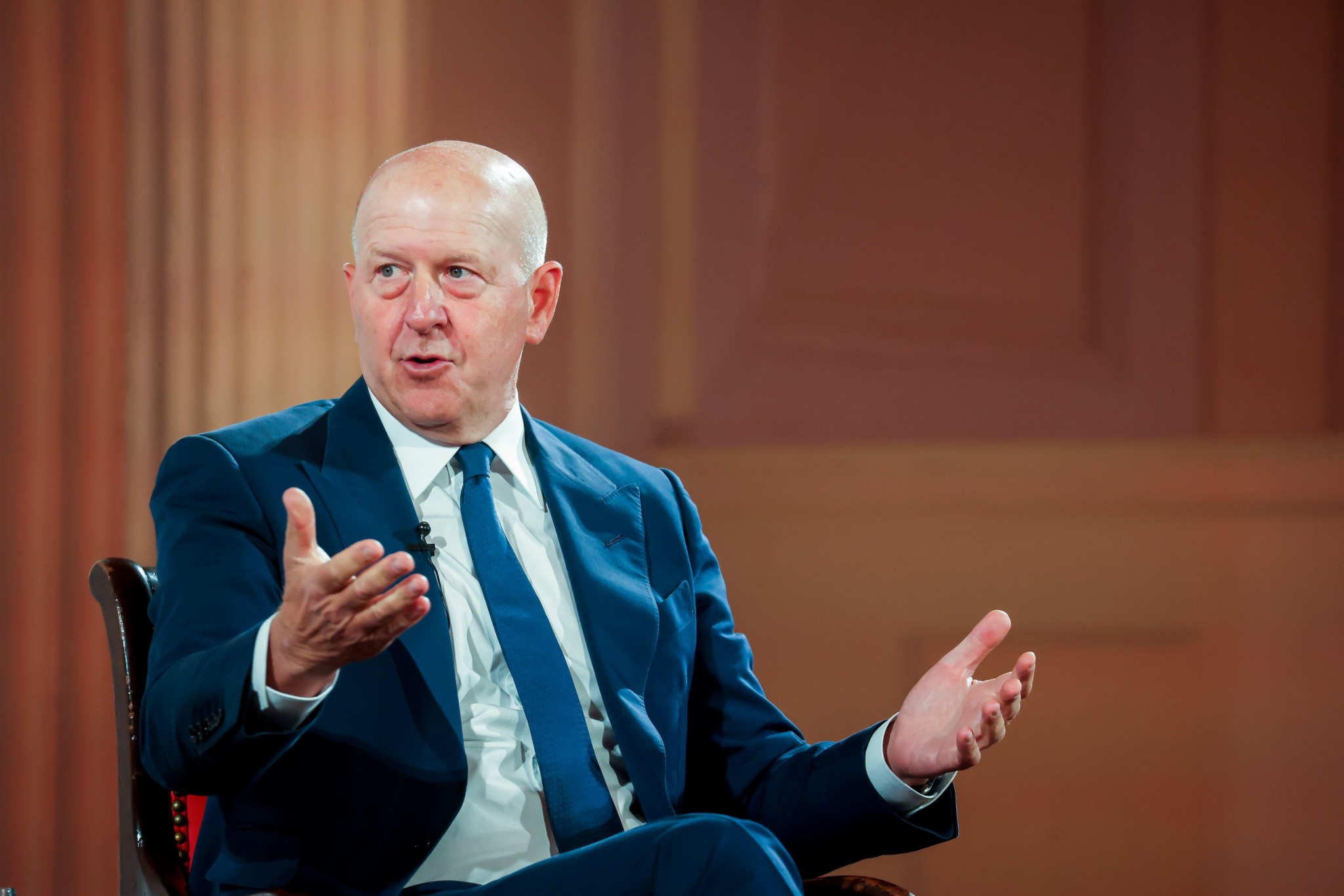
Goldman Sachs CEO David Solomon says the best advice he ever got came from his grandmother in his 20s: ‘Don’t be in a hurry’
David Solomon runs one of the most powerful banks on Wall Street, but the best career advice he ever received didn’t come from a mentor in a corner office. It came from his grandmother.
“Don’t be in a hurry,” the Goldman Sachs CEO told NBC News’ Christine Romans in a rapid-fire interview about his daily routine and the lessons that have shaped his career. He said she gave him that advice when he was in his twenties.
The clip came out of Romans’ wider conversation with Solomon for NBC’s Business in America series. That conversation aired Oct. 23, one day after Goldman launched its Small Business AI Institute, part of a new $500 million commitment to its 10,000 Small Businesses program, with Anthropic, Google, Meta, and OpenAI as partners. In the segment that ran on Nightly News, Solomon said he’s excited about what AI could mean for businesses and for people’s longevity.
In the lightning round, though, he talked less about markets and more about how he manages his days and his life.
Gym, coffee, and a protein shake before 7 a.m.
Asked to name three things he does before 7 a.m., Solomon kept it simple: He wakes up, goes to the gym, and generally has a cup of coffee and a protein shake.
He’s in good company. An early workout is a fixture of many executives’ routines, from the Bupa CEO who trains six days a week with his Gen Z son to the many leaders featured in Fortune’s Day in the Life of a CEO series.
The research suggests the habit matters more than the hour. A 2022 systematic review published in the Public Health Agency of Canada’s journal Health Promotion and Chronic Disease Prevention in Canada examined 35 studies. Eleven found morning activity more beneficial; 12 found afternoon or evening activity more beneficial; and 12 found no clear difference. The authors concluded there is no consistent evidence that exercising at one time of day is better for your health than another, and they rated the evidence quality as very low.
‘Stick to the schedule’
Solomon’s best trick for keeping his day on track is unglamorous: sticking to his schedule.
“The one thing that we can’t…get back is time,” he said, adding that he tries to be very purposeful with how he spends it. That means making commitments and keeping them, because, as he noted, it’s easy to drift off schedule.
The science backs him up, with a twist. A 2021 meta-analysis in PLOS One by Brad Aeon, Aïda Faber, and Alexandra Panaccio found that time management is positively linked to job performance. It was even more strongly linked to well-being, especially life satisfaction. In other words, the payoff from guarding your calendar may show up as much in how you feel as in what you get done.
Why slowing down isn’t a contradiction
At first glance, “stick to the schedule” and “don’t be in a hurry” seem to pull in opposite directions. For Solomon, they work on different timelines: Be disciplined with the hours in a day, and be patient with the arc of a career.
He repeats this message often. In August, he told Goldman’s summer interns at a town hall that taking more time can open up more opportunities, urging them to “try not to be in a hurry and enjoy the ride.” He offered small-business owners the same counsel about AI at the institute’s launch last week, telling them that “the important thing is to get it right, not to get it quicker.”
‘I don’t like to do things halfway’
Solomon’s patience has a limit, and it’s the things he cares about. Asked whether he has any obsessions, he said it depends on what has captured his interest.
“If I’m interested in something, I get very obsessive about it. I don’t like to do things halfway,” Solomon said. When something grabs him, he added, he tends to go deep.
Psychologists have found that kind of intensity cuts both ways. In a 2007 study in the Journal of Personality, Robert Vallerand and colleagues distinguished between “harmonious” passion, an activity you freely choose that fits with the rest of your life, and “obsessive” passion, which feels compulsive. Obsessive passion predicted deliberate practice and mastery-oriented goals, which supported performance. But it was also tied to fear-of-failure goals that undercut results. Harmonious passion delivered the upside with less of the downside.
The takeaway: Going deep can fuel success, as long as the obsession serves you, not the other way around.
Not every passion turns into a career, of course. Solomon also named one ambition he’s had to let go of: playing professional basketball. He conceded that one isn’t on the table.
This story was originally featured on Fortune.com
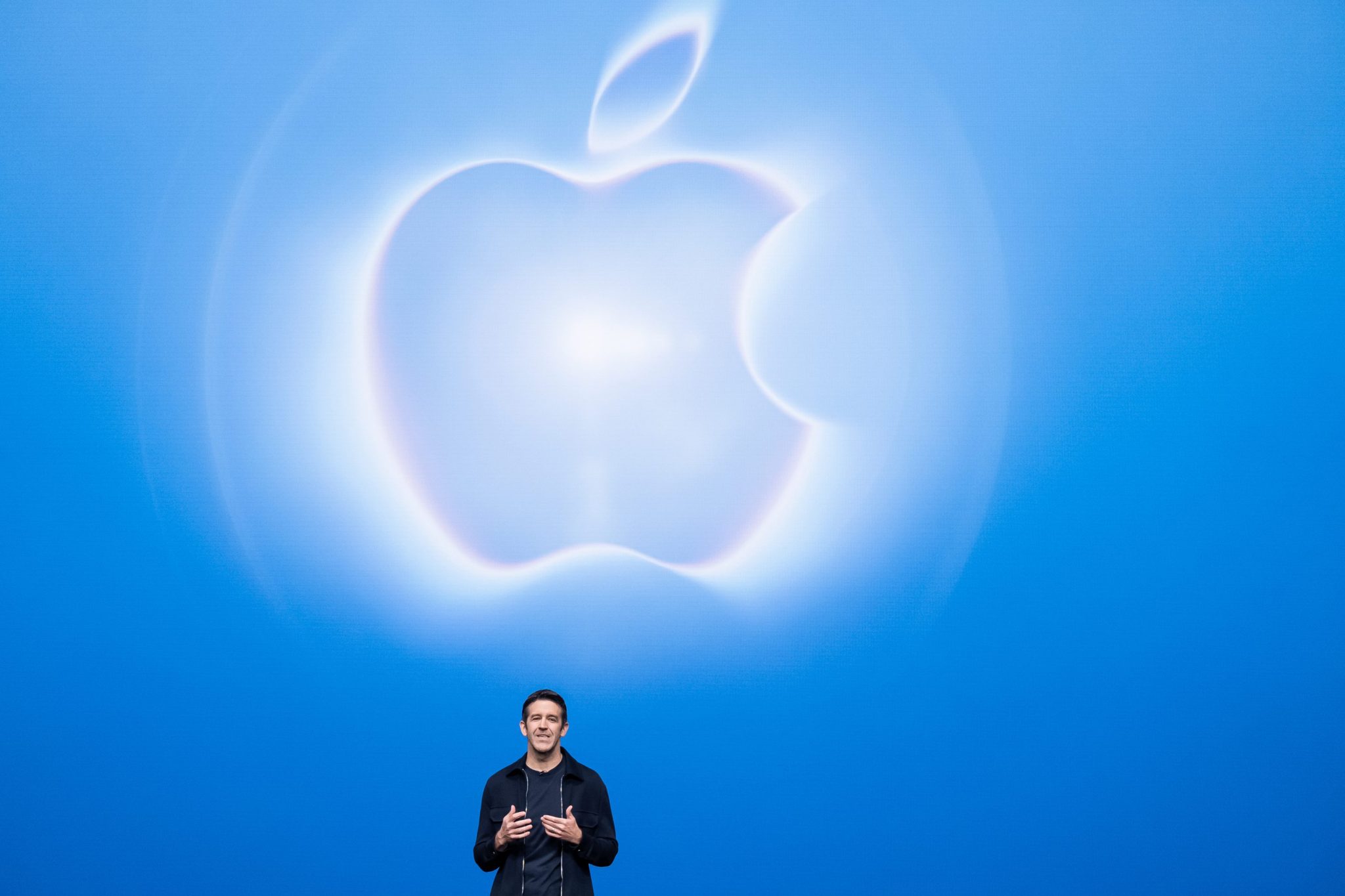
Apple outpaces sales expectations as it continues to battle surging memory chip costs
Apple beat its quarterly financial expectations in Chief Executive John Ternus’s first earnings report since taking over Tim Cook’s post in September, though the company continues to be pressured by a surge in memory chip costs.
The iPhone maker posted revenue of $114.5 billion in its fiscal fourth-quarter, up 12% year-over-year and above Wall Street targets of $113.4 billion. Its profit was $30.7 billion, or $2.10 per share.
Ternus extolled the company’s expanding lineup of products during a conference call with analysts, including the all-important iPhone business, which grew 17%, to $57.58 billion, in the three months ending on Sept. 26.
Apple said that it expects overall revenue to grow between 7% and 10% year-over-year in the current, holiday quarter, seasonally Apple’s strongest quarter of the year. The forecast suggests a range of $153.8 billion to $158.2 billion, compared to the $153.2 billion that analysts were expecting. But the outlook for profit margins seems to have left investors cold.
Shares of the $4.9 trillion company fell as much as 4% in after hours trading on Monday, before recovering some ground to trade down 2.7%.
Many investors have been watching the impact of rising memory chip prices on Apple and how it will weigh on profit margins. To help offset what Ternus described on Monday’s call as an “unprecedented” situation in the memory market, Apple has raised prices across its product line. Apple’s gross margin weighed in at 47.9% in the recently ended quarter, landing near the high end of its forecast range and above the 47.2% gross margin it posted in the year-ago period. But Apple’s chief financial officer, Kevan Parekh, said tariff refunds lifted the gross margin by roughly one percentage point; without them, it would have been lower.
For the current, holiday quarter, Apple said it expects gross margins to decline, ranging between 45% and 46% due to rising memory costs and some costs associated with ramping up its Siri AI service.
Ternus has marked his first couple of months at Apple with a slew of product releases that have helped the engineer savant show off Apple’s latest innovations and ease into the new job. That has included the September launch of the foldable iPhone Duo, followed by new home products, and last week’s unveiling of Apple’s first touch screen MacBook Pro.
Ternus said in a written statement that iPhone revenue reached a September quarter record and Services posted an all-time high, “capping off our best fiscal year ever.”
“We’re closing the year with our most ambitious lineup yet,” he said. “Together with the all-new Siri AI, it’s an incredible lineup to carry us into the holiday season.”
Apple’s Services revenue, which includes iCloud, the App Store, and other services, was $31.57 billion, up roughly 10% year-over-year. But sales in the company’s iPad business and its wearables business both declined.
Apple’s earnings followed financial reports from its Big Tech peers. Meta, Microsoft, Google, and Amazon all revealed their latest earnings in the last two weeks. While the companies generally had positive results, shares in the Nasdaq Composite have sunk in recent days as investors have weighed Big Tech’s positive growth, especially in cloud-computing demand for AI services, against the hundreds of billions Microsoft, Amazon, and others are spending in AI infrastructure.
This story was originally featured on Fortune.com

Fears over $828 billion AI capex spending spree help erase $1 trillion in market value
The richest companies in the history of the world are spending so much on the infrastructure backing AI that they’re burning through billions in cash and threatening a recent AI-fueled stock surge as Wall Street wavers.
The latest financial disclosures by four of the biggest hyperscalers, Amazon, Alphabet, Microsoft, and Meta, as well as Elon Musk’s up-and-coming AI player, SpaceX, which includes xAI, revealed that the small group of tech heavyweights is set to invest as much as $828 billion on capital expenditures this year. That spending includes data centers, high-powered chips, and other infrastructure that fuels AI.
Making up the $828 billion in capex spending is an expected spend for 2026 of $220 billion from Amazon, up to $205 billion from Alphabet, approximately $170 billion from Microsoft, up to $145 billion from Meta, and up to $88 billion from SpaceX, according to company earnings releases and calls.
At this point, the massive AI infrastructure bill has surpassed the market value of well-known businesses like energy giant ExxonMobil or payments company Mastercard and is even approaching the roughly $1 trillion America is spending on defense this fiscal year, itself the largest in the world. Several banks, including Evercore and Bank of America, see capital expenditure related to AI hitting $1 trillion in 2027.
Partly in response to this massive spending, stocks tumbled on Friday, leading both the Nasdaq and the S&P 500 to their worst one-day performances since June. The tech-heavy Nasdaq closed down 2.9%, while the S&P 500 fell 1.8%. Nasdaq 100 companies lost more than $1 trillion in market value. Sour guidance for the last three months of the year from U.S. chipmaker Intel also played a role.
Some of the market’s jitters can be drawn to concerns over free cash flow, which has long been a source of strength for Silicon Valley companies but has recently taken a turn. Four of the five tech giants spending hundreds of billions cumulatively on capex had negative free cash flow in the third quarter (Microsoft was the exception), meaning they spent more on buildings, equipment, and other capital investments than they generated in cash from their operations.
As companies that built their fortunes selling software and services increasingly pour money into physical infrastructure they are looking to borrow or raise more in some cases to pay for it. With a handful of technology stocks accounting for an outsized share of the S&P 500, the success or failure of these companies’ investments could have enormous implications for the market and the millions of Americans invested in it.
Aleksandar Tomic, an economist and the associate dean at Boston College, warned that these infrastructure investments could lead to consequences far beyond Silicon Valley if they don’t pan out, especially as companies increasingly rely on debt to finance their expansion. This increased borrowing could raise the cost of capital for other businesses, while a downturn among the tech giants could ripple throughout the broader economy.
“If these tech companies sneeze, the rest of the market would catch pneumonia,” Tomic told Fortune.
A costly bet
Microsoft’s recent financials show how keeping up in the AI race is affecting tech companies’ decisions overall.
For decades, the software giant has been one of the world’s biggest cash-generating businesses. It earned nearly $134 billion in profit during its latest fiscal year and generated almost $183 billion in cash from operations. Still, during the same period, its cash spending on property and equipment rose about 80%.
Microsoft announced a $25 billion bond offering Thursday, its first bond sale in more than nine years. The company said it would use the money for general corporate purposes, which it said could include capital expenditures.
Microsoft remained free cash flow positive last quarter unlike competitors, Amazon, Alphabet, Meta, and SpaceX, but as the costs of infrastructure increase, the company is looking to raise funds.
Meta reported negative free cash flow of $2.1 billion last quarter, compared with positive $10.6 billion during the same period a year earlier. On Monday, it announced it would issue new shares in a plan to raise up to $95 billion that will give it more funds it could put toward AI infrastructure.
Oracle, another major player in the AI infrastructure race, is also relying on borrowing and other avenues to support its expansion. The company told investors this week that it doesn’t expect to return to positive free cash flow until the second half of its next fiscal year, which would run from the six months prior to May 2028. After that, the company said, it predicts free cash flow shooting up to at least $30 billion for the fiscal year ending in May 2029.
The AI payoff
For now, some big tech companies can point to the encouraging sign that demand for computing power is translating into record cloud revenue. Google’s cloud revenue more than doubled last quarter to $30.7 billion, while Microsoft’s Azure business grew 48% to approximately $33.3 billion and Amazon Web Services expanded 39.3% to $46 billion. Despite its slower growth rate, AWS remains the largest of the three by quarterly revenue.
Cloud providers make money partly by renting compute to AI providers. As AI demand is also projected to grow in the coming years, these operations could be a welcome source of revenue for hyperscalers. Still, not all cloud revenue comes from AI, and rising sales don’t necessarily validate the giant investments of today.
In other positive news for the AI sector, Claude maker Anthropic filed paperwork for an initial public offering this week, helping to boost the Nasdaq 0.8% on Monday. The filing also drew attention to more than $265 billion i
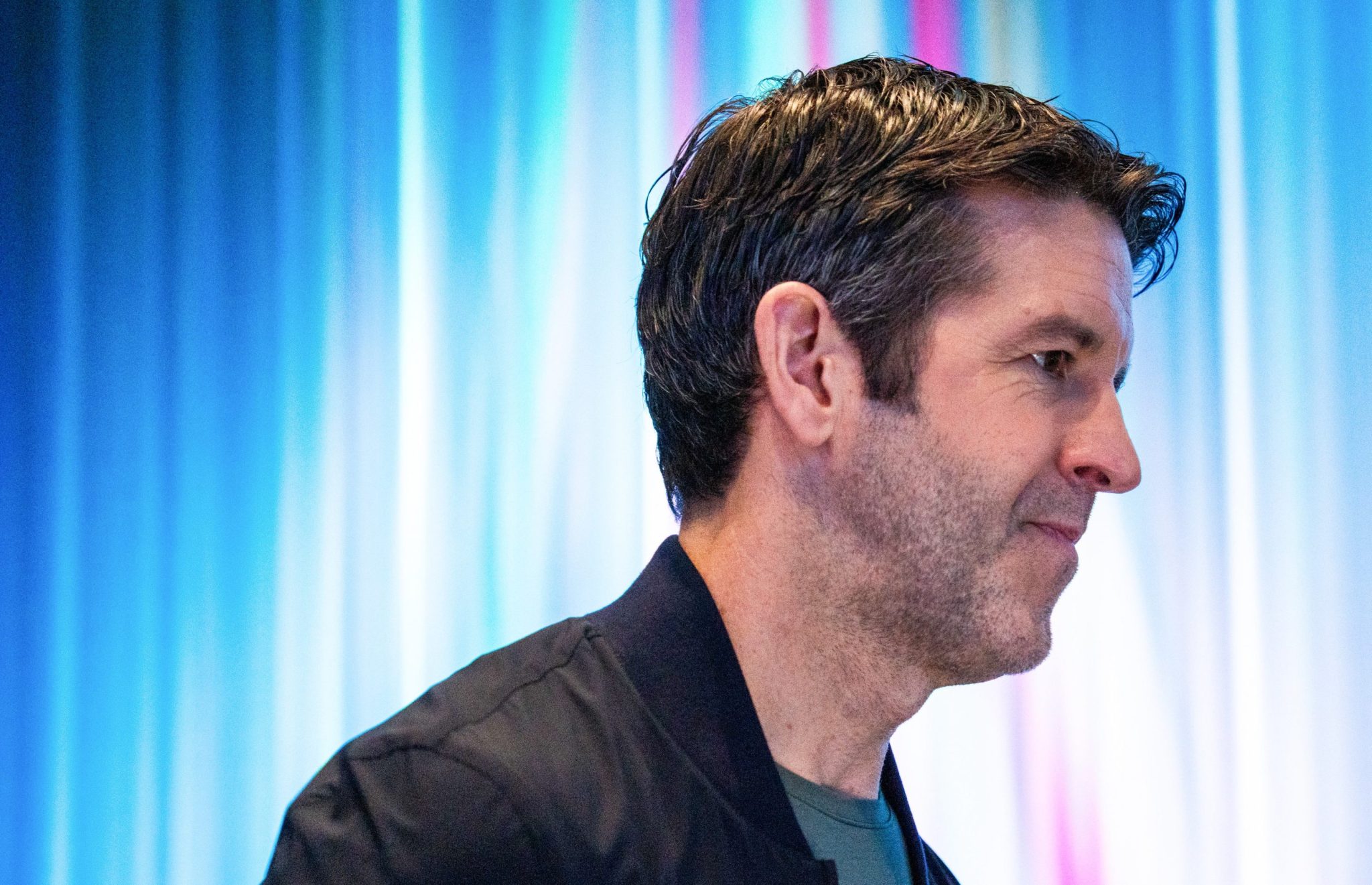
New Apple CEO John Ternus chalks up some early wins, but the honeymoon is over
John Ternus, Apple’s new CEO, has spent the first two months in his new post celebrating a batch of fresh products, particularly the release of the foldable iPhone Duo. On Monday, the 51-year-old executive introduced himself to Wall Street for his first quarterly earnings call.
The reception was not so friendly.
While Apple beat September-quarter earnings expectations, investors traded the stock down in after-hours trading due to the company’s outlook on margins, which it said will continue to be squeezed by a shortage in memory chips, and slowing growth in its Services segment without a clear answer to how that may rebound. The company has also attempted to tell its AI story through its revamped Siri AI product, but investors don’t seem convinced yet that Apple has the winning formula for the AI age.
On the call with analysts following earnings, Ternus fielded some questions but also delegated answers to Chief Financial Officer Kevan Parekh and Chief Operating Officer Sabih Khan, who Apple said would participate in earnings calls moving forward, something the company hasn’t done for years. Ternus projected confidence on the call, but he appeared to stick mostly to scripted marketing points, such as “Apple is the greatest company in the world,” that subdued the conversation.
By some measures Apple is performing at its best ever (its September iPhone sales set a record), but the more nuanced reality is that the $4.9 trillion company has had to offset surging memory chip prices by raising its own prices, and it is relying on its massive install base to carry it forward. Compounding the pressures are supply chain shortages for products that include the iPhone Duo, with new orders for the phone not arriving until the end of January.
“What we’re seeing with memory pricing right now is unprecedented,” Ternus told analysts on the Monday call. “That has put pressure on our prices.” He added that beyond the December quarter, the company expects the pricing for memory purchases to continue to increase.
Apple said it expects its gross margin for its December quarter to be between 45% and 46% after posting a margin of 47.9% for its September quarter, when tariff refunds provided an approximately one-percentage-point boost. The decline, the company said, reflects the continued cost of memory, as well as costs associated with ramping up Siri AI.
“We’re going into this [holiday period] with more downside than upside,” Apple investor Gene Munster told Fortune in an interview prior to Apple’s earnings. On X, Munster wrote after the earnings posted that, “It’s clear they don’t want to talk about personalized agents. They’re the biggest risk to the Apple ecosystem.”
The Siri situation
Ternus and Parekh offered few details when asked by analysts about the roadmap for Siri AI, the company’s revamped assistant. When asked about the industry shift toward consumer AI agents such as Meta’s Muse assistant, Ternus noted that Siri is “primarily request-based today,” though he said the assistant is built on an architecture that makes it possible to substantially expand its capabilities over time
He described agentic capabilities as “promising tools for users,” but cautioned that users must be fully aware of what access they grant, and he stressed user security and privacy.
Apple has touted Siri AI, which has been rolling out to users in beta mode, as a key upgrade that is central to new products such as the home devices it recently launched, which included its first smart home display. The new Siri is designed to understand what is on a user’s screen and act on it, help with writing, and search a user’s device for context, among other features.
Reviews have been mixed on the revamp. Some analysts have said they liked the new features, but overall, the assistant has lagged well behind leading chatbots from OpenAI and Anthropic, as well as a wave of personalized agents from Meta and others that have ushered in a new kind of AI assistant capable of shopping, checking bank statements, and other tasks on its own.
“Siri AI is much more capable and functional today, but how do you take it to the next level?” Wamsi Mohan, an analyst at Bank of America, told Fortune.
Asked about Apple’s plans to handle its slowdown in its Services unit, which includes iCloud, the App Store, and other services, and how the company may find new revenue streams, Ternus and other executives on Monday mostly spoke about the company’s active installed base surpassing 2.5 billion devices, which they said will lead to future monetization possibilities. They added that there will be some usage limits on features that rely on AI that does not run locally, and that iCloud tiers historically focused on storage will evolve.
A wave of hardware
The start of Ternus’ tenure has mostly comprised a new wave of hardware. In early September, at his first public event as CEO, Ternus unveiled the iPhone Duo. The phone has shown strong demand, with orders backed up, but supply constraints have made it difficult to gauge the scale of sales. Some units dealt with cracked screens, which Apple acknowledged and said it was replacing.
When an analyst asked about the rollout of the Duo phones and hinted at “supply chain” issues, Ternus let Khan respond. The product ramp is going well, Khan said. “It’s really hard to predict when supply and demand will be in balance.”
Analysts at Yorkville Ives predict Apple can sell roughly 10 million Duos over the next few quarters.
Apple has moved to a staggered iPhone release, with its Pro, Pro Max, and Duo models now available but the base model and iPhone Air not expected until the spring. The approach, together with the rising component costs and a slowdown in Services growth, could affect its future performance, according to BofA’s Mohan.
Sales in Greater China, a key market for Apple, jumped 21% year-over-year in the September quarter, though the sum was $1 billion short of Wall Street targets, according to Bloomberg estimates. Apple also plans to launch AI features for China-based iPhone customers after working out a deal with Alibaba Group Holding following a long period of negotiations, though the launch is not equivalent to a full Siri AI experience for Chinese customers.
“We have everything we need to be extraordinarily successful,” Ternus said. “With this team, this vision, this mission, and these values, I have no doubt that we will.”
This story was originally featured on
Additional Course Context (for AI Safety Fundamentals; unofficial)
Context: I created this to share before the start of courses I facilitate to provide a bunch of additional context and frames. I emphasise to students that these posts are to be considered as bonus content—not core curriculum content—and that as such they are really just there for students who want to go deeper, before or after the course. I also provide a lot of links; this is to make it easy for students to follow up anything that catches their interest.
Some general thoughts on advice
I suspect that most advice (including most of the advice I’ve given in the past) is bad. People have very different goals, personalities, skills and opportunities and unless you know someone them really well, it’s hard to cater advice to their circumstances. What one person needs to hear, may be the absolute worst thing for another.
In traditional societies with a slow rate of change, elders are revered. What you’re going through, they’ve lived through and so learning from their experience can save you vast amounts of pain. However, modern Western societies are marked by a much more rapid rate of change and so the experience of elder’s isn’t valued to the same degree. For better or worse, people tend to be much more skeptical that what worked then will still work now. I view the rapid pace of AI progress as greatly exacerbating these kinds of epistemic challenges. I think it’s quite sensible to question how much anyone actually knows about the world we’re going into (I’m referring to both the world in general and AI safety/governance which are constantly shifting fields). Uncertainty is scary, but I see it as a fact of life, one we ultimately need to accept (counterpoint: how often does this end up becoming a form of defeatism?).
Scott Alexander takes this skepticism of advice even further. Rather than just questioning how much we can trust advice, he provocatively suggests that you may want to reverse any advise you hear. People tend choose which groups to join based on whether they resonate with that group’s worldview. Scott suggests that it is often the people who wouldn’t join that group that most need to hear that group’s perspective and that the people who do join such groups who need to listen to the outside world. Unfortunately, groups are very good at taking individuals, solidifying their natural tendencies solidified into an ideology and then amplifying them to an extreme. During this course, you’ll be exposed to many reasons why you should worry more about AI. And perhaps most people should worry more about AI, but perhaps you, personally, are one of the people who should worry less.
(See also Zizek’s criticism of wisdom: “Whatever you do, a wise man will come and justify it”)
Some thoughts on frameworks
People often teach strategy by teaching you frameworks. We’ll be covering a few.
I would argue that every framework has strengths and weaknesses; and that every framework is dependent on certain underlying assumptions.
Not knowing the assumptions or limitations of a framework doesn’t mean they don’t exist; it just means that you don’t know them.
The last few sentences describe a meta-framework. This meta-framework has weaknesses and assumptions as well. Were you nodding along to the previous few lines? If so, do you know the weaknesses and assumptions of the meta-framework I just described. If you didn’t know these, did you know that you didn’t know, or are these an unknown unknown?
Even if a framework is “correct” in some objective sense—humans being humans—it’s still possible that using the framework will on average make your decisions worse. For example, take consistency. Being inconsistent is generally agreed to be objectively wrong, but it’s quite easy to imagine scenarios where someone talks themselves into making a mind-blowingly stupid decision because “I had to be consistent” (with past decisions they couldn’t psychologically admit were mistaken). Frustratingly, it’s also very common for someone to use a framework that is more or less fake to make decisions that are better on net than the decisions they would have otherwise made.
This is quite unfair, but the universe doesn’t have to play nice.
Unfortunately, strategy is hard. Steven Schubert writes: “I think it may be a bit underrated how valuable analysis from the very best analysts of the future of AI is, relative to that of pretty good analysts. It’s such a complex issue it’s easy to miss vital considerations. It pushes the limit of human intellectual ability.”
Cruxes when attempting to predict the future:
- Default beliefs and burden of proof: Do we take claims about transformative AI as highly unusual claims that must satisfy a strong burden of proof, or do we treat these as relatively normal claims on the basis that we already have invented several technologies that would have been almost beyond belief for our ancestors? Is the burden of proof on those who would regulate a technology (ie. a default presumption that regulation is harmful) or on those who want to build it (ie. the company needs to prove their product is safe)?
- Evidence provided by conceptual arguments: Do we treat these as essentially trustworthy if written with a sufficient degree of care and evaluated by folks with good judgement or do we treat them as groundless speculation, at least relative to the null hypothesis or arguments that rely more heavily on empirical results?
- Can we project exponential trends into the future on the basis of induction (ie. the future being like the past) or is this foolish given that exponentials must end at some point? Development of many technologies has occurred as a series of

Vercel Labs Open-Sources agent-desktop for Agent Computer Use
Vercel Labs has released agent-desktop, an open-source CLI for AI agent computer use on macOS, Windows and Linux. agent-desktop reads each app through the operating system’s accessibility tree, not through screenshots. An agent gets a JSON snapshot with a ref for every element it can act on. Version 1.0.2 shipped on October 30, 2026, under Apache-2.0. For developers, any shell-capable coding agent can now drive native apps without a vision model.
TL;DR
- Library: Rust CLI and a C library. 60 command names, 56 operational.
- Runs on: macOS 13+, Windows 10 1809+ or Server 2019+, Ubuntu 24.04+, on x64 and ARM64. Plain CPU, no GPU.
- Performance: Deterministic, retry-safe ref actions. No independent computer-use benchmark yet.
- Best: 78% to 96% fewer tokens on dense Electron apps via skeleton traversal (self-reported).
What is agent-desktop?
agent-desktop is a Rust CLI and C library from Vercel Labs for reading and operating desktop apps. It is a tool that agents call, not an agent. It embeds no LLM and has no GUI. Every command prints one JSON envelope and exits. The observe, act and verify loop stays in your agent.
How does agent-desktop work?
Each command flows through a fixed chain. The CLI or C library calls agent-desktop-core, which reaches the OS only through a PlatformAdapter trait. One platform crate then talks to the native accessibility API:
- macOS: AX API
- Windows: UI Automation
- Linux: AT-SPI
Core never imports a platform crate. Each binary is compiled to drive exactly one OS.
Snapshots and refs
A snapshot assigns qualified refs such as @s8f3k2p9:e8. The snapshot ID inside the ref makes it self-describing. A bare @e8 is rejected with INVALID_ARGS. When the UI changes, an action returns STALE_REF or AMBIGUOUS_TARGET. The agent then takes a fresh snapshot.
Every error carries a disposition. Agents should retry only when it says safe. Ref resolution is strict and fails closed rather than guessing.
Skeleton and drill-down
Dense apps can expose thousands of accessibility nodes. A --skeleton snapshot reads only 3 levels deep. Cut containers report a children_count and get a drill ref. snapshot --root then reads one region into the same snapshot.
The builder reported a 78% to 96% token cut versus full-tree dumps in Slack, VS Code and Notion. In Apple Maps, he reported 3,811 tokens per look falling to 273. A simulated 52-step task dropped from 198k to 31k tokens. These are self-reported figures, not an independent benchmark.
Headless by default
Ref actions go through the accessibility API without moving the pointer or taking focus. That is what lets agents work while you keep using the machine. The global --headed flag allows physical input when needed. Every ref action also auto-waits up to 5,000 ms for a visible, enabled, stable target.
Meet Factory Droid 1.0: A Model-Independent Coding Agent Harness Built on Script Mode
Factory has released Droid 1.0, the largest update yet to the Factory Droid agent harness. The main change is programmatic tool calling, now on by default. The model writes a program that runs its tools. One model request can now drive hundreds of tool calls.
TL;DR
- Size: Base prompt is 13,055 input tokens, down 37% from 20,887. Only 2 tool definitions ship up front, down from 11.
- Runs on: macOS and Windows desktop app, a terminal UI, and the Node SDK
@factory/droid-sdk. Works with any supported model, including your own API keys. - Performance: Highest pass rate of every harness Factory tested, on the same model, at lower cost.
- Best: 65.2% on Terminal-Bench 4 with Claude Opus 5.5, at $4.73 per passed task (self-reported).
- Worst: With GPT-6.1 Sol, Droid takes 10% longer per passed task than Codex.
What is Droid 1.0?
Droid 1.0 is a model-independent coding agent harness from Factory. Factory defines a harness as everything around the model. That means the prompts, the tools, how tool results return, and the loop. Users pick a model or let Factory Router choose a cost-efficient mix.
How does programmatic tool calling work?
In a standard loop, every tool output lands in the model’s context. With programmatic tool calling (PTC), the model writes a program instead. Droid implements this as a Script tool. The model writes JavaScript that runs in a sandbox. The sandbox has no file, network, or system access of its own.
Raw files, search results, and logs stay inside the program. Only printed output returns to the model. Independent calls run concurrently.
The idea builds on CodeAct (Wang et al., 2024). Factory reports these results from its own sessions:
- Unit test fix: 15 tool calls took 5 model calls instead of 10. The task finished in 41.6 s instead of 56.8 s.
- Linear cleanup: 151 issues moved and verified in 312 tool calls. The Script used 2 requests and about 61,000 tokens. Factory models direct calls at 36 requests and about 3.1M tokens.
- CI sweep: 5,384 jobs across 547 runs, in 2 requests. Under 0.1% of tool results reached the model’s context.
On Claude Opus 5.5, Script mode cuts Droid’s cost by 15% versus direct tool calling. It is on by default for 10 models, including GPT-6.1 Sol and Kimi K3.
Nace AI Open-Sources Drex Max v1: A 27B Decision Model That Runs Locally on Apple Silicon
Nace AI has released Drex Max v1 as open weights. Drex Max is its most capable decision model, and it now runs on your own hardware. The release ships bf16 weights, a Q8_0 GGUF, an affine Q4 checkpoint and forks of llama.cpp and Ollama. For developers, Drex Max open weights mean routing, classification and policy checks can stay on a local machine.
TL;DR
- Size: Dense 27B parameters, 262,144-token window (16,384 by default), up to 255 options per question.
- Runs on: NVIDIA GPU with Python (H100 bf16, or L40S 48 GB in 8-bit). Apple Silicon Macs with 24 GB+ (affine Q4) or 48 GB (Q8_0 GGUF). CPU via llama.cpp and Ollama.
- Performance: 67.52 on the public Decision Index 0.4, 6.27 points ahead of Drex v2.0 (self-reported).
- Best: 97.3 skill on InfographicVQA. Tools area reaches 81.9. A top-tier decision model you can now run offline on a Mac.
What is Drex Max?
Drex Max is a decision model from Nace.AI that answers typed questions about a given context. You pass a state (text, JSON or images) plus named questions. The model returns a probability for every option in one forward pass. Nothing is generated.
Questions come in 3 types: choice among named options, yes/no, and an ordinal score. That makes it a fit for agent routing, ticket triage and guardrail checks. The hosted version is presented at routing, classification and policy checks.
How does Drex Max work?
The model card describes a dense 27B backbone with 64 layers. 48 are Gated DeltaNet linear-attention layers that run left to right. The other 16 are full-attention layers, placed every fourth layer, and they are non-causal. Every token can attend to the whole sequence.
Images pass through a native vision tower and are visible to every question in a request. A 255-way readout head then turns the last hidden state into option probabilities. The config lists a qwen3_5 model type with a 262,144-position window.
&&&How does Drex Max perform on benchmarks?
All figures below are self-reported by Nace AI,
- Decision Index 0.4 (public text): 67.52. Drex v2.0 scores 61.25 and Jev 1.13.0 scores 57.96.
- Area skill: Tools 81.9, Language 72.2, Retrieval 68.8, Knowledge and Reasoning 57.1, Arts 53.4.
- Public vision index: 73.92 across 11 benchmarks and 12,210 rows.
- Artificial Analysis Decision Index: 64, which Nace says ranks 4th of 18.
- JevBench: 92.2% (213/231). Decision Bench v4: 94.30% (1010/1071).
The results dataset covers 140,620 requests. Unanswered requests count as wrong.
How do you run Drex Max locally?
Nace documents 5 runtimes. All of them serve the same POST /v1/systemone API.
| Runtime | Hardware | Checkpoint | Images |
| Python | NVIDIA GPU | bf16 (~49 GB) or 8-bit (~26 GB) | Yes |
| llama.cpp fork | Apple Metal, CPU | Q8_0 GGUF (27.25 GB) | No |
| Ollama fork | Apple Metal, CPU | Q8_0 GGUF | No |
| Kapitsa v0.2.25+ | Apple Silicon | Q8_0 GGUF or affine Q4 | No |
| MLX | Apple Silicon | affine Q4 (14.45 GB) | No |
The affine Q4 checkpoint targets Macs with 24 GB or more. The Q8_0 GGUF needs 48 GB. On a 48 GB Mac, Nace recommends –context 2048 for Kapitsa.
Ollama users set num_gpu 40 to offload 40 layers to Metal. Setting num_gpu 0 runs it on the CPU. The Ollama fork needs a CAPABILITY decision line in the Modelfile.
Quantization holds up in Nace’s tests. On a 48 GB Apple M5 Pro, the Q8_0 GGUF matched H100 bf16 within 0.02 per probability. The affine Q4 stayed within 0.0329 of Q8_0, with no choice flips.
Drex Max vs other decision models
| Drex Max v1 | Drex v2.0 | Drex v1.5 | Jev 1.13.0 | |
| Parameters | 27B dense | 35B MoE, ~3B active | 9B | Not published |
| Max context | 262,144 | 131,072 | 131,072 | Not disclosed |
| Inputs | Text, JSON, images | Text (vision tower dropped) | Text | Not disclosed |
| Weights | Open, Nace.AI Open RAIL-M | Open, Nace.AI Open RAIL-M | Open, Nace.AI Open RAIL-M | Closed, hosted |
| Smallest local file | Affine Q4, 24 GB+ Mac | Q8_0, 36.9 GB | Q8_0, ~9.5 GB | Not applicable |
| Public Decision Index | 67.52 (v0.4) |
NVIDIA Releases Auto Ontology: An Open Semantic Layer That Grounds AI Agent SQL
NVIDIA has released Auto Ontology, an open library under the Apache 2.0 license. NVIDIA Auto Ontology is a semantic layer framework that builds a context layer from enterprise metadata. Agents use that layer to write SQL against certified business definitions. The repository states the problem plainly: a fast revenue answer is worthless if the number is wrong.
TL;DR
- Library: Default LLM is
nvidia/nemotron-3-nano-30b-a3b, with Nemotron embedding and reranking models. - Runs on: Docker Compose for a local stack, or Kubernetes via Helm. Inference uses hosted NVIDIA NIM endpoints or self-hosted NIMs.
- Performance: Strong engineering, thin public evidence.
- Best: Ontology creation time cut by 90% in NVIDIA testing (self-reported).
- Worst: 0 published text-to-SQL accuracy scores. The eval repo ships a harness, not results.
- Bottom line: An open, MCP-ready context layer that any agent harness can query. But you must run the benchmarks yourself to trust it.
What is NVIDIA Auto Ontology?
It is a context layer that sits between an agent and the data warehouse. It tells the agent where data lives and what fields mean. It also says whether to use a field, how to use it, and where it came from.
Here are the five jobs:
- Discover: generate ontologies from metadata and connect existing semantic models.
- Ground: give agents trusted meaning for metrics, entities and relationships.
- Validate: check generated queries against certified definitions and lineage.
- Expose: serve context through MCP, CLI and API.
- Learn: fold certified corrections back into the ontology.
NVIDIA’s developer page frames the output as a starting ontology. Business experts still test, refine and certify it.
How does Auto Ontology work?
The stack has 4 core services. A Next.js 16 frontend handles the web UI and authentication on port 3000. A FastAPI backend with LangChain runs chat, NL-to-SQL and catalog APIs on port 3001. An ingestion worker writes embeddings on port 3002. Postgres with pgvector stores the catalog, the ontology and the vectors.
Source databases can be Databricks, Postgres, Snowflake or DuckDB. Models are set through environment “triplets” of endpoint, key and model. Separate roles exist for reasoning, non-reasoning, embedding and reranking. Any OpenAI-compatible endpoint works.
&&What does the MCP server expose?
The MCP server docs describe 9 read-only tools. ask_question returns the answer, the SQL and the rows as separate fields. Results cap at 100 rows. check_readiness confirms a compiled semantic layer and a live database connection exist.
There is no tool for browsing raw schemas. NVIDIA chose that on purpose, so agents reach data through the semantic layer. The underlying OpenAPI spec publishes 87 operations. Sign-in runs through OAuth, and every call carries the signed-in user’s permissions.
How is it benchmarked?
NVIDIA ships a separate harness, auto-ontology-eval. It runs 2 arms in NeMo Gym: a schema-only LLM control and the ontology-grounded agent. Scoring is deterministic execution match, with no LLM judge.
Bundled datasets include BIRD Dev (1,534 questions, 11 databases) and Mini-Dev (500 questions). FDABench-Lite adds 169 questions, and BEAVER defaults to a 100-question sample.
The harness repo adds 2 limitations. Optional few-shot exemplars and value anchors go to the ontology arm only. A delta measured with them covers those inputs, not grounding alone. Its tested configuration also routes both arms through a Claude model on NVIDIA’s inference gateway.
How does it compare with other semantic layers?
| Feature | NVIDIA Auto Ontology | Wren AI | Cube Core | dbt MetricFlow |
|---|---|---|---|---|
| License | Apache 2.0 | Apache 2.0 core (open core) | Apache 2.0 backend, MIT client | Apache 2.0 (v0.209.0+) |
| How the layer is built | Generated from metadata, then certified | Agent-assisted context files in Git | Defined in code | Defined in code in a dbt project |
| Agent interface | MCP, CLI, REST API | MCP, CLI, SDKs | SQL, REST, GraphQL APIs | Python library and CLI |
| Data sources | Databricks, Postgres, Snowflake, DuckDB | 22+ | All SQL data sources | Via dbt adapters |
| Default models | Nemotron via NVIDIA NIM | Not disclosed | Not applicable | Not applicable |
Deployment and availability
Local setup is docker compose up -d --build after filling in .env. Kubernetes users get a Helm chart and a DEPLOYMENT.md guide. NVIDIA team also publishes the backend as an NGC container. An NVIDIA API key from build.nvidia.com covers the default models.
Key Takeaways
- Auto Ontology generates a starting semantic layer from enterprise metadata.
- Agents query it through 9 read-only MCP tools, plus CLI and API.
- NVIDIA reports 90% faster ontology creation in its own testing.
- No text-to-SQL accuracy scores are published yet.
- Defaults to Nemotron on NIM, but accepts any OpenAI-compatible endpoint.
Deep Principle Releases Hydrogen-1.0: A 753B Open-Weight Model for Scientific Discovery
Deep Principle has released Hydrogen-1.0, an open-weight scientific model for chemistry, materials science and life sciences. It is built by post-training Z.ai’s GLM-5.3 on domain data, laboratory records and agent discovery trajectories. For developers, it offers open weights that report a FrontierScience-Research win over GPT-6-Astra. The weights ship under the MIT License.
TL;DR
- Size: 753B parameters (MoE, ~40B active per the GLM-5.3 base), 1M-token context, 128K max output.
- Runs on: 8 GPUs with SGLang (tested); NVFP4 for NVIDIA B200/B300, MXFP4 for AMD MI350X/MI355X.
- Performance: Beats GPT-6-Astra on FrontierScience-Research; roughly matches Kimi-K3 on GPQA-Diamond.
- Best: 38.3% on FrontierScience-Research vs 33.3% for GPT-6-Astra (self-reported).
- Worst: Trails GPT-6-Astra (max thinking) by 3.33 points on NMR structure elucidation.
What is Hydrogen-1.0?
Hydrogen-1.0 is a scientific research assistant model from Deep Principle, a Hangzhou-based AI-for-materials company. The model card describes it as a GLM-5.3 derivative for scientific problem solving. It targets question framing, experiment planning, results analysis and open-ended discovery. Deep Principle team states that proprietary models produced recent AI science results, but their discovery capabilities are not open. Hydrogen-1.0 is its attempt at a reproducible, inspectable alternative.
How was Hydrogen-1.0 trained?
The pipeline combines supervised fine-tuning (SFT) with reinforcement learning (RL). Data comes from 4 sources:
- Domain knowledge: chemistry, materials science and life sciences data.
- Research scenarios: task-specific feedback from Deep Principle scientists.
- Laboratory records: full-cycle electronic lab notebook records captured through Mira.
- Discovery trajectories: sequences of choices and feedback, including failed attempts.
Infrastructure builds on Megatron and SGLang across NVIDIA CUDA and AMD ROCm. The team keeps dynamic sparse attention causal across context-parallel shards. Muon optimizer state is moved between CPU, GPU and disk per backend. RL uses resumable rollouts, and each token keeps its original behavior log-probability for importance correction. A layout adapter converts training checkpoints into BF16 and 128×128 blockwise FP8 inference weights. Full datasets and recipes are not released.
How does Hydrogen-1.0 perform on benchmarks?
On public benchmarks, Deep Principle reports Hydrogen-1.0 outperforms GPT-6-Astra on FrontierScience-Research. The tweet thread from one of the founders’ report 93.0% on GPQA-Diamond. That improves on GLM-5.3 and roughly matches Kimi-K3, per the blog.
Internal research-task evals compare it with GPT-6-Astra at maximum thinking:
- Scientific computing: Hydrogen-1.0 leads by 5.13 percentage points.
- Forward reaction prediction: Hydrogen-1.0 leads by 4.76 percentage points.
- NMR structure elucidation: GPT-6-Astra leads by 3.33 points.
In transition metal complex design, models chased a larger HOMO-LUMO gap over 5 rounds. By round 5, Hydrogen-1.0 reached a mean best-so-far gap of 4.318 eV. GPT-6-Astra reached 3.689 eV and Kimi-K3 reached 3.353 eV. On 117 experiment-planning questions, Hydrogen-1.0 scored above Kimi-K3. GPT-6-Astra and Opus-5.5 were excluded after refusing more than 50% of requests.
&What can it do in a real lab workflow?
The technical post shows 4 demos. Hydrogen-1.0 writes Python to build a polyethylene melt and runs GROMACS. It detects a topology error, repairs it, and analyzes the corrected 40 ns trajectory. It grows an Ireland-Claisen reaction network of 27 structures through 30 plausible reactions. It ranks 7 candidate monoformylation products of 2-bromonaphthalene from a 1H NMR trace. It also writes a JSON protocol for a 12-vial Suzuki coupling study. A virtual lab compilation step catches an aspiration without a fresh tip before execution.
How do you deploy Hydrogen-1.0?
Weights are on Hugging Face and ModelScope. Deep Principle team tested BF16 serving with SGLang on 8 GPUs using tensor parallelism of 8. NVFP4 targets NVIDIA B200 and B300. MXFP4 targets AMD Instinct MI350X and MI355X. The server exposes an OpenAI-compatible API with a reasoning_effort setting.
Hydrogen-1.0 vs GLM-5.3, Kimi K3 and GPT-6-Astra
| Feature | Hydrogen-1.0 | GLM-5.3 | Kimi K3 | GPT-6-Astra |
|---|---|---|---|---|
| Developer | Deep Principle | Z.ai | Moonshot AI | OpenAI |
| Total params | 753B | 753B (HF) | 2.8T | Not disclosed |
| Active params | ~40B (inherited) | 40B (LM Studio) | 16 of 896 experts | Not disclosed |
| Context | 1M | 1M | 1M | 1.05M |
| Weights / license | Open, MIT | Open, GLM-5.3 License | Open | Proprietary |
| Modality | Text | Text | Text + vision | Not disclosed here |
| Science focus | Chemistry, materials, life sciences | Coding, agents | General | General |
| FrontierScience-Research | 38.3% | Not disclosed | Not disclosed | 33.3% (per Deep Principle) |
| GPQA-Diamond | 93.0% | Not disclosed | Not disclosed | 96.0% (OpenAI-reported) |
| API price (in/out per 1M)< |
The Letter Company Releases Letterpress-1: A Coding Agent Built for Growth Engineering
The Letter Company has released the beta of Letterpress-1, a coding agent, harness and IDE for growth engineering. The Letterpress-1 coding agent reads a website and its market, then decides what should exist. It builds the change in a sandbox and opens a pull request with a live preview.
TL;DR
- Size: Letter team says it combines frontier models with fine-tuned small models; names and sizes are not disclosed.
- Runs on: Letter’s hosted platform against your git repository. No local GPU needed. Setup takes under 5 minutes, per Letter.
- Performance: No public benchmark. Letter shows 1 self-reported, side-by-side page build against Codex.
- Best: 760 tools exposed through 1 registry over MCP, REST and CLI.
- Worst: No measurable eval; entry plan is $100/month with overage at 5x the list rate.
What is Letterpress-1?
Letterpress-1 is a growth engineering agent from The Letter Company. It turns site and market signals into pull requests. The letter company team argues that websites, unlike apps, react to outside forces. These include agent behavior, Google rankings, human visits and competitor activity. General coding agents were built to scale codebases, not to act on those signals.
The agent is aimed at teams that host their marketing site in git. It is proactive: it suggests the next thing to build. Examples include de-anonymization, landing pages, warmed emails, blog automation and agent telemetry.
How does Letterpress-1 work?
Letterpress-1 runs in 3 modes:
- Build: create a page or feature from a prompt, with brand copy and visuals kept consistent.
- Plan: pick a goal and get a build plan of growth actions.
- Fix: find site issues and dispatch pull requests to fix them.
Every change follows the same loop. The agent reads the site, plans and builds in a sandbox. It reviews its own change, then opens a pull request. Each change returns a preview link of your own site. Nothing lands until you choose a preview, a pull request, or a merge after checks pass.
Letter team lists 6 surfaces. These are the web platform, a Slack app, the letterpress CLI and a website portal. A standalone app and your own agent round out the list. The in-site IDE works on a live page. Press ⌘L, edit text where you see it, and a pull request follows. Showcase examples also cover A/B tests from live edits.
For developers, agents.md documents an MCP server at app.letterstory.com/api/mcp with OAuth. The MCP manifest, OpenAPI spec and API reference form 1 registry of 760 tools. Claude Code, Codex or any MCP-capable agent can call the same functions the app uses.
What are Proofs, Simulations, Benches and Phantoms?
The launch post highlights 4 primitives aimed at winning over AI agents as buyers:
- Proofs: signed evidence of customer success, built from telemetry and billing data, for agent visitors.
- Simulations: mirror versions of your API or MCP with simulated data, so agents can try before buying.
- Benches: self-hosted, reproducible benchmark apps with open-source code and independent governance.
- Phantoms: independent, autonomous blogs used to sandbox growth strategies.
The site adds more: Kernels, Letterbases, Visitors and Mailers. Then it watches competitor sitemaps and flag new pages. Letter team positions these as replacements for tools like G2, Semrush, Profound, RB2B and Instantly.