Program
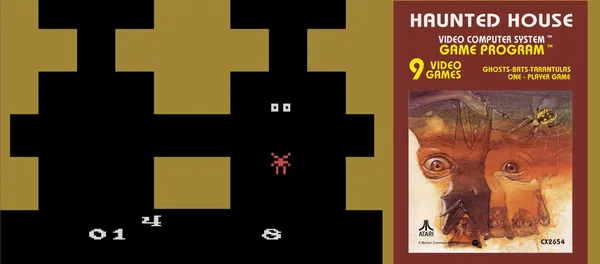
In the 20th century we had radio and television programs; a television executive at ABC could program Thursday nights as a comedy block; the television itself became the vessel for playing Video Computer System game programs in the 1970s. By the 1980s one could program their VCR to record television or even program their home computer on that same screen.
Programs have been ubiquitous your entire life. You heard them. You watched them. You played them. You may have even made them. And as broadcasting has given way to narrowcasting and analog signals have given way to digital software, programs are increasingly watching you and using that information to alter everything from prices to our perception of reality.
We have all noticed this but no one seems to know what to do about it. He have created a world where anyone can program media - including the programs themselves. While access has never been greater, literacy has never been lower. The vast majority of people haven’t been taught even the most basic principles of this new media. We are ignorantly grazing in a field filled with danger - unable to understand the warnings so many have been shouting for decades.
The Warnings
The arrival of programmable interactive media led to a frenzied
interest that crescendoed in the 1990s with the introduction of the DVD
and the world wide web. By this point, the information age had become
tangible in the everyday life of ordinary people. But people generally
engaged new media like they did television: passively. But programmeable
media is too powerful to tolerate passive consumption. Realizing this, a
group of media theorists emerged to publish the Principles
of Technorealism on March 12, 1998.The twelve original contributors were David Bennahum,
Brooke Shelby Biggs, Paulina Borsook, Marisa Bowe, Simson Garfinkel,
Steven Johnson, Douglas Rushkoff, Andrew Shapiro, David Shenk, Steve
Silberman, Mark Stahlman and Stefanie Syman. The final document was
based on the concept originated by Shapiro, Shenk and Johnson.
They opined that “in a world driven by the flow of
information, the interfaces – and the underlying code – that make
information visible are becoming enormously powerful social force,
[therefore] the creation of better tools should be an important part of
being an involved citizen. These tools affect our lives as much as laws
do, and we should subject them to a similar democratic scrutiny.” Or as
Technorealist contributor Douglas Rushkoff summed it up, program
or be programmed.
Rushkoff is not a computer programmer in any formal sense. He is a media theoretician. So while he laments the absence of ubiquitous computer programming education in US public schools, he is really talking about digital media more broadly.
On Digital Media
Digital media takes the notion of “analog programs” as we saw them on
television and turns them into flexible, programmable code. Today that
often means code that drives capital intensive recommendation algorithms
which now underpin the media ecosystem. If not as social media, then as
the innocuous Google News app that defaults on your phone. If not as the
Google News app, then as the digital newspaper that is constantly
re-configuring itself based on engagement metricsAs C.
Thi Nguyen has said, “Metrics are technology that standardize
attention.”
from social media and the hundreds of advertising
networks that fester in the ecosystem like flies on a decaying
corpse.The Technorealists proposed to guard against this form
of Surveillance Capitalism 16 years before the term was coined. Point 3
of the manifesto reads: “Government has an important role to play on the
electronic frontier […] it is foolish to say that the public has no
sovereignty over what an errant citizen or fraudulent corporation does
online. […] Technology standards and privacy issues, for example, are
too important to be entrusted to the marketplace alone. Competing
software firms have little interest in preserving the open standards
that are essential to a fully functioning interactive network. Markets
encourage innovation, but they do not necessarily insure the public
interest.”
The
225 partners of DWnoyb recently
filed a GDPR complaint against dict.cc due to their consent
agreement featuring an astounding 1,741 partners. ‘Felix Mikolasch, data
protection lawyer at noyb: “It would take days or even weeks to properly
read and understand the data protection policies of 1,741 companies. It
is ridiculous to assume that this would allow for an informed
decision.”’
by
David
Schmudde is licensed under
CC
BY-NC
4.0
The internet is truly a different type of media; digital
interactivity facilitates the same physical reach to both the
institutional power and the distributed peer. The interface to this
media is a sophisticated language colloquially known as
programming.The name programming elides its expressive
power, which is somewhere between mathematics and natural
language.
And if you do not know how to speak it, the institutional
powers will speak it for you.
Take the basic example of RSS/atom. I love RSS and use it to this
day. The premise is simple: in a diverse information ecosystem, you can
select feeds from major corporate news agencies, collectively funded
information providers, and self-funded bloggers and they all get equal
space in your reader. The feed is flexible; the sources inevitably
change from year to year as you discover new things and get tired of old
things. But this intellectual freedom comes at a cost - you must make
choices. You must create the program. The alternative is an
algorithmically defined news app that makes the program for you. And the
organization controlling that program makes tiny, seemingly innocuous
tweaks every week which can have profound consequences over time.For example, the person who added the infinite scroll
to the Facebook timeline, Aza Raskin, now
says he regrets it. It turns out that removing the “next page”
button is a great way to keep people on Facebook but not a great way to
consciously use time. Or how about the time that Amazon paid the USA
Federal Trade Commission $2.5 billion to settle a case built around what
its
own employees called the “Iliad Flow” - an Amazon Prime-cancellation
process spread across four pages and fifteen options, where every button
except one routed a user back to the start. Leaked internal documents
showed that when Amazon simplified the flow, cancellations dropped 14
percent, so the company reversed course and kept the maze.
Digital media’s flexibility, reach, subtlety, and power demands our active engagement unique to any other preceding media.
On Speaking
The ability to speak the language of programming tended to favor white males - but not exclusively and not historically. When programming was less well-compensated and less highly regarded, it was a job for women. And as Prophets of Computing demonstrates, there have been a large number of local approaches to machine programming throughout Asia and Latin America.
But the current crop of programmers - the people who by definition
control programmed media - does seem like more of a monoculture. A more
egalitarian world is possible but we will not arrive there in a
generation by putting iPads in classrooms. The Technorealists have
understood this for decades.Again from the Technorealists: “Wiring the schools will
not save them. The problems with America’s public schools – disparate
funding, social promotion, bloated class size, crumbling infrastructure,
lack of standards – have almost nothing to do with technology.
Consequently, no amount of technology will lead to the educational
revolution prophesied by President Clinton and others. The art of
teaching cannot be replicated by computers, the Net, or by ‘distance
learning.’ These tools can, of course, augment an already high-quality
educational experience. But to rely on them as any sort of panacea would
be a costly mistake.”
To the contrary, multiple studies have shown that tablets
and laptops largely detract from the learning environmentThe Laptop
and the Lecture: The Effects of Multitasking in Learning
Environments (Hembrooke & Gay, 2003); Dividing
Attention in the Classroom Reduces Exam Performance (Glass &
Kang, 2019); Examining
the impact of off-task multi-tasking with technology on real-time
classroom learning (Wood et al., 2011); Don’t
Throw Away Your Printed Books: A Meta-Analysis on the Effects of Reading
Media on Reading Comprehension (Delgato et al., 2018), etc…
and tablets are a poor tool for teaching programming;
they are designed primarily for media consumption.
LLMs are the latest consumer layer of digital media. At a minimum,
they promise to become a metamediaMarshall McLuhan coined the term “metamedia“ to
describe the relationship between form and content, especially in the
context of new technologies and new media.
of our everyday lives. Much has been written about how
LLMs will eliminate the entire field of programming - as if people will
no longer need to know how to speak for themselves. Programming will
still exist. But much will be obscured by a consumer veneer.
The language of programming is actually the language of systems. Self-trained hackers were aware of this language when they were hacking the telephone networks of the 1970s. And freshmen at MIT in the 1980s understood this after reading the Structure and Interpretation of Computer Programs. Humans build systems. And systems contribute to our view of the world that we are born into. LLMs can provide a surface-level understanding of a system but only hands-on experience can provide knowledge.
You are constrained by any system that you cannot inspect. This is
true of both designed and emergent systems such as cities, forests, and
networks. The natural sciences, including informatics,The term informatics is often used
interchangeably with computer science - where the latter
focuses on either the theory of computation or the study of the physical
computer.
produces the notation we use to describe what we know
about these systems. As long as there are systems and networks, there
will be programming.
On Mind
The physical computer is unique because it is the artificial
embodiment of a natural science. The theoretical computer has no
politics. But the physical computer is bound to the systems used to
create it.The first point from the Technorealist manifesto:
“Technologies are not neutral. A great misconception of our time is the
idea that technologies are completely free of bias – that because they
are inanimate artifacts, they don’t promote certain kinds of behaviors
over others. In truth, technologies come loaded with both intended and
unintended social, political, and economic leanings. Every tool provides
its users with a particular manner of seeing the world and specific ways
of interacting with others. It is important for each of us to consider
the biases of various technologies and to seek out those that reflect
our values and aspirations.”
And those systems have historically been large,
well-funded bureaucratic projects or globally scaled, highly-capitalized
consumer products. So the end result of decades of effort to
“democratize computing” has produced an oligarchic class of unimaginable
wealth and a consistent decade-over-decade decline in the share of any
productivity gains created by the computer.“The labor share — the percentage of economic output
that accrues to workers as compensation in exchange for their labor —
has been declining in the nonfarm business sector throughout most of the
post-World War Two era […] reaching a low of 56.0 percent in the fourth
quarter of 2011.” ~ Labor
share of output has declined since 1947 March 07, 2017
Or
take the example of newspapers. The papers were revolutionized by
productivity gains starting with the arrival of digital layout tools.
The industry employed 458,000
people in June 1990 and declined to 367,200 in December 2005 while
the revenues rose, profits remained strong, and the papers were a prized
acquisition asset. Average employee pay did not benefit from the gains
in efficiency. See also the wage
calculator to see how your work has been systematically devalued
since 1979.
So how do we fight back against these overwhelming odds? We program. Not as an offense into their territory. But as a defense of our territory - our mind.
Civilization is built on media. You cannot shelter your sons and daughters; you have already seen the impact on your friends and neighbors. It is past time to accept that in a programmable world of digital media, we can no longer blame the television executive or the media baron for their programs. We must support and participate in alternative systems. From food to computing - we must create and participate in systems that minimize cruelty as a bulwark against systems that maximize profit.
The lingua franca of these systems is software. This language is at least as important as the language you speak with your friends. Learning the language of systems - a.k.a programming - will be a mind-opening second or third language that you can use to manifest the world you want to see in everyday media.