


从“直播地球”到太空算力,国星宇航闯关港股

科技股抛售潮蔓延,韩股指跌超3%,油气、芯片板块领跌,三星一度跌5%

左右打脸!“电力不足” vs“算力过剩” ,结果都是“卖AI”
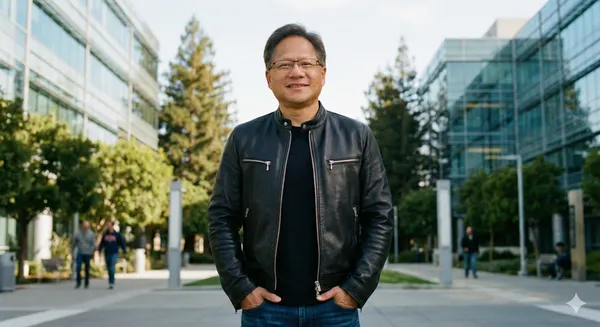
报道:Marvell千亿吞并Lumentum,事前得到黄仁勋支持

India’s Sovereign AI: 20 Models, 38,000 GPUs [2026] - https://tech-insider.org/

Artificial intelligence use doubles among rural Nebraskans - Nebraska Public Media
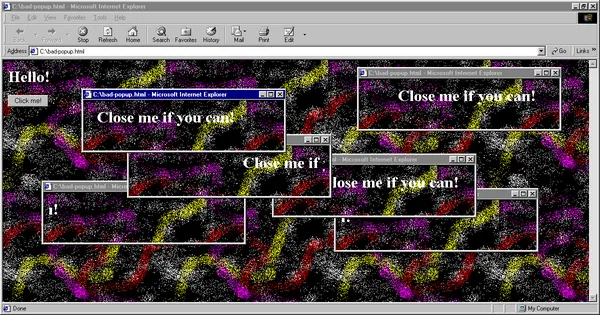
Union Types and Option Types

the lost malloc()
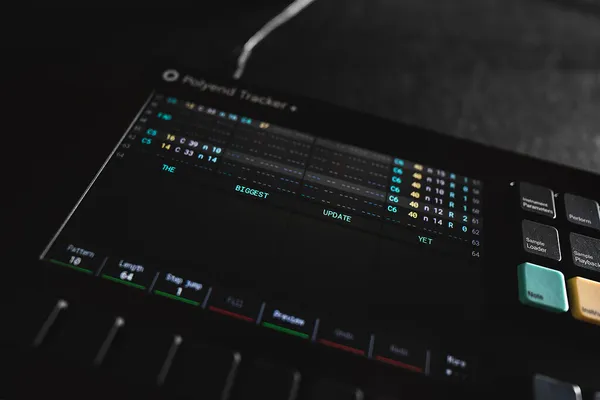

Benchmarking: Qwen 27B, 35B, QFN180B; Nemotron Bolt 74B, Flint40B & Clover 35B (Q4) on M5 Max 2026 on Kapitsa with KFlash [P]
 | hey folks, I'm Ye, one of the contributors to Kapitsa, an open-source inference engine optimized specifically for Apple Silicon to run Qwen, Nemotron, Flint and Clover models locally. Our custom-written Metal kernels let us tune for each chip and each model. https://github.com/nace-ai/kapitsa/ The latest update, 0.2.26, is out. Since our last M5 Max numbers, Flash-Next 180B reads prompts 46% faster and the 27B writes 8% faster, and DiffuSpace's Clover 35B joins the catalog. Kapitsa also runs Qwen Flash-Next 180B with SSD offloading: on a Mac that can't hold it, the experts that don't fit in RAM stream from the SSD, so it runs on a 48 GB MacBook Pro at 61 tok/s. Here are the end-to-end numbers on a 2026 MacBook Pro 16 with an M5 Max and 128 GB: six targets (dense, MoE, hybrid Mamba-2 MoE and a block-diffusion MoE), from 1K context up to 32K, against the next-fastest engine for each. Try it (any Apple Silicon Mac; models in this post: ResultsDecode is a 512-token coding answer, prefill a 4K prompt, median of 3 runs:
From 1K context all the way up to 32K. At 32K the 35B still writes 175 tok/s, and Flash-Next barely drops (90 to 78): Against the other enginesAgainst the next-fastest engine for each model on the same Mac: 1.23x Splash on the 35B, 2.2x oMLX on Bolt, 1.18x rec on Flint and 1.12x mlx-serve on the 27B. Flash-Next is a tie with mlx-serve, Splash still reads prompts faster on the two Qwens, and nothing else runs Clover on a Mac. Every cell with versions and flags: benchmarks. Raw runs: results. Why it's fast: KFlashOther engines verify the drafter's guesses as one chain and stop at the first miss. KFlash verifies a best-first tree of the drafter's candidates in the same 8-row pass and keeps the longest branch the target agrees with. Three details make it fit Apple silicon:
Send us your benchmarksRun the same test on your Mac and add it to the community results. It takes 3-15 minutes: Plug in and close heavy apps while it runs. At the end it asks once: Enter sends the result as a pull request from your GitHub fork, and One more askDo you know prior work where tree-verified sampling matches plain sampling token for token under the same seed? Please point me to it so we credit it. We cite SpecInfer, Medusa, EAGLE-2 and Sequoia. [link] [comments] |
What actually broke when I tried to fine-tune on web-scraped data and what fixed it [D]
Fine tuning on self collected web data felt straightforward until it wasn’t. Here’s what actually caused problems:
Boilerplate contamination was the silent killer. Navigation menus, cookie banners, and footer text were leaking into training examples. The model started generating weirdly structured outputs that looked like half-rendered HTML. Solved it with aggressive DOM-targeting rather than raw text extraction and switching to a rotating residential proxy layer (per-request IP rotation means target sites serve you the same rendered DOM a real browser session would get, rather than a bot-filtered skeleton) made a noticeable difference in how clean the raw HTML was before I even touched the parser.
Deduplication order mattered more than I expected. Running exact dedup before fuzzy dedup produced meaningfully different training sets than the reverse. The model’s tendency to regurgitate phrasing shifted noticeably depending on the order.
The thing I still haven’t fully solved: near-duplicate detection across different languages. MinHash works fine monolingually, but multilingual dedup keeps surfacing edge cases I don’t love.
Curious whether others have hit the same issues, especially around multilingual corpora. Also genuinely wondering if anyone has a principled approach to deciding when scraped data quality is “good enough” to stop cleaning and just train.
[link] [comments]
LightMIS: Ultra-lightweight medical image segmentation for edge devices [R]
Hi everyone,
I am one of the authors of LightMIS, and I would like to share our work on 2D binary medical image segmentation. LightMIS has 131K parameters and aggregates multi-scale encoder features directly, without a learned stage-wise decoder. It achieves close observed modality-macro Dice and IoU averages to nnWNet, while using 98.14% fewer parameters and 94.58% fewer GFLOPs, with both models trained and evaluated under the same nnU-Net protocol.
Paper: https://arxiv.org/abs/2609.28327
Code: https://github.com/AndreiiArhire/LightMIS
We also tested LightMIS and the reference models on a real edge device with an Arm Mali-G52 MC2 GPU, where the full LightMIS model ran around 10.5× faster than nnWNet. All LightMIS variants achieved 100% GPU operator coverage, without CPU fallback.
We started by training several popular medical image segmentation architectures, both lightweight and heavyweight, from scratch in the same controlled environment using nnU-Net v2.3.1. The experiments covered six datasets and five imaging modalities. Our goal was to develop a lightweight architecture that performs well across these modalities, which led us to the current version of LightMIS.
The source code, checkpoints, and details needed to reproduce the results are publicly available. Feel free to experiment with it and try it on your own segmentation tasks. I would be happy to hear how it works for you! Any suggestions or feedback are welcome!
[link] [comments]