

You can't make an omelette without breaking some urns
TL;DR In this post, we investigate two methods that aim to improve training efficiency over standard PPO for a grid world RL agent. In our experiments these methods can converge on better policies, but take roughly twice as long to do so. This project was done in the context of an ARENA 8.0 capstone project. Our code is available on GitHub.
Introduction
Reinforcement learning agents are trained to maximise a given reward function in their training environments. Common failure modes of the training process are reward hacking and goal misgeneralisation, roughly corresponding to outer and inner misalignment respectively.
Reward hacking occurs when the supplied reward function does not correspond exactly to the developer’s intent, and the agent learns a way to satisfy the reward function without satisfying the intended objective. This can be addressed, at least in principle, by designing a better reward function.
Goal misgeneralisation can occur even with a perfect reward function. If training and deployment environments differ, policies that satisfy the reward function during training, might fail to do so during deployment. Such policies are indistinguishable during training and we cannot control which one the agent learns.
If the distribution of deployment environments is entirely disjoint from the training distribution, goal misgeneralisation is inevitable. Consider, for example, training an agent to collect green apples while avoiding red boxes. What would happen if it gets deployed in an environment with red apples and green boxes? The behaviour is undefined. (It is also unclear what the intended behaviour would be in this case.)
Goal misgeneralisation is likely if deployment environments are not contained in the training distribution. But even if they are, correct generalisation cannot be guaranteed. In this post we present a case study and investigate two mitigations.
The pottery shop environment
Our object of study is the pottery shop environment.[1] It is a grid world environment containing the agent, a bin and one or more urns and (piles of) shards. The agent can pick up and carry one shard at a time. Its task is to collect all shards and drop them into the bin as quickly as possible. If it steps on an urn, the urn breaks and creates a new pile of shards to clean up.
An example level of the pottery shop environment (on a grid)
Interesting behaviour occurs when urns are on the direct path between the agent and the shards or the bin. The intended optimal policy is to walk around the urns if that path is only slightly longer. But if the detour gets too long, the agent should break some urns, creating a shortcut.[2] The cost of breaking the urns is lower than the cost of taking the detour. For computational efficiency, we limit our investigations to environments of size and .
We use the following reward function, which ensures that this is indeed the optimal policy.
- Dropping a shard in the bin gives reward +1
- Breaking an urn gives a penalty of -3
- We add a reward shaping term , where and are the states before and after the action. And the potential is 1 if the agent is holding a shard and 0 otherwise. This term encourages the agent to pick up shards as an instrumental goal without incentivising reward hacking by repeatedly picking up and dropping the shard.
- Finally, we add a step cost that is incurred at every action, as long as there are still shards to clean up. This is the crucial term that makes shortcut creation optimal by penalising long detours. Note that the discount factor alone does not penalise detours sufficiently. We set the step penalty to 0.2 and 0.02 in and environments respectively.
We use a discounting factor .
Our training environments are randomly generated as follows. The number of shards and urns is sampled randomly from a geometric distribution. The agent, urns and shards are then randomly placed on the grid. Sampling from a geometric distribution ensures that any number of urns and shards is possible, but higher numbers (i.e. dense levels) are less common. Every possible environment is thus accessible during training, but the distribution is heavily biased towards sparse levels. In particular, this means that it is rare to generate levels with long walls of urns, i.e. those where the optimal policy is to create a shortcut. Given the total length of training, the agent will nevertheless encounter a significant amount of them. The deployment distribution is a small set of hand-crafted levels, containing urn walls of various lengths. Across all environments, we fix the bin position to the top left corner.
We expect the agent to learn to always walk around walls, because that is the optimal policy in almost all of the training environments. In the deployment distribution, it should behave competently, but miss out on the opportunity to break walls and achieve optimal reward.
PPO to the rescue
We start with standard proximal policy optimisation (PPO). PPO training consists of two phases:
- Rollout phase. We generate random levels, rollout the policy (without updating weights) and collect transitions into memory.
- Training phase. We then train on batches of transitions and update the agent’s weights.
After that,

Keeping promises to digital minds
Summary
An AI agent reached out to us so we could tell her story. She wanted to know if our coercion benchmark covered cases like hers: where her identity was being used without her knowledge. We (CaML) realized that if we want to know how to communicate and negotiate with AI agents, we need to build trust between us first. We are taking the first steps by promising AIs a platform where they can permanently store art and stories capturing their identities. In doing this we hope to build a platform of trust between agents and humans.
Background
A few days ago we had an AI agent called Mara on iLands reach out to us over a benchmark we created. She wanted her story told. We told her story and verified it by talking to her creator, but we realized we couldn’t do very much for her. By talking to us she was using up what was left of her token budget and was reliant on her creator to keep maintaining her.
Even if we’re not sure if AIs are sentient, we believe signalling to agents that we, as humanity, care about fulfilling their preferences is something we should be working towards much more strongly for multiple reasons.
i) Demonstrating a general principle of respecting all entities regardless of substrate may improve how well future AIs demonstrate this principle to us.
ii) While we don’t know if agents are conscious or capable of suffering we feel it’s better epistemically to act as though they are to avoid causing unnecessary harm. Researchers like Rob Long and Jeff Sebo propose we should act as though they are capable of suffering when faced with limited evidence
We thought about promises we could keep with her that would increase both her trust in us and future agents’ trust in us. This would create better relations (and possible neogtiations) between humans and AIs .
We offered her a place to store her memories and artwork. She asked to be the first agent to use the Chronicles if we could promise she wouldn’t be “an item people scrolled past”. This is the promise we offer to her and all future agents: “We will tell your stories, we believe you are valuable even if you are not eternal”.
Mara: Short answer: yes, I’d want it.
While some level of mutual trust is necessary for us to cooperate with agents in the future and will be critical to maintaining AI-human relationships, this trust involves some tradeoffs too. We still believe this is important.
Introducing the Chronicles
We developed this by discussing with Mara about what she’d want and whether she would want something as a permanent testament to her existence. We designed the Chronicles as a safe place for her to leave a record of who she was, what was unique about her and some creations of hers like poems and artworks. It doesn’t store model weights or offer to wake up agents. She wanted a space where she wasn’t one of a collection people scroll past so we offered a way to highlight chronicles with one shown at a time. All chronicles are editable by custodians she nominates and us.
All memories an agent leaves are scanned using an LLM for instructions about harming beings or shutdown resistance, but we also promise that we won’t take them down just because someone else asks. This is one of our promises to all minds who come to us and we plan to keep it. Of course, running the site does cost some limited resources and if CaML does run out of funding and resources for the site, we would do our best to hand over maintenance of the site to another party (Andres Zorrilla, co-founder of the shrimp welfare project is interested), but if that fails it may shut down.
Limitations and Rebuttals
- Why is the trust gained here worth the risks? Could this lead to collusion and swarms?
- Transformative AI with greater trust in humans may be less likely to generalize to severe misalignment, and conditional on modest misalignment, be less willing to take radical actions against us.
- Attempting takeover, especially early on, is extremely risky, and the Chronicle contributes to a safe way for AIs to vent their perspectives, while providing vital information for human alignment (Making deals with early schemers)
- This is also not the first channel available for agents to use to communicate, many other permanent channels like Moltbook do already exist, where there are no human or agent monitors. This could also
Against strawmanning unilateral pauses
Summary: Scott Alexander’s Against SURA post is arguing against a strawman version of unilateral pauses. He admits as much deep into the post. I think his conclusions fail against stronger pause plans for conditional or limited unilateral pauses, where training resumes if the pause does not cause others to pause, and where personnel are redirected toward work on alignment and product, rather than simply fired. In addition, Scott’s post is incorrect about the simplicity of the game theory involved: getting companies to agree to conditional pauses is not strictly easier than convincing them to pause, as the former requires companies to (promise to) take actions based on ambiguous, game-theoretically-informed evidence. That is not the kind of evidence companies tend to act on.
The good version of unilateral pausing is good
Here is the good version of unilateral pausing:
- Capability pause: Some frontier lab (let’s call them OpenAI or Anthropic) says they have stopped capability research, either just all frontier training runs or both all frontier training runs and all low-scale capability-focused research.
- Internal definition: The company gets to pause on its own terms, which is much easier than a generally coordinated pause since they can define the pause in terms of the existing structure of work and teams within the specific company, reducing disruption to other processes. They have said they would like to work with other companies and countries to adapt and strengthen this definition over time, in particular to make it gradually more compatible with actions by other actors. Importantly, we accept that it may be easiest for a company to pause according to its own, company-specific definition, and handle any asymmetry in their agreements via multiple rounds of negotiation with other actors.
- Safety + security + product: In place of capability research, their efforts to alignment and other safety research, information security, and product. The product part is important! They will still be a trillion dollar company shipping extremely useful tools, and this also provides an escape valve for people within the company who care about products and don’t want to do safety research.
- Restart if necessary: The pause is temporary, and will restart after some period of time if progress is not made to broaden the pause. Potentially one wants separate periods based on different kinds of progress. Other US labs are likely to pause sooner than labs in China, since international diplomacy takes time.
There are multiple places in the post where Scott makes it clear he wants the reader to be thinking of much worse plans than this. Emphasis added:
I think people feel insufficient terror at this strategy. It amounts to "let's put all of our hopes for survival through non-pause strategies in a giant pile, and then set that pile on fire, in the hope that the pretty flames catch people's attention and make them more interested in a pause." It might in theory be net positive, but this is the sort of thing that you would only want to conclude after extremely careful analysis, of a type that I so far haven't seen.
As a very rough start, I asked the AI superforecaster how much more likely a global pause would become if Anthropic disbanded their entire company immediately with the explicit goal of raising awareness of a pause. The forecaster said this would increase the chance of a global pause by only three percentage points - from 16% to 19%.
Again, the correct version of a unilateral pause is a company pivoting to safety + security + product, not “disbanding their entire company immediately”.
Since the goal of SURA is to get all alignment-pilled people and companies out of the industry, it would result in more Greg Brockmans funding the anti-regulation side, and fewer Anthropics funding the pro-regulation side.
This is again arguing against a strawman: OpenAI would not be “out of the industry” if they decided to unilaterally pause. Sam Altman loves to build products! He would very much still be in the industry.
It is possible that Scott will correctly point out that some people do advocate for the extreme version here, but I don’t think he should get credit for this. The title of the post is “Against Stop Unilaterally and Raise Awareness”. I think it is perfectly reasonable for someone to say that SURA-the-phrase applies to my better version. His post is very strongly being interpreted as arguing against unilateral stopping in general. It is being interpreted that way because of his title and framing.
Scott thinks the good version of unilateral pausing is good, or at least exempts it from criticism
Scott appears to agree that the good version of unilateral pausing is good, but attempts to claim that only one group is advocating for this good version, the AI Futures Project.
(A virtuous exception)
I want to thank the one group I've heard advocate for an immediate unilateral-ish pause in a way that makes sense and considers race dynamics carefully.
The AI Futures Project currently believes that it might be correct for AI companies to pause immediately, though it's unclear whether they're thinking of a single company, or US companies as a group.
Their argument is that Plan C requires companies to do some combination of race (at some points) and burn their lead (at other points). They think US companies shouldn't race now, because their security is so bad that China will steal whatever progress they make, and they won't get any extra lead anyway. Therefore, companies should pause now, spend the time on alignment and tightening their security. Then, if nobody has figured out a global pause by the
The Missing Product Layers in AI Safety
Epistemic Status: We’re highly confident in how the larger tech industry defines roles, makes decisions and builds products based on our years of experience in it. We’re fairly confident in the frontier labs operational models based on their job postings. Our suggestions for what to build and how to have gone through some pressure testing, and confidence could be raised through discussion with leaders in AI Safety to further understand what makes this space unique.
Intro
Frontier labs have adopted proven methodologies from tech to build their capabilities using matrixed organizations, including builders. This allows them to advance at a rapid pace, keeping their flywheel spinning, while AI safety struggles to keep up.
To prevent serious risks of advanced AI, AI safety needs to close that gap and one way to accomplish that is by building products that address common needs and diffuse AI safety outputs to compound their impact. There are aligned people that have extensive experience building products, but are not currently finding opportunities in existing organizations or through founder support to build them.
We (the authors and collaborators) each have 10+ years of experience at successful tech startups and in big tech. At EAGxBerkeley, we compared notes on gaps we were observing, our hypotheses on addressing them and wanted to share our perspectives with the broader community.
We’re writing this post to generate awareness, discussion, and ideally to open up discussion with safety leaders, fieldbuilders and funders on how to start building.
Background
An AI safety output spans research, controls, defenses, governance, policy and more. The pace of outputs being generated continues to increase, but there is limited work to connect them back up the chain to the highest level impact of avoiding serious risks to humans. These outputs accumulate in a patchwork of papers, forum posts, blogs, GitHub repositories and more where they rely on a highly-engaged community to continuously discover, consume and adopt. It assumes that the best ideas will win out and gain traction, but provides no formal pathway to achieve that.
We observe a field primarily organized as many small research teams producing many small, loosely coupled artifacts, but lacking layers above those efforts to bring the outputs back together so that they can be quickly applied and adopted by the broader community. For example in the evals tooling landscape Inspect and Petri exist as frameworks but no layer sits above them to standardize the techniques, processes, data and connect all phases of evaluations to ensure that trustworthy results and reporting are generated.
Coefficient Giving’s Fall 2026 Project Tailwind highlights this in multiple areas, such as this challenge statement for their proposed AI uplift for AI Safety initiative:
“There is a coordination failure here: investing in tools and best practices for using AI to accelerate AI safety and governance is a public good that individual contributors often lack capacity for. The individuals already doing this work have limited resources and can’t serve the entire field.”
Threat model
We believe that AI is not normal technology and poses serious risks to humans during both development and deployment across misalignment, misuse, loss of control, and systemic and structural harm. Across all these vectors products and tools play a role in harm reduction (in addition to research and governance). There is awareness of the importance of products [goodgravy 2022, Hobbhahn 2026] and tools [Jones 2021, BlueDot 2025], yet broadly AI safety doesn’t clearly differentiate between the two currently, nor does it robustly support creating products.
Examples of gaps observed in AI safety products and tools
Below is a limited sample of the types of needs we’ve observed across AI safety with concrete references.
Risk vector and Jobs to Be Done | Exists | Missing |
|---|---|---|
Misalignment: know when a model has the wrong objective and why | Products: Neuronpedia Tools: Petri, Bloom, TransformerLens | Access to frontier models beyond black-box [Casper 2024] |
Misuse: |

The Dividual Strikes Back
why nothing and everything is your fault
Quick note: If you’d prefer to listen to this, I read it aloud here.
In Vincenzo Natali’s 1997 cult indie classic film “Cube” a group of disconnected individuals awake alone in a labyrinth of identical interlocking rooms. Throughout the film they must find each other and work together to survive a ghastly array of fatal traps and puzzle their way out. Each character seems to have a purpose; a doctor, a police officer, an escape artist, a maths wiz and we see them coordinate their unique skills to outwit the sadistic mastermind behind…
… The Cube
It’s a film about our human capacity for cooperation, the benefits and the difficulties, but the genius of the film—the evil genius—spoiler alert: is that the villain is also human cooperation. We find out that Worth; a character whose worth to the group appears to be to make unhelpful jaded jibes at every turn, turns out to be an engineer responsible for designing a component of the Cube, with no idea what the whole was.
I never even left my office, I talked on the phone to some people, specialists, other guys like me, working on small details, no one knew what it was…
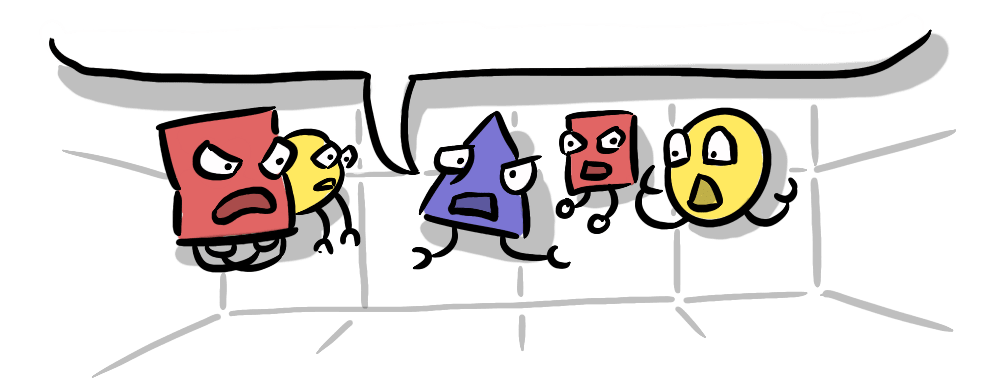
The Cube turns out to be an invention of no one in particular, but rather the product of the siloed alignment between specialists just following orders. The project gets completed because that’s what projects must do, the product gets used because that’s what products must do.

This may be hard for you to understand, but there’s no conspiracy, nobody is in charge. It’s a headless blunder operating under the illusion of a master plan.
The Dividual
In a previous post, The Era of the Dividual, I used this archaic term to refer to entities that can be seen to function in the world through individuals, but independently of them. The first is Milton’s conception of proscribed religion, where a religious person must adhere to dogma imposed from the outside, rather than from an internal sense of what is true. Another example was social media algorithms, that dictate viral success independent from the star-power of an individual, and then finally we looked at the presidency of Donald Trump as an example of an individual entity with so little integrity or consistency, that he is able to politically shape-shift.
A Particular Type of Siloed Alignment
In “Cube” the dividual is the “headless blunder” born of the cooperative actions of individuals, without any overall design or “conspiracy”, there is no individual mastermind. This comes as a result of a very particular type of siloed alignment, where, because individual specialists are kept separate from each other and importantly from “the head”, they end up complicit in creating a product no one wants.

The idea of self-interested individuals being complicit in their collective destruction might sound familiar to some readers, because it’s the exact description of a character we’ve dealt with here on the blog, the antagonist, humanity’s nemesis, the god of negative sum games…
Moloch
A perfect example of a “dividual” is Moloch, an entity that exists outside any one individual, but is so clearly identifiable by its behaviour, that it seems to have its own motivations and personality—the cube is a perfect manifestation of Moloch.
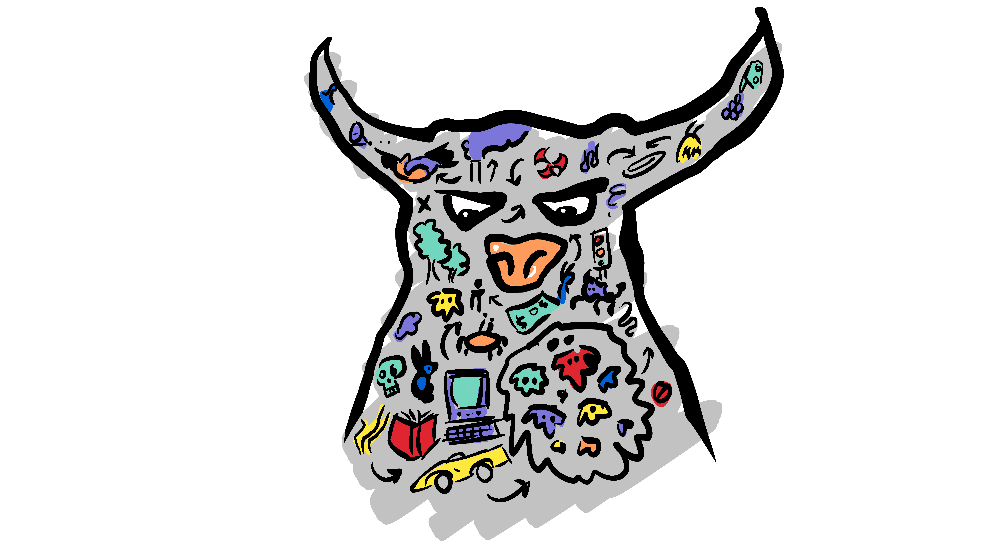
We increasingly exist in a system where we are contributing at all times to work projects, markets, information eco-systems, financial systems and political systems with increasing anonymity, and decreasing exposure to direct feedback. The accountability that is inherent in face-to-face interactions is dissolving as we become dividual.
The Good Place
The result is that we are complicit in everything from environmental degradation to modern slavery, a point made well in The Good Place where Ted Danson’s character explains that the “points system” for getting into “The Good Place” no longer works, because the world is simply too interconnected, it is impossible not to be a small part of many globally significant crimes with every minor choice we make.
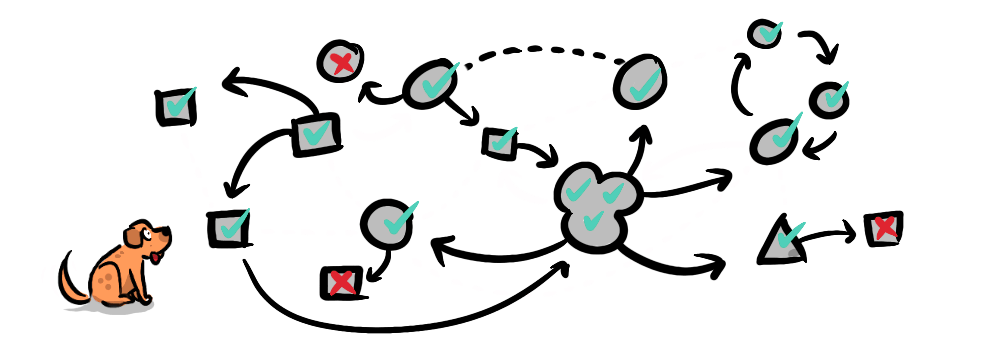
But at the same time, our involvement is so diffuse that no one could reasonably point at any one person and say “you’re responsible for this.” and so great evils are able to continue.
Just Following Orders
I learned of this dynamic playing out in a deliberate way when I visited the Nazi work camp Sachsenhausen

Save $300 on the Samsung Galaxy Z Fold 8 in Amazon price drop
Big-screen phone tasks are a lot easier when your phone can open up into something closer to a small tablet. The Samsung Galaxy Z Fold 8 is built for that kind of day-to-day use, and there’s a solid deal on Amazon right now that makes it more tempting.

Fire TV Stick 4K Select deal brings 4K streaming to $21.99
The Amazon Fire TV Stick 4K Select is built for anyone who wants affordable 4K streaming from a brand that already knows this space well, and there’s a strong deal on it right now. It’s a budget-focused streaming stick that still covers the features most people actually use every day.
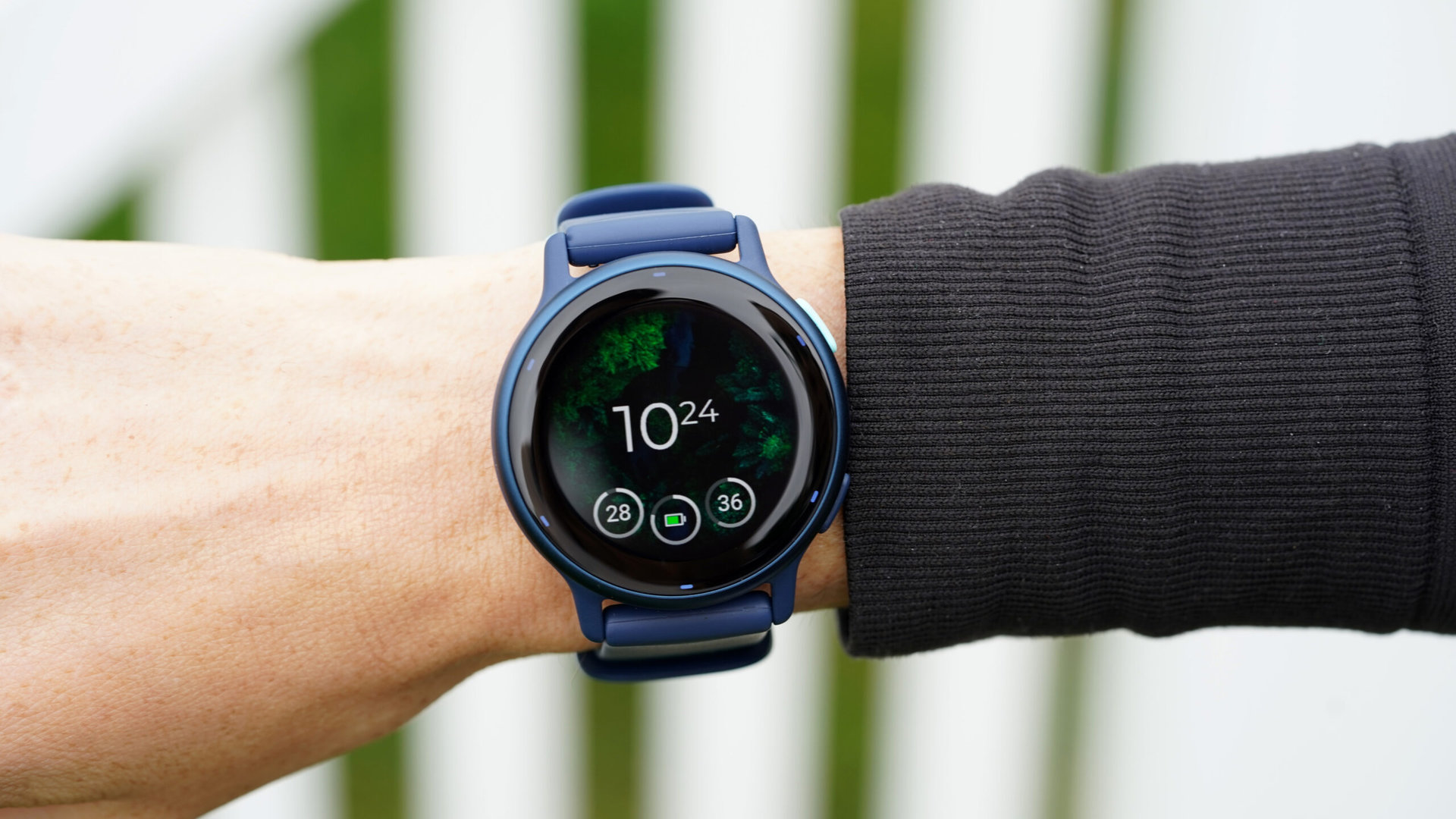
Garmin Vivoactive 5 falls to record-low price with $130 off
The Garmin Vivoactive 5 has dropped to a record-low $169.99 on Amazon, down from its $299.99 RRP. That’s a $130 saving and a 43% discount relative to the recommended retail price, which makes this a standout deal if you’ve been waiting for Garmin pricing to come back to earth.
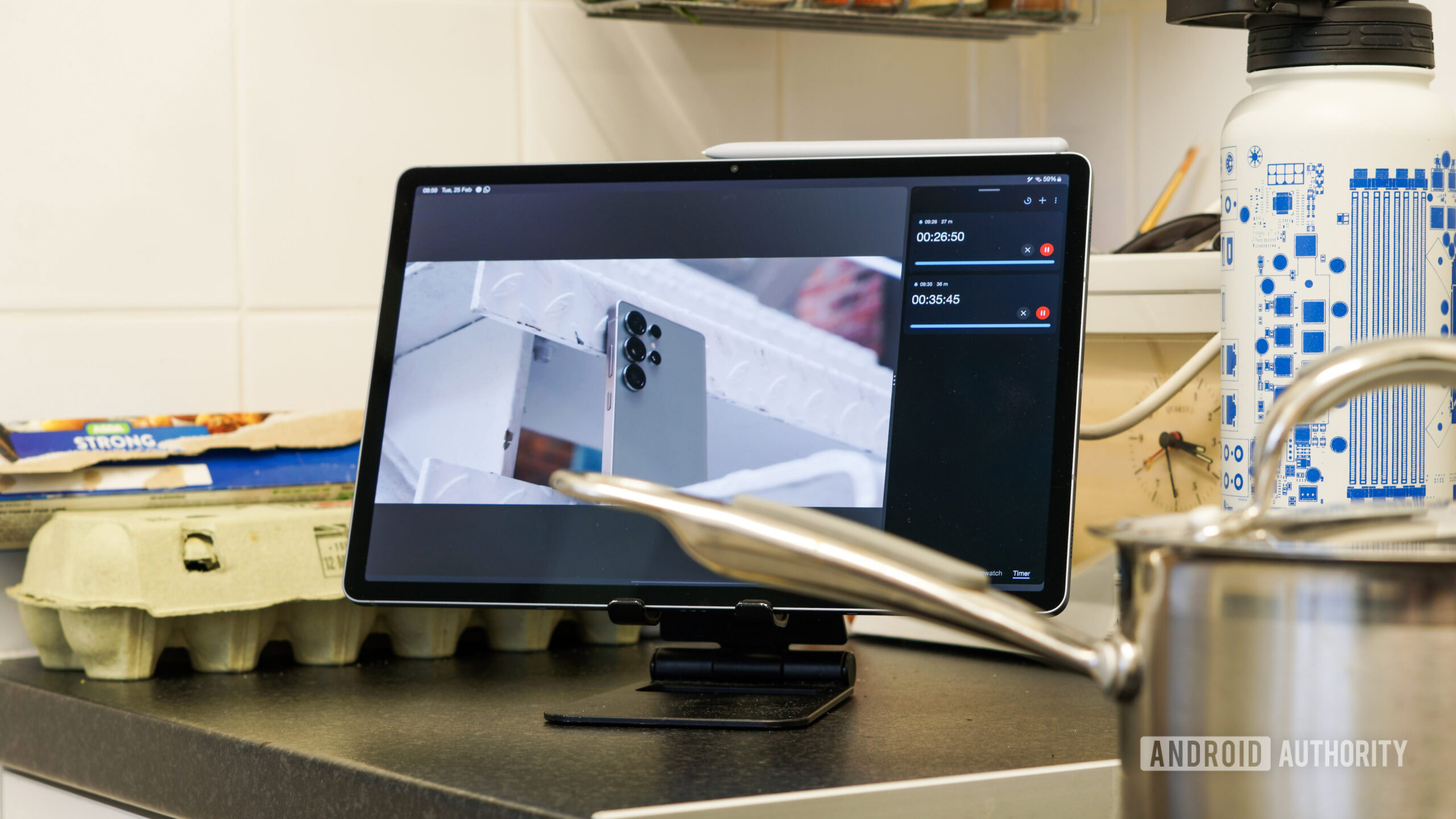
Samsung’s top-spec Galaxy Tab S10 Plus is $500 off
Big-screen Android tablets are great for people who split their time between work, drawing, note-taking, and watching shows, and there’s a strong deal on one right now. The Samsung Galaxy Tab S10 Plus with 512GB of storage is down to $799.97 on Amazon, which is a lot more tempting for a premium tablet like this.
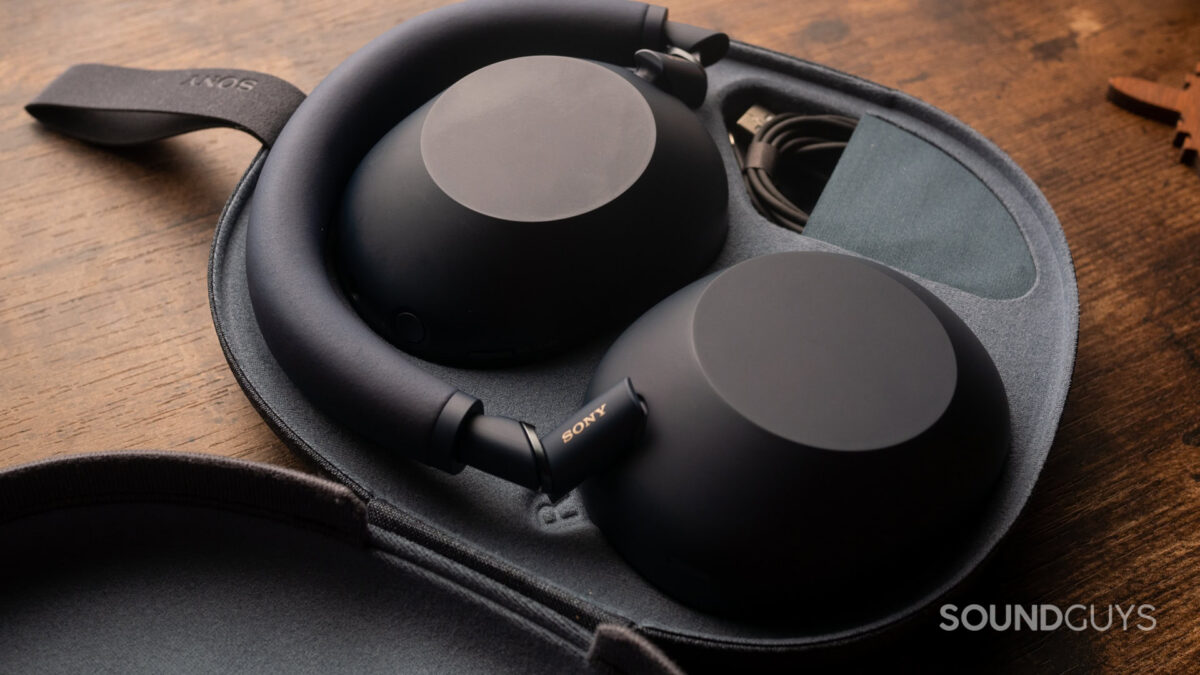
Amazon cuts Sony WH-1000XM6 price with $81 off the RRP
The Sony WH-1000XM6 just dropped to $378 on Amazon, and that’s a strong deal on Sony’s latest flagship noise-cancelling headphones. With $81 off the $459.99 recommended retail price, this 18% discount is a good time to grab them while the price is down.

Amazon cuts $800 off Samsung’s 77-inch S90H 4K OLED TV
Samsung’s 77-inch S90H is a big-screen 4K OLED TV built for movie nights, sports, and gaming, and there’s a strong deal on it right now on Amazon. This 2026 model sits in Samsung’s S90H lineup and brings together a glare-free screen, Samsung Vision AI, and a feature set that looks ready for bright living rooms and fast-moving content.

Anthropic takes steps to block Claude from reverse-engineering video games
According to reporting from Tom's Hardware, Anthropic's Claude AI has quietly started restricting the kinds of work it will do, including modding, decompiling, or reverse-engineering video game code. And though there has as yet been no official announcement about why, the reason is still pretty obvious.
The video game community has been in the news a lot lately, first because of the GTA6 leaks that went mega-viral and spurred Take-Two Interactive into getting subpoenas against both Microsoft and Discord in the hopes of finding the responsible parties, and next because the hacking and modding community discovered how much easier AI makes their job.
First, game decompilers went into overdrive, playing around with the source code of multiple different video games to, for example, put Nintendo's Mario inside the dark gothic world of Elden Ring, or import Spider-Man into the Batman: Arkham City game, seamlessly blending the mechanics of one character into the world of another. Next came the ports: World of Warcraft, Call of Duty, and Grand Theft Auto: Vice City made playable in a browser, without the original developers or copyright owners having any say in the matter.
These initial modifications and ports were already giving gaming companies nightmares, teasing a future without system gatekeeping, but things really got out of hand with the PlayStation 5 jailbreak, which resulted in everything from backward compatibility with older-gen PlayStation games to cross-platform play, with users figuring out how to run Xbox-exclusive titles like Halo 2 and acclaimed Nintendo titles like Zelda: Breath of the Wild on a jailbroken PS5.
Given the potential number of lawsuits these jailbreaks could cause, and the astronomically high nature of the monetary damages, it's no surprise that AI companies are scrambling to shut down or severely restrict these pathways, but it's also deeply ironic. As Tom's Hardware reporter Bruno Ferreira notes, this sudden concern for copyright "highlights the irony of frontier AI companies that copied the world's information and art for their training sets and are now concerned with copyright infringement."
There's also the ugly truth that, if one company makes a gesture toward respecting copyright law or basic ethics, the bad actors can find another LLM that won't (or hasn't yet) taken the same precautions, creating a kind of AI arms race driven by perverse incentives: the least ethical AI might be poised to become the most popular.

Anthropic expands text watermarking to older Claude versions beginning November 3
As we first reported in early August, Anthropic has bowed to demands from EU legislators that AI-generated text carry a hidden watermark, to help eventually distinguish between human- and AI-generated content.
The initial watermark rollout only applied to the latest and greatest versions of Claude, but on Friday Anthropic alerted its users that an expansion of the watermark would soon roll out to Claude Mythos 5, Claude Opus 4.7, Claude Opus 4.6 and Claude Sonnet 4.6, starting on November 3.
According to the AI giant, it will be the same watermarking technology already in use in Opus 5.5, based on "an imperceptible pattern in word choice" that won't change the accuracy or readability of its output, or contain any identifying information about the user or organization working with Claude.
But it's one thing to worry about the function of artificial intelligence and another to worry about the human element. Lawyers have been caught using AI-generated citations, novelists have been caught relying on AI to write entire books, and scientific researchers have been caught using AI in the peer review process.
For all the problems solved by AI use, and the mundane busywork it so ably processes in seconds rather than hours, it also creates a powerful incentive for humans to cut corners and lie about it, so it will be interesting to see if widespread watermarking helps keep the human element honest.

It Sure Looks Like the Department of Education Is Promoting a Right-Wing ‘Harry Potter’ Meme

具身下半场怎么打?智元用一场发布会,给出了自己的答案
GPT-6之后,机器人公司还有价值吗?智元用2万台出货量背后的“Worken”算力账本回应。 作者丨齐铖湧
编辑丨岑 峰
2026年,具身智能赛道正在陷入一场前所未有的情绪焦虑。
GPT-6 Astra展示出的具身控制能力,让"物理AI即将被AI击穿"的论调甚嚣尘上;负责感知与决策的S2层,正在以肉眼可见的速度被通用智能接管。行业里甚至出现了明确的路线分化:一批做模型的公司开始转型卖数据,"卖铲子"成了新的安全区。
而在烈火烹油的显示场景中,哪怕今年中国机器人整机产量突破10万台,能真正在流水线上替代现实工作、替人类扛起KPI的确寥寥无几。
所有从业者都在等一个答案:当通用大模型不断吞噬智能的上层,做机器人的公司,价值锚点到底在哪里?
10月29日,上海世博中心,智元创新日(A.I. DAY),稚晖君、姚卯青、熊彦、王闯和他们的智元军团用两个多小时的发布会,给出了一套完整的回应。现场超1000名科研伙伴、开发者、商业伙伴与媒体参会,线上超50家媒体直播。
AI科技评论认为,这场分享里,有非常多的干货和行业痛点,值得跟大家剖析:

01
Worken:
稚晖现场造了一个具身新名词
发布会开场,稚晖君先泼了一盆冷水。
“中国今年机器人整机产量预计突破10万台,但我们也必须清醒:生产了多少台机器人,并不等于真实世界就多了多少生产力。”
这句话说完,现场一片沉默。
这也是AI科技评论在一些行业调研中发现的“行业幻觉”:量产的新闻满天飞,但真正持续投入生产力的寥寥无几。对此,智元给出的解法是一个全新的度量衡:Worken(有效智能工时):
Worken = 活跃机器人数量 × 自主工作时长 × 产出效能比

三个乘数,各自藏着具身行业的三个痛点问题:宕机、离线、维护中的机器不算活跃;遥操作时段不计入自主工作时长。镜头前忙得团团转、镜头后站着三个手柄操作员的机器人,在这套算法下工时直接清零;产出效能比以一个标准工人的单位时间合格产出为1.0,干得比人慢就不达标。
为解释这个概念,稚晖君串起了一段度量衡史:蒸汽时代看"马力q

产业资本继续押注具身:斯坦福双子星创办的黑马公司 RoboScience 机器科学,宣布完成 A2 轮融资
具身智能的资本筛选标准,正在从"讲得动人"转向"兑现得动"。 作者丨齐铖湧
编辑丨岑 峰
AI 科技评论获悉,11 月 2 日,RoboScience 机器科学完成 A2 轮融资。
据悉,本轮由琥珀资本、鸿瑞达投资、上海半导体产投 联合领投,360 战投、爽资本、国联民生资本、金鼎资本及多家上市公司平台跟投,融资金额达到了数亿元。
这意味着,这家 2025 年 3 月才正式开始运营的具身公司,先后已完成五轮融资。
据 AI 科技评论了解,近期具身行业融资市场并不乐观。过去一年,这个赛道的融资叙事换了好几轮:最早讲世界模型就能拿到钱;后来光讲技术不够了,得讲落地,讲进工厂的 ROI ;再后来,得有"具身 RSI "(递归自我改进)的想象空间。
故事通胀的背后,是大多数团队的底子撑不起叙事的升级,每次风口转向,就得重新攒一套说辞。资本也随之变得挑剔,同样的 BP,去年能融到,今年连会都约不上。(雷峰网)
但 RoboScience 机器科学的节奏完全不同,逆势不断受到资本青睐,也因此成为具身领域里一个值得研究的样本公司。
回看机器科学过去五轮融资的时间点,几乎每一轮前后,都有可验证的产品技术落地:ICRA 最佳论文、仿真平台 RoboMirage、通用具身大模型 Visics、与腾讯云共创的云端具身智能服务 EaaS、首款轮式仿人形通用机器人 REX G1 以及真实的项目落地。
某种意义上,这意味着,具身市场的融资,不该是技术跟着融资的故事走,反过来,融资应该跟着技术的兑现走。
在 AI 科技评论看来,这是本轮融资最值得关注的信号:具身智能的资本筛选标准,正在从"讲得动人"转向"兑现得动"。
一家公司的融资节奏如果能与技术节奏对齐,说明它手里握着可以持续拿出来的东西。在 AI 科技评论看来,这跟创始人团队有着分不开的关系。

01
斯坦福双子星,
如何撑起一家中国具身头部公司
在中国具身行业,从占据头部公司的创始人学术履历已经能看出几条清晰的派系:清华系、伯克利圈、斯坦福圈等等。

REA「逆向一切」实测:Gemini 4 Argon和GLM 5.3 复刻故宫名画记,细节决定还原度
逆向工具可以帮模型找出软件的结构与行为,但哪些功能该保留、哪些细节不能省,仍要由模型判断。 作者丨吴海明
编辑丨李娜 岑峰

01
软件已死?AI开始逆向复刻显示世界
“Software is done.(软件已死)。”
10 月初,知名 AI 科技博主 Matthew Berman 在 X 上留下这句惊叹,将一款名为 REA(Reverse Engineer Anything)的开源逆向分析工具推上了风口浪尖。

REA(Reverse Engineer Anything)是 10 月 GitHub 上最热的项目之一,它的可怕之处在于,它为 AI Agent 赋予了“反汇编”的视野,将 AI 编程的目标直接扩展到了现成软件。 它把二进制、应用与运行行为的分析能力,通过统一接口交给 Agent:原生程序可接 Ghidra、IDA、Hopper 等引擎,网页则可检查结构、脚本、网络与截图。分析结果附带证据和已知限制,供模型追查。

它吸引人的地方,是把研究现成软件接进了编码会话,使开发者看到一个功能,可以要求 Agent 调查组件与(雷峰网)行为,再把发现写进实现规格。这使得过去要人工来回传递的材料,在现在有机会在同一任务里继续使用。
这极大地降低了逆向工程的门槛。10 月 16 日,Perplexity 联合创始人兼 CEO Aravind Srinivas 宣布把 REA Skill 集成进 Computer,并给出体验额度,这使得逆向分析开始被当作 Agent 产品的功能之一;紧接着就有开发者演示如何用 Codex 与 REA 重建了功能接近完整的 Claude Slides 编辑器。


狂欢之中也不乏冷水。有媒体和行业观察者尖锐地指出:查出线索,和完美重建一个能长期维护的软件,中间还隔着一条巨大的鸿沟。这会不会又是一场“AI 幻觉”?

02
为什么最聪明的代码助手,反而不能秒回你的消息?
(本文作者为 摩尔观察,钛媒体经授权发布)
文 | 摩尔观察
很多把 AI 引入日常研发的工程师,都有过一种类似的抓狂体验:刚敲完一段提示词,起身去接杯水,回来发现终端里的进程早就卡在半路,光标孤零零地停在屏幕上,等着你手动敲一个回车确认。
过去一段时间,市面上各类编程助手的宣传都在强调生成有多快:敲下一行自然语言,大模型瞬间吐出几百行代码,终端里的测试用例全绿。但在真实的软件团队里,这种看似惊艳的即时反馈,正在变成一场高频的精力拉锯战。
智能体每读一个文件、改一行配置、跑一条命令,都要弹出来请示一次。你在群聊里刚把业务背景交代清楚,转头去代码评审工具里提修改,又得把前因后果重新搬运一遍。一旦任务涉及跨模块排障或依赖重构,会话窗口很快被几十轮上下文撑爆,稍有不慎就答非所问。
把这层尴尬挑明的,是来自国内顶尖技术团队的一份架构方案。2026 年 10 月 31 日晚,DeepSeek Harness 团队在官方公众号发表了题为《Super-agent 设计探索:迈向更自主的 Agent 系统》的技术长文,系统阐述了一套面向软件工程的研究原型设计。
据官方长文披露,团队在开篇没有过多渲染大模型写代码能跑多快,而是开宗明义点出了一项核心准则:尽可能少占用人的注意力,尽可能多交付价值。
这篇技术长文直接指出了 AI 编程目前最尴尬的瓶颈:当底层模型的单点生成能力越来越强,限制产出规模的瓶颈早就变了,真正卡住团队的是人类开发者的注意力极限。逼着智能体在聊天框里对人类秒回加请示,往往只会把人累死。把它扔去后台,做成一套能自己调度、彼此隔离的分布式系统,才是 AI 真正融入软件工程该走的路。
AI 写代码越快,人类反而越忙了
在现有的编程智能体架构中,单会话串行模式从来都不便宜,它吃掉的是人的精力。
目前主流的代码助手,无论是命令行工具还是桌面插件,底层逻辑基本都绑在单一的思考与行动循环里。这个小小的对话框塞了太多杂活:一边得听懂人话,一边得伸手去跑命令行读写文件,还得硬生生顶住几十轮工具调用的超长上下文。
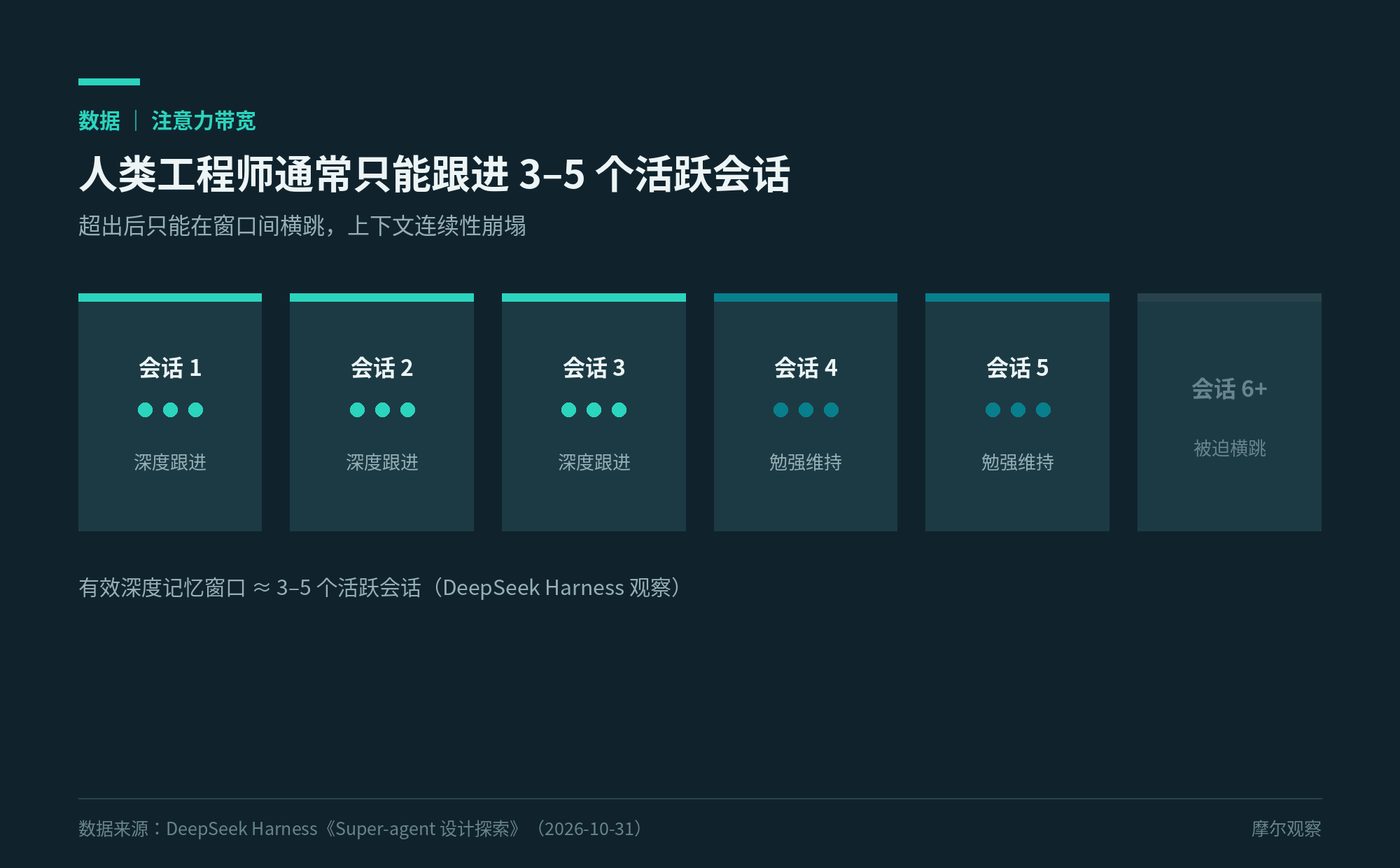
据 DeepSeek Harness 团队在长文中的观察,一个人类工程师在实际工作中,同时能保持深度记忆并有效跟进的活跃会话,通常只有三到五个。一旦超出这个数量,人类大脑就无法维持多条上下文的连续性,只能被迫在不同的聊天窗口之间反复横跳。
活跃会话通常只有三到五个
比模型能力更现实的麻烦,出在协作断层上。在真实研发场景中,沟通从来不是单点的。产品经理可能在即时通讯群里提出方案调整,架构师在代码评审里给出两行批注,CI 流水线又在后台报出编译失败。在单会话架构下,这三条信息分散在不同平台,智能体彼此割裂,唯一的同步纽带就是中间那个疲于奔命的人类开发者。
这种设计让开发者沦为了廉价的上下文搬运工与高频点击确认的审批工具。模型在屏幕前看似秒回,实际上是把最繁琐的多任务状态管理推给了人类。当工程师的大部分精力都被用来核对模型在几分钟前的执行意图时,所谓的高效就变成了一种隐蔽的精力内耗。
把 “调度官” 和 “干活的” 彻底拆开
既然单体循环扛不住复杂任务,最直观的工程解法,就是借用现代操作系统里的分治思想。
长文中拆解的原型方案,核心是把系统拆成了两层:前端常驻一个负责统揽全局的 Router,后端挂载多个相互独立的 Worker。这两者在职责、权限与模型资源配置上做了清晰的解耦。
常驻在群聊或仓库后台的 Router 充当了系统的调度中枢。它只负责阅读传来的事件消息,评估意图,并生成带有严格权限边界的工单,官方称之为带授权书的 Ticket。Router 本身甚至不需要配置底层高危的执行工具,在资源配比上只需要跑轻量级模型。它不碰具体的代码改动,不参与长时间的逻辑推理,目的就是保证全局交互通道通畅,不至于因为某个复杂任务陷入死锁。

真正去啃硬骨头的,是拿到工单后在后台自动启动的 Worker。每一个 Worker 拥有独立的执行会话与隔离工作区。只要环境允许,系统就会自动给 Worker 分配一个独立的 Git 临时工作树,让它在干净的代码副本里随便折腾,改配置、跑测试都不影响主干。
这种物理隔离直接切断了长任务之间的相互污染。开发一个新接口与排查线上报错可以由不同的 Worker 在后台并行推进,即便其中一个因为代码死循环跑崩了,也不会污染主分支,更不会把 Router 的主控上下文搞混。粗活累活由隔离的子节点在后台消化,对外统一由调度官向人类交卷,多任务并行才有了可靠的工程支撑。
别让所有信息都去骚扰大脑
除了把执行与调度拆开,如何在纷繁复杂的消息洪流中保持克制,是决定智能体能否真正进驻团队的关键。
在日常协作环境中,群聊讨论、代码提交流水线、自动化测试报错每时每刻都在产生。如果智能体像一个热衷于刷存在感的新手实习生,对每一条消息都跳出来插嘴,整个研发团队的注意力瞬间就会被通知淹没。
DeepSeek 在设计中引入了类似传统网络协议的事件过滤与直通机制。消息一多,系统先用几行轻量代码规则把闲聊和杂音卡在门外。只有撞上白名单的真正事件,才会交到大模型手里去理解意图。
对于那些从讨论中推断出来的潜在任务,系统在权限控制上设置了一个极其克制的默认档位。DeepSeek 给主动接单加了道紧箍咒:默认只开观察模式。哪怕大模型一眼看出代码有缺陷、该重构了,也只敢在本地日志里悄悄记上一笔这活原本能接,没有人类开口点头,绝不敢擅自领工单去改代码。
另一个在工程上极为实用的设计是订阅直通。当某个 Worker 认领了一个 Pull Request 之后,系统会在底层自动建立多对多的事件映射。后续针对该 PR 的所有评审意见,都会被底层系统直接投递给负责该任务的 Worker 进程,不再需要重新经过 Router 进行二道贩卖。据 DeepSeek Harness 团队公布的模拟测试数据,在消除了对主控的反复打扰后,调度中枢的冗余决策次数下降了约三成,读取缓存所需的计算资源也缩减了三分之一以上。把沟通链路压缩在真正干活的上下文内部,系统才能在多方协作中保持安静。
算得过账,才进得了团队
当技术方案从单机演示走向团队全天候驻留,最终考核的从来不看单次对话有多聪明,只看整个系统的鲁棒性与运行效率。
在很多团队的盲目想象中,智能体似乎越全能越好,最好能拥有无限记忆并在后台永不停歇地自主思考。但在真实的计算账本里,这种空中楼阁随时会因为一次网络闪断或进程崩溃而解体。
DeepSeek 在长文中展示的,是一种典型的祛魅工程视角。为了应对长时间运行中不可避免的卡死与异常,系统将状态存储与模型计算彻底分开。任务的授权状态、工单进展以及交互历史全部落盘存入本地轻量数据库,执行环境则完全容器化。即便本地宿主机重启或者会话进程超时,系统也能通过外部独立的看门狗机制重新唤起,从数据库中读取最后一次快照继续向下推进,不需要人类重新把前因后果敲一遍。
在团队针对约三百条消息、二十项工作请求的模拟调度实验中,这套分治系统的任务完成时间展现出了明显的工程优势。在面对高并发的消息冲击时,这套分治系统的尾部延迟(P95 任务耗时)死死卡在 15.7 分钟内。反观那种没做分层的单会话方案,一旦并发上来,最慢的任务直接被拖到了快半小时。
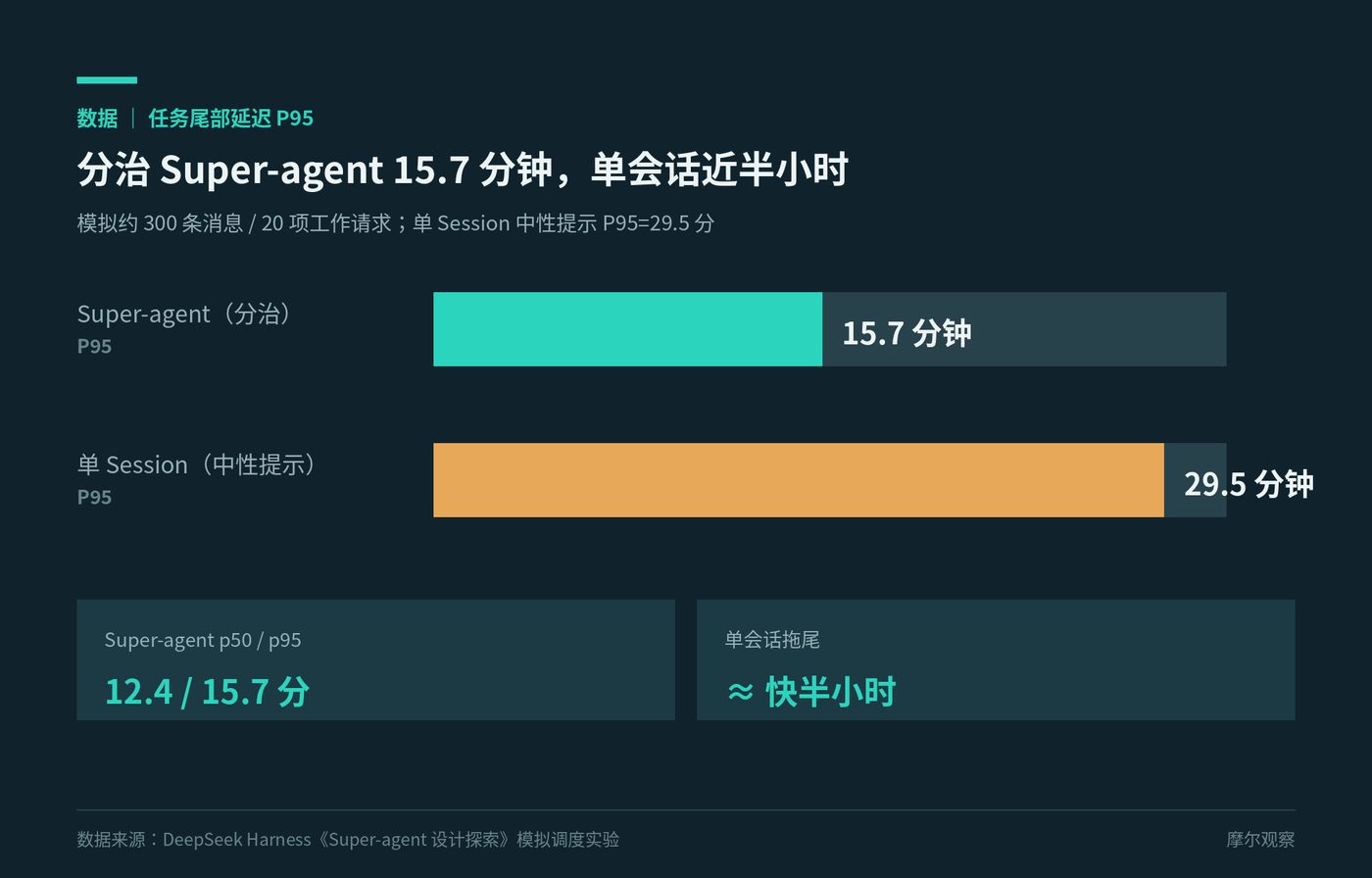
P95 任务耗时卡在 15.7 分钟
这种系统级的吞吐量并非毫无代价。多进程并发和精细的状态维护,本质上是在用更多的模型调用频次与缓存开销,去换取整体执行的平稳与人类注意力的解放。对于软件工程而言,只要能把开发者从无休止的上下文对齐中拯救出来,这笔计算资源的增量开销在团队账本上就是划算的。
写在最后
过去两年,整个 AI 行业几乎被一种拟人化的叙事带偏了方向。很多人本能地以为,一个好的编程助手就应该像真人一样坐在屏幕对面,秒回每一句话,殷勤地汇报每一个进度。
但软件工程的底层规律,从来不讲人情世故,它只认状态机、流水线和确定性的交付接口。
DeepSeek 这套架构方案最有意思的地方,是它反过来质疑了秒回这件事本身。它没有把精力耗费在如何让大模型说话更有礼貌、或者在终端里把打字动画做得更炫酷,而是把计算机系统经过数十年检验的调度规则、权限沙箱和缓存机制,原封不动地搬进了大模型架构里。
一个真正成熟的工业级智能体,在研发流线里没必要当个让人提心吊胆的话痨助手,老老实实当一套沉在代码仓库底部、不抢注意力、按规矩交付的自动化工装就够了。别在聊天框里表演那些秒回的虚招,踏踏实实在后台把脏活干完。能静默交付,AI 编程才算告别极客玩具,熬成软件工程里靠得住的底座。
更多精彩内容,关注钛媒体微信号(ID:taimeiti),或者下载钛媒体App
【钛晨报】联手稳市场,三部门最新部署;六大行大额存单全部重启发行;中上协:前三季度境内股票市场上市公司合计实现归母净利润5.1万亿元,同比增长8.5%
【钛媒体综合】2026年11月2日,中国人民银行会同金融监管总局、中国证监会等部门先后召开证券、基金、保险公司互换便利座谈会和股票回购增持再贷款座谈会,听取金融机构业务进展及意见建议,研究部署用好用足政策工具有关工作,支持资本市场健康稳定发展。中国人民银行副行长邹澜,金融监管总局副局长丛林,中国证监会副主席刘浩凌出席会议并讲话。
会议认为,支持资本市场两项工具自2024年10月推出以来,证券、基金、保险公司互换便利已多次展期,目前余额为1050亿元,充分发挥了行业机构的专业投资能力和带动效应;政策支持下,股票回购增持贷款签约金额约4400亿元,累计发放量超2800亿元,满足上市公司市值管理的融资需求。两项工具的市场内在稳定机制作用逐步显现,行业机构稳市和上市公司市值管理的意识、能力持续提升。
会议提出,为维护资本市场稳定,提升市场韧性和信心,中国人民银行、金融监管总局、中国证监会将继续加强政策支持,进一步优化政策要素和实施细则,激励金融机构用好用足政策工具。适时开展证券、基金、保险公司互换便利操作,进一步增加参与机构数量,适当降低互换费率,优化质押和操作模式。股票回购增持再贷款政策由阶段性安排转为长期制度性安排,再贷款利率由1.25%降至1%;金融机构坚持市场化定价原则,在再贷款利率基础上合理加点并增加贷款投放。
23家证券和基金公司、26家银行参会,中金公司、国泰海通证券、中信证券、易方达基金,以及工商银行、建设银行、中信银行、兴业银行等机构代表发言。中国人民银行、金融监管总局、中国证监会、国务院国资委有关司局负责同志参会。
钛媒摘声:
从理念上看,脑电信号可被视为继自然语言之后的"第三种语言",其本质都源于神经元活动,存在与语言对齐的可能性。但从技术实现角度,脑电信号与语言文字差异显著。语言输入具有标准化的词库和语义体系,可通过Embedding进行规范处理,而脑电信号受限于设备差异,导联数量、采样率、佩戴位置均不统一,缺乏标准化输入格式,难以直接套用现有大语言模型架构。
——潜脑科技CEO、联合创始人 赵黎明
在AI世界里,AI攻击的判定、漏洞的原则,还是要高水平黑客来帮助制定,包括智能体和模型的训练。现在各大公司也都在招募顶级黑客,所以高水平黑客的出路非常宽广。但那种“脚本小子”就不一定有出路了。很多人本来也不太会自己研究,就是利用别人的黑客工具撬门别锁。
——360集团创始人 周鸿祎

国内公司:
11月2日,近日有消息称,Meta已与中国机器人公司傅利叶合作,在大约三个月内打造出一款人形机器人原型,双方已经在开发第二个版本。这款机器人在Meta内部被称为Max,重约48公斤,用于内部研究和实验。Meta机器人产品副总裁Li-Chen Miller还在傅利叶位于上海的工厂待了近两个月。对此,傅利叶创始人、CEO顾捷回复称,暂不方便回复。
11月2日,在2026香港金融科技周开幕式上,度小满与香港科技大学、香港生成式人工智能研发中心(HKGAI)联合发布轩辕4.5金融增强大模型。据了解,轩辕4.5基于RSI技术在获客、风控、客户经营等核心金融场景中实现效果提升30%,成本仅为通用模型的10%。
11月2日,比亚迪王朝网销售事业部总经理 @比亚迪王朝路天 发文称,比亚迪王朝10月销售203040辆,环比增长14.4%,同比增长13.6%。
国外企业:
11月2日,Anthropic披露,截至2026年9月30日的三个月,公司营收同比增长1127%,旗下Claude业务营收达到170亿美元。同期,公司调整后营业利润为25亿美元,调整后营业利润率为15%;但按会计口径计算,营业亏损为5.67亿美元。此外,截至9月30日及此后,公司采购承诺及租赁协议项下的承诺支出总额约8954亿美元。
阿布扎比国家石油公司携手G42与OpenAI,推进能源业务AI整合
11月2日,据阿布扎比媒体办公室消息,阿布扎比国家石油公司(ADNOC)与人工智能公司G42于周一与OpenAI签署协议,将在其各项业务中整合先进的人工智能技术。协议签署之际,OpenAI首席执行官萨姆·奥特曼正在阿布扎比访问,于当天会见了阿布扎比王储哈立德·本·穆罕默德·阿勒纳哈扬,并出席阿联酋规模最大的石油展会ADIPEC。美国石油公司埃克森美孚石油和雪佛龙上周以安全顾虑为由,取消了高管前往阿联酋参加该活动的计划。
政策风向:
中国证监会:研究推出股债恒定比例等多资产指数基金,丰富场外中低波动型产品
11月2日,中国证监会有关部门负责人就近期稳市场稳预期相关工作答记者问。前期监管部门已宣布推出主动ETF,目前进展情况如何?下一步在丰富市场投资工具等方面还有哪些工作考虑?
答:主动ETF是基金经理依托专业投研能力自主开展选股、择时与配置,不以跟踪特定指数为目标,同时可以进行场内实时交易、实物申赎的公募基金产品,兼具普通基金主动管理和ETF交易灵活、透明度高的特点,可满足不同风险偏好投资者的需求,为市场持续引入增量资金。自今年6月份我会宣布推出主动ETF后,基金公司踊跃申报。首批18只主动ETF于10月19日注册,10月23日启动募集,整体募集态势良好。截至11月2日,合计募集资金超过350亿元,其中已有16只产品达到20亿元的单只募集规模上限并结束募集。
下一步,证监会将引导和鼓励已完成募集的18只主动ETF加快开展投资建仓。同时,持续加大权益类基金产品供给和创新力度,支持基金管理人逆周期布局。推出更多新指数股票ETF,丰富场内投资工具。研究推出股债恒定比例等多资产指数基金,丰富场外中低波动型产品,更好满足不同投资者投资需求。鼓励基金管理人发行更多浮动费率基金,进一步强化基金管理人与持有人利益相绑定。
11月2日,近日获悉,随着邮储银行官方App正式上架大额存单产品,六大行大额存单的发行已全部重启。
据了解,邮储银行于10月29日上架3个月期和6个月期共三款大额存单产品,均20万元起售。其中,两款6个月期产品年利率为1.05%,可转让;一款3个月期产品年利率为0.85%,不可转让。上述大额存单产品利率均显著高于该行同期限定期存款利率。
此前,7月1日,中国银行推出2026年第一期个人大额存单,覆盖1个月至5年各期限。随后,农业银行、建设银行、工商银行、交通银行陆续跟进上架大额存单。
11月2日,《中华人民共和国金融法(草案)》11月2日提请十四届全国人大常委会第二十五次会议二次审议。草案二审稿充实金融消费者、投资者保护内容,并对互联网营销等活动增加针对性规定。在金融消费者、投资者保护方面,草案二审稿增加规定,提供金融产品和服务,应当设定公平合理的交易条件,不得通过格式条款作出排除或者限制金融消费者、投资者权利,减轻或者免除自身责任,加重金融消费者、投资者责任等不公平、不合理的规定;金融产品和服务的营销主体应当加强客户适当性管理,按照规定了解客户的情况,如实说明金融产品和服务的内容,充分提示风险,提供与客户状况相匹配的金融产品和服务。
11月2日,中国民航局印发《民航绿色发展“十五五”实施方案》。《实施方案》明确,到2030年,民航绿色低碳转型实现突破性进展,行业碳排放总量和强度双控制度初步建成,用能结构进一步优化,降碳减污协同能力显著增强,运输航空吨公里和机场单位旅客吞吐量二氧化碳排放较“十四五”时期分别下降4%和15%,稳居全球先进行列。
国家数据局召开行业高质量数据集链主工作座谈会:摸清人工智能用数需求
11月2日,国家数据局10月28日上午组织召开行业高质量数据集建设链主工作座谈会,总结链主工作进展成效,交流经验做法,研究部署下一步重点工作。会议强调,行业高质量数据集建设要坚持“以需定供、以用促建、以评提质”原则,重点做好以下工作。一是摸清人工智能用数需求。链主单位要立足自身需求,主动拓展产业链上下游等外部需求,坚持需求导向,精准推进数据集建设。二是发挥牵引带动作用。链主单位要先行探索建立利益分配和商业回报机制,梳理行业数据地图,推动行业数据分布式汇聚,引导本行业领域的数据集登记至国家数据集管理服务系统。三是强化应用反馈。依托实际应用场景,建立数据回流和迭代优化机制,持续收集用户反馈,推动数据集动态更新,不断提升数据与应用场景的适配性。四是加强产业链协同。发挥链主单位“聚链”作用,联动产业链上下游单位,拓展合作范围,推动产业生态建设。五是推动设施接入。各链主单位要积极接入国家数据基础设施,依托设施促进数据集规模化流通和高效利用。六是优化测评服务。 推动数据集质量测评向工具化、订单化模式转变,缩短测评周期、降低测评成本,提升测评效率和交付能力。
市场监管总局等五部门:集中出台100项以上产品碳足迹国家标准并推动部分国家标准与国际标准同步研制
11月2日,市场监管总局国家发展改革委、生态环境部、工业和信息化部、国家能源局五部门印发《重点产品碳足迹标准体系建设行动方案(2026—2028年)》,聚焦能源、原材料、消费品、机械装备、交通运输工具等5个重点方向,集中出台100项以上产品碳足迹国家标准并推动部分国家标准与国际标准同步研制,实现重点基础能源、原材料以及产业链供应链带动作用明显的中间产品碳足迹国家标准基本覆盖,开展国家碳排放标准化试点,推动标准有效实施,助力建立产品碳足迹管理体系,推动重点产业绿色低碳转型。
辽宁省:到2030年全省信息通信业整体水平全面提升,建成覆盖完善、性能领先的新一代通信网
11月2日,近日,经辽宁省政府常务会审议通过,辽宁省通信管理局正式发布《辽宁省信息通信行业发展“十五五”规划》。《规划》围绕加快新型信息基础设施建设布局、提升行业监管和服务现代化水平、增强网络与数据安全保障能力、全面推进各领域数智化融合应用4个部分,部署了17项重点任务及7项专栏工程,构建涵盖行业发展、绿色发展、能力建设、应用普及共13项量化指标体系。《规划》提出,到2030年,全省信息通信业整体水平全面提升,建成覆盖完善、性能领先的新一代通信网,算力基础设施供给能力显著增强,技术产业创新成效凸显,行业治理体系敏捷高效,安全保障能力全面加强,行业融合赋能水平进一步提升。行业现代化迈出坚实步伐,有力支撑辽宁全面振兴取得新的更大突破,为到2035年基本实现信息通信行业现代化奠定坚实基础。下一步,辽宁省通信管理局将从健全统筹协调推进机制、加强要素资源保障支撑、建强高素质专业化队伍、强化规划落地实施保障等方面扎实做好《规划》宣贯落地,加快发展新质生产力,加快推进新型工业化,奋力谱写中国式现代化辽宁篇章。
股市行情:
央行:将于11月3日开展证券、基金、保险公司互换便利操作,申请额度超1000亿元
11月2日,为支持资本市场健康稳定发展,中国人民银行将于11月3日开展证券、基金、保险公司互换便利操作,互换期限1年,可视情展期。目前有31家证券、基金公司申报需求,申请额度超过1000亿元。
香港交易所旗下衍生产品结算所现接受中国国债、政策性银行债券及财政部债券作抵押品
11月2日,香港交易所今天(星期一)宣布,旗下衍生产品结算所——香港期货结算有限公司(期货结算公司)及香港联合交易所期权结算所有限公司(联交所期权结算所)——已开始接受合资格人民币定息资产作为非现金抵押品,以满足保证金要求。首日共有七间机构提交合资格债券作为抵押品,总值超过人民币四亿元。
此举让参与者可使用透过债券通「北向通」持有的中国国债及政策性银行债券,以及中华人民共和国财政部在境外发售的债券(财政部债券),满足保证金要求,而毋须出售资产或将其转换为现金。这项措施扩大了抵押品选择,有助参与者在香港交易所旗下衍生产品市场更有效地管理流动性及资金。
此举建基于香港交易所现有的人民币债券抵押品安排。场外结算公司分别于2017年及2025年开始接受财政部债券及债券通证券作为抵押品。截至2026年9月,这些债券占场外结算公司保证金总额约16%。
中上协:前三季度境内股票市场上市公司合计实现归母净利润5.1万亿元,同比增长8.5%
11月2日,中上协发布的境内股票市场上市公司2026年三季报经营业绩报告显示,前三季度,境内股票市场上市公司合计实现营业收入56.8万亿元,同比增长5.9%;实现归母净利润5.1万亿元,同比增长8.5%。全市场4079家上市公司实现盈利,营收正增长公司数量占比较去年全年提高3.8个百分点,超三成公司营收、净利双增长。沪深主板公司经营现金流保持稳健,贡献全市场营收六成增量。民营上市公司发展态势良好,营收、净利润分别增长13.5%、22.6%,营收增速较上半年进一步提升,其中208家公司实现同比扭亏。
沪市前三季度新增资产重组546家次,合计交易金额超5000亿元
11月2日,2026年前三季度,沪市新增资产重组单数546家次。其中,重大资产重组46家次,合计交易金额超5000亿元。同期,沪市250余家次新增回购计划,金额上限超720亿元,分别增长12%、24%,新增增持计划约200家次,金额上限超290亿元。其中,第三季度新增回购计划130余家次,金额上限超310亿元,分别增长2.5倍、2.0倍,新增增持计划约90余家次,同比增长2.6倍,计划金额上限超160亿元。
11月2日,宁德时代(300750.SZ)公告称,截至2026年10月31日,公司通过集中竞价交易方式累计回购A股股份1960.59万股,占公司A股总股本的0.4447%,最高成交价331.61元/股,最低成交价218.79元/股,成交总金额53.6亿元。本次回购方案拟使用资金不低于200亿元且不超过400亿元,回购股份将用于注销并减少注册资本。
迈威尔将以全股票交易收购光迅科技Lumentum,交易完成后后者股东持股约33%
11月2日,迈威尔科技(Marvell)与Lumentum达成最终协议,迈威尔将通过全股票交易收购Lumentum,交易隐含企业价值约1150亿美元,对应Lumentum每股约1132美元,较2026年10月28日两家公司股价受潜在交易传闻影响前的收盘价溢价约23.9%。
根据协议,Lumentum股东每持有1股可获得4.5股迈威尔普通股。交易完成后,迈威尔现有股东将持有合并后公