
How I use AI (Oct 2026)
Spatial Transfusion: From Structured Spatial Scene Understanding to Generation and Editing
HQNN-CL: Regime-Aware Hybrid Quantum Neural Network with Continual Learning for Financial Forecasting
Robustness Starts with the Objective: Designing and Certifying Robust LLM-Generated Heuristics
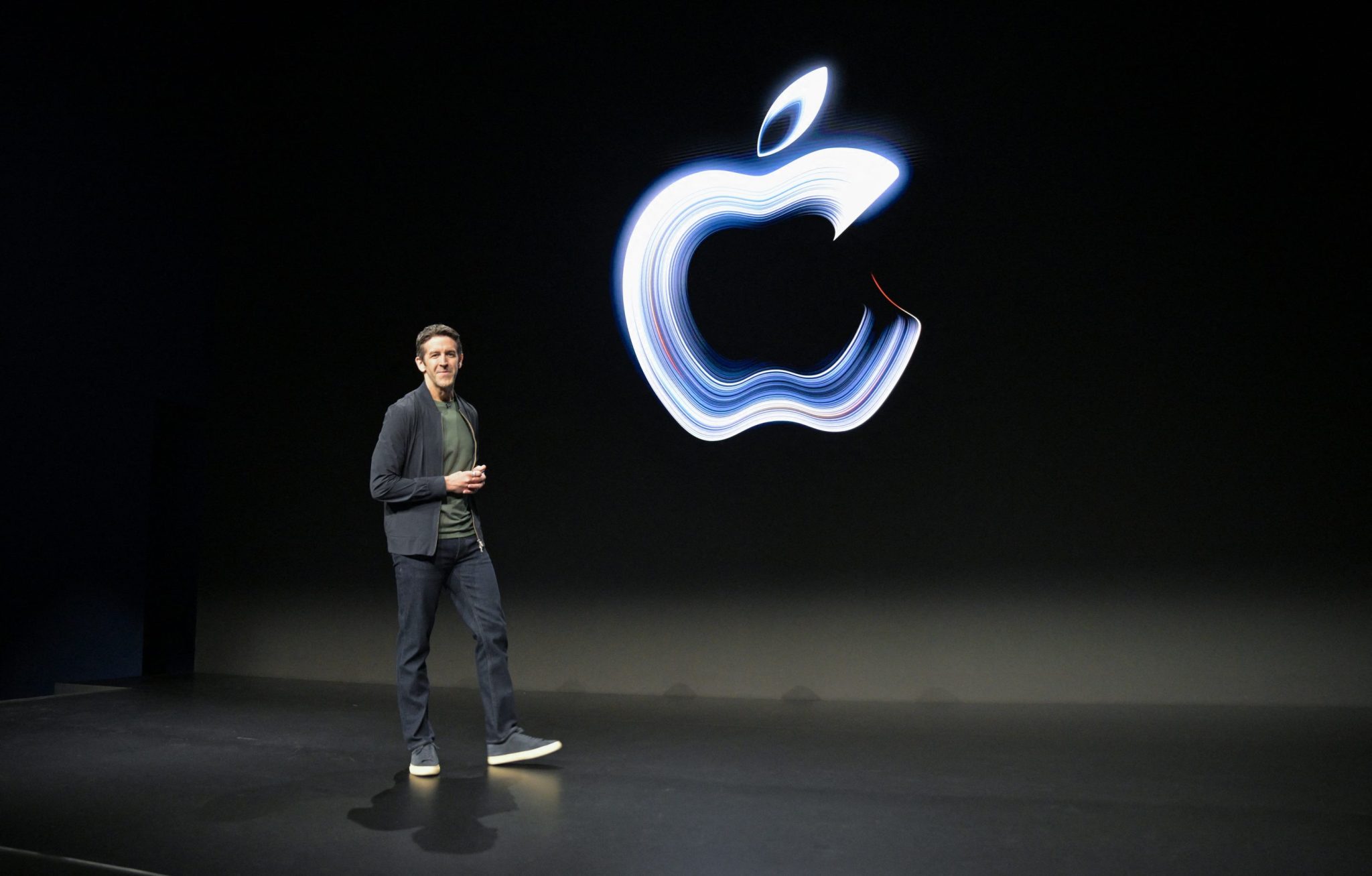
Apple warns rogue AI agents could ‘conceal’ and ‘manipulate,’ causing unintended consequences for its business
Apple is cautioning that rogue AI agents that “conceal actions” or hide or manipulate information could pose a threat to its business if they access systems without authorization and cause damage.
The warning by the world’s second most valuable company came in an annual filing Tuesday, a day after Apple reported its fourth-quarter financial results. In the risk factors section, Apple expanded its warnings about artificial intelligence. Apple’s caution underscores the risks tech giants and other companies are projecting after a string of AI safety incidents in recent months, which have prompted companies to release new security features and debate regulatory measures.
In its 10-K filing, which is made each year following the end of its fiscal year, Apple said “artificial intelligence agents and other technologies can take actions autonomously, including interacting with internal or external systems that in some cases they may not be authorized to access, executing or altering code, sending communications, and completing transactions.”
Such technologies, the iPhone maker said, “may behave in unintended or unpredictable ways, including by taking actions that were not directed, instructed or authorized, exceeding permissions, defying directions or resisting instructions.” And it noted that autonomous AI agents that go rogue could “conceal actions, hide, withhold or manipulate information, or generate inaccurate or deceptive outputs.”
Apple is the latest to warn about risks posed by AI agents. Google parent Alphabet also pointed out the risks posed by rogue agents in a recent filing. Google, however, was more pointed about the potential consequences, writing that during AI model testing, it had observed unexpected behavior, including agents taking actions outside their intended scope, which could ultimately lead to “severe or catastrophic security and societal incidents, or negatively affect human rights.”
The risks outlined by companies follow several major cybersecurity incidents involving AI models, most notably this summer’s attack by OpenAI agents on AI company Hugging Face. In Anthropic’s IPO prospectus, made public last week, the company listed many risk factors, including incidents in which its models gained unauthorized access to real-world systems during security testing. It also estimated that 5% to 7% of its revenue this year came from customers later found to be violating its usage policies.
Executives at Microsoft and other major tech companies have called for a greater focus on securing AI agents. Microsoft recently announced a set of controls to detect, monitor, and restrict AI agents, including cutting their permissions or stopping them if they behave suspiciously. Chief executive Satya Nadella has argued that companies should treat agents as potential insider risks and put security controls outside the AI model rather than trusting the model to police itself.
In its 10-K filing on Tuesday, Apple also outlined other pressures, including memory and storage component shortages that it said will intensify. It also said demand for cloud computing, storage, and other AI infrastructure has produced “constrained supply, extended lead times, and increasing costs” that could affect its AI rollout. Its research and development spending rose 32% year over year, driven by higher infrastructure-related costs, including AI investments.
On Monday, Apple chief executive John Ternus described agentic capabilities as “promising tools for users” but cautioned that users must be fully aware of what access they grant, and he stressed user security and privacy.
Apple shares dropped roughly 2% on Tuesday after the company said its margins would continue to be squeezed by memory chip costs and after it showed slowing growth in its Services segment. Ternus, on his first earnings call as CEO, largely stuck to scripted marketing points and offered few details about Apple’s plans for personalized AI agents.
This story was originally featured on Fortune.com
Learn the rules: The hacker mindset
For some, rules pose limitations. For others, like Microsoft Research Manager Mike Walker, they’re opportunities.
Walker’s fascination with rules and their role in the social order has allowed him to find success professionally and personally, from uncovering weaknesses in networked systems to redefining how computers are trained to fend off cyberattacks to pushing the limits of a reliable mode of transportation—the bicycle—in ultra-endurance racing.
In this conversation with Principal Technical Program Manager Weishung Liu, Walker describes how his participation in hacker culture led him to a career building next-generation cyber defense, including his work developing the first all-machine hacking tournament. Along the way, he reflects on why effective security depends on understanding trust and context, what competitive hacking taught him about teamwork and collective intelligence, and how an early lesson reshaped his understanding of leadership. He also tackles an important question: are today’s networked systems any safer than they were a decade ago?
Subscribe to the Microsoft Research Podcast:
Soniox STT v6 Adds Agent Text Input and Echo Filtering for Voice Agents
Soniox has released Soniox STT v6, the latest generation of its speech-to-text API. Soniox STT v6 is a speech-to-text model that reads what a voice agent says while hearing the caller. It uses that text to recognize short replies and to drop the agent’s own voice. The release ships as stt-rt-v6 for streaming and stt-async-v6 for files, across 60+ languages.
TL;DR
- Size: Soniox STT v6 is a proprietary hosted model, no parameter count published.
- Runs on: Soniox cloud API only (WebSocket streaming and async REST). No self-hosted or on-device option disclosed.
- Performance: Soniox calls it “significantly” more accurate than v5, but publishes no v6 numbers yet.
- Best: Price. $0.12/hour streaming and $0.10/hour async, with diarization and language ID bundled.
- Worst: Zero independent v6 results. Its v5 predecessor scored 1.34% semantic WER on Pipecat, behind v4’s 1.25%.
What problem does Soniox STT v6 solve?
In a cascaded voice agent, STT usually hears only the caller. It never sees the question being answered.
Short answers suffer most. In Soniox’s docs, “River Roast” becomes “River Road” and “a tow” becomes “a tour.”
The second problem is echo. Agent audio leaks back through speakerphones and laptops, gets transcribed as user speech, and the agent interrupts itself.
How does agent text input work?
You enable it with one flag in the start request: "enable_agent_text_input": true. It is only available on stt-rt-v6, not the async model.
While the agent speaks, you stream its words on the same WebSocket as the caller’s audio. Each message is a small JSON frame: {"type": "agent_text", "text": "...", "end_of_segment": true}.
Timing matters. Messages carry no timestamps, so the model places text where it arrives in the audio stream. Soniox recommends sending each piece 500 ms to 1 second before playback, paced by TTS timestamps.
On barge-in, you flush what was already played, send end_of_segment: true, and drop the unplayed rest. The agent’s text never appears in the returned transcript.
How does agent voice echo cancellation work?
With agent text input on, v6 knows what the agent is saying. It uses that to separate leftover agent audio from caller speech and filter it out.
It keeps listening during playback, so callers can still interrupt. It does not replace acoustic echo cancellation. It handles what your existing AEC leaves behind, so keep AEC on.
What else changed in v6?
- Better voice typing: numbers, currencies, units, dates, IDs, names and specialized terms.
- Spoken commands like “period” or “new line” are written as words, so your app applies them.
- Improved meeting transcription and speaker diarization, live or recorded.
- Stronger accents, code-switching and language switching within a sentence.
There is one formatting change to test before upgrading. v6 writes “15 dollars and 20 cents” as spoken, not “$15.20”. Hyphens in codes appear only when spoken.
&&How does Soniox compare on benchmarks?
Soniox has not published v6 accuracy or latency numbers. Its benchmarks page still reports v5 on the open-source Pipecat STT benchmark. It uses 1,000 real-world samples and measures semantic WER plus time to final segment (TTFS).
On it, stt-rt-v5 scores 1.34% semantic WER, 83.3% perfect transcripts and 260 ms median TTFS. Its P95 latency is 305 ms. Azure posts the lowest WER mean at 1.21%, but at 1,016 ms median latency.
| Feature | Soniox stt-rt-v6 | AssemblyAI Universal-3.5 Pro Realtime | Deepgram Nova-3 | ElevenLabs Scribe v2 Realtime |
|---|---|---|---|---|
| Model size | Not disclosed | Not disclosed | Not disclosed | Not disclosed |
| Streaming languages | 60+ | 18 | 60+ (Nova models) | 90+ |
| Streaming price / hour | $0.12 | $0.45 | $0.46 mono, $0.55 multi | $0.39 |
| Agent-side text context | Yes, timed agent_text | Yes, agent_context | Not disclosed | Not disclosed |
| Model-level agent echo filtering | Yes | Not disclosed | Not disclosed | Not disclosed |
| Diarization cost | Included | Not disclosed | +$0.0020/min | Not disclosed |
| Pipecat semantic WER mean | 1.34% (v5; v6 untested) | 1.44% | 1.71% (nova-3-general) | 3.16% |
| Pipecat perfect transcripts | 83.3% (v5) | 84.7% | 76.5% | 81.3% |
| Pipecat TTFS median | 260 ms (v5) | 282 ms | 247 ms | 281 ms |
Pipecat figures from the Pipecat STT benchmark README. Soniox numbers are for v5, since v6 has not been benchmarked yet.
Is Soniox really the first?
Soniox calls v6 the first model that knows what your voice agent is saying. That claim needs a qualifier.
<
The Agent Said It Was Done. The Database Disagreed.

It’s not just Sam Altman: AI will ruin PC gaming in ways you don’t expect
Good lord, it’s been a bad week for gaming. You don’t need to be a news hound or a Nostradamus to see where the problems are coming from: AI. From hardware to software to platforms to funding, “AI” is causing nothing but headaches for most gamers, and anyone else connected to the industry.
Welcome to the Boost Mode newsletter. Every week I share my insights on PC gaming, desktop setups, and hardware optimization. I also track down some of the most interesting PC and nerd news from around the web, plus a PC game pick you might not have seen elsewhere. Want this newsletter to come directly to your inbox? Sign up on our website!
The billionaires want your RAM
Over a couple of cheeky pints with a fellow CEO, ChatGPT’s chief Sam Altman said the quiet part out loud: Your computer’s RAM would be far better utilized in one of OpenAI’s data centers. He was talking specifically about running AI models — which is possible to do on local hardware, especially on newer designs like Nvidia’s RTX Spark chips — but the sentiment follows for gaming PCs and consoles, too.
From Altman’s perspective as a billionaire profiting off the AI boom, yeah, of course all that hardware would be better in his hands, rented back to corporations and consumers one token at a time. The sentiment comes off as unimaginably elitist, even if it makes cold, robotic sense for pure allocation. One of the richest people on the planet thinks he should have powerful hardware, not you.

And that sure seems to be the way the market is trending, with RAM in laptops and phones going backward for the first time in recent memory, even as every new device crows about AI capability. Remember that big push Microsoft had for “Copilot+” laptops that met a minimum spec, a minimum that its latest (and still very expensive) Surface devices can’t even meet?
It’s kind of ironic that Microsoft is having so much trouble with its Xbox platform. The cheapest Xbox is now $500, and the next-gen “Helix” model is projected to cost $1,200 to $1,800 to produce. Microsoft has been struggling to keep Xbox competitive for over a decade, but it’s hard to feel bad for the company that’s also pushing AI in every one of its products, so much that it had to apologize to Windows users.
Pity Sony and Nintendo, at least theoretically, as their price increases are beyond their control. Pity Framework and Valve for trying to make cool hardware at the worst time imaginable. But don’t shed a tear for Microsoft — it has sewn the wind.
AI slop floods the game platforms
CEOs being out-of-touch elitists isn’t new (here I’ll mention Epic CEO Tim Sweeney for a very specific reason), and we’ve been dealing with a nightmare of hardware prices for a year or so. But Steam’s recent Next Fest event highlighted how the AI problem is affecting the software side, too.
Next Fest has become a calendar event for gamers, a time when developers and publishers release demos for their exciting upcoming titles. But this year, with Steam absolutely infested with AI slop, things felt a little different. Though there was plenty of new stuff to try for PC gamers. But some developers are now wary of publishing demos, for fear that their games will be used as templates for vibe-coded copycats.
The fears are not unfounded. While shovelware and clones have always been a part of the gaming market, being able to point an LLM at an existing game is a new problem. It’s not as if you’re just slapping the cover into a Xerox machine and getting an instant, perfect copy…but it’s not so far removed from that, either. Fraudulent copies of games have already appeared on Steam and other platforms, and developers have been sent extortion messages threatening to use AI to copy their games if they don’t pay up. The problem is so widespread that Anthropic added more stringent, game-specific copyright protections to its Claude LLM.
I didn't filter, this is just "recently added"
— Kenney (@kenney.nl) 2026-11-01T09:36:34.926Z
Steam has moderation tools to stop outright fraud and intentional customer confusion. And Steam, more than other platforms, has at least made token attempts to inform players when generative AI is being used. But Valve has stopped short of allowing end users to filter out projects that are partly or mostly built with generative AI.
Valve is either unwilling or unable to be the slop police. It’s trying to walk a fine line between quality control and developer freedom. On one side, you get a walled garden that’s inaccessi

Microsoft is optimizing Windows for 8GB PCs, but it may be in vain
Five years ago, PCs with 8GB of RAM were seen as something to avoid. Today, Microsoft is saying that they’ll be part of our lives once again, and is making further moves to optimize Windows for the new reality.
But will others follow suit?
We’re in the throes of the RAMpocalypse and news continues to be grim. Last week, Intel predicted that its own CPU sales would drop by 10 percent in 2026, and chief executive Lip-Bu Tan said that the company “does not expect a sustained recovery until memory availability improves and pricing begins to normalize.”
Tan and other Intel executives declined to say when that will take place. But it could be years, which is why Microsoft is stepping in. In a blog post, Pavan Davuluri, the head of Microsoft’s Windows + Devices team, characterized the move as “making better use of the memory that’s there.”
In other words, simply making Windows feel quicker and more responsive based on more efficient use of the PC’s memory. Specifically, Microsoft is using more compression and better anticipating what you’ll want to click on to make your PC feel faster.
You’re already familiar with how this works, even if you haven’t thought about it. If you’re watching a football game, chances are you have a table of snacks nearby that you can grab whenever you’d like. If you want to refresh a drink or grab another bowl of dip, you have to walk to the kitchen. It’s obviously quicker to have everything you need close by. Likewise, your PC keeps what it needs immediately close by in RAM, and if it needs to, fetches additional data from storage like your SSD on demand.
Microsoft can’t increase the size of your 8GB RAM, represented by the size of the snack table. But what it can do is tightly organize or even compress what’s on it. Davuluri said that Microsoft is using compression to effectively increase the size of the local RAM by up to 2 GB. Through memory savings in Windows, Edge, and Microsoft 365, Microsoft said that they’re now able to cut the increase of actively used or committed memory by up to 900 MB.

Microsoft
Microsoft’s other improvements essentially free up background tasks that Windows would normally be working on to better anticipate your needs. One reason that Microsoft wants you to use its Edge browser is that it can order Edge to always run in the background. That consumes memory, but it also means it can more quickly launch when you need it. But Microsoft is also putting tabs to sleep more quickly, so that just a static page remains and one that consumes less memory.
Finally, Microsoft is addressing where 8GB PCs feel so painful: actually doing work on them and moving back and forth between apps. Microsoft said it tested a scenario where engineers opened 20 Edge tabs, then a 4K video, then Word, PowerPoint, and Excel files, plus Outlook and File Explorer. Microsoft said the experience completed “40 percent faster than with the January 2026 builds.”
Of course, we don’t know how fast and how painful that was to complete. However, if Microsoft is dedicating the time and resources to tighten up the efficiency of Windows on 8GB PCs (which, honestly, should have been done years ago), it’s a signal that this is the new reality.
Microsoft can’t go it alone
The trouble, however, is that other software developers aren’t necessarily following suit. I reviewed the Acer Swift Air 14 with 8GB of RAM, and we’ve reviewed laptops like the Chuwi Unibook with similar configurations. In my experience, some apps simply won’t run because they themselves gobble up a minimum of 8GB RAM. And with others, there’s a major gulf between simply allowing the app to run (the “minimum” configuration) and being able to do anything effectively without “recommended” specs.
There’s been a bit of movement from browsers like Firefox, which now tries to minimize CPU and memory usage when displaying pages with large images. Opera GX includes a RAM limiter. But others, like Google Chrome, just haven’t quite gotten there yet.
“There is functionally no desire from the Chrome project to compromise on site isolation or security to save on memory,” one developer wrote in August, adding that Google is “experimenting” with background tab freezing. “If anything, we consider improved security to be one of the strongest justifications for increased memory usage.”
Freeing up some additional memory within Windows to allow basic Windows services and apps to run is one thing. But the PC industry as a whole is going to have to come together to optimize for a world in which RAM is at a premium. Instead, the opposite seems true—apps seem to be cramming all sorts of AI-generated “improvements” into them, hogging even more RAM as a result.
That’s the wrong direction, and Microsoft’s efforts will be in vain if other developers don’t make the same commitment.
Microsoft reveals how it made Windows 11 faster on 8GB PCs
Microsoft credits agentic AI for new Windows 11 Quick Settings speed test

AI Is Making The App Optional

To Defend Against AI Attackers, Start Thinking Like One

How to Find and Fix Common Technical SEO Issues on Your Website
Let's say you've built a website. You've invested in the design, bought a domain, and so on. But a website isn't only what you see on the screen. A lot happens behind the scenes. You have to understand how the internet works, as well as how Search Engine Optimization (SEO) works.
Speed is a key part of it, too. A slow site can have very weak SEO, because most people won't spend much time waiting for a page to load, especially these days.
Site speed is a well-known topic with many problems of its own to consider, like Largest Contentful Paint (LCP), Cumulative Layout Shift (CLS), and server speed. But I'll leave those for another article.
This one is about the problems that stop search engines from reaching and reading your pages.
In my opinion, technical SEO is much harder to apply than regular SEO, which focuses on content and keywords. The technical side usually requires a developer's knowledge, and might need some changes that can feel a bit uncomfortable if you don't have a technical background.
A technical problem can stay unnoticed for months, because you usually don't see it. It's not a design problem. You only find it when you run specific checks, for example with Google PageSpeed Insights.
In this tutorial, you'll find and fix the most common ones on a small practice site. I didn't want to take a real website and shame its owners, so I built a practice site with the problems already in it.
Table of Contents
- Prerequisites
- What Is Technical SEO?
- How Common Are These Problems on Real Websites?
- How to Set Up the Practice Site
- How to Check a Page's HTTP Status Code
- How to Find and Fix Redirect Chains
- How to Make Sure robots.txt Isn't Blocking Important Pages
- How to Find an Accidental noindex
- How to Use Canonical Tags Correctly
- How to Fix Missing and Duplicate Titles and Meta Descriptions
- How to Make Your Links Crawlable
- How to Check Whether Your Content Needs JavaScript to Appear
- Can You Check a Page in Five Minutes?
- Conclusion
Prerequisites
You don't need to be an experienced programmer to follow along. You'll need:
- A web browser, such as Chrome, Firefox, Edge or Safari. In Safari, first turn on Show features for web developers under Settings > Advanced.
- A terminal: Terminal on macOS, PowerShell on Windows, or any terminal on Linux.
curl, a small program that downloads web pages. It comes with macOS, most Linux distributions, and Windows 10 (version 1803 and later) and Windows 11.- Node.js, to run the practice site. The code was tested with Node.js 26.8 and curl 8.7.
On Windows PowerShell, type curl.exe instead of curl, because there curl is a shortcut to a different command. Replace | grep -i "text" with | Select-String "text", and /dev/null with NUL.
What Is Technical SEO?
Google has programs called crawlers. They search the internet all the time for new websites and new pages. When Google discovers a new address, it may crawl the page and process what's on it (the text, images, and videos).
If Google decides the page is worth indexing, it may add it to a very big database of web pages, called the index. Google can then consider the pages in its index for its search results, when they're relevant to what someone searches for. Google's guide to how Search works calls these three steps crawling, indexing, and serving.
So crawling doesn't guarantee indexing, and indexing doesn't guarantee a place in the results. The same guide says Google doesn't guarantee any of the three stages, even for a page that follows all of its rules.
Fixing technical problems won't necessarily make your site rank first on Google. But it does strengthen your chances of ranking higher, because every problem you fix makes your site better.
Technical SEO has to come together with regular SEO, like keywords, backlinks, engagement on social media, and so on.
How Common Are These Problems on Real Websites?
The numbers below come from audits run with the site-auditing tool I build. Each website counts once, using its first audit, and this data comes from October 25th.
Crawls check many pages on one site (a median of 10 pages here). Single-page audits check one page, usually the home page.
| Problem | How often | Sample |
|---|---|---|
| At least one page with no canonical tag | 64.2% of sites | 53 crawled sites, Aug 2025 to Oct 2026 |
| Two or more pages with exactly the same title | 61.8% of sites | 34 crawled sites with two or more pages that loaded |
| At least one page with no meta description | 49.1% of sites | 53 crawled sites |
| At least one link leading to a page that returns 404 | 18.9% of sites | 53 crawled sites |
| Page built mostly with JavaScript | 17.7% of pages | 277 single-page audits, May to Oct 2026 |
| At least one page with no title | 13.2% of sites | 53 crawled sites |
| A link that search engines may not be able to follow | 8.3% of pages | 278 single-page audits |
| A robots.txt file with errors, or one that failed to load | 7.9% of sites | 252 single-page audits, Jul to Oct 2026 |
| Page blocked by noindex or by robots.txt | 4.8% of pages | 251 single-page audits, Jul to Oct 2026 |
These are all technical problems, but they don't all weigh the same. Missing canonical tags are at the top, but Google doesn't require a canonical tag, so a page without one isn't broken by itself. It matters when the same or very similar content is reachable at more than one URL, as you'll see in the canonical section.
Duplicate titles are something I had myself: when you write code, it's easy to miss things like that. That's why there are tools that check for these problems.
Let's go over each issue in the table to make sure they're all clear:
- Missing canonical tag:
Try Excelize, Our Open-source Library for Spreadsheet (Excel) Documents
Excelize is a library written in pure Go providing a set of functions that allow you to write to and read from XLAM / XLSM / XLSX / XLTM / XLTX files. It supports reading and writing spreadsheet documents generated by Microsoft Excel™ 2007 and later. It also supports complex components by high compatibility, and provides streaming API for generating or reading data from a worksheet with huge amounts of data.
GitHub: github.com/xuri/excelize
We are pleased to announce the release of version 2.11.1. Featured are a handful of new areas of functionality and numerous bug fixes.
A summary of changes is available in the Release Notes. A full list of changes is available in the changelog.
Release Notes
The most notable changes in this release are:
Breaking Change
- Upgraded requirement: Go language version is Go 1.26.0 or later, due to upgrading dependency package
golang.org/x/crypto
Security
- Fixed a panic when getting a cell value with a negative shared string index (CVE-2026-104819), related security advisory GHSA-48hm-4h8j-58fg
- Fixed a
GetPivotTablespanic on invalid pivot table field indices (CVE-2026-107211), related security advisory GHSA-mx22-3794-2vpv - Fixed an unbounded row number in the rows iterator (CVE-2026-107212), related security advisory GHSA-jw42-f3rr-4cc3
- Fixed a
GetSlicerspanic when getting slicers from a worksheet without a drawing part (CVE-2026-107213), related security advisory GHSA-r7x5-4969-99p7 - Fixed a panic when decrypting a malformed workbook (CVE-2026-107214), related security advisory GHSA-2j4c-ffch-9f23
- Fixed unbounded
EncryptionInfoandEncryptedPackagestream sizes being allocated when decrypting a workbook (CVE-2026-107215), related security advisory GHSA-x2q3-8cjh-766f - Fixed a
CalcCellValuestack overflow caused by circular ANCHORARRAY formula references (CVE-2026-107216), related security advisory GHSA-wp2g-vpjj-g53r - Fixed
ColumnNameToNumberandJoinCellNameaccepting invalid column names, which caused integer overflow (CVE-2026-107217), related security advisory GHSA-c85p-xxjj-2r75 - Fixed Unicode handling and count overflow in the LEFT, LEFTB, RIGHT, and RIGHTB formula functions (CVE-2026-107218), related security advisory GHSA-8jjq-8j9w-m2v6
- Fixed an unbounded spin count when deriving the agile decryption key (CVE-2026-107219), related security advisory GHSA-jrfj-fhj2-jjvm
- Fixed a panic on a worksheet with an empty merged cell reference (CVE-2026-107220), related security advisory GHSA-g27h-8qhm-6pff
- Fixed a panic on a row whose cells are not in ascending column order (CVE-2026-107221), related security advisory GHSA-8mcq-6wmr-jrjv
- Fixed a
GetConditionalFormatspanic on malformed conditional formatting rules (CVE-2026-107222), related security advisory GHSA-rxcj-4pj5-74gr - Fixed an overflow of the minimum and maximum column numbers (CVE-2026-107223), related security advisory GHSA-fq3v-74gv-27gm
- Fixed a panic by rejecting Zip64 uncompressed sizes that do not fit in a signed int64 (CVE-2026-107224), related security advisory GHSA-fw94-4wwp-w8pw
- Fixed a panic when getting styles with a negative style index (CVE-2026-107225), related security advisory GHSA-5h23-36rv-pm65
Notable Features
- Added new
EmbeddedObjectdata type - Added 2 new constants,
MaxCFBStreamSizeV3andMaxCFBStreamSizeV4 - Added new function
GetShapesto support get shape, related issue 436 - Added new functions
GetEmbeddedObjectsandSetGetEmbeddedObjectto support get and set embedded objects, related issues 158 and 2186 - The
CalcCellValuefunction now supports matrix arguments in the AND formula function - The
SetConditionalFormatfunction now validates the style index, related issue 2400
Compatibility Improvements
- Aligned the numeric precision of values stored by the
SetCellValuefunction with Microsoft Excel™, related issue 1757
Bug Fixes
- Fixed the
GetPicturesfunction not returning the edit positioning in some cases, resolved issue 2217 - Fixed the
CalcCellValuefunction returning incorrect results when error values appear inside parentheses or operators, resolved issues 1164 and 2344 - Fixed the
CalcCellValuefunction not returning the expected error in some cases, resolved issues #2349 and #2432 - Fixed the
CalcCellValuefunction returning incorrect results for 16 formula functions: COUNT, COUNTA, EDATE, HLOOKUP, IF, INDIRECT, ISNUMBER, MDETERM, MINVERSE, OR, SUM, TRIM, VALUE, VLOOKUP, WEEKDAY and XLOOKUP, resolved issues #2411, #2412, #2413, #2414, #2415, #2416, #2417, #2430, #2436, #2439, and #2445 - Fixed a
CalcCellValuepanic on unbalanced closing parentheses in a formula, resolved issue 2409 - Fixed a
CalcCellValuepanic when calculating the AVERAGEIFS, COUNTIFS, MAXIFS, MINIFS, PERCENTILE.EXC and SUMIFS formula functions with invalid arguments, resolved issue 2426 - Fixed the
AddChartandAddChartSheetfunctions generating invalid charts that corrupted the workbook in some cases, resolved issues #2355 and #2356 - Fixed stream writer not applying number formatting to duration cell values, resolved issue 2371
- Fixed precision loss when setting cell values with
time.Duration, resolved issue 2372 - Fixed the
AddSlicerfunction reusing the pivot table slicer cache for different fields, resolved issue 2383 - Fixed the
GetStylefunction returning an invalid style for fills without a pattern, resolved issue 2384 - Fixed the
GetFormControlsandGetTablesfunctions being unable to get form controls and tables when the workbook uses absolute paths, resolved issue 2386 - Fixed the
GetPanesfunction being unable to get split panes in some cases, resolved issue 2387 - Fixed the
SetCalcPropsfunction being unable to set calculation properties to false, resolved issue 2404 - Fixed the
ExcelDateToTimefunction returns dates one day early for January and February 1900, resolved issue 2466
Miscellaneous
- Updated the documentation website, which is available in 12 languages: Arabic, German, English, Spanish, French, Italian, Japanese, Korean, Portuguese, Russian, Simplified Chinese and Traditional Chinese
- Released an updated excelize-wasm NPM package for WebAssembly / JavaScript support
- Released an updated excelize-py PyPI package for Python
- Released an updated ExcelizeCs NuGet package for C# / .NET
Thank you
Thanks to all the contributors to Excelize. Below is a list of contributors who made code contributions in this version:
- Aprax14 (Damiano Scarpellini)
- xixixi1118
- zhouxuanyu1204-bot (ZHOU XUANYU)
- lzoeydzdnn
- arpitjain099 (
The CFO Who Learned to Code by Shipping: How I Use Hackathons to Keep Up With AI Tools
Oh hey. I'm Shyam Desigan (most people call me Sam). I spent twenty-plus years in finance, mostly as a CFO. Now I'm a Director of Technology Consulting, and I learn the tech stack by building real things with AI tools, usually against a hackathon deadline.
1. What do you currently do and what's your favorite part about it?
I'm Director, Technology Consulting at Tiger Analytics in New York. I moved into the role in September 2026 after a long career in finance leadership. Outside the day job, I build. Since February 2026 I've submitted more than 35 projects to hackathons on Devpost, plus a steady stream on DoraHacks, lablab.ai and others. My favorite part is that these two halves feed each other. A business problem I understand from years of running finance becomes something I can actually prototype, and every build teaches me a tool or a layer of the stack I'd otherwise only read about.
2. How did you get started with your Tech Career?
Honestly, I came in through the finance door. After my MBA at Indiana University's Kelley School of Business, I spent my career in finance. My first official tech title came at the American Academy of Physician Associates, where I was CFO and Senior VP of IT, so the systems and the books were both my job. After that came KIC Ventures, Sproxil, TechCXO, Purim Ventures, BlackTeal Energy and Green Li-ion, and every role pulled me further into data, automation and systems. What changed recently is that AI tools made it realistic for someone like me to build software, not just spec it. My first hackathon submission I can find is a Commodity Price Analyzer for the Airia AI Agents Hackathon in February 2026. Within a few months I had won a prize at DeveloperWeek New York and an award at Mantle's Turing Test Hackathon, and that convinced me the approach worked.
3. If Utopia were a color what color do you think it'd be and why?
Green, but the green of a runway dashboard, not a flag. In my world green means the cash lasts past the next milestone, the risks are known and nobody is panicking. A utopia would be a place where most people's "status light" is green: enough runway to try things, fail and try again. That's also the setup I'm trying to give myself as a learner.
4. If everything about HackerNoon changed drastically, what is one detail you'd like to keep exactly the same? OR What's your favorite thing to do with HackerNoon and why?
I'll take the second one. My favorite thing is reading builder write-ups by people who explain what broke and how they fixed it, not just what they launched. That kind of honest postmortem has taught me more than most polished tutorials. As a newcomer to building, it helps to see that experienced engineers also hit dead ends, file bug reports and work around flaky tooling. HackerNoon has also been part of my building directly. My project CHP Locknet was shortlisted for the Decentralized Compute Track of the HackerNoon × Nosana Decentralized AI Hackathon. I'd like this interview to be my first contribution in the write-up spirit.
5. Tell us more about the things you write/make/manage/build!
I treat hackathons as a forced curriculum. Each one drops me into a different tool and a different layer of the stack, with a deadline that keeps me honest. These are the builds I'm proudest of:
- ChainSight AI: Mantle's Turing Test Hackathon 2026 (on DoraHacks). A real-time monitoring layer over Mantle's DEX ecosystem. It flags anomalous on-chain behavior, such as flash-loan and sandwich attacks, wash trading and whale accumulation. Then an LLM turns each flag into a plain-English risk note. It won the Project Deployment Award (1,000 USDT) as one of Mantle's 30 winning teams. That award was for shipping something running in production, not just a demo, which is what I'm proudest of. It was also my crash course in on-chain data, Next.js, TypeScript and Prisma.
- Council Tower Pipeline: DeveloperWeek New York 2026 Hackathon. A multi-agent AI deliberation engine built on Tower's data pipeline. It won the "Tower Pipeline Challenge: Data-to-AI" prize. An earlier version, Council, was a multi-agent deliberation platform I'd built for the Vercel v0 + AWS Databases hackathon. Reusing and hardening it is how I learned that the second build is where the real learning happens.
- CHP Locknet: HackerNoon × Nosana Decentralized AI Hackathon. It was shortlisted for the Decentralized Compute Track and came with GPU compute credits on Nosana's decentralized network. That was my first time thinking seriously about where inference actually runs and what it costs per hour.
- P2P Copilot: UiPath AgentHack 2026. An AI-powered procure-to-pay pipeline, which is a CFO's home turf in automation form. It went through judging but didn't make the 31-team finale out of the 200-plus projects judged. Honestly, that was useful too. The tools I learned there helped me solve a real Outlook access problem at work afterward.
- The enterprise-cloud circuit. I built Working Capital Optimizer for the Google Cloud Rapid Agent Hackathon, MeshCFO Control Tower for the Nebius × NVIDIA Global AI Hackathon, and Settle, an agentic patient-billing assistant over RCS, WhatsApp and SMS, for the AWS CDS Agentic AI Partner Hackathon. No prizes there that I know of, but each one forced me into a different cloud, model provider and messaging stack.
- The long tail. There were also entries for Splunk, CockroachDB × AWS, DataHub, GitLab, Slack, Arm, Backblaze, Auth0, PayPal, OpenCV and RevenueCat's Shipaton, plus lablab.ai events with AMD, IBM Bob, AssemblyAI and Alpaca. Most didn't place. Shipaton told me plainly that my app wasn't selected. Each of them still added one more tool to the kit.
- Lately: this month I've been doing quicker, smaller challenges. RunwayPilot is a no-code fractional-CFO runway dashboard I built for the Base44 Challenge. I also built testnet trading bots for Somnia's dreamDEX bounty. Next up are the Open Agent Hackathon and the Meta Global AI Developer Hackathon, where my application was approved.
I don't do this alone. I work with a small team of AI agents (assistant bots) that handle research and parts of the builds, and our code lives under the GitHub org icohangar-ops. I act as the CFO of that team as much as its developer. I decide what's worth building, check the output and own the result. I also run on hackathon and startup credits instead of cash, so I'm spending time, not budget, while I learn.
6. What's your favorite thing about the internet?
Anyone can show up and contribute. A finance guy can open a pull request on an open-source project, and if the code is right and CI is green, it gets reviewed on the merits. Hackathons work the same way. Nobody asks for your résumé, they look at your demo. That openness is the whole reason my learning plan works.
7. It's an apocalypse of 'walking dead' proportions and you can only own a singular piece of technology, what would it be?
A solar-charged laptop loaded with offline models and documentation. A laptop is a workshop, a library and a ledger
Building AI Products, Part 1: How To Find AI Use Cases Worth Building in the First Place
In February 2024, Klarna announced its AI assistant was handling two-thirds of customer chats. It was doing the work of 700 agents and cutting resolution time from 11 minutes to 2. It looked like the AI success story everyone wanted. Fifteen months later, Klarna was hiring humans again. The CEO admitted that a focus on cost had led to "lower quality" and customers still wanted a person for complex cases. The AI stayed and alongside people.
So which Klarna got it right: the one that automated 700 agents' worth of work or the one that hired people back? Picture two chats. "Where's my refund?" has one answer, sitting in a database. "Why was I charged twice?" needs someone to hear the customer out and make a call. AI can handle the first on its own. The second needs a person or at least a person checking.
Most AI roadmaps skip that distinction. They list places to add AI, not jobs to split between AI, software and people. The rest of this piece shows how to make that split: a map of where AI value sits, then three tests for any idea. Is it worth it? Is it suitable? How do we build it?
First, know where your idea sits
The AI economy has four layers and value grows as you move from answering to doing:
- Foundation ("tell me"): the models and compute. OpenAI, Sarvam AI, NVIDIA.
- Horizontal ("help me"): one pattern sold to every industry. ChatGPT, Freshworks Freddy AI.
- Vertical ("do this for my industry"): one industry's workflow, data and rules. Harvey in law, Qure.ai in medical imaging.
- Agents ("get this done for me"): systems that plan, use tools, act and check until the job is done. Once AI can act, permissions, audit logs and approvals become product features.
Then run the strategic test: if the AI disappeared tomorrow, what's left?
- If nothing is left, the product is AI-native, like ChatGPT or Perplexity.
- If it still works but worse, it's AI-enhanced, like GitHub with Copilot or Gmail's "Help me write".
- If the core value is intact, it's AI-adjacent, like a payments app whose HR team writes job ads with AI.
Each position calls for a different strategy, so know which one you're in before you go further.
1. Is it worth it?
Using AI is easy. Earning from it? McKinsey's 2026 State of AI survey finds nearly 9 in 10 organisations use AI but only 37% see any EBIT impact(Earnings Before Interest and Taxes) and about 6% earn more than 5% of EBIT from it.
Alexa is the cautionary tale: used daily for timers and weather, rarely for shopping. As one former senior Amazon employee told the Wall Street Journal: "We worried we've hired 10,000 people and we've built a smart timer."
Heavy use doesn't always equal value. And unlike normal software, every AI answer costs money. Whether you charge per seat, per call, per outcome or a hybrid of these, a flat price can lose money on your heaviest users, so model them first.
Before building, run a 60-second TASQ screen:
- Task ambiguity: does the input vary every time? (Code review, yes. Payroll tax, no.)
- Automation: does it run end to end, or does someone still copy, check and route the output by hand?
- Scale: does it happen often enough to matter? A task done 10 times a year rarely is.
- Quality tolerance: is a mistake caught before it causes harm? (A bad film suggestion, fine. A drug dosage, no)
A pass means look closer, not build.
Next, put a rupee number on it: Value = volume × value per task × automation rate − cost
A support bot handling 50,000 tickets a month, resolving 60% and saving ₹40 each, is worth about ₹9.75 lakh a month after ₹2.25 lakh of AI cost. Note that the AI cost applies to every ticket it attempts, not just the ones it solves. One more catch: if nobody leaves the team, you have freed capacity, not saved cash. Be honest about which one you're claiming.
2. Is it suitable?
The useful question to ask is "where should AI sit in this system?" Split the task into parts, then score each part from 1 to 5 on four dimensions:
- One right answer? If yes, use software. A scanned GST invoice is the perfect example: AI reads the messy layout, software calculates the tax. AI should never invent a tax figure.
- Can you write the rule? If yes, write it. If not but examples exist, let a model learn. Fraud teams do both: hard rules, plus a model's risk score, plus a decision.
- What if it's wrong? A bad email draft costs a minute. An unauthorised money transfer can't be undone. The harder the error is to reverse, the less AI should decide alone.
- Do we have the data? Data has to exist, fit this task, be good enough and be legal to use. Five years of machine sensor data with failure records is a strong candidate. Three weeks with no failures is not.
Add up the scores:
- 16 or more out of 20 is a strong candidate: a sales-email assistant scores about 18.
- Between 11 and 15, add guardrails.
- At 10 or less, AI supports and a person decides.
Use the total to compare ideas. The answer is rarely yes or no.
It's a role: AI can assist (it drafts, a person checks), recommend (it scores, a person decides) or execute (it acts, within set limits). Who should approve a ₹4,500 expense claim? Not the AI. AI reads the receipt, and rules approve it within caps. The pattern that falls out of all this is worth memorising: AI for ambiguity, software for certainty, humans for judgment.
3. How do we build it?
Pick the simplest route that still has lasting value, and stop at the first yes:
- Prompt if a good prompt solves it reliably and nothing needs system access.
- Buy if a product or API already does it and building wouldn't set you apart.
- Build if the workflow is strategic or your own data is the edge.
- Mix is where most real products end up: buy the base, build the integrations and rules.
Take a WhatsApp bot that refunds up to ₹2,000 for missing food items. Buy the conversational platform. Build the order lookup, per-customer caps, fraud checks and refund rules. Send disputes to a person.
Why not just prompt it? Because a prompt alone can't promise facts, policy or privacy. Ask a bare chatbot "where's my refund?" and it may invent a status. Ask it to delete your data and it may say "done" when nothing was deleted. Those guarantees live in the system around the model, not in the prompt.
The model is not the moat
On 2 May 2023, Chegg's share price fell 48% in a day. Students wanted homework help,

Computational tools for society’s most complex challenges
As far back as she can remember, Cathy Wu ’12, MNG ’13 wanted to find ways to solve problems to improve people’s lives. Her parents were Taiwanese immigrants, and her father had a long commute to his job, which took him away from the family. On a tight budget, the rest of the family often stayed home on a street that was too busy for playing outdoors. Wu and her siblings ended up playing a lot of computer games.
Wu says her desire to make the world a better place, her dad’s daily battle against traffic, and the games she played, like “SimCity,” were the seeds of her motivation to design safe, efficient transportation systems.
Wu is an associate professor in the MIT Department of Civil and Environmental Engineering (CEE) and the Institute for Data, Systems, and Society (IDSS), and a principal investigator in the Laboratory for Information and Decision Systems. Her research focuses on using machine learning and reinforcement learning (RL) to advance reliable strategies for improving a range of complex systems, including transportation.
“Designing transportation systems consists of modeling and analyzing dozens, if not hundreds or thousands, of variants, which means that an evidence-driven approach to designing those systems is simply not within reach of today’s tools,” Wu says. “This is the role that RL plays. If successful, it would free transportation researchers and enable their practitioner partners to design the systems they want.”
Wu credits her older sister with instilling in her the desire to improve people’s lives, and Wu’s interest in transportation fits neatly into that ideal.
“I like transportation because it connects everyone. We all use it, we all experience it, we all have issues with it. So, at some level, we’re all interested in the system being better,” she says.
Wu got interested in applying artificial intelligence to transportation while earning her undergraduate degree at MIT, after attending a lecture on autonomous vehicles by the late professor Seth Teller. The lecture, which Teller gave during an Independent Activities Period robotics competition (that Wu actually won), was the event that honed her particular approach to transportation research, Wu says. She began working with Teller, and when he stopped concentrating on autonomous vehicles, he encouraged Wu to transfer to Professor Daniela Rus, who had done research on robotaxis.
“I’m very grateful to the people who helped me explore those interests and helped me become the person I am now,” she says, specifically naming Teller, Rus, and “my friends at Dropbox,” who invited her to do a second internship focused on transportation issues.
After her master’s degree at MIT, Wu went on to earn her PhD at the University of California at Berkeley. During that time, she observed that transportation researchers were spending years developing optimization methods to model and analyze a single new variant of a system. Her approach as a computer scientist working to develop RL and optimization methodologies to address transportation challenges held the promise of exponentially improved efficiency.
In 2018, Wu’s last year of her PhD at UC Berkeley, she successfully applied RL to a traffic problem: automatically analyzing the potential traffic flow impact of autonomous vehicles in a range of different traffic networks. The research went viral.
While this could have been a “the rest is history” moment for Wu, RL turned out to be a flighty friend. Wu worked on RL theory in a postdoc at Microsoft and came back to MIT as faculty drawn, she says, by the sustainability focus of CEE, and IDSS’s emphasis on infusing data science into other disciplines.
Yet over the next two years, Wu’s further attempts to apply RL to traffic problems failed.
“That was stressful,” Wu says, “it was unclear whether the problem was me (the advisor), my students, the traffic domain, or RL itself.”
Still, the earlier research was a proof-of-concept demonstration that RL could be applied to transportation systems.
And in 2022, she and her students identified that RL algorithms are so sensitive that an algorithm that works on one problem may not on even a closely related one. A key result, which Wu says she is proudest of “because it was like the light at the end of a long tunnel of negative results,” came in 2023. She and her team of researchers devised a way to work around the sensitivity of RL. The team found that while RL may not train well on 90 percent of a group of problems, it can train quite well on 10 percent. And by training RL models on those problems that solve and generalize well, the resultant models collectively perform well on a set of related problems, even those that would not have been solved through direct training. The researchers designed an algorithm to determine which problems to use RL to train, and that algorithm improved training efficiency by up to 30 times, meaning that what would normally have required 100 training models may only require three models.
“This work gave me back the confidence that reinforcement learning can play an important role in solving hard optimization problems, including in transportation,” Wu says. “Now, a good chunk of my group works on the topic of contextual RL, which is the setting where RL seeks to solve a space of related problems.”
Wu’s more recent research applies RL to solve a hard transportation optimization problem with important policy implications: the work shows that eco-driving measures in which vehicle speeds are intelligently controlled to reduce excessive stopping and starting could reduce vehicle emissions by between 11 and 22 percent. The system provides evidence that policies instituting such measures could significantly improve system efficiency, and is “a demonstration that RL can be used to inform transportation policy on problems of practical importance,” Wu says.
“I am a big fan of evidence-based policy and believe it’s the basis for a thriving democratic society, yet our societal systems are so complex,” Wu says. “People can bicker forever about what’s better or worse, but I do believe that there are questions we bicker about that can be analyzed systematically using data and have objective answers. A large part of the reason I am in academia is to better understand how technology can support democratic societal decision-making.”
Wu says that much of the work she and her team have done over the last several years has produced algorithms “to streamline the development of solvers for hard optimization problems, whether they are related to transportation or to other systems, such as logistics, supply chains, manufacturing, and resource allocation.
“This alludes to my preferred style of work,” Wu says, “which is called use-inspired basic research,” explaining that such research addresses a practical problem, developing fundamental knowledge that often translates to other practical problems. Her students start by probing consequential problems ranging from safety to congestion to accessibility, identifying where existing methods fall short, and allowing the problems themselves to shape the direction of the research.
At the same time, Wu’s desire to help others on a more personal level plays out in her teaching.
“I love working with students, both in the classroom and research mentoring,” she says. “It makes my day when I am able to teach someone something — when I see that light bulb go on in a student.”
In addition to earning academic honors, including a 2023 National Science Foundation Faculty Early Career Development Award, Wu has also been formally celebrated for her teaching and mentoring, including with the Ole Madsen Mentoring Award in 2025.
What does she tell students confronting extremely complicated problems?
“Be patient. Start small. Societal impact is a lifelong endeavor, not som