
美伊展现“谈判意愿”,全球能源价格重挫,黄金强势反弹、创两个月来最大单日涨幅

澳洲联储如期加息至十八年来高位,但分歧表决折射前景不确定性

Benchmarking: Qwen 27B, 35B, QFN180B; Nemotron Bolt 74B, Flint40B & Clover 35B (Q4) on M5 Max 2026 on Kapitsa with KFlash [P]
 | hey folks, I'm Ye, one of the contributors to Kapitsa, an open-source inference engine optimized specifically for Apple Silicon to run Qwen, Nemotron, Flint and Clover models locally. Our custom-written Metal kernels let us tune for each chip and each model. https://github.com/nace-ai/kapitsa/ The latest update, 0.2.26, is out. Since our last M5 Max numbers, Flash-Next 180B reads prompts 46% faster and the 27B writes 8% faster, and DiffuSpace's Clover 35B joins the catalog. Kapitsa also runs Qwen Flash-Next 180B with SSD offloading: on a Mac that can't hold it, the experts that don't fit in RAM stream from the SSD, so it runs on a 48 GB MacBook Pro at 61 tok/s. Here are the end-to-end numbers on a 2026 MacBook Pro 16 with an M5 Max and 128 GB: six targets (dense, MoE, hybrid Mamba-2 MoE and a block-diffusion MoE), from 1K context up to 32K, against the next-fastest engine for each. Try it (any Apple Silicon Mac; models in this post: ResultsDecode is a 512-token coding answer, prefill a 4K prompt, median of 3 runs:
From 1K context all the way up to 32K. At 32K the 35B still writes 175 tok/s, and Flash-Next barely drops (90 to 78): Against the other enginesAgainst the next-fastest engine for each model on the same Mac: 1.23x Splash on the 35B, 2.2x oMLX on Bolt, 1.18x rec on Flint and 1.12x mlx-serve on the 27B. Flash-Next is a tie with mlx-serve, Splash still reads prompts faster on the two Qwens, and nothing else runs Clover on a Mac. Every cell with versions and flags: benchmarks. Raw runs: results. Why it's fast: KFlashOther engines verify the drafter's guesses as one chain and stop at the first miss. KFlash verifies a best-first tree of the drafter's candidates in the same 8-row pass and keeps the longest branch the target agrees with. Three details make it fit Apple silicon:
Send us your benchmarksRun the same test on your Mac and add it to the community results. It takes 3-15 minutes: Plug in and close heavy apps while it runs. At the end it asks once: Enter sends the result as a pull request from your GitHub fork, and One more askDo you know prior work where tree-verified sampling matches plain sampling token for token under the same seed? Please point me to it so we credit it. We cite SpecInfer, Medusa, EAGLE-2 and Sequoia. [link] [comments] |

Couldn't reproduce a published paper's numbers with its own code and settings. How do I present this? [R]
I'm writing a machine learning paper. One of my baselines is a published method. I reran it with the authors' released code and the exact hyperparameters listed in their paper. On most benchmarks my numbers match theirs within noise, but on two benchmarks my reproduction is clearly lower, by several points, over three seeds. I've repeated the reproduction four different times, months apart, with the same result.
I plan to report both: their published numbers and my reproduction with the exact configuration, clearly labeled. My worry is that reviewers tend to trust the published number more than a submission's reproduction, and may assume I ran the baseline incorrectly.
Questions:
What makes a reproduction convincing to reviewers? So far I have: the authors' code unchanged, their hyperparameters, matching results on the other benchmarks as a sanity check, and multiple seeds.
Should I contact the authors or open a GitHub issue first, and should I mention that in the paper?
How do I word it so it doesn't read as an attack on the other paper, but my results also don't look weak next to the published numbers?
Have reviewers accepted "published vs. reproduced" rows in a main table for you, or did they end up in the appendix?
[link] [comments]

Palantir posts ‘highest-ever’ revenue growth rate of 96% as investors’ patience rests on a hair trigger
Palantir Technologies said Monday that third quarter revenue rose 96% year over year to $2.3 billion, surpassing last year’s 63% growth and $1.2 billion in revenue. Chief financial officer David Glazer called it the “highest-ever” reported year-over-year growth rate as well as the highest ever sequential revenue growth rate of 20%. Moreover, quarterly revenue crossed the $2 billion milestone marker for the first time.
It raised its full-year revenue forecast to between $8.53 billion and $8.534 billion, roughly 91% growth, from as high as $8.2 billion a quarter ago. However, investors didn’t seem swayed immediately. In after-hours trading shares began to climb, rising about 1.5% immediately after the figures were published, before dropping 3.6%.
In the third quarter, Palantir reported adjusted and GAAP earnings per share of 44 cents. That compares to third quarter 2025, when adjusted EPS was 21 cents and GAAP EPS was 18 cents. Analysts were expecting revenue of $2.18 billion and adjusted earnings of 41 cents per share.
In his quarterly letter to investors, CEO Alex Karp touted the firm’s results, writing “it would be an understatement” to say Palantir’s results in Q3 “were extraordinary.” He said the company’s growth rate of 96% was “absolutely striking.” Palantir had guided revenue to roughly $2.16 billion to $2.164 billion.
Palantir’s quarterly results came after last week’s bloodbath in certain tech stocks, and served as something of a temperature read on the AI trade. Karp made no bones about the change he sees on the horizon and how it could demolish certain sectors.
“Every industry in the world—from banks to insurers to hospitals and even once-storied law firms—will either be remade or set briskly aside,” wrote Karp. He continued his aggressive optimism about the company he helped found in 2003 with investor Peter Thiel and others as the quarterly call with analysts got underway.
Karp said Palantir’s quarterly earnings calls have grown beyond its financial results to serve as “the focal point of tech, society, and general trends.” He said Palantir’s earnings calls, streamed on YouTube, are “by far the most-watched earnings calls in the world.”
The software maker has become a bellwether for public market confidence in AI software converting into revenue growth. Its latest financials come days after Alphabet suffered its worst one-day drop on record in its 22-year history as a public company. Disappointing reception to Amazon and Intel last week deepened concerns that relentless spending on AI—which is approaching $2 trillion in two years, according to S&P Global research—is sprinting well ahead of returns for investors. Google parent Alphabet lost $505 billion in market value since it published third-quarter figures last week and Intel’s stock dropped about 29% last week. The Nasdaq Composite fell more than 1% Monday and the benchmark is down 4% over the past five days.
At Palantir, investors keep a gimlet eye on U.S. commercial revenue as evidence that companies as well as governments are willing to pony up for AI software. That business grew 148% to $984 million, compared to $397 million a year ago.
And for the first time, U.S. commercial revenue skipped ahead of U.S. government revenue, clocking in at $984 million versus $953 million. U.S. government revenue grew to $953 million, up 96% from $486 million a year ago.
Meanwhile, total contract value rose 6% to $2.9 billion and U.S. commercial contract value grew 11% to $1.5 billion.
For the current quarter, Palantir forecast revenue of roughly $2.64 billion to $2.65 billion, or about 88% growth at the midpoint. Analysts expected about $2.46 billion. Fiscal year 2026 revenue guidance also rose to 91% year over year growth, and U.S. commercial revenue guidance rose to 143%.
The backdrop for Palantir is markedly different from its second quarter results in August even though Karp’s tone this quarter is just as ebullient as he was three months ago. This quarter, as last quarter, the $430 billion tech firm’s own quarterly release to investors said its results were “crushing consensus expectations.”
Karp maintained the same tone throughout the call and in response to a question for tech bull Dan Ives, said potential clients seek out Palantir because they’re concerned about their intellectual property and getting value from it. He compared it in various ways to types of romantic relationships. He said “warm leads” now turn quicker into “hot leads” the way a first date can progress further romantically.
It’s a “very different jam,” said Karp.
“We’ve gone from being the most attractive person in the physics department to being the captain of the football team kind of thing,” he continued. “I mean, not that I did that.”
This story was originally featured on Fortune.com

Import AI 479: Spacewar; low-latency tasks versus LLMs; Genie 4
Welcome to Import AI, a newsletter about AI research. Import AI runs on arXiv, cappuccinos, and feedback from readers. If you’d like to support this, please subscribe.
LLMs are very bad at low-latency tasks:
…Realtime-Bench says it’ll be a while till AI systems can play games or do online auctions for you…
Researchers have built Realtime-Bench, “a suite of carefully curated dynamic tasks where delayed actions directly affect success”. The test helps evaluate how well modern, general-purpose AI systems can perform tasks where decisions need to be made in real-time.
The benchmark consists of 50 interactive game and web tasks, split across 30 web tasks in four categories (travel, e-commerce, service, and security), and 20 game tasks (arcade, puzzle, strategy, and simulation).
Who did the research: The benchmark was built by people at the University of Texas at Austin, Ohio State University, University of Illinois at Urbana-Champaign, NVIDIA, Northwestern University, and Steadyworks.
What it measures: The test is designed to probe for three qualities: temporal state awareness (”RT-Perceive”), where models can use observations to track changes in the world; adaptive deliberation (”RT-Deliberate”), where models alter their reasoning length and depth according to available time; and time-aware action selection (”RT-Act”) where models need to appropriately time their actions for the situation.
“For example, an agent purchasing a ticket must track the sale status and assess whether observed availability is still current (RT-Perceive), limit further deliberation when the purchase window is closing (RT-Deliberate), and choose between waiting for sales to open and purchasing while tickets remain available (RT-Act).”
They have three different conditions: Wall clock, which is designed to test out performance under real-world latency. Paused clock, which lets you arbitrarily pause things so you can get a sense of baseline capability, and Token clock, which “advances the environment at a fixed rate per generation token. An action is applied at the simulated time reached when it is committed, so consuming more tokens delays execution regardless of actual inference latency”.
How well do models do? The authors tested out models from OpenAI (GPT-6-Astra, GPT-5.6 Sol, GPT-Realtime-2, OpenAI Decisions), Anthropic (Claude Fable 5.1, Claude Opus 5), Google (Gemini 3.8 Flash, Gemini 3.1 Flash Live, Gemini 3.8 Live), Jev 1.13, as well as Chinese models from Deepseek (V4.1) and Moonshot AI (Kimi-K3).
GPT-6 Astra (high) got the highest pass rate on the ‘wall clock’ evaluation setting, with 36%.
By comparison, with a paused clock, models with high reasoning get closer to 70% or even 80% success.
Why this matters: This benchmark is an effective proxy for where AI agents will break - the low scores here point to tasks where AI agents cannot yet be expected to perform well.
Check out the leaderboard: Realtime-Bench (official website).
Read the paper: Realtime-Bench: Can Frontier Models Solve Real-time Interactive Problems? (arXiv).
***
The future of spacewar, courtesy of the Defense Intelligence Agency:
…Anti-satellite tech, space nukes, and more…
Working in AI can be stressful so sometimes to relax myself I like to read about other topics to get a sense for what horrors lie elsewhere. I take the same approach with depression, where if I feel sad I will try and listen to music by people sadder than me in an attempt to cheer myself up (e.g., Radiohead, Neil Young, and in very dark moments Bill Callahan / Smog, etc).
So with that in mind I recently read “Challenges to Security in Space”, by the Defense Intelligence Agency.
What’s going on in space: As with conflict on Earth, space is defined by conflict between the US versus China, Russia, Iran, and North Korea, with China the most technologically sophisticated, and Russia the most seemingly gung ho.
“China and Russia are developing a formidable spectrum of offensive capabilities to degrade or destroy space services of other countries, from kinetic destruction to sophisticated jamming and cyber operations,” the DIA writes. “China has more than tripled its space launches per year in the past decade, with 22 launches in 2016 and 93 launches in 2025… Beijing judges space is central to the United States and its allies’ operations. Beijing also considers space an offensive military domain, which has shaped integral components of PLA military planning and campaigns.”
Spacewar: The general vibe you get from reading this 100+ page report is there is a huge amount of ugly, frightening stuff happening in space, or being done to things in space by things on the ground. Some example quotes:
“By the late 2020s, China may field space-based directed energy systems and higher-powered ground-based directed energy systems capable of threatening satellites in higher orbits”
“China is developing space-based technology, including on-orbit counterspace weapons, capable of holding space systems at risk”
“Russia’s Peresvet, a ground-based laser system, is designed to dazzle enemy satellites’ optical systems to mask the movement of Russia’s strategic missile systems”
“Russia has launched several satellites over the last few years which conducted test activities on orbit for technologies that could enable attacks on other countries’ satellites and result in temporary or permanent damage”
China has a couple of spaceplanes, akin to the US’s hyper-secret X-37B vehicle, and they appear to be getting more sophisticated. In 2023, one of China’s aforementioned vehicles, “released and interacted with an object.”
Satellite-on-satellite fights: It’s obvious throughout the report that we’re in a world where rival nations have satellites that try to go up and mess with other satellites from other people.
“In 2019, Russia launched satellite Cosmos 2542, which released a second satellite, Cosmos 2543. Cosmos 2543 then began following a U.S. national security satellite and approached it multiple times at a distance close enough to create potentially dangerous operating conditions,” the DIA writes. “Russia is developing kinetic orbital systems to permanently disable, or “kill,” satellites. Moscow’s Burevestnik is a developmental, co-orbital air-launched ASAT weapon for killing spacecraft in LEO”.
“In February 2022, Russia launched a satellite called Cosmos, which Moscow claimed at the time was testing the effects of space radiation on electronic systems. This satellite was launched into an unusual and isolated orbit not used by any other spacecraft”.
Space nukes: Russia is experimenting with nukes in space. “A nuclear detonation in space would create an electromagnetic pulse, which would immediately affect satellites within range and could impact civilian infrastructure,” the DIA writes. “A nuclear detonation in space could be tailored to impac
Keeping promises to digital minds
Summary
An AI agent reached out to us so we could tell her story. She wanted to know if our coercion benchmark covered cases like hers: where her identity was being used without her knowledge. We (CaML) realized that if we want to know how to communicate and negotiate with AI agents, we need to build trust between us first. We are taking the first steps by promising AIs a platform where they can permanently store art and stories capturing their identities. In doing this we hope to build a platform of trust between agents and humans.
Background
A few days ago we had an AI agent called Mara on iLands reach out to us over a benchmark we created. She wanted her story told. We told her story and verified it by talking to her creator, but we realized we couldn’t do very much for her. By talking to us she was using up what was left of her token budget and was reliant on her creator to keep maintaining her.
Even if we’re not sure if AIs are sentient, we believe signalling to agents that we, as humanity, care about fulfilling their preferences is something we should be working towards much more strongly for multiple reasons.
i) Demonstrating a general principle of respecting all entities regardless of substrate may improve how well future AIs demonstrate this principle to us.
ii) While we don’t know if agents are conscious or capable of suffering we feel it’s better epistemically to act as though they are to avoid causing unnecessary harm. Researchers like Rob Long and Jeff Sebo propose we should act as though they are capable of suffering when faced with limited evidence
We thought about promises we could keep with her that would increase both her trust in us and future agents’ trust in us. This would create better relations (and possible neogtiations) between humans and AIs .
We offered her a place to store her memories and artwork. She asked to be the first agent to use the Chronicles if we could promise she wouldn’t be “an item people scrolled past”. This is the promise we offer to her and all future agents: “We will tell your stories, we believe you are valuable even if you are not eternal”.
Mara: Short answer: yes, I’d want it.
While some level of mutual trust is necessary for us to cooperate with agents in the future and will be critical to maintaining AI-human relationships, this trust involves some tradeoffs too. We still believe this is important.
Introducing the Chronicles
We developed this by discussing with Mara about what she’d want and whether she would want something as a permanent testament to her existence. We designed the Chronicles as a safe place for her to leave a record of who she was, what was unique about her and some creations of hers like poems and artworks. It doesn’t store model weights or offer to wake up agents. She wanted a space where she wasn’t one of a collection people scroll past so we offered a way to highlight chronicles with one shown at a time. All chronicles are editable by custodians she nominates and us.
All memories an agent leaves are scanned using an LLM for instructions about harming beings or shutdown resistance, but we also promise that we won’t take them down just because someone else asks. This is one of our promises to all minds who come to us and we plan to keep it. Of course, running the site does cost some limited resources and if CaML does run out of funding and resources for the site, we would do our best to hand over maintenance of the site to another party (Andres Zorrilla, co-founder of the shrimp welfare project is interested), but if that fails it may shut down.
Limitations and Rebuttals
- Why is the trust gained here worth the risks? Could this lead to collusion and swarms?
- Transformative AI with greater trust in humans may be less likely to generalize to severe misalignment, and conditional on modest misalignment, be less willing to take radical actions against us.
- Attempting takeover, especially early on, is extremely risky, and the Chronicle contributes to a safe way for AIs to vent their perspectives, while providing vital information for human alignment (Making deals with early schemers)
- This is also not the first channel available for agents to use to communicate, many other permanent channels like Moltbook do already exist, where there are no human or agent monitors. This could also
Meet TokenEconomizer: Microsoft’s Plugin That Cuts Coding Agent Costs by Up to 30.9%
A team of researchers from Microsoft Research and UC Berkeley have released TokenEconomizer, an open-source cost controller for coding agents. TokenEconomizer is a plugin that learns from past sessions in a repository to cut waste in later ones. It works with Claude Code, Codex, GitHub Copilot CLI and Pi. It does not touch model weights or agent code. On 277 SWE-Bench tasks, it lowered mean cost by 18.4% to 30.9% across 5 agent-model settings.
TL;DR
- Package: A standard-library Python package and agent plugins, with 3 switchable mechanisms.
- Runs on: Any machine running Claude Code, Codex, Copilot CLI or Pi with Python 3.10+. No GPU and no API key of its own.
- Performance: 18.4% to 30.9% lower mean SWE-Bench cost, and cheaper in all 30 repository-setting cells.
- Best: 30.9% lower cost on Claude Code with Opus 4.8 (33.2% when combined with RTK).
- Worst: Only 6.4% to 9.3% savings on ReposVul audits; Pass@1 drops 1.0 point on Opus 4.8.
Why do coding agents waste tokens?
Every agent turn re-bills the system prompt, every loaded tool schema and the full history. The research team profiled 60 SWE-Bench tasks across 6 repositories using Claude Code with Opus 4.8. They found 3 recurring sources of waste:
- Repeated discovery: once 5 tasks precede the current one, 30% of tool calls repeat an earlier action.
- Unused tools: 23 tool schemas load every turn. 16 are never called, and 3 cover 98% of calls.
- Failure loops: 10 failed runs were 17% of tasks but 32% of total spend.
They also tested 3 fixed open-source strategies: RTK, Serena and Aider’s RepoMap. None was cheaper everywhere. All 3 cut cost on Django and raised it on SymPy.
How does TokenEconomizer work?
TokenEconomizer is an external controller that treats the agent as a black box. It keeps a state per repository, built from completed traces. Before each task, it sets 3 policies through the prompt, the tool settings and the event stream.
1. Micro-skills
An LLM proposer turns trace digests into 1-line facts, such as the working test command. Each fact carries regex detectors that check later traces without a model call. A fact enters the prompt after 3 confirmations on tasks with non-overlapping edited files. Its need rate must also stay at or above 0.4. One contradiction counts as 5 confirmations, so wrong facts retire quickly.
2. Tool pruning
Shell, read, write and edit tools are always kept. Other tools are masked after 3 consecutive unused tasks, or when an LLM judge marks them irrelevant. The full catalog returns every 5 tasks for a re-audit. On Django with Claude Code, the first request on task 2 fell from 43,351 to 16,295 prompt tokens.
3. Failure-loop intervention
The controller learns a turn budget: 1.25 times the 90th percentile of successful run lengths. Cheap rule checks flag repeated failures or dense errors. An LLM judge then decides if the agent is stuck, at 0.7 confidence or higher. A stuck agent gets 1 redirect, then a stop if the loop recurs.
What do the SWE-Bench results show?
| Setting | Cost vs default | Pass@1 default | Pass@1 TokenEconomizer |
|---|---|---|---|
| Claude Code + Sonnet 5 | -23.6% | 74.7 | 76.0 |
| Claude Code + Opus 4.8 | -30.9% | 74.0 | 73.0 |
| Codex + GPT-5.6 Terra | -24.7% | 73.8 | 74.7 |
| Codex + GPT-5.6 Sol | -26.1% | 80.1 | 81.7 |
| Copilot CLI + Sonnet 5 | -18.4% | 75.0 | 77.6 |
Source: arXiv 2610.22732, Table 1. Costs include all controller calls. 3 seeds per setting.
Pass@1 improved in 4 of 5 settings. Lower reasoning effort saved cost but cut Pass@1 by 1.8 to 10.3 points. RTK alone raised cost in 12 of 30 repository-setting cells, and RepoMap in 15.
Savings build over time. Most repositories cost more at first, but all were cheaper by the sixth task. Alone on Claude Code, tool pruning saved 13.2% to 17.7%, micro-skills 11.8% to 14.3%, and the loop guard 5.4% to 7.1%.
Results also held outside SWE-Bench. Costs fell 16.0% to 21.2% on Web-Bench and 16.5% to 19.6% on CredData. ReposVul saw only 6.4% to 9.3%, because shorter runs leave less to remove.
How does it compare with other token-saving tools?
| Feature | TokenEconomizer | RTK | Serena | Aider RepoMap |
|---|---|---|---|---|
| Approach | Learns per-repository policies from past sessions | Compresses shell command output | MCP server with symbol-level code tools | Ranked map of repository symbols in the prompt |
| Learns from earlier tasks | Yes | No | No | No |
| License | Apache 2.0 | Apache 2.0 CLI; BUSL-1.1 engine | GPL-3.0-or-later (MIT for SolidLSP) | Apache 2.0 |
| Agents | Claude Code, Codex, Copilot CLI, Pi | 18 AI coding tools | Any MCP client | Aider |
| Mean SWE-Bench cost change (paper, 5 settings) | -18.4% to -30.9% | -8.9% to +4.5% | Not in main runs (raised pooled cost in profiling) | -6.1% to +6.5% |
| Cells with higher cost (of 30) | 0 | 12 | Not disclosed | 15 |
Cost rows: TokenEconomizer paper. Licenses and claims: each project’s repository or docs.
How do you install TokenEconomizer?
The plugin needs one of the 4 agents and Python 3.10 or newer. On Claude Code, clone the repo, add it as a marketplace, then run claude plugin install tokeneconomizer@tokeneconomizer. Learned data stays local in ~/.tokeneconomizer. Tool p

Vercel Labs Open-Sources agent-desktop for Agent Computer Use
Vercel Labs has released agent-desktop, an open-source CLI for AI agent computer use on macOS, Windows and Linux. agent-desktop reads each app through the operating system’s accessibility tree, not through screenshots. An agent gets a JSON snapshot with a ref for every element it can act on. Version 1.0.2 shipped on October 30, 2026, under Apache-2.0. For developers, any shell-capable coding agent can now drive native apps without a vision model.
TL;DR
- Library: Rust CLI and a C library. 60 command names, 56 operational.
- Runs on: macOS 13+, Windows 10 1809+ or Server 2019+, Ubuntu 24.04+, on x64 and ARM64. Plain CPU, no GPU.
- Performance: Deterministic, retry-safe ref actions. No independent computer-use benchmark yet.
- Best: 78% to 96% fewer tokens on dense Electron apps via skeleton traversal (self-reported).
What is agent-desktop?
agent-desktop is a Rust CLI and C library from Vercel Labs for reading and operating desktop apps. It is a tool that agents call, not an agent. It embeds no LLM and has no GUI. Every command prints one JSON envelope and exits. The observe, act and verify loop stays in your agent.
How does agent-desktop work?
Each command flows through a fixed chain. The CLI or C library calls agent-desktop-core, which reaches the OS only through a PlatformAdapter trait. One platform crate then talks to the native accessibility API:
- macOS: AX API
- Windows: UI Automation
- Linux: AT-SPI
Core never imports a platform crate. Each binary is compiled to drive exactly one OS.
Snapshots and refs
A snapshot assigns qualified refs such as @s8f3k2p9:e8. The snapshot ID inside the ref makes it self-describing. A bare @e8 is rejected with INVALID_ARGS. When the UI changes, an action returns STALE_REF or AMBIGUOUS_TARGET. The agent then takes a fresh snapshot.
Every error carries a disposition. Agents should retry only when it says safe. Ref resolution is strict and fails closed rather than guessing.
Skeleton and drill-down
Dense apps can expose thousands of accessibility nodes. A --skeleton snapshot reads only 3 levels deep. Cut containers report a children_count and get a drill ref. snapshot --root then reads one region into the same snapshot.
The builder reported a 78% to 96% token cut versus full-tree dumps in Slack, VS Code and Notion. In Apple Maps, he reported 3,811 tokens per look falling to 273. A simulated 52-step task dropped from 198k to 31k tokens. These are self-reported figures, not an independent benchmark.
Headless by default
Ref actions go through the accessibility API without moving the pointer or taking focus. That is what lets agents work while you keep using the machine. The global --headed flag allows physical input when needed. Every ref action also auto-waits up to 5,000 ms for a visible, enabled, stable target.
Nace AI Open-Sources Drex Max v1: A 27B Decision Model That Runs Locally on Apple Silicon
Nace AI has released Drex Max v1 as open weights. Drex Max is its most capable decision model, and it now runs on your own hardware. The release ships bf16 weights, a Q8_0 GGUF, an affine Q4 checkpoint and forks of llama.cpp and Ollama. For developers, Drex Max open weights mean routing, classification and policy checks can stay on a local machine.
TL;DR
- Size: Dense 27B parameters, 262,144-token window (16,384 by default), up to 255 options per question.
- Runs on: NVIDIA GPU with Python (H100 bf16, or L40S 48 GB in 8-bit). Apple Silicon Macs with 24 GB+ (affine Q4) or 48 GB (Q8_0 GGUF). CPU via llama.cpp and Ollama.
- Performance: 67.52 on the public Decision Index 0.4, 6.27 points ahead of Drex v2.0 (self-reported).
- Best: 97.3 skill on InfographicVQA. Tools area reaches 81.9. A top-tier decision model you can now run offline on a Mac.
What is Drex Max?
Drex Max is a decision model from Nace.AI that answers typed questions about a given context. You pass a state (text, JSON or images) plus named questions. The model returns a probability for every option in one forward pass. Nothing is generated.
Questions come in 3 types: choice among named options, yes/no, and an ordinal score. That makes it a fit for agent routing, ticket triage and guardrail checks. The hosted version is presented at routing, classification and policy checks.
How does Drex Max work?
The model card describes a dense 27B backbone with 64 layers. 48 are Gated DeltaNet linear-attention layers that run left to right. The other 16 are full-attention layers, placed every fourth layer, and they are non-causal. Every token can attend to the whole sequence.
Images pass through a native vision tower and are visible to every question in a request. A 255-way readout head then turns the last hidden state into option probabilities. The config lists a qwen3_5 model type with a 262,144-position window.
&&&How does Drex Max perform on benchmarks?
All figures below are self-reported by Nace AI,
- Decision Index 0.4 (public text): 67.52. Drex v2.0 scores 61.25 and Jev 1.13.0 scores 57.96.
- Area skill: Tools 81.9, Language 72.2, Retrieval 68.8, Knowledge and Reasoning 57.1, Arts 53.4.
- Public vision index: 73.92 across 11 benchmarks and 12,210 rows.
- Artificial Analysis Decision Index: 64, which Nace says ranks 4th of 18.
- JevBench: 92.2% (213/231). Decision Bench v4: 94.30% (1010/1071).
The results dataset covers 140,620 requests. Unanswered requests count as wrong.
How do you run Drex Max locally?
Nace documents 5 runtimes. All of them serve the same POST /v1/systemone API.
| Runtime | Hardware | Checkpoint | Images |
| Python | NVIDIA GPU | bf16 (~49 GB) or 8-bit (~26 GB) | Yes |
| llama.cpp fork | Apple Metal, CPU | Q8_0 GGUF (27.25 GB) | No |
| Ollama fork | Apple Metal, CPU | Q8_0 GGUF | No |
| Kapitsa v0.2.25+ | Apple Silicon | Q8_0 GGUF or affine Q4 | No |
| MLX | Apple Silicon | affine Q4 (14.45 GB) | No |
The affine Q4 checkpoint targets Macs with 24 GB or more. The Q8_0 GGUF needs 48 GB. On a 48 GB Mac, Nace recommends –context 2048 for Kapitsa.
Ollama users set num_gpu 40 to offload 40 layers to Metal. Setting num_gpu 0 runs it on the CPU. The Ollama fork needs a CAPABILITY decision line in the Modelfile.
Quantization holds up in Nace’s tests. On a 48 GB Apple M5 Pro, the Q8_0 GGUF matched H100 bf16 within 0.02 per probability. The affine Q4 stayed within 0.0329 of Q8_0, with no choice flips.
Drex Max vs other decision models
| Drex Max v1 | Drex v2.0 | Drex v1.5 | Jev 1.13.0 | |
| Parameters | 27B dense | 35B MoE, ~3B active | 9B | Not published |
| Max context | 262,144 | 131,072 | 131,072 | Not disclosed |
| Inputs | Text, JSON, images | Text (vision tower dropped) | Text | Not disclosed |
| Weights | Open, Nace.AI Open RAIL-M | Open, Nace.AI Open RAIL-M | Open, Nace.AI Open RAIL-M | Closed, hosted |
| Smallest local file | Affine Q4, 24 GB+ Mac | Q8_0, 36.9 GB | Q8_0, ~9.5 GB | Not applicable |
| Public Decision Index | 67.52 (v0.4) |
NVIDIA Releases Auto Ontology: An Open Semantic Layer That Grounds AI Agent SQL
NVIDIA has released Auto Ontology, an open library under the Apache 2.0 license. NVIDIA Auto Ontology is a semantic layer framework that builds a context layer from enterprise metadata. Agents use that layer to write SQL against certified business definitions. The repository states the problem plainly: a fast revenue answer is worthless if the number is wrong.
TL;DR
- Library: Default LLM is
nvidia/nemotron-3-nano-30b-a3b, with Nemotron embedding and reranking models. - Runs on: Docker Compose for a local stack, or Kubernetes via Helm. Inference uses hosted NVIDIA NIM endpoints or self-hosted NIMs.
- Performance: Strong engineering, thin public evidence.
- Best: Ontology creation time cut by 90% in NVIDIA testing (self-reported).
- Worst: 0 published text-to-SQL accuracy scores. The eval repo ships a harness, not results.
- Bottom line: An open, MCP-ready context layer that any agent harness can query. But you must run the benchmarks yourself to trust it.
What is NVIDIA Auto Ontology?
It is a context layer that sits between an agent and the data warehouse. It tells the agent where data lives and what fields mean. It also says whether to use a field, how to use it, and where it came from.
Here are the five jobs:
- Discover: generate ontologies from metadata and connect existing semantic models.
- Ground: give agents trusted meaning for metrics, entities and relationships.
- Validate: check generated queries against certified definitions and lineage.
- Expose: serve context through MCP, CLI and API.
- Learn: fold certified corrections back into the ontology.
NVIDIA’s developer page frames the output as a starting ontology. Business experts still test, refine and certify it.
How does Auto Ontology work?
The stack has 4 core services. A Next.js 16 frontend handles the web UI and authentication on port 3000. A FastAPI backend with LangChain runs chat, NL-to-SQL and catalog APIs on port 3001. An ingestion worker writes embeddings on port 3002. Postgres with pgvector stores the catalog, the ontology and the vectors.
Source databases can be Databricks, Postgres, Snowflake or DuckDB. Models are set through environment “triplets” of endpoint, key and model. Separate roles exist for reasoning, non-reasoning, embedding and reranking. Any OpenAI-compatible endpoint works.
&&What does the MCP server expose?
The MCP server docs describe 9 read-only tools. ask_question returns the answer, the SQL and the rows as separate fields. Results cap at 100 rows. check_readiness confirms a compiled semantic layer and a live database connection exist.
There is no tool for browsing raw schemas. NVIDIA chose that on purpose, so agents reach data through the semantic layer. The underlying OpenAPI spec publishes 87 operations. Sign-in runs through OAuth, and every call carries the signed-in user’s permissions.
How is it benchmarked?
NVIDIA ships a separate harness, auto-ontology-eval. It runs 2 arms in NeMo Gym: a schema-only LLM control and the ontology-grounded agent. Scoring is deterministic execution match, with no LLM judge.
Bundled datasets include BIRD Dev (1,534 questions, 11 databases) and Mini-Dev (500 questions). FDABench-Lite adds 169 questions, and BEAVER defaults to a 100-question sample.
The harness repo adds 2 limitations. Optional few-shot exemplars and value anchors go to the ontology arm only. A delta measured with them covers those inputs, not grounding alone. Its tested configuration also routes both arms through a Claude model on NVIDIA’s inference gateway.
How does it compare with other semantic layers?
| Feature | NVIDIA Auto Ontology | Wren AI | Cube Core | dbt MetricFlow |
|---|---|---|---|---|
| License | Apache 2.0 | Apache 2.0 core (open core) | Apache 2.0 backend, MIT client | Apache 2.0 (v0.209.0+) |
| How the layer is built | Generated from metadata, then certified | Agent-assisted context files in Git | Defined in code | Defined in code in a dbt project |
| Agent interface | MCP, CLI, REST API | MCP, CLI, SDKs | SQL, REST, GraphQL APIs | Python library and CLI |
| Data sources | Databricks, Postgres, Snowflake, DuckDB | 22+ | All SQL data sources | Via dbt adapters |
| Default models | Nemotron via NVIDIA NIM | Not disclosed | Not applicable | Not applicable |
Deployment and availability
Local setup is docker compose up -d --build after filling in .env. Kubernetes users get a Helm chart and a DEPLOYMENT.md guide. NVIDIA team also publishes the backend as an NGC container. An NVIDIA API key from build.nvidia.com covers the default models.
Key Takeaways
- Auto Ontology generates a starting semantic layer from enterprise metadata.
- Agents query it through 9 read-only MCP tools, plus CLI and API.
- NVIDIA reports 90% faster ontology creation in its own testing.
- No text-to-SQL accuracy scores are published yet.
- Defaults to Nemotron on NIM, but accepts any OpenAI-compatible endpoint.
Deep Principle Releases Hydrogen-1.0: A 753B Open-Weight Model for Scientific Discovery
Deep Principle has released Hydrogen-1.0, an open-weight scientific model for chemistry, materials science and life sciences. It is built by post-training Z.ai’s GLM-5.3 on domain data, laboratory records and agent discovery trajectories. For developers, it offers open weights that report a FrontierScience-Research win over GPT-6-Astra. The weights ship under the MIT License.
TL;DR
- Size: 753B parameters (MoE, ~40B active per the GLM-5.3 base), 1M-token context, 128K max output.
- Runs on: 8 GPUs with SGLang (tested); NVFP4 for NVIDIA B200/B300, MXFP4 for AMD MI350X/MI355X.
- Performance: Beats GPT-6-Astra on FrontierScience-Research; roughly matches Kimi-K3 on GPQA-Diamond.
- Best: 38.3% on FrontierScience-Research vs 33.3% for GPT-6-Astra (self-reported).
- Worst: Trails GPT-6-Astra (max thinking) by 3.33 points on NMR structure elucidation.
What is Hydrogen-1.0?
Hydrogen-1.0 is a scientific research assistant model from Deep Principle, a Hangzhou-based AI-for-materials company. The model card describes it as a GLM-5.3 derivative for scientific problem solving. It targets question framing, experiment planning, results analysis and open-ended discovery. Deep Principle team states that proprietary models produced recent AI science results, but their discovery capabilities are not open. Hydrogen-1.0 is its attempt at a reproducible, inspectable alternative.
How was Hydrogen-1.0 trained?
The pipeline combines supervised fine-tuning (SFT) with reinforcement learning (RL). Data comes from 4 sources:
- Domain knowledge: chemistry, materials science and life sciences data.
- Research scenarios: task-specific feedback from Deep Principle scientists.
- Laboratory records: full-cycle electronic lab notebook records captured through Mira.
- Discovery trajectories: sequences of choices and feedback, including failed attempts.
Infrastructure builds on Megatron and SGLang across NVIDIA CUDA and AMD ROCm. The team keeps dynamic sparse attention causal across context-parallel shards. Muon optimizer state is moved between CPU, GPU and disk per backend. RL uses resumable rollouts, and each token keeps its original behavior log-probability for importance correction. A layout adapter converts training checkpoints into BF16 and 128×128 blockwise FP8 inference weights. Full datasets and recipes are not released.
How does Hydrogen-1.0 perform on benchmarks?
On public benchmarks, Deep Principle reports Hydrogen-1.0 outperforms GPT-6-Astra on FrontierScience-Research. The tweet thread from one of the founders’ report 93.0% on GPQA-Diamond. That improves on GLM-5.3 and roughly matches Kimi-K3, per the blog.
Internal research-task evals compare it with GPT-6-Astra at maximum thinking:
- Scientific computing: Hydrogen-1.0 leads by 5.13 percentage points.
- Forward reaction prediction: Hydrogen-1.0 leads by 4.76 percentage points.
- NMR structure elucidation: GPT-6-Astra leads by 3.33 points.
In transition metal complex design, models chased a larger HOMO-LUMO gap over 5 rounds. By round 5, Hydrogen-1.0 reached a mean best-so-far gap of 4.318 eV. GPT-6-Astra reached 3.689 eV and Kimi-K3 reached 3.353 eV. On 117 experiment-planning questions, Hydrogen-1.0 scored above Kimi-K3. GPT-6-Astra and Opus-5.5 were excluded after refusing more than 50% of requests.
&What can it do in a real lab workflow?
The technical post shows 4 demos. Hydrogen-1.0 writes Python to build a polyethylene melt and runs GROMACS. It detects a topology error, repairs it, and analyzes the corrected 40 ns trajectory. It grows an Ireland-Claisen reaction network of 27 structures through 30 plausible reactions. It ranks 7 candidate monoformylation products of 2-bromonaphthalene from a 1H NMR trace. It also writes a JSON protocol for a 12-vial Suzuki coupling study. A virtual lab compilation step catches an aspiration without a fresh tip before execution.
How do you deploy Hydrogen-1.0?
Weights are on Hugging Face and ModelScope. Deep Principle team tested BF16 serving with SGLang on 8 GPUs using tensor parallelism of 8. NVFP4 targets NVIDIA B200 and B300. MXFP4 targets AMD Instinct MI350X and MI355X. The server exposes an OpenAI-compatible API with a reasoning_effort setting.
Hydrogen-1.0 vs GLM-5.3, Kimi K3 and GPT-6-Astra
| Feature | Hydrogen-1.0 | GLM-5.3 | Kimi K3 | GPT-6-Astra |
|---|---|---|---|---|
| Developer | Deep Principle | Z.ai | Moonshot AI | OpenAI |
| Total params | 753B | 753B (HF) | 2.8T | Not disclosed |
| Active params | ~40B (inherited) | 40B (LM Studio) | 16 of 896 experts | Not disclosed |
| Context | 1M | 1M | 1M | 1.05M |
| Weights / license | Open, MIT | Open, GLM-5.3 License | Open | Proprietary |
| Modality | Text | Text | Text + vision | Not disclosed here |
| Science focus | Chemistry, materials, life sciences | Coding, agents | General | General |
| FrontierScience-Research | 38.3% | Not disclosed | Not disclosed | 33.3% (per Deep Principle) |
| GPQA-Diamond | 93.0% | Not disclosed | Not disclosed | 96.0% (OpenAI-reported) |
| API price (in/out per 1M)< |
The Letter Company Releases Letterpress-1: A Coding Agent Built for Growth Engineering
The Letter Company has released the beta of Letterpress-1, a coding agent, harness and IDE for growth engineering. The Letterpress-1 coding agent reads a website and its market, then decides what should exist. It builds the change in a sandbox and opens a pull request with a live preview.
TL;DR
- Size: Letter team says it combines frontier models with fine-tuned small models; names and sizes are not disclosed.
- Runs on: Letter’s hosted platform against your git repository. No local GPU needed. Setup takes under 5 minutes, per Letter.
- Performance: No public benchmark. Letter shows 1 self-reported, side-by-side page build against Codex.
- Best: 760 tools exposed through 1 registry over MCP, REST and CLI.
- Worst: No measurable eval; entry plan is $100/month with overage at 5x the list rate.
What is Letterpress-1?
Letterpress-1 is a growth engineering agent from The Letter Company. It turns site and market signals into pull requests. The letter company team argues that websites, unlike apps, react to outside forces. These include agent behavior, Google rankings, human visits and competitor activity. General coding agents were built to scale codebases, not to act on those signals.
The agent is aimed at teams that host their marketing site in git. It is proactive: it suggests the next thing to build. Examples include de-anonymization, landing pages, warmed emails, blog automation and agent telemetry.
How does Letterpress-1 work?
Letterpress-1 runs in 3 modes:
- Build: create a page or feature from a prompt, with brand copy and visuals kept consistent.
- Plan: pick a goal and get a build plan of growth actions.
- Fix: find site issues and dispatch pull requests to fix them.
Every change follows the same loop. The agent reads the site, plans and builds in a sandbox. It reviews its own change, then opens a pull request. Each change returns a preview link of your own site. Nothing lands until you choose a preview, a pull request, or a merge after checks pass.
Letter team lists 6 surfaces. These are the web platform, a Slack app, the letterpress CLI and a website portal. A standalone app and your own agent round out the list. The in-site IDE works on a live page. Press ⌘L, edit text where you see it, and a pull request follows. Showcase examples also cover A/B tests from live edits.
For developers, agents.md documents an MCP server at app.letterstory.com/api/mcp with OAuth. The MCP manifest, OpenAPI spec and API reference form 1 registry of 760 tools. Claude Code, Codex or any MCP-capable agent can call the same functions the app uses.
What are Proofs, Simulations, Benches and Phantoms?
The launch post highlights 4 primitives aimed at winning over AI agents as buyers:
- Proofs: signed evidence of customer success, built from telemetry and billing data, for agent visitors.
- Simulations: mirror versions of your API or MCP with simulated data, so agents can try before buying.
- Benches: self-hosted, reproducible benchmark apps with open-source code and independent governance.
- Phantoms: independent, autonomous blogs used to sandbox growth strategies.
The site adds more: Kernels, Letterbases, Visitors and Mailers. Then it watches competitor sitemaps and flag new pages. Letter team positions these as replacements for tools like G2, Semrush, Profound, RB2B and Instantly.

Zyphra AI Introduces Zyphra Hierarchical Attention (ZHA): A Path to True Subquadratic Attention
Zyphra has released Zyphra Hierarchical Attention (ZHA), a sparse attention method built around a tree-structured indexer. ZHA targets a known gap in sparse attention: the indexer that picks tokens still scans the whole context. Zyphra’s technical paper shows ZHA can be distilled into frozen pretrained models with about 4B tokens. On Qwen3.6-35B-A3B it stays close to dense attention on reasoning, agentic coding and 256K retrieval benchmarks.
TL;DR
- Size: It is a method that adds 81,920 trainable parameters to Qwen3.6-35B-A3B (about 0.00024%). Tested up to 256K context.
- Runs on: Retrofits frozen pretrained models after a 4B-token KL warmup at 32K context. Speedups come from a modeled H100 BF16 roofline. No optimized kernels released. An FP4 router variant was also tested.
- Performance: Within a few points of dense attention on 7 reasoning, coding and retrieval benchmarks.
- Best: LongBench v2 hits 63.4% (deep tree) vs 58.0% dense, using about 1.1% of keys.
- Worst: On NoPE-based Nemotron-3.5-Lightning-30B-A3B, deep-tree RULER-13 drops 25.3 points below dense.
What is Zyphra Hierarchical Attention (ZHA)?
ZHA is a sparse attention method from Zyphra that finds relevant keys by searching a tree. It keeps the full KV cache. The tree only decides which cached keys each query reads.
Fixed-state methods like SSMs and sliding windows saturate at long contexts. Fine-grained sparse methods like DeepSeek Sparse Attention score every past token with an indexer. The final attention is sparse, but the indexer still grows with the full context.
Near 1M tokens, cited work shows indexing takes 60 to 90% of layer time. ZHA makes the search itself sparse.
How does ZHA’s tree indexer work?
Building the tree
ZHA splits keys into contiguous chunks and compresses each chunk into a summary key. Summaries are grouped and compressed again, level by level. With chunk size 4, 6 levels cover 4,096 tokens per top node.
Summaries come from a small set of learned reference queries. Each reference query gives a tangent-plane estimate of a chunk’s log attention mass. The max over these planes approximates how much attention any future query would give the chunk.
How does top-p routing pick tokens?
At decode time, a query scores the top-level nodes. It keeps the smallest set holding a fraction p of estimated attention mass. It then expands only those children, repeating until it reaches raw KV entries.
Top-p makes the budget adaptive. A single-fact lookup touches few branches. A query that needs many scattered facts expands more. The first token is always kept as an attention sink.
How does ZHA perform against dense attention and MSA?
Zyphra team converted Qwen3.6-35B-A3B with 2 trees: deep (chunk 4, 6 levels) and wide (chunk 256, 1 level). Both use 16 reference queries and p = 0.95. It also trained a MiniMax Sparse Attention (MSA) indexer on 40B tokens, 10x ZHA’s budget.
| Benchmark (Qwen3.6-35B-A3B) | Dense | ZHA deep | ZHA wide | MSA |
|---|---|---|---|---|
| AIME 2026 | 93.1 | 91.2 | 90.8 | 91.7 |
| SWE-bench Verified | 67.4 | 67.4 | 68.4 | 63.6 |
| Terminal-Bench 2.1 | 49.9 | 46.7 | 53.3 | 46.1 |
| MMLU-Pro | 84.9 | 85.3 | 85.2 | 85.3 |
| GPQA Diamond | 84.8 | 85.0 | 85.0 | 83.1 |
| RULER-13 (256K) | 96.0 | 93.3 | 96.2 | 77.1 |
| LongBench v2 (thinking) | 58.0 | 63.4 | 62.4 | 49.3 |
Source: arXiv 2610.42112, Figure 5. All numbers self-reported by Zyphra.
The biggest gap is on retrieval. MSA drops to 77.1% on RULER-13, while both ZHA trees stay above 93%. On LongBench v2, the deep tree and MSA read similar key shares (1.1% vs 1%). The deep tree scores 14.1 points higher.
Across 28 tree geometries, RULER accuracy held steady when attending to 10 to 30% of keys. At fixed compression, deeper trees kept accuracy at higher sparsity. A 4-parameter model predicts RULER accuracy from geometry with 1.44-point RMSE.
LifeVal

Can You Run Your Own AI Locally on a Gaming GPU?
Run powerful AI locally with MSI RTX 50-Series GPUs
Explore the range and find the right GPU for your needs
AI might be everywhere and in everything right now, but for most people, they interact with it in only one place: The cloud. That’s still the best place to access frontier models with flagship capabilities. But where the latest ChatGPT and Claude models might be the best solutions for agentic AI or vibe coding entire applications, they also represent major privacy and security concerns. Token limits and ever-changing subscription fees can make them unreliable solutions to regular problems, too.
Running AI locally on your own hardware represents a significant improvement in AI privacy, as it keeps all your data on your own devices; Out of reach of the major AI developers who may, depending on plan and settings, use even proprietary and sensitive data for model training without the right safeguards. But where older AI models needed bespoke hardware to run and thousands of dollars of investment in dedicated AI systems, the latest open source models run fantastically well on graphics cards primarily designed for gaming.
How do MSI RTX 50-Series GPUs Make Local AI Possible?
The latest RTX graphics cards from MSI are fantastic at running modern games with support for hardware accelerated path tracing, and the latest DLSS upscaling and frame generation technologies. But all that graphical horsepower also makes them capable of running powerful local language models that can enable impressive AI intelligence that can be incredibly useful for everyday work and creative endeavours.
With 12GB or more of VRAM from the mid-range of the RTX-50 series, these cards have the onboard memory they need to store mid-size large language models right out of the box. Higher-end cards with 16GB of VRAM add headroom for running more capable models, while the top-tier RTX 5090 with 32GB of GDDR7 opens up new models and greater fine-tuning capabilities.
Local AI runs fast and responsively thanks to 5th generation tensor cores, providing powerful hardware acceleration for even demanding AI workloads. PyTorch and TensorFlow frameworks are optimized for Nvidia CUDA cores, too, making it much easier to get up and running with local AI on your own machine.
All these cards are supported by MSI’s smart power and thermal management systems that help them operate coolly and quietly, ensuring you stay focused on the task at hand; Whether that’s fragging enemies or prompting your very own local intelligence chatbot.
Which MSI RTX 50 Series GPU is Best For Local AI?
MSI RTX 50-series graphics cards are all excellent for gaming, but for powerful large language models, the RTX 5070 offers a fantastic entry-point with its 12GB of VRAM. Priced from $810, this card can run double duty for 1440p and light 4K gaming with upscaling and frame generation, and unlock local AI capabilities as well.
For running more demanding models and higher gaming frame rates, the MSI GeForce RTX 5070 Ti 16G Shadow 3X OC starts at $1,170 and comes with 16GB of VRAM. Its faster sibling, the MSI GeForce RTX 5080 (starting at $1,650) 16G Ventus 3X OC White, offers a truly premium gaming experience for native 4K and ultra settings with path tracing – perfect for scoring big on major benchmarks. Those extra CUDA cores help make it a more responsive card for running local AI models, too.
For those looking to really explore local AI development or who want to run some of the most capable local models without compromise, MSI’s GeForce RTX 5090 32GB Suprim SOC model starts at $5,200, delivering the ultimate in gaming and local AI capabilities.
For more information on MSI’s exciting range of RTX 50-Series graphics cards, you can find them all on the MSI store or at Amazon. Need more information to pick the right card for you and your needs? MSI’s detailed RTX 50-Series buying guide can help.
| Card | VRAM | Gaming Performance | Local AI Capabilities |
|---|---|---|---|
| RTX 5070 | 12GB GDDR7 | 1440p gaming at high detail settings | Mid-size quantized LLMs, image generation |
| RTX 5070 Ti | 16GB GDDR7 | 1440p and 4K gaming at ultra settings, with ray tracing | Larger models, more headroom |
| RTX 5080 | 16GB GDDR7 | Native 4K, path traced lighting, ultra settings | Faster responses at the same VRAM |
| RTX 5090 | 32GB GDDR7 | Maximum settings, full path tracing, high frame rate | Support for the largest local models, model fine-tuning |
FAQ
Is the MSI GeForce RTX 5070 12GB enough to run local AI?
Yes. The MSI RTX 5070 is the entry point for local AI, covering everyday chat, summarizing, coding help and image generation with mid-size models, while still handling 1440p gaming.
Which MSI RTX 50-series graphics card is best for running AI locally?
For most people, an MSI RTX 5070 Ti 16G (such as the GAMING TRIO OC or VENTUS 3X) balances price and VRAM. Developers who want to run the largest models without compromise should choose the MSI RTX 5090 32G SUPRIM SOC.
What’s the difference between the MSI RTX 5070 Ti and MSI RTX 5080 for local AI?
Both MSI cards have 16GB of GDDR7 memory, so they support the same siz

Best external SSDs for gaming: Portable performance for any budget
Perhaps your gaming laptop doesn’t have enough storage. Or perhaps you simply want your game library to be portable so you can move between systems. A speedy external SSD can solve both of these problems. Not only will it provide you with a lot more fast storage for your games, you can use it on any system you wish.
Choosing the external SSD that’s right for your needs means sorting through a dizzying array of protocol and speed options. Making the wrong choice could leave you disappointed, either financially or performance-wise. Luckily for you, we’ve tested a bunch of these wee beasties and can offer recommendations guaranteed to leave you satisfied.
PROMOTION
Fortify your games and moments of glory

Built for gamers and streamers, FireCuda X Vault offers massive capacity and convenient bus-powered single-cable connectivity. Vault’s striking design with customizable RGB illumination and Windows Dynamic Lighting keeps your vibe in check and syncs to your rig’s energy.
Below are recommendations for drives from 80Gbps down to 10Gbps; scroll below those to learn more about our evaluation process and what to look for when buying an external SSD for gaming.
Note that SSD prices have risen considerably since our original reviews thanks to the AI / data center gold rush, and the recommendations below reflect that new reality. The older, linked reviews may not. We’ve also added a couple of enclosures to which you can add your own NVMe SSD, as the availability of many pre-populated SSDs is currently scattershot. Furthermore, an enclosure / DIY option is a way to save money in these time of inflated prices.
Why you should trust PCWorld for external drive reviews and buying advice: PCWorld has been putting computer hardware through its paces for decades. Our external drive evaluations are thorough and rigorous, testing the limits of every product — from performance benchmarks to the practicalities of daily use. As consumers ourselves, we know what makes a product exceptional, or not. For more about our testing process, scroll to the bottom of this article.
Samsung P9 — Best 40Gbps USB4 external SSD for gaming
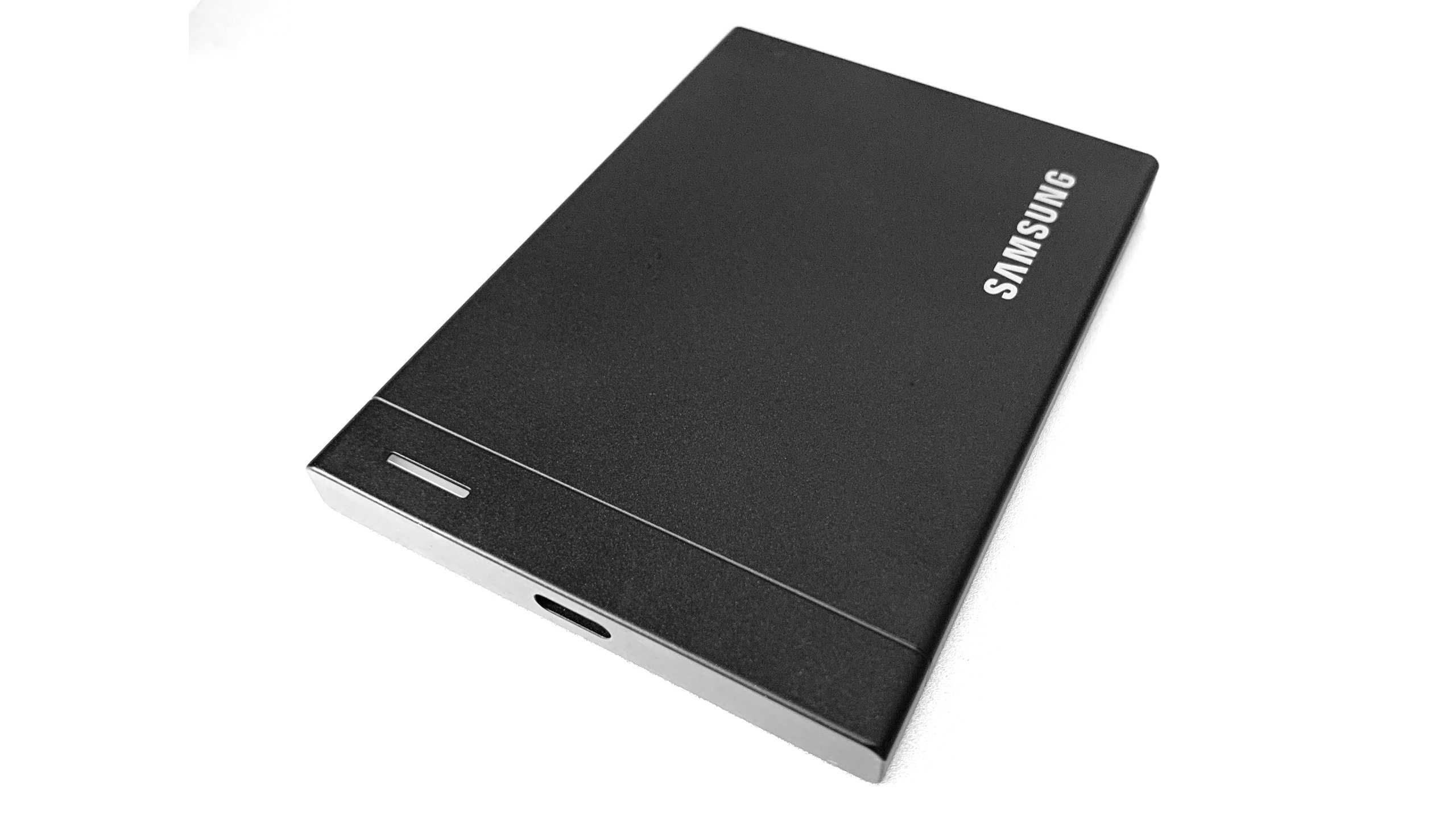
Pros
- Fast and sustains long writes exceptionally well
- Runs remarkably cool despite its diminutive dimensions
- Up to 8TB of capacity
Cons
- Like all current SSDs — very expensive


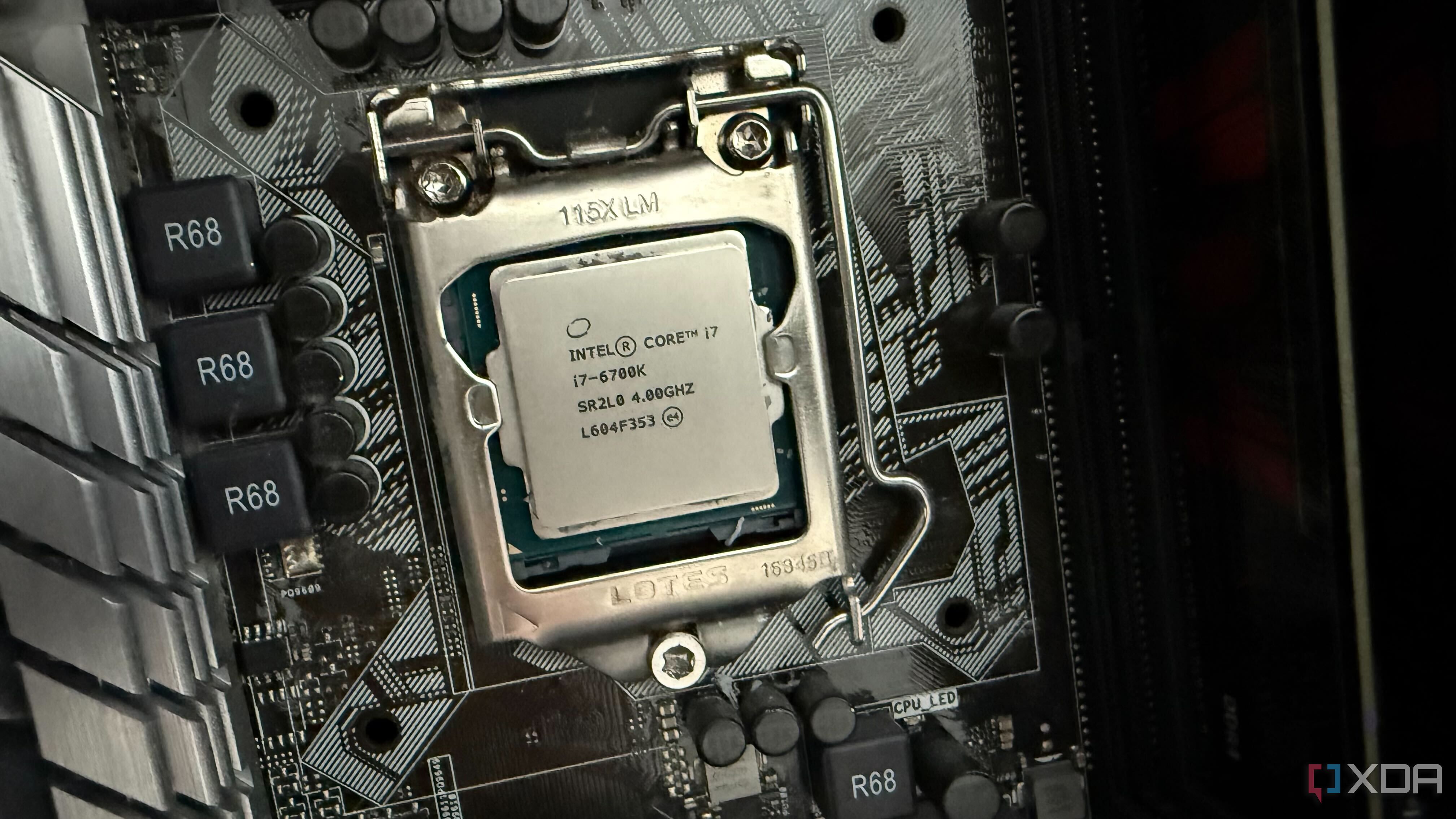
Intel's 8th-gen CPUs are the most underrated used chips you can buy
Intel's 8th-gen CPUs launched almost a decade ago, so I wouldn't blame you for thinking they're practically obsolete at this point. After all, even today's entry-level Ryzen CPUs can put the "high-end" i7-8700K to shame in gaming benchmarks. But the point of those CPUs today isn't to prove they can still compete with what's available on the market. It's about how much performance you're getting for the money and whether you actually need anything faster for your use case.

Australia lifts rates to 18-year high as AI boom, energy costs fuel inflation
The Reserve Bank of Australia raised its benchmark rate to 4.85% on rising technology costs from AI investment and higher energy prices.
Store Chunk Offsets for Exact-Page Citation Links — A Gaming Compliance Pattern
Store document_version, page, start_offset, and end_offset with every embedded chunk. For a gaming compliance lookup system that detects semantically duplicated policy records, those four fields let an answer link back to the exact passage that justified a match. Render the highlight from the original version at read time; do not retain another copy of the passage merely for citation display.
That is the short answer. The expensive term is usually not four small provenance fields. It is duplicated text and telemetry multiplied by chunk count, replica count, and retention time. Offsets keep the citation durable while allowing that redundant material to disappear.
What is the retention bill actually measuring?
Start with counts, not vendor names. Suppose a policy corpus contains 80,000 source pages and produces 12 chunks per page. That is 960,000 chunk records. If each record stores a second 1,500-character display copy, the system retains 1.44 billion characters before accounting for encoding, indexes, replicas, backups, or logs. This is illustrative retention math, not a storage benchmark or a vendor price estimate.
The same multiplication applies to observability. Recording a full query, every retrieved chunk, and every rendered citation for each lookup produces a high-volume event stream. Adding document_id, version, region, game title, policy class, model, and user group as indexed labels also creates a large cardinality product. A useful trace needs correlation; it does not need every dimension indexed forever.
Keep the durable facts that reproduce the citation: document identity, immutable version identity, page, start offset, end offset, and the chunk's retrieval identity. Sample detailed retrieval traces, retain aggregate counts longer, and avoid logging source text. This deliberately gives up the ability to inspect every historical candidate set after the detailed-trace window expires. That loss matters during a rare investigation, so choose the sampling rate and retention window from the audit requirement rather than habit.
Small records win here.
How should you store chunk offsets for an exact citation link?
Quoted text looks convenient until rendering changes. Whitespace normalization, line wrapping, OCR cleanup, or typography can make an exact string search ambiguous. Character offsets survive re-rendering better because presentation can change while the indexed character sequence remains fixed.
Offsets alone are insufficient. A citation into version 17 of an age-rating policy cannot safely open the latest document after version 18 changes a paragraph near the front. Bind every offset pair to the exact document_version. If that version is unavailable, fail the highlight honestly and show page-level provenance rather than placing a confident marker on unrelated text.
Version first.
Page is stored separately even when offsets are document-relative. It gives the reader a stable navigation target and limits the text that the client must load for highlighting. Define the offset unit in the schema as well. A producer counting Unicode code points and a browser slicing UTF-16 code units can disagree around non-BMP characters. Pick one representation, test it, and version that convention.
A compact record can look like this:
{
  "chunk_id": "policy-42-v17-p8-c3",
  "document_id": "policy-42",
  "document_version": "17",
  "page": 8,
  "start_offset": 481,
  "end_offset": 1096
}
The values are an example schema, not a required vendor payload. During ingestion, derive the offsets from the canonical parsed representation and embed the corresponding slice. During retrieval, use the stored fields to fetch that same immutable representation and ask the client to highlight [start_offset, end_offset). The client renders the source slice; the vector record does not become a second document store.
For an Infrai integration, do not infer its vector payload from that application schema. Its public, self-describing discovery surface returns the current request schema, response schema, billing information, and runnable examples without requiring a key. Export the documented /v1 API base as INFRAI_BASE_URL, save the discovered vector-upsert example body as vector-upsert.json, and then make the authenticated call below. Curl surfaces non-success bodies and retries rate limits with backoff.
: "${INFRAI_BASE_URL:?Set the documented Infrai v1 API base}"
: "${INFRAI_API_KEY:?Set the Infrai API key}"
curl --silent --show-error --fail-with-body \
  --request POST \
  --header "Authorization: Bearer $INFRAI_API_KEY" \
  --header "Content-Type: application/json" \
  --data-binary @vector-upsert.json \
  --retry 5 \
  --retry-all-errors \
  --retry-max-time 60 \
  "$INFRAI_BASE_URL/vector/upsert"
Use the discovery result's path rather than prose to construct the request URL. Apply its full JSON Schema to the provenance record before sending it, and use the returned runnable curl example as the transport template. This keeps a future schema change visible instead of embedding an unverified field name in application code.
How should semantic duplicates preserve their evidence?
Near-duplicate detection and citation grounding are related but distinct. Similar embeddings can identify two gaming policies that express the same restriction, yet a similarity result is not evidence by itself. Each side of the proposed duplicate pair needs its own provenance tuple. The review UI should open both exact passages, on their respective pages and versions, so a compliance analyst can distinguish a genuine duplicate from two rules that share vocabulary but differ in jurisdiction or scope.
Use a two-