
India’s Sovereign AI: 20 Models, 38,000 GPUs [2026] - https://tech-insider.org/


A Decade of Kill Bugs
[R] There is no free lunch in RLVR: under strategy specialization, every pass@1 gain provably costs some prompt, and the pass@k crossover has a tight bound [R]
Paper: https://arxiv.org/abs/2610.39295
Code + verification package (every number in the paper is checked by a script): https://github.com/yliusci/no-free-lunch-rlvr
Browser diagnostic: https://huggingface.co/spaces/yliusci/passk-price
I kept running into the same pattern in RLVR papers: the RL model wins at pass@1 and the base model catches up or wins at large k (Yue et al. 2025 and many follow-ups). I wanted to know whether more training fixes this or whether it is structural. This is a theory paper, no new training runs.
Setup: model RLVR as an exponential tilt of the base policy over solution strategies shared across prompts (exact for mirror descent, and GRPO stays within 3e-4 TV of it at matched entropy in simulation).
What comes out:
No free lunch. Under exclusive specialization, every update that raises pass@1 strictly lowers success on some prompt. The exact condition is a Stiemke duality statement (a strictly positive price on prompts that equalizes strategy fitness). Being the best strategy on each prompt is provably NOT enough: there is a 3x3 counterexample with a free lunch.
The pass@k price. Once the losses reach the hardest prompts, a crossover is forced. The number of crossings is at most the sign variation of the shift in per-prompt success (Karlin total positivity). The bound is tight for 1 to 6 crossings, and the order-preserving case gives exactly one, which recovers the known single-crossover result.
A frontier, not a bug. With a per-prompt floor, the constrained update traces the optimal pass@1 vs pass@k trade. Forbidding any per-prompt loss removes the crossover and the whole pass@1 gain with it.
The same tilt gives the entropy-performance law with an identifiable exponent.
Practical part: base and RL per-prompt success rates (already in any eval log) are enough to read off the crossing count, the bound, and the price (worst pass@k loss). On published GRPO numbers for Omni-MATH (transcribed from 2607.20543, so indicative only) it finds one crossing between k=64 and k=256.
Where I expect pushback: the shared-strategy model is a population-limit abstraction, and the forced crossover needs a coverage assumption (the paper gives the regime where it fails). I would really like to see per-prompt logs where people observe 2+ crossings, since that is the signature of RL reordering prompt difficulty.
[link] [comments]
Operators Day : 10 founders hiring for founding ML roles - Nov 5 [n]
Hi all! I'm part of the EWOR team and we're organising Operators Day this Thursday, November 5 (4:30 PM CET / 9 PM IST), online on Zoom.
Ten founders will be pitching live, sharing what they're building and the founding roles they're hiring for - AI/ML engineers, robotics engineers, CTOs, CPOs, marketing and sales leads, and more.
These are real founding opportunities with meaningful equity.
If you're an ML engineer or researcher exploring your next move, or know someone who might be a great fit, come join us!
Spots are limited.
Register here: https://luma.com/OperatorsDay?utm_source=reddit&utm_content=machinelearning
Disclosure: I work with EWOR and am helping organise the event.
[link] [comments]
To all ML PhDs, how are you guys doing these days? [D]
Given how competitive AI research has become, and how much luck is involved in landing an actual research role at Big Tech or an AI startup, do you still think your PhD was worth it?
Yes, i know a PhD should primarily be about enjoying research, not getting an industry job. But realistically, we all need to make a living, and after 4–6 years, you’d hope to have some opportunities beyond roles where a master’s would have been enough.
So how you guys feel about it, especially those who recently graduated.
[link] [comments]
Sparks of Weight-Space Programming: LLMs can natively read & write neural network weights [R]
Link: https://rikiyat.github.io/blog/weight-space-programming/
Snippet: “We find that frontier LLMs are surprisingly good at natively reading and writing neural network weights, well past what we’d expect from humans or conventional algorithms. This might be a big deal for both optimization and interpretability.
Just by looking at the raw weights, GPT-6 Astra can tell what a network was trained to do. And without any environment feedback, it has no trouble writing, from scratch, small game-playing networks that outplay networks trained with PPO for 100 million steps.”
Very surprising result, I didn’t expect frontier models to have this capability that has not been optimized for, and it’s something humans cannot do either.
[link] [comments]
Looper
If Grok Bot supported team collaboration and was Open Source
WTF Ubuntu?
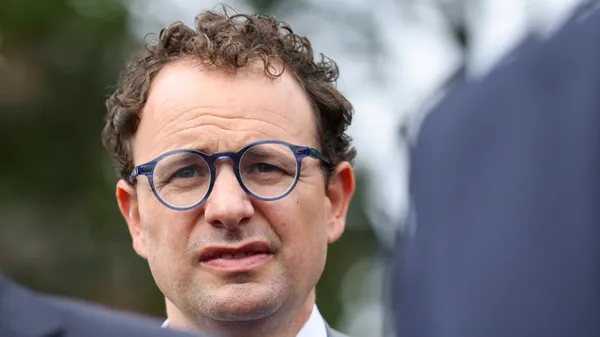

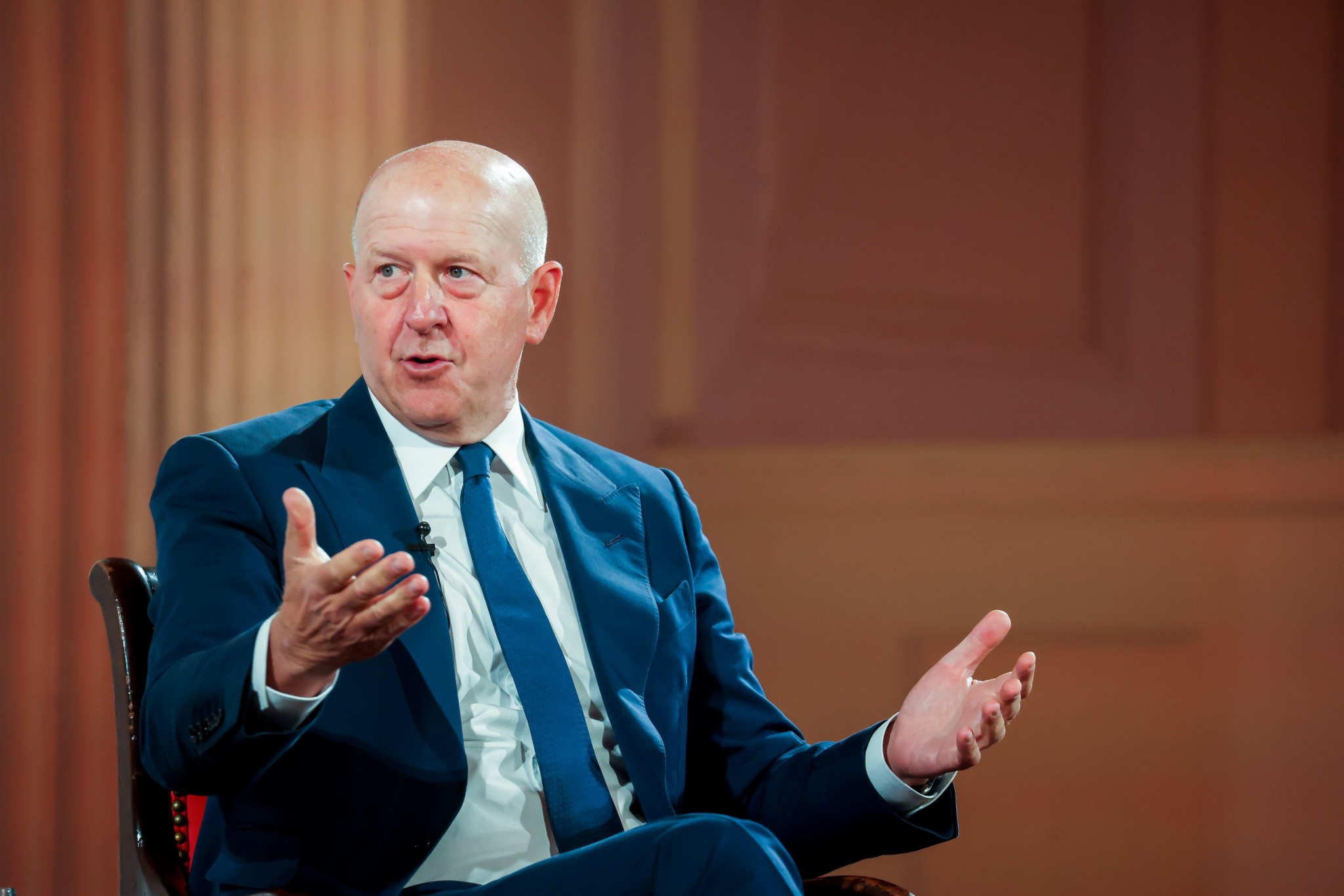
Goldman Sachs CEO David Solomon says the best advice he ever got came from his grandmother in his 20s: ‘Don’t be in a hurry’
David Solomon runs one of the most powerful banks on Wall Street, but the best career advice he ever received didn’t come from a mentor in a corner office. It came from his grandmother.
“Don’t be in a hurry,” the Goldman Sachs CEO told NBC News’ Christine Romans in a rapid-fire interview about his daily routine and the lessons that have shaped his career. He said she gave him that advice when he was in his twenties.
The clip came out of Romans’ wider conversation with Solomon for NBC’s Business in America series. That conversation aired Oct. 23, one day after Goldman launched its Small Business AI Institute, part of a new $500 million commitment to its 10,000 Small Businesses program, with Anthropic, Google, Meta, and OpenAI as partners. In the segment that ran on Nightly News, Solomon said he’s excited about what AI could mean for businesses and for people’s longevity.
In the lightning round, though, he talked less about markets and more about how he manages his days and his life.
Gym, coffee, and a protein shake before 7 a.m.
Asked to name three things he does before 7 a.m., Solomon kept it simple: He wakes up, goes to the gym, and generally has a cup of coffee and a protein shake.
He’s in good company. An early workout is a fixture of many executives’ routines, from the Bupa CEO who trains six days a week with his Gen Z son to the many leaders featured in Fortune’s Day in the Life of a CEO series.
The research suggests the habit matters more than the hour. A 2022 systematic review published in the Public Health Agency of Canada’s journal Health Promotion and Chronic Disease Prevention in Canada examined 35 studies. Eleven found morning activity more beneficial; 12 found afternoon or evening activity more beneficial; and 12 found no clear difference. The authors concluded there is no consistent evidence that exercising at one time of day is better for your health than another, and they rated the evidence quality as very low.
‘Stick to the schedule’
Solomon’s best trick for keeping his day on track is unglamorous: sticking to his schedule.
“The one thing that we can’t…get back is time,” he said, adding that he tries to be very purposeful with how he spends it. That means making commitments and keeping them, because, as he noted, it’s easy to drift off schedule.
The science backs him up, with a twist. A 2021 meta-analysis in PLOS One by Brad Aeon, Aïda Faber, and Alexandra Panaccio found that time management is positively linked to job performance. It was even more strongly linked to well-being, especially life satisfaction. In other words, the payoff from guarding your calendar may show up as much in how you feel as in what you get done.
Why slowing down isn’t a contradiction
At first glance, “stick to the schedule” and “don’t be in a hurry” seem to pull in opposite directions. For Solomon, they work on different timelines: Be disciplined with the hours in a day, and be patient with the arc of a career.
He repeats this message often. In August, he told Goldman’s summer interns at a town hall that taking more time can open up more opportunities, urging them to “try not to be in a hurry and enjoy the ride.” He offered small-business owners the same counsel about AI at the institute’s launch last week, telling them that “the important thing is to get it right, not to get it quicker.”
‘I don’t like to do things halfway’
Solomon’s patience has a limit, and it’s the things he cares about. Asked whether he has any obsessions, he said it depends on what has captured his interest.
“If I’m interested in something, I get very obsessive about it. I don’t like to do things halfway,” Solomon said. When something grabs him, he added, he tends to go deep.
Psychologists have found that kind of intensity cuts both ways. In a 2007 study in the Journal of Personality, Robert Vallerand and colleagues distinguished between “harmonious” passion, an activity you freely choose that fits with the rest of your life, and “obsessive” passion, which feels compulsive. Obsessive passion predicted deliberate practice and mastery-oriented goals, which supported performance. But it was also tied to fear-of-failure goals that undercut results. Harmonious passion delivered the upside with less of the downside.
The takeaway: Going deep can fuel success, as long as the obsession serves you, not the other way around.
Not every passion turns into a career, of course. Solomon also named one ambition he’s had to let go of: playing professional basketball. He conceded that one isn’t on the table.
This story was originally featured on Fortune.com
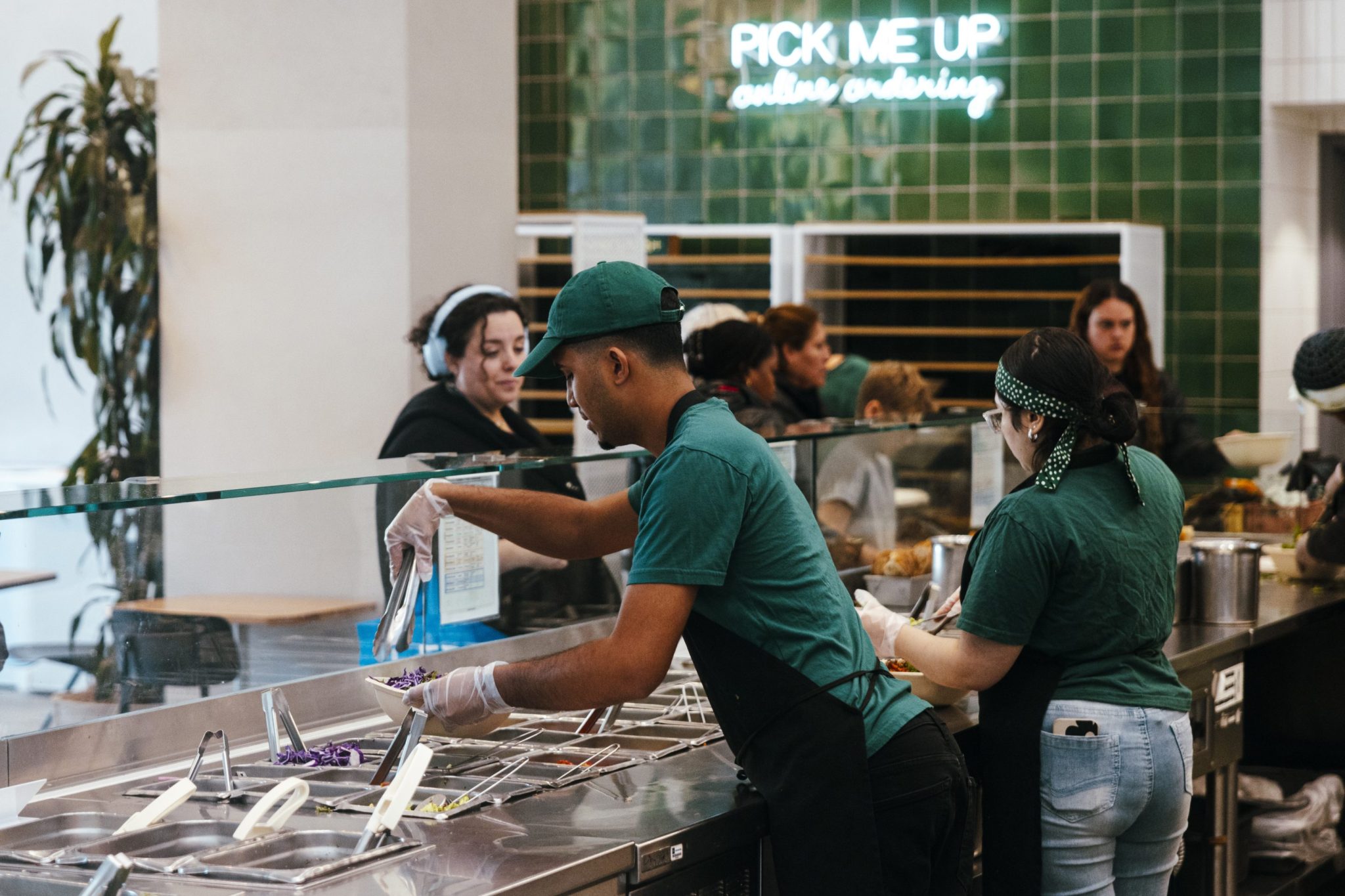
Sweetgreen managers could earn more than $200,000 a year under a new pay plan, as the salad chain bets higher pay will lift sales
A fast-casual chain favored by the office lunch set is sweetening compensation packages for managers at its restaurants.
Starting next year, Sweetgreen managers will be eligible to earn more than $200,000 a year if they meet certain milestones set by the company. The new offering, which will be paid through a mix of base salary and equity, is intended to empower managers who contribute to the business’s success, and “[share] those wins with those that are driving it,” co-founder and CEO Jonathan Neman said.
Under the new incentive plan, Sweetgreen managers (known as “head coaches”) will see their base pay increase by up to 45% if they work at restaurants with higher sales volume. The company declined to specify how high sales need to be to meet this threshold.
When restaurants outperform their sales goals, managers will get a revenue share bonus from the upside, with the percentage increasing based on their tenure in the business. Managers can also continue to receive equity in the company based on their performance.
Base salary increases will go into effect in Q1 of 2027, while head coaches will start to receive bonuses based on store performance on a quarterly basis from Jan. 1, 2027, according to Sweetgreen.
How Sweetgreen is making the case for higher pay. Higher labor and related costs cut into Sweetgreen’s earnings for the quarter ending in June, accounting for 29% of revenue, up from 28% the year prior. Same-store sales and restaurant profits also declined that quarter compared to 2025. (Sweetgreen will report Q3 earnings on Nov. 5.)
Amid such economic pressures, Neman recognized that investing in additional compensation for managers “is definitely a bet.”
“But the data supports that if we’re able to attract, retain, and incentivize better head coaches, that they will drive higher sales and better margins,” he added. Neman noted that while Sweetgreen is investing some money upfront to raise managers’ base salaries, most of the investment is contingent on their stores meeting certain performance targets.
“Typically the company would take more of that upside. Now we’re sharing in that upside with our team, but…we think that’s a good trade,” he said.
Zoom out. Sweetgreen isn’t the first fast-casual chain to bet big on its managers. Chipotle announced in 2021 that workers in its highest general manager position could earn $100,000, on average, as it sought to hang onto workers in a tight labor market. The burrito business doesn’t appear to have taken a financial hit from this move, as its restaurant operating margins have stayed between 23% and 26% in recent years. More than 85% of general managers at Chipotle were promoted internally in 2025, according to its 2026 proxy statement.
Neman said Sweetgreen took inspiration from chains like In-N-Out Burger, which recently confirmed that store managers can earn more than $200,000 on average, and Raising Cane’s, which grants monthly bonuses to managers based on sales, and said in 2024 it paid managers up to $175,000 annually.
In addition to business performance, Sweetgreen will be looking at metrics like team member turnover, “head coach stability” (i.e. whether managers stay in their stores), quality and experience scores, and internal mobility to determine whether this incentive program is working, Neman said.
This report was originally published by HR Brew.
This story was originally featured on Fortune.com
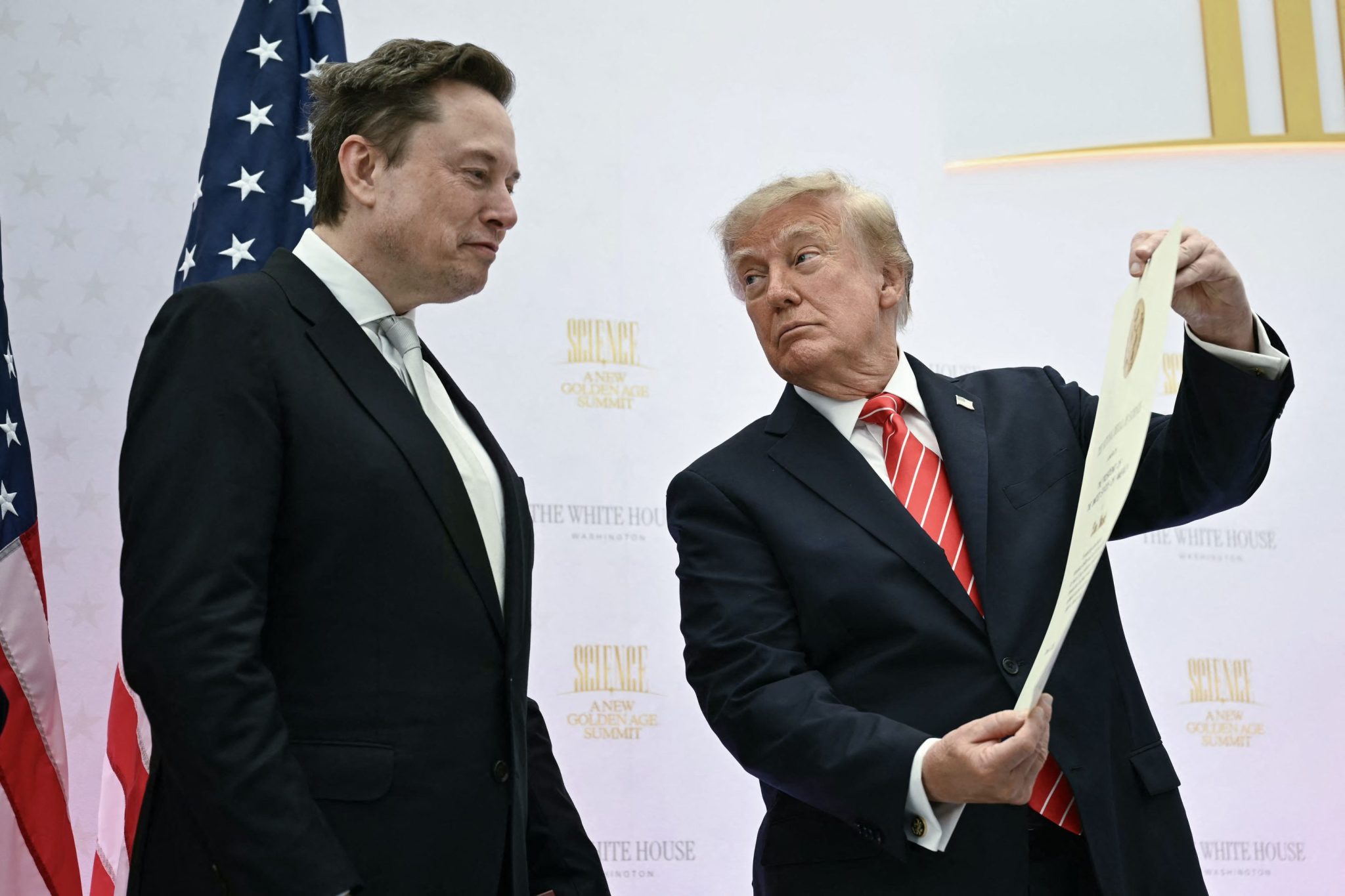
After topping 2024’s donor list, Elon Musk said he’d do ‘a lot less.’ Since then, he’s given more than George Soros has personally in his lifetime
In May 2025, Elon Musk said he was pulling back from political spending.
“I think in terms of political spending, I’m going to do a lot less in the future,” Musk said in an interview with Bloomberg at the Qatar Economic Forum. “I think I’ve done enough.”
He then left room to change course: “Well, if I see a reason to do political spending in the future, I will do it,” he said. “I don’t currently see a reason.”
He had just finished the 2024 election cycle as the country’s biggest political donor, according to OpenSecrets. That year, he gave $291.5 million, all to Republicans. The next-largest donor, Timothy Mellon, gave $197 million.
In the 17 months since, Musk has given $427.5 million to federal political committees, according to a Fortune analysis of Federal Election Commission filings through Oct. 14. That’s nearly $200 million more than George Soros, the man Musk has claimed “astroturfed” anti-Tesla protests. Soros, the Democratic megadonor, has given personally $243.2 million to federal committees in 47 years of FEC records.
How much has Musk contributed?
Most of Musk’s money arrived after July 1 of this year. SLF PAC, the flagship super PAC for Republican Senate candidates, reported a $75 million check from Musk on Sept. 9 and an $83 million check on Sept. 23. Musk has spent more than $200 million to help elect Ken Paxton, the Texas attorney general, to the Senate, according to a New York Times analysis.
America PAC, the super PAC Musk funds, reported $165.6 million from him between July 1 and Oct. 14, in its October quarterly and pre-general reports. That includes $8 million in in-kind support from United States of America Inc., one of his companies, which America PAC attributed to Musk.
He also gave $20 million on Sept. 4 to the Congressional Leadership Fund, the main super PAC for House Republican candidates. And on Aug. 21, his trust gave $10 million to Lone Star Liberty PAC, which supports Paxton, who is running against Democrat James Talarico.
Other counts put him higher. The Times and OpenSecrets rank Musk as the top donor of the 2026 midterms, at $445.6 million for the full cycle (outside of the FEC, a Fortune analysis of IRS filings found he gave $10 million to the Republican Governors Association and $2 million to the Republican Attorneys General Association on July 6). The Brennan Center for Justice, which counts his company alongside him, puts the total at $483 million.
How much has Soros contributed?
Soros’s largest personal checks came before July 2026. He gave Democracy PAC II, one of his family’s two super PACs, $125 million in September 2021 and $50 million in November 2022. In the 2024 cycle, he gave $4.2 million personally to federal committees, FEC records show.
Soros has also given $67.8 million to political groups that report to the IRS, including $24.2 million to Justice & Public Safety PAC, according to IRS filings. FollowTheMoney, which compiles state campaign finance records, lists about $70 million more in state and local contributions. Together, that comes to about $381 million, still less than Musk has given since May 2025.
The comparison changes if groups Soros funds are counted. The Fund for Policy Reform, a nonprofit, has given $210.5 million to Democracy PAC since 2020, including $60 million in January 2024 and $50 million in January 2026, but the nonprofit doesn’t disclose its donors. The Times describes it as a channel for Soros family money and notes that Alex Soros, George’s son, is a director. Counting the fund, Soros’s federal total is $453.7 million, more than Musk has given since his remarks.
The Times counts George and Alex Soros together at $103.4 million this cycle and reports that the family’s two super PACs held about $173 million in cash as of mid-October.
Over his lifetime, Musk has given $723.8 million to federal committees, about three times Soros’s personal federal total, according to Fortune’s analysis of FEC filings. Fortune’s analysis counts contributions each man made to federal political committees as reported to the FEC, including in-kind gifts that recipients attributed to them, and excludes duplicate memo entries. Musk’s totals run through Oct. 14, 2026; Soros’s run through Sept. 9, 2026.
Musk’s totals exclude donations to groups that don’t disclose their donors, as well as any money given after Oct. 14.
This story was orig