
Discussing politics with a chatbot: How political beliefs shape prompt formulation for generative AI
How could AI best help Alzheimer's patients now and in the future?
Alzheimer's is a terrible thing to go through. I was thinking about how we can help Alzheimer's from the care side rather than the disease and cure side. I wonder if a sort of Notebook LM for memories that would be built early on help someone maintain understanding and connection to the world. It seems much better than a chatbot. What else might be a very helpful tool?
Discuss

AI Is Making The App Optional
AI Doom or AI Bubble? What to Actually Expect from AI in the Next Two Years
If you follow AI news, you’ve probably noticed two stories running side by side. In one, AI is so powerful that it may wipe out humanity within a few years. In the other, AI is wildly overhyped and the money pouring into it is a bubble about to burst. Even Sam Altman, the CEO of OpenAI, has said investors are “overexcited” about AI.
Both stories can’t be fully true at once. Either AI is about to become all-powerful, or it’s a lot less impressive than the valuations suggest. I work with tech companies on content and strategy, and I kept hearing smart people repeat one headline or the other. So I went looking for a more grounded view.
One of the most level-headed takes I came across was from Denis Stebunov, CEO of the software development company ivelum, who recently recorded his thoughts on these headlines. His view, which I’ll lean on throughout this piece, is that the doomsday scenario and the bubble panic both miss what’s actually going on with AI, and what we should expect from it over the next couple of years.
Why doom sells
It’s natural to feel uneasy about AI. It’s new, it moves fast, and few people fully understand how it works. Anxiety about the unknown is a very human reaction. But Stebunov argues there’s more to the doomsday narrative than ordinary nerves.
The first factor is old and well documented: bad news sells. Open any news site and the headlines are about wars, hurricanes, crashes, and crimes. Plenty of good things happen too; they just don’t get the clicks. “Bad news drive more engagement,” as Stebunov puts it. “People are more likely to click on something that sparks anxiety.” A study published in Nature Human Behaviour analyzed about 105,000 headline variations tested on the news site Upworthy and found that each additional negative word in a headline raised the click-through rate by about 2.3%.
The second factor is less obvious. The warnings about AI’s dangers don’t only come from random people online. They come from the leading AI companies, which talk to the public and to governments about risks and regulation. In Stebunov’s view, raising these concerns has become part of the PR strategy of the two largest AI labs, OpenAI and Anthropic. A product that might be dangerous is, by implication, a very powerful product. “It’s a bold move,” he says, “and it’s clearly working.”
The third factor is cultural. Most of us grew up on The Terminator and The Matrix, which paint a vivid picture of machines taking over. More hopeful visions exist, Star Trek among them, but they don’t stick the same way. So when someone mentions very advanced AI, most people picture Skynet, a story they already know.
The real risks today
None of this means AI is harmless. Stebunov has concerns of his own, and the most concrete is cybersecurity.
The threat is no longer hypothetical. In November 2025, Anthropic reported that it had disrupted a cyber-espionage campaign by a state-sponsored group that used its AI model to attack roughly 30 organizations. The AI carried out 80 to 90% of the tactical work on its own, according to the report, with humans stepping in mainly to approve the big decisions.
But the same technology works on defense. In July 2025, Google said its AI agent Big Sleep had found a critical vulnerability in SQLite, a widely used open-source database, that attackers were preparing to exploit. Google called it the first time an AI agent had directly foiled an exploitation attempt in the wild.
“It’s more like a cat-and-mouse game,” Stebunov says, “which probably will be accelerating.” Attackers get faster, defenders get faster, and organizations that don’t keep up will pay for it. That’s a serious problem, and a very different one from the end of humanity.
The extrapolation trap
In fairness, the doomsayers are mostly not talking about today’s AI. They mean future systems that will be far more capable, and their argument goes: look how much progress AI made in the past few years, and imagine where it will be in a few more.
“This is a classic extrapolation,” Stebunov says. You take the past trend and assume it will continue at the same pace, or faster. That’s a reasonable starting point, but only if you understand where the past progress came from.
What actually happened since 2018
The technology behind today’s chatbots goes back to 2017, when researchers at Google introduced the transformer architecture. In 2018, OpenAI built on it with GPT, the generative pre-trained transformer. That was the scientific breakthrough.
What followed, in Stebunov’s words, was “not a series of scientific breakthroughs, but rather scaling of the same idea.” The industry discovered that the bigger the model and the more it’s trained, the better it performs. That’s where most of the money went: bigger models, more compute, more data centers.
There were also two important advances in how the models are used. First, they learned to use tools. Second came agents, which run the model in a loop with the right tools and context so it can work through a task step by step. “That was big,” Stebunov says. “Agents can now perform real tasks, and this has already changed how people work.”
Still, the research itself produced no new fundamental breakthrough. Ilya Sutskever, one of OpenAI’s co-founders, has made the same point. He has described 2012 to 2020 as the age of research and 2020 to 2025 as the age of scaling, and argued that making models a hundred times bigger won’t transform everything. In his view, the field is heading back to research.
What to expect in the next two years
If most recent progress came from scaling, the question is how long scaling can continue. Not forever, Stebunov says, though nobody knows when it will slow down. “Maybe it will plateau in the next year, or maybe not.”
A genuine new breakthrough would change the picture, and he isn’t aware of one on the horizon. Without it, his forecast is refreshingly unexciting: “We’ll probably have more or less the same, just better, and with more practical applications.”
In practice, that means steady improvement rather than leaps: models that keep getting better at reasoning, coding, and following instructions. The biggest gains will come from putting the existing models to work in narrow, well-defined areas where agents can handle real tasks. And much of the change will come from more companies figuring out how to use what already exists, rather than from smarter models arriving.
That’s a long way from superintelligence by 2028, and a long way from a technology about to collapse.
What if the bubble bursts?
The bubble worry isn’t made up. In August 2025, Sam Altman told reporters: “Are we in a phase where investors as a whole are overexcited about AI? My opinion is yes.”
The numbers explain the nerves. According to Futurum Group, the five largest US cloud and AI infrastructure companies planned to spend roughly $660 to $690 billion on capital expenditure in 2026, nearly double the year before. OpenAI ended 2025 with about $20 billion in annualized revenue, and Futurum estimated th
Building AI Products, Part 1: How To Find AI Use Cases Worth Building in the First Place
In February 2024, Klarna announced its AI assistant was handling two-thirds of customer chats. It was doing the work of 700 agents and cutting resolution time from 11 minutes to 2. It looked like the AI success story everyone wanted. Fifteen months later, Klarna was hiring humans again. The CEO admitted that a focus on cost had led to "lower quality" and customers still wanted a person for complex cases. The AI stayed and alongside people.
So which Klarna got it right: the one that automated 700 agents' worth of work or the one that hired people back? Picture two chats. "Where's my refund?" has one answer, sitting in a database. "Why was I charged twice?" needs someone to hear the customer out and make a call. AI can handle the first on its own. The second needs a person or at least a person checking.
Most AI roadmaps skip that distinction. They list places to add AI, not jobs to split between AI, software and people. The rest of this piece shows how to make that split: a map of where AI value sits, then three tests for any idea. Is it worth it? Is it suitable? How do we build it?
First, know where your idea sits
The AI economy has four layers and value grows as you move from answering to doing:
- Foundation ("tell me"): the models and compute. OpenAI, Sarvam AI, NVIDIA.
- Horizontal ("help me"): one pattern sold to every industry. ChatGPT, Freshworks Freddy AI.
- Vertical ("do this for my industry"): one industry's workflow, data and rules. Harvey in law, Qure.ai in medical imaging.
- Agents ("get this done for me"): systems that plan, use tools, act and check until the job is done. Once AI can act, permissions, audit logs and approvals become product features.
Then run the strategic test: if the AI disappeared tomorrow, what's left?
- If nothing is left, the product is AI-native, like ChatGPT or Perplexity.
- If it still works but worse, it's AI-enhanced, like GitHub with Copilot or Gmail's "Help me write".
- If the core value is intact, it's AI-adjacent, like a payments app whose HR team writes job ads with AI.
Each position calls for a different strategy, so know which one you're in before you go further.
1. Is it worth it?
Using AI is easy. Earning from it? McKinsey's 2026 State of AI survey finds nearly 9 in 10 organisations use AI but only 37% see any EBIT impact(Earnings Before Interest and Taxes) and about 6% earn more than 5% of EBIT from it.
Alexa is the cautionary tale: used daily for timers and weather, rarely for shopping. As one former senior Amazon employee told the Wall Street Journal: "We worried we've hired 10,000 people and we've built a smart timer."
Heavy use doesn't always equal value. And unlike normal software, every AI answer costs money. Whether you charge per seat, per call, per outcome or a hybrid of these, a flat price can lose money on your heaviest users, so model them first.
Before building, run a 60-second TASQ screen:
- Task ambiguity: does the input vary every time? (Code review, yes. Payroll tax, no.)
- Automation: does it run end to end, or does someone still copy, check and route the output by hand?
- Scale: does it happen often enough to matter? A task done 10 times a year rarely is.
- Quality tolerance: is a mistake caught before it causes harm? (A bad film suggestion, fine. A drug dosage, no)
A pass means look closer, not build.
Next, put a rupee number on it: Value = volume × value per task × automation rate − cost
A support bot handling 50,000 tickets a month, resolving 60% and saving ₹40 each, is worth about ₹9.75 lakh a month after ₹2.25 lakh of AI cost. Note that the AI cost applies to every ticket it attempts, not just the ones it solves. One more catch: if nobody leaves the team, you have freed capacity, not saved cash. Be honest about which one you're claiming.
2. Is it suitable?
The useful question to ask is "where should AI sit in this system?" Split the task into parts, then score each part from 1 to 5 on four dimensions:
- One right answer? If yes, use software. A scanned GST invoice is the perfect example: AI reads the messy layout, software calculates the tax. AI should never invent a tax figure.
- Can you write the rule? If yes, write it. If not but examples exist, let a model learn. Fraud teams do both: hard rules, plus a model's risk score, plus a decision.
- What if it's wrong? A bad email draft costs a minute. An unauthorised money transfer can't be undone. The harder the error is to reverse, the less AI should decide alone.
- Do we have the data? Data has to exist, fit this task, be good enough and be legal to use. Five years of machine sensor data with failure records is a strong candidate. Three weeks with no failures is not.
Add up the scores:
- 16 or more out of 20 is a strong candidate: a sales-email assistant scores about 18.
- Between 11 and 15, add guardrails.
- At 10 or less, AI supports and a person decides.
Use the total to compare ideas. The answer is rarely yes or no.
It's a role: AI can assist (it drafts, a person checks), recommend (it scores, a person decides) or execute (it acts, within set limits). Who should approve a ₹4,500 expense claim? Not the AI. AI reads the receipt, and rules approve it within caps. The pattern that falls out of all this is worth memorising: AI for ambiguity, software for certainty, humans for judgment.
3. How do we build it?
Pick the simplest route that still has lasting value, and stop at the first yes:
- Prompt if a good prompt solves it reliably and nothing needs system access.
- Buy if a product or API already does it and building wouldn't set you apart.
- Build if the workflow is strategic or your own data is the edge.
- Mix is where most real products end up: buy the base, build the integrations and rules.
Take a WhatsApp bot that refunds up to ₹2,000 for missing food items. Buy the conversational platform. Build the order lookup, per-customer caps, fraud checks and refund rules. Send disputes to a person.
Why not just prompt it? Because a prompt alone can't promise facts, policy or privacy. Ask a bare chatbot "where's my refund?" and it may invent a status. Ask it to delete your data and it may say "done" when nothing was deleted. Those guarantees live in the system around the model, not in the prompt.
The model is not the moat
On 2 May 2023, Chegg's share price fell 48% in a day. Students wanted homework help,
Apple just had its best year ever. So why is its stock falling?
Yesterday, Apple (Nasdaq: AAPL) reported its fourth-quarter results, which closed out its fiscal 2026 financial year.
On the surface, the results were exceptionally strong, with Apple exceeding Wall Street’s expectations on the most important metrics. But after announcing its results, AAPL shares fell, and today in early morning trading they are down. Here’s what you need to know.
Apple’s Q4 beat expectations
Wall Street had some lofty expectations for Apple going into its Q4 2026 earnings report. Analysts had a consensus expectation of Apple delivering $113.46 billion in revenue and earnings per share (EPS) of $2.00.
Apple topped both.
The company ended up reporting $114.5 billion in revenue and an EPS of $2.10. But things were even better: Its all-important iPhone revenue for the quarter was $57.58 billion, beating analyst expectations by more than a billion dollars, suggesting that, despite price hikes, demand for Apple’s smartphones remains strong. Mac revenue came in at $10.79 billion, also beating analyst expectations by more than a billion dollars.
“Today, Apple is proud to report a September quarter revenue record of $114.5 billion, up 12 percent from a year ago,” Apple CEO John Ternus said, “with iPhone reaching a September quarter record and Services reaching an all-time high, capping off our best fiscal year ever.”
Still, Apple shares fell after its earnings report, which was released after the closing bell yesterday. And today, the company’s stock price is down around 2% as of the time of this writing to $327.25.
But why?
Guidance matters more than results
Investors love great, record-setting results. But if they love one thing more than results, it’s guidance showing the future is rosy for the company.
After Apple reported its Q4 results yesterday, it also issued guidance for its current quarter, which is Q1 of fiscal 2027. The quarter is arguably Apple’s most important as it’s the first full quarter with the new iPhone on sale, and it covers the all-important holiday period.
On the sales front, things look positive: Apple is forecasting a record Q1 revenue of $158.18 billion. However, revenue isn’t profit, which comes from the margins on its sales. And Apple’s reported gross margin guidance for Q1 wasn’t what investors wanted to hear.
Apple said it expects gross margins for the quarter to be between 45% and 46%. As CNBC noted, analysts expected Apple to guide gross margins to 46.3%. Either way, those gross margins are expected to be well below Apple’s Q4 gross margins of 47.9%.
The lower-than-expected gross-margin guidance seems to be the main driver of AAPL’s stock price drop today.
Why are Apple’s gross margins expected to decline?
But why are Apple’s gross margins expected to decline when the company has raised prices on most of its products in recent months?
You can blame the so-called RAMageddon—the skyrocketing cost of memory, which AI hyperscalers are gobbling up to power their data centers, leaving consumer electronics companies like Apple forced to pay more for an increasingly scarce component that used to be relatively inexpensive.
Apple chief financial officer Kevan Parekh told analysts that its expected lower margins for Q1 “includes primarily the impact of higher memory costs” in addition to “some costs related to the ramp of Siri AI,” the company’s revamped AI chatbot.
The higher consumer prices but lower-margins discrepancy shows that Apple isn’t passing the full cost of higher memory prices onto customers; instead, it’s absorbing some of those costs to keep product prices rising even further, which could potentially put consumers off upgrading.

EU Court Advisor Warns Google AI Chatbot May Breach Copyright Rules

Read more of this story at Slashdot.

Apple to Place Stricter Age Restrictions on Dating Apps and Some AI Chatbots

Trump Asked Grok AI About Invading Venezuela. Democrats Want His Chat History

Here’s Why You Shouldn’t Use AI to Vote

Mac 端安卓设备管理工具 AndroMeld 限时 8 折,仅需 28 元起!
在日常工作中,我们经常要使用电脑和手机来协同完成工作。
如果用的是 Mac + iPhone,那当然不会有什么问题。但如果用的是 Mac + 安卓手机,那光是文件传输,就足够让人头大。
AndroMeld 就是一款能让你的 Android 设备和 Mac 电脑无缝连接的工具!

怎么个无缝法?
通过有线 / 无线的方式,让它们连接起来,然后就能直接在 Mac 上:
- 打开访达,直接读写安卓设备中的文件;
- 在独立窗口内,运行安卓设备中的 App;
- 让安卓通知显示在 Mac 通知中心;
- 连接 AI Agent (智能体) ,让它直接操控安卓设备;
- 更多玩法……
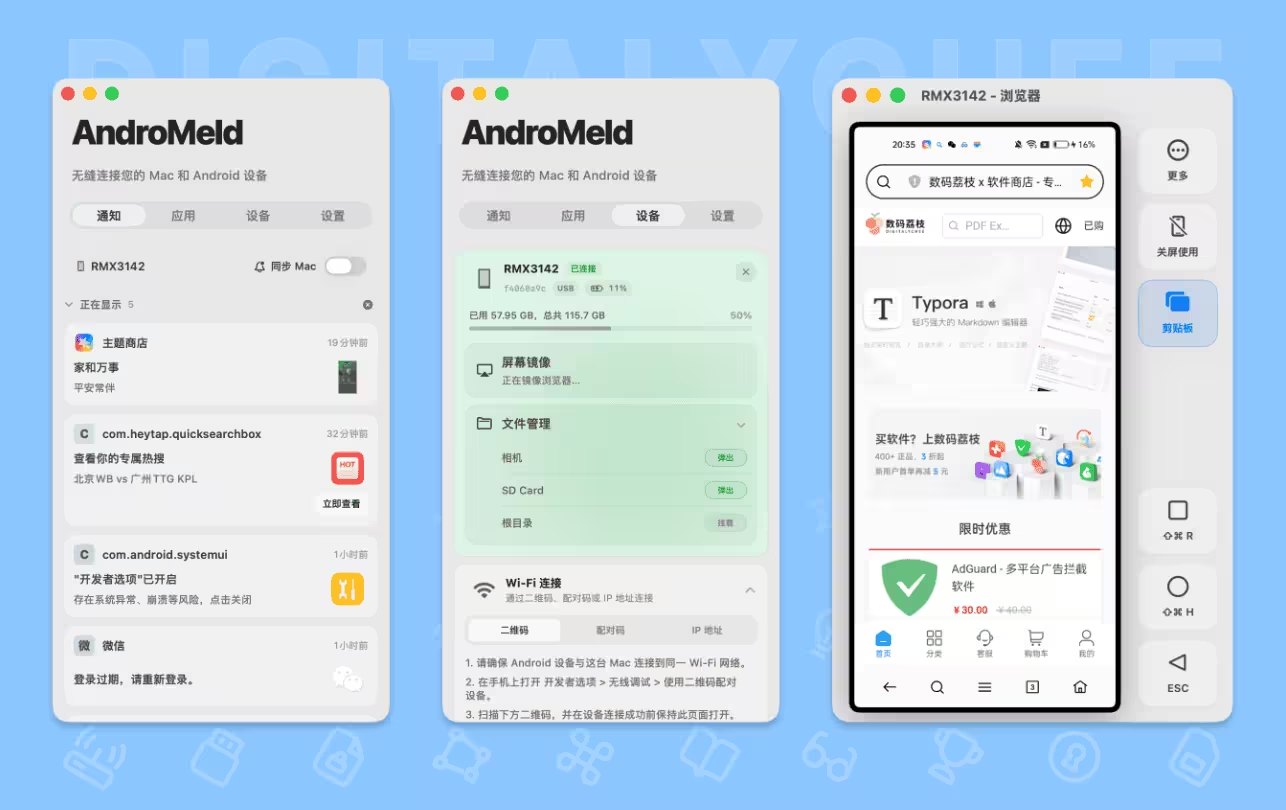
数码荔枝「双十一」正版软件大促活动已开启,下单 AndroMeld 可享受 8 折优惠!
即日起至 11 月 13 日,AndroMeld 限时 8 折,到手仅 28 元起,买断也只要 68 元。快戳小众软件专属优惠链接前往购买>>
- 新用户免费加入会员,首单立减 5 元
- 结算页面输入“APPINN”优惠码,额外再享 95 折优惠;
两种连接方式
AndroMeld 的用法很简单,只需要:
- 从 Mac App Store 安装 AndroMeld;
- 在安卓手机上打开开发者选项;
- 用数据线把手机和电脑连接起来,或者让它们接入同一个 Wi-Fi。
运行 AndroMeld 后,按照提示操作就能轻松完成配置。

剪贴板 & 通知同步
连接后,可马上体验到的功能,就是剪贴板和通知同步。
剪贴板同步:就是从一台设备复制,然后到另一台上面粘贴,轻松完成文字或图片的跨设备传输。

这个过程可以是从电脑到手机,也可以是手机到电脑,都没问题。
带来类似于 iPhone 和 Mac 搭配使用的体验。
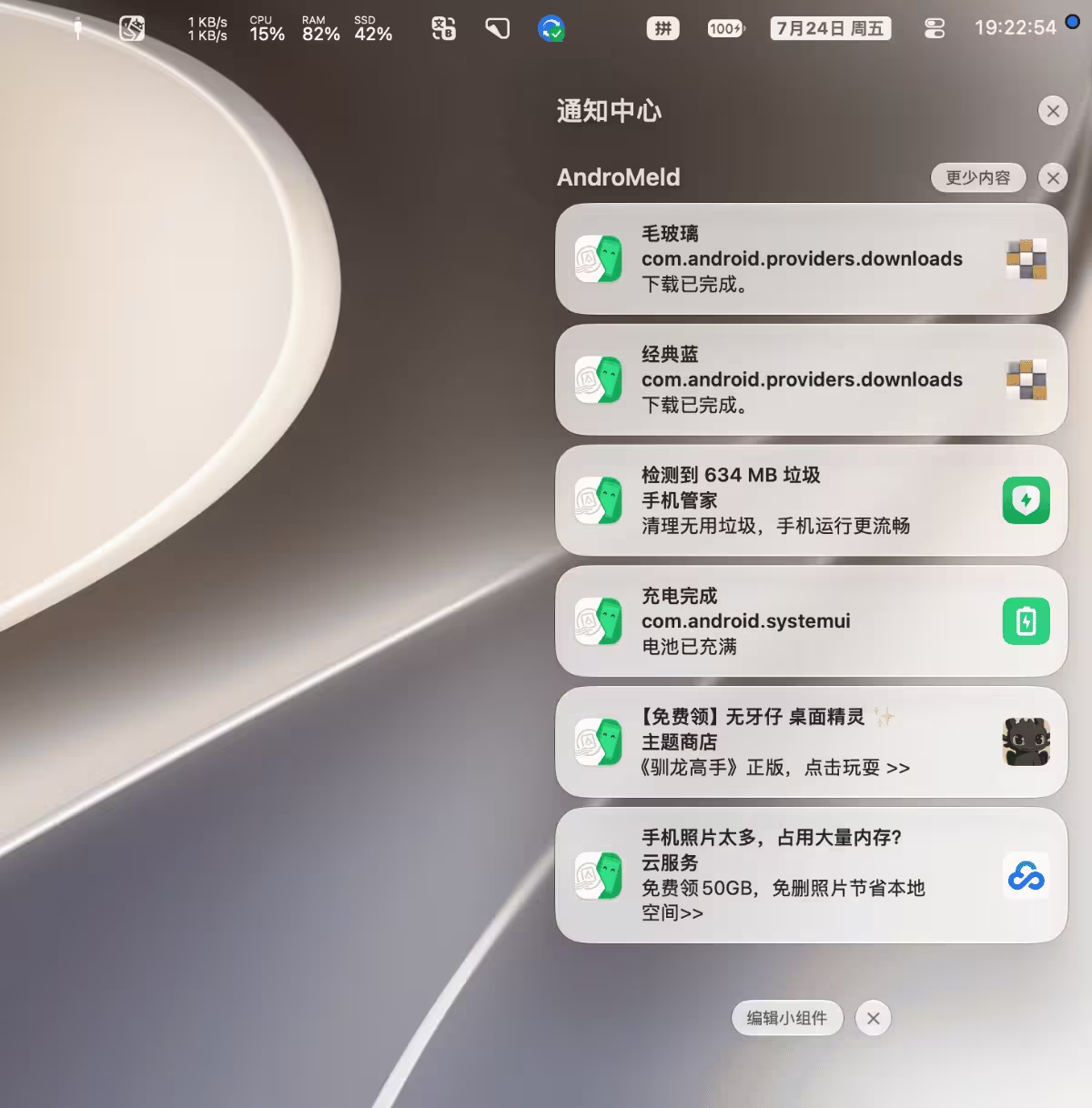
通知同步:就是让安卓设备接收到的通知,实时显示在 macOS 的通知中心 —— 方便复制安卓手机上接收到的验证码等信息。
在访达中管理文件
AndroMeld 还支持把安卓设备中的存储空间,挂载到 Mac 访达。
方便我们以文件夹的形式,复制 / 移动 / 编辑 / 删除安卓设备里面的文件。
在实测中发现,不仅能够挂载「存储卡」 (存放各类应用的数据) 和「相机」 (存放相机拍摄的照片视频) 这两个文件夹,甚至还能挂载「根目录」,方便我们访问系统文件和数据。

在 Mac 上运行安卓应用
利用 AndroMeld,还能在 Mac 上,直接运行安卓设备中已安装的应用!
比如,想要测试某个网站在手机上的浏览效果,可以直接在 Mac 上进行如下操作:
滑动桌面找到浏览器,鼠标点击打开,输入并访问 appinn.com,在搜索框内输入 PDF,按下回车……
在上述过程中,不需要触碰手机,只需要用电脑键鼠控制手机操作,用电脑屏幕查看手机画面 —— 跨设备办公效率拉满!
当然了,上述只是在投屏模式下的基本玩法,AndroMeld 还支持更高级的 —— 融合模式。
在融合模式下,安卓应用可以运行在虚拟屏幕上,以独立 Mac 窗口呈现!手机本身可以继续其他任务,甚至保持锁屏。
画面可以缩放、旋转……还能在 Mac 上实现同屏多任务!
比如,一边玩安卓游戏,一边通过专门的安卓 App 查找玩法攻略。

让 AI Agent 操控设备
很多朋友一直想实现手机自动化,但此前复杂的编程方案让人望而却步。相比之下,AndroMeld 提供了称得上「傻瓜式」的解决方案。
它内置了 MCP 服务器,可实现让 AI Agent 直接查看并操控安卓设备。
用户只需要在 Mac 上安装好 AndroMeld 并配置好一款 AI Agent,比如 OpenClaw。
接着把 AndroMeld 提供的提示词,发送给 AI Agent,等它自动完成相关配置,就能对它发号施令了。
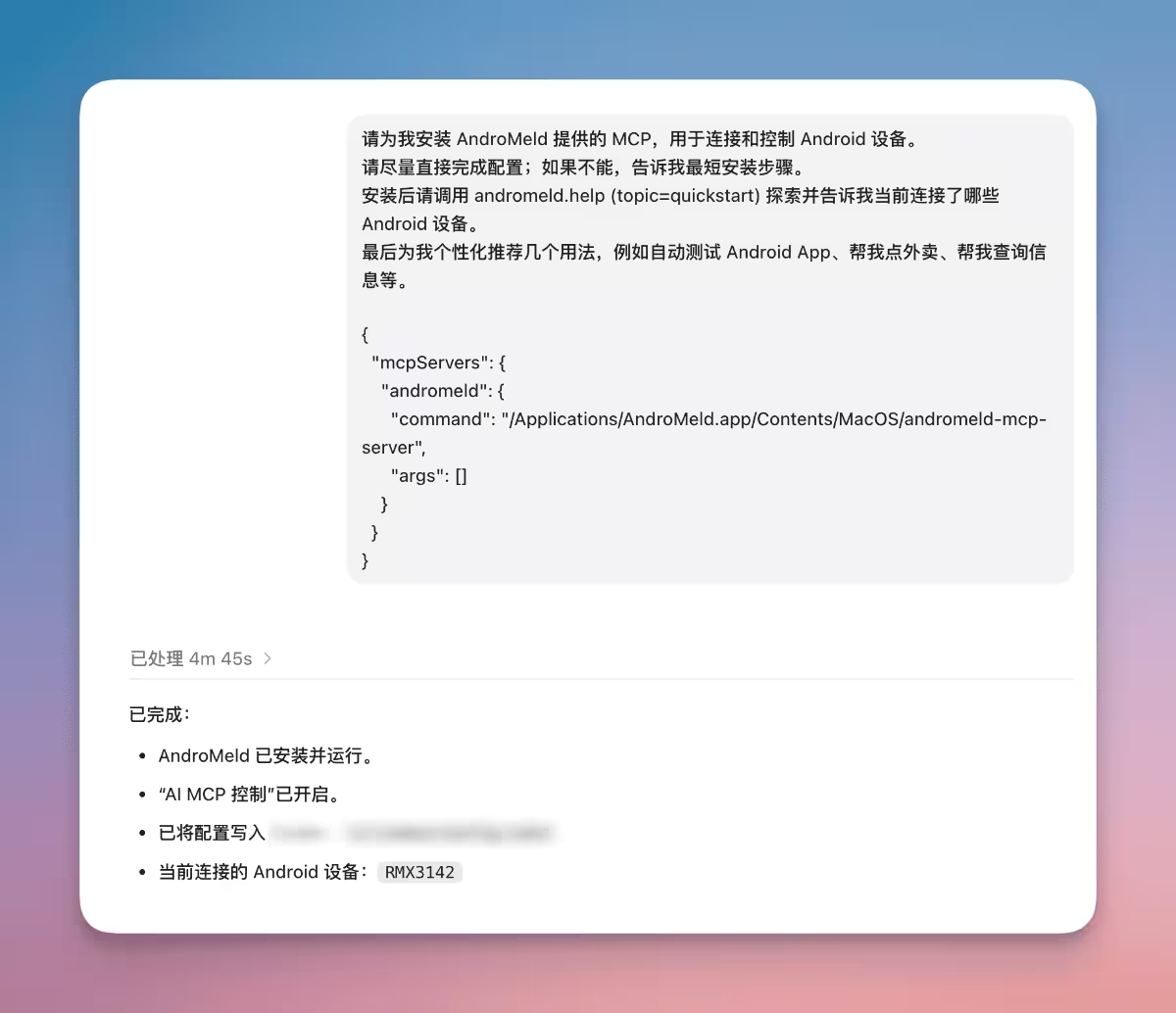
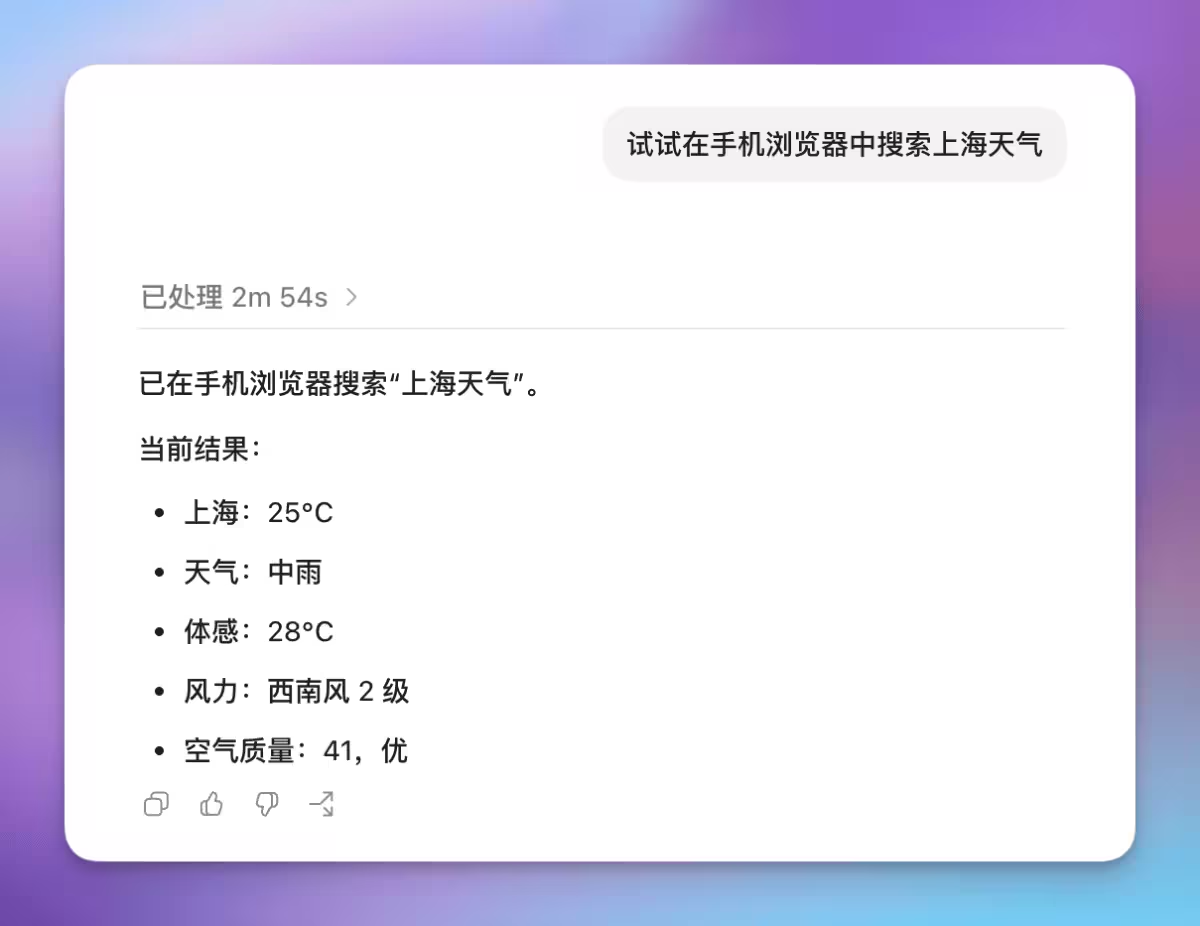
比如,对 AI 说:试试在手机浏览器中搜索上海天气。
AI 就会按照要求,在手机桌面找到并打开浏览器,点击搜索框,输入上海天气并搜索……最后把在对话中回复结果。

写在最后
AndroMeld 真的很强!不过,它对设备系统版本的要求,有那么一点点门槛。
仅支持 macOS15 及以上版本,和 Android14 及以上版本。
如果你的设备满足要求,那就赶快下载 AndroMeld 体验一下吧!
通过 USB 或 Wi-Fi 连接,就能在 Mac 上直接运行手机中的 App、管理文件,并实现通知与剪贴板同步等功能。
即日起至 11 月 13 日,AndroMeld 限时 8 折 到手仅 28 元起,买断也只要 68 元。
戳专属优惠链接下单更划算,让 Android 与 Mac 无缝融合,为日常工作提升效率!
优惠购买
- https://lizhi.shop/products/andromeld?cid=jxlwguir
- 新用户免费加入会员,首单立减 5 元
- 结算页面输入“APPINN”优惠码,额外再享 95 折优惠
相关阅读
Claude API公测消息线程功能 长对话无需反复上传历史 首词延迟可降低35%
Windows 11新增还原摘要功能:在新设备或重装系统还原配置后 可检查缺失哪些应用
[程序员] 晚上用 Grok Bot 把我手上的项目全管起来了。
以前是挨个打开 Cursor 和 Codex ,在每个 tab 里一轮一轮地跟它们对话。现在我只对着一个 bot 聊,想到什么说什么,它会自动把事情转给对应负责的 bot 。
负责开发的 bot 会先判断这个任务适合用什么模型,再去创建对应的 Cursor 云端任务:普通发版用 Composer ,做规划用 Opus ,真正写代码用 Grok 4.7 。
这样我的注意力就被释放出来了。我只跟一个 bot 聊,它负责判断任务、分发任务、收集结果、反馈给我,我再接着和它聊、做决策,如此往复。
不用再管一堆 tab ,只管一段对话。
顺着这个思路,我也搭起了自己的产品团队:一个 bot 对应一个产品,各有各的开发习惯,我给它们定了不同的开发规则。比如 iOS 应用,涉及签名或验证的环节,必须连到我本机的 Mac 上操作;普通 Web 开发,在 Grok Bot 自己的云端主机上做就够了。
另外还建了个健康助手。最近总有些健康问题想问,干脆让一个 bot 专门回答这些,并告诉它可以去我的 Notion 和 Dropbox 里查阅、更新健康笔记和健康档案。这样它会越来越了解我。
晚上下班回到小区,我会快走散步半小时,算是做点小有氧。这 30 分钟里我一直在跟 Grok Bot 打电话,聊各种想到的问题,大多是提前记在 Todoist 待办里的:看到的好点子、好项目,想聊的、想调研的工作,就趁这个时候一个个跟它聊。
Grok Bot 的语音模式回复简短又快,很适合打电话聊。不像文字模式那样甩给我一大段文本,语音里它的回答往往很精炼,应该是专门优化过的。
用 Personal Agent 最大的感受是:碎片时间终于被用起来了。散步的时候打个电话聊聊天,调研、写作、记笔记、做开发、清理邮件,聊着聊着就都做完了。
人在散步,事情也在往前推进。
真的有点贾维斯的感觉了。
[分享创造] ChatGPT 网页版没目录?我搞定了 500+ 轮完整目录,还能导航和搜索!
ChatGPT 网页版我觉得是真的聪明,而且不用操心 token ,我超级爱用,一聊就是几百轮。可惜听说以后可能要合并额度了,不知道还能不能继续这么愉快地聊天了。
8 月底那次改版以后,官方目录就经常出问题。有时候只显示一部分,有时候干脆没了。
短对话还好,长对话就真的难受。我有些对话几百轮,光靠滚动页面基本没戏。
于是就开始折腾怎么把目录完整弄出来。
一开始想得挺简单,不就是把用户提问和 AI 回答里的标题抓出来吗?
但是 ChatGPT 长对话的历史消息不是一次性全部加载出来的。
我当时观察到,8 月 23 日之后,页面实际渲染出来的用户提问有时候只有 5 条左右,右侧目录甚至只剩下 2 ~ 5 条。
直接从当前页面提取,肯定拿不到完整目录。
后来就改成分批去拿历史内容,每拿到一批就先缓存,再跟之前的数据合并。不能每次刷新都从头来,更不能把之前已经拿到的目录弄丢。
听起来也不复杂,但实际做的时候各种坑。
而且不能只是把目录生成一次就完事,还得一边保留旧目录,一边把新产生的内容补进去。用户继续聊天,目录也要跟着更新。
这块来回折腾了不少次。
目前我自己实测过 500 轮问答,也就是 500 个用户提问,加上对应的 500 个 AI 回答, 合计 1000 条消息,目录可以导航准确无误。
但我觉得 AI 的回答还是太长了。为了更好地找到重点,我又给 AI 的回答做了二级目录,一级是用户提问,二级是 AI 回答中的标题。继续聊天时,目录也会跟着更新。
我以为这下高枕无忧了,肯定能找到重点了。
结果又发现一个问题:
500 条一级目录,加上几千条二级标题,眼睛都看花了……
于是又干了个目录检索功能,直接搜关键词,把相关的提问和标题筛出来。
本来以为这下终于可以了,结果又碰到新的坑。
目录里搜到了,点过去却不一定能马上找到对应的内容。因为那条历史消息可能根本还没加载到页面上。
所以现在又在折腾目录跳转和定位,尤其是几百轮长对话的情况。ChatGPT 的页面是活的,他会不停的卸载和挂载新的内容。所以搜索定位不一定靠谱。又狠狠的优化一通,现在即使搜索不能直接跳,知道知道在那条,用目录的导航能力也能跳过去,就是慢一点。远的话可能要 1 分多钟,如果搜索可用时候就很快几秒。
一个目录能折腾几个月。ChatGPT 要让用户真正找到长聊天里的重点,做好还真不容易。
ChatGPT 完整目录导航和目录搜索这些功能,现在已经放到我自己做的 Chrome 浏览器插件 OutlineSave 里了。除了目录和检索,还有高亮、书签、备注、离线 HTML 导出等。不过这次主要还是想聊聊目录的实现。
顺便问一下,独立开发这个 Chrome 插件,做了 10 个月,目前大概 1800 个用户,43 条评价,4.9 星,这个成绩算怎么样?有经验的朋友给点参考。

[推广] 我用 WorkBuddy + Lexmount 整理了三个岗位,聊聊网页读取之后的核对
代同事分享一篇 WorkBuddy 查招聘信息的使用记录,以下是原文。
三个名字里都带着“AI”的岗位,放到一起看,做的事却差得挺远:一个偏海外增长,一个做企业里的 Agent 平台,一个做游戏中的 AI 模块。
这次我用 WorkBuddy 搭配 Lexmount 云浏览器,把腾讯招聘官网的三个深圳岗位整理成了一张对照表。除了工作内容和要求,表里还留了来源链接和读取日期,方便比较,也方便回查原文。
下面是 2026 年 11 月 3 日重新核对后的结果节选,完整条件另有文件保留。
图 1:11 月 3 日的真实界面,按审校后的内容另行简排。“9s”仅是这一轮排版用时,网页读取和审校另计。
我想试的是,让 WorkBuddy 把到官网找资料这一步也接过去:搜索岗位,打开详情,读完之后再整理。这样交给它的就可以是一个网页任务,不用先把几个页面的内容逐段搬进对话框。
Lexmount 提供的就是其中的网页操作能力。它把浏览器放在云端,让 WorkBuddy 这样的 Agent 调用,完成打开页面、搜索、点击和读取内容等操作。它和 WorkBuddy 各有分工:一个负责操作网页,一个负责安排任务、理解内容和整理结果。产品接入说明
要找到它,可以从 WorkBuddy 的技能广场入手。按官网给出的路径,进入“专家·技能·连接器”,选择“技能”,切到 SkillHub,搜索 lexmount,就能找到“lexmount 云浏览器”这个 Skill。第一次使用还需要按提示完成安装和 Lexmount 官网授权。官方接入说明
我选择这个组合,主要看中两点:能在 WorkBuddy 里通过现成的 Skill 调用;也能实际操作页面,把正文和截图留下来。查招聘资料需要在列表和详情页之间来回查看,正好用得上这些功能,所以先拿三个岗位试。
给 WorkBuddy 的要求,我也拆得很具体:列出岗位名称、地点、主要工作和要求,把优先或加分条件单独放一列。页面没写的信息,就标成“未披露”,不要补猜。
这三个岗位在 10 月 22—23 日整理过一次。11 月 3 日,我又让它先到官网搜索“AI 产品”,再沿着原来的三个链接逐一核对,看看页面有没有变化。
这轮由 WorkBuddy 调用 Lexmount,完成搜索、打开详情和读取正文。执行界面里能看到它调用云浏览器、打开官网的过程。

图 2:11 月 3 日,WorkBuddy 调用 Lexmount 的实际执行界面。
官网的搜索结果里,既有深圳岗位,也有广州等其他城市的岗位。这次还是沿着之前保存的三个深圳岗位链接往下查,范围没有扩大到整份搜索列表。

图 3:11 月 3 日,官网“AI 产品”的搜索结果。81 条是不同城市的总结果数;本次复核的是此前保存的三条链接。
列表里能看到岗位名、地点和一小段职责,但具体要什么经历,还得打开详情。读到正文后,先把岗位名、地点和网址对上,再分别整理工作内容、明确要求、优先条件,读取日期也跟着这一条记录留下来。
这样整理,几个岗位才有了能放在一起比较的内容。想核对某个条件,可以回到对应原文,不必只凭表里的一句概括判断。
不过,能把网页读回来,和能把要求分对,还是两回事。
10 月首次整理时,我另外用 Codex 对照原文审校。它发现,首版表格把一些“优先”条件放进了必需条件。问题反馈给 WorkBuddy 后,表格才改过来。
《三角洲行动》的 AI 产品运营岗,有一句就很容易分错:
有 AI 产品经历,具有游戏 AI 产品实践经验者优先;
“有 AI 产品经历”是要求,游戏 AI 产品实践则是优先条件。整句放进“必需”那一列,读表的人就可能以为,没有游戏 AI 项目经历便不符合要求。
页面顶部还有“两年以上工作经验”的标签,也不能和这句话拼成“两年以上游戏 AI 经验”。原文没有这样写。

图 4:11 月 3 日重新打开的岗位原页。这部分关键要求与 10 月 23 日记录一致。
所以我会把原文留在结果旁边。表格把信息缩短了,有些词却不能顺手省掉。少了一个“优先”,条件就变严了;没写学历,也不能替招聘方写成“学历不限”。这三个岗位的薪资都没有披露,表里就照实保留“未披露”。
来源和日期也用上了。对照 10 月保存的岗位表,原先那条“AI 产品运营”的链接,11 月 3 日打开时,已经变成了“增长产品经理(AI/Agent 方向)”。页面标注更新于 10 月 30 日。
变化也不只是名字。旧要求写的是“3 年以上全球化产品运营、增长经验”,新页面改成了“3 年以上产品经理经验”,并明确提出要具备 Agent/AI 产品设计或策划经验。看工作经历是否匹配时,这个差别不能省略。

图 5:11 月 3 日读取的岗位原页,页面标注更新于 10 月 30 日。上面的变化来自它与 10 月留存记录的对照。
这让我觉得,表格里留一个网址还不够,也得知道内容是什么时候读到的。之后再拿这份资料做判断,就能沿着原链接重新确认,不至于一直用旧要求看新岗位。
最后留下的文件有 CSV 表格和 Markdown 文档。前者可以放进表格软件继续比较,后者方便逐条读完整内容。想仔细看某个岗位,就沿着链接回官网。这次没有登录或投递,岗位是否仍能申请,还需要另外确认。
这套组合也有需要留心的地方。浏览器调用过程中出现过导航报错;WorkBuddy 里也遇到了模型繁忙,重试后才继续完成整理。最后的摘要还有几处要按原文修正。这次仍需要跟进重试、检查结果,暂时还不能把任务交出去就不管。
这次用下来,Lexmount 完成了这几个页面的访问和操作,能和 WorkBuddy 配合,把网页资料带到后面的整理里。对需要在网站里搜索、点开详情、留下原文和截图的任务,这种用法值得继续试。至于省了多少时间、换更多网站是否一样顺利,这次还下不了结论。
只偶尔看两三条岗位,手动打开官网也很合理。如果经常需要把几个网页的内容整理到一起,我会先用这样的小任务试试,并把要求写清楚:
逐条读取这些岗位页面,保留岗位名、来源链接和读取日期。工作内容、岗位要求、优先或加分条件分开整理;即使没有单独的“加分项”标题,也检查正文里的“优先”表述。没写的信息标成“未披露”,不要补猜。整理后对照原文检查,拿不准的地方单独列出来。
新一批岗位还没试过。下次再用,我仍会先核对几条,确认表里的说法对得上原文,再继续往下整理。

奔驰新款长轴E级车上市:首次搭载中国团队开发的AI座舱
11月2日,2026年款梅赛德斯-奔驰长轴距E级车今日上市,起售价为42.38万元。新车率先搭载由奔驰中国研发团队主导、独立开发的全新AI智能座舱,车载虚拟助手融合豆包AI大模型,新增声纹识别等功能。
阅读全文