
Surrogate Modeling and Explainable Artificial Intelligence for Complex Systems: A Workflow for Automated Simulation Exploration
Leveraging generative AI for human understanding: meta-requirements and design principles for Explanatory AI as an emerging paradigm
Finding my thing
How do I follow up my last post…I’ve never had such a response before, I’m still working my way through every reply.
And I wasn’t actually going to post today.
Since last week I’ve been having great conversations and spent a lot of time thinking, without my agent. I’m back to actually jotting stuff down in my notes rather than agents.
Inertia is my problem. Just because this newsletter is sent tues/thurs in a specific format, it’s easier to keep that going. I feel obliged.
But really I’m trying to find something. My thing. And if I do what I’ve done, I won’t find it. I need to change it up. So from now until the end of the year, the formats will vary, the content, even the days + frequency of when I post. I’m in experimental mode. The digital equivalent of going to Thailand, slinging on those awful trousers and finding myself.
I need to post what I’m interested in. For me to continue doing this for a long time, I have to make these for me. So what am I interested in?
I’m following my nose. It’s already led me to have convos with Stripe, Granola, Zed and Raycast about how they’re building in this new world, while staying sane and nurturing a considered culture. I think there’s a ton of interesting stuff here I’ll write and build on top of. Coming soon-ish.
I said I wasn’t going to post today, but you’re reading this…so, what gives? Well in my deliberation of to post or not to post, I felt like I wanted to bring you along in my thinking. I want to bare all whilst we see where we end up.
I’ve stopped using Grok Bot for everything, except to ping me when Carlos Alcaraz is playing. I’m reading more long-form. I’m consuming less slop (and spending a little less time on X). I’m recording a voice-note every morning for a minimum of 10 minutes, and not doing anything with the transcript. I’m letting things percolate, noticing what I come back to.
Agents give you answers to everything. But if we’re ‘soul-searching’ or trying to connect the dots, an answer presented to us may not be the right path. Even if it’s a reasonable one. All I’m ‘optimising’ for here is - what do I really want to do? And noticing what I keep coming back to when I take the time to think on it.
This is not an ‘anti-ai’ stance at all. I love AI. I can do so much more than I ever could. It’s a tool though, not a person, and I use it as such. You probably need a grand total of one tool (an agent). Instead of looking at everything as an opportunity to optimise, I want to use AI for fun.
Quick bites
Try doubleAI’s Maxwell, a code execution model that speeds up software as it runs. Results: 38x faster data pipelines with no code changes.*
Patrick Collison posted about adding a feedback box to what you build as a quick way to keep iterating.
A few links to get your agents to make good UI: Stageshow for making product demos, BoardUI for great-looking components and Looseleaf for a hand-drawn feel.
I enjoyed this post on how Jakub built a personal health app for just himself. He puts out a lot of great visual work.
Nobody knows anything - ‘if you feel behind right now don’t worry you aren’t.’ Fun site, but if it’s hard to read, hit the grid icon in the top right.
Kino - edit video with your agents.
Hex - A free voice dictation app for Mac, Windows and Linux. The landing page is pretty good!
I like this… a Chrome extension that swaps clickbait thumbnails for real stills from the video.
Afters
The Agent Said It Was Done. The Database Disagreed.
Artificial Limitation: The Illusion of Intelligence
Like most of the world, I increasingly leverage AI in my daily life, both in and out of work. I won’t claim to be an AI professional, but rather a professional who uses AI. In fact, I’d consider myself a professional thinker, which is perhaps what fascinates me so much about this nomenclature of Artificial Intelligence. So much so that I find myself writing another article about AI instead of focusing on my other writing initiatives.
I have repeatedly circled back to this, including in my article, AI Doesn’t Think The Way You Think It Thinks, and it comes down to what it truly means to know, to think, and to have intelligence. I don’t mean this in a philosophical sense, but in the practical sense of how we're seeing it applied today. I feel like I had a breakthrough in understanding this past week that I hope to impart in this article.
First, I want to narrow the scope of artificial intelligence to the productized service models we are generally interacting with from companies like Anthropic, Google, Meta, OpenAI, and xAI. These models are how most of us are experiencing AI, and while I think a broader reflection on AI without the boundaries imposed by these companies is interesting, it's less applicable to most of us. Those boundaries are exactly where I have found the nuance lies.
In my last article, I used the term “frozen brain” to explain how these models are incapable of learning when we use them. They have already synthesized their knowledge and weighted their parameters. They might synthesize information again to satisfy a prompt, but they don't re-integrate that new synthesis into the original synthesis in the moment. Likewise, they adapt their behavior using the conversation’s context, but the context remains localized. That is inherently different from permanently learning from experience. If you’re familiar with how a computer works, it’s kind of like the difference between memory and storage. It’s in the memory; it is not in the storage.
That is because the models we use are not allowed to learn directly from these interactions, as part of safety measures to ensure stability and prevent corruption by bad actors. To be clear, your data may be used later during controlled training sessions. The difference is called in-context learning versus in-weight learning. In training mode, their weights are adjusted based on a multitude of factors related to the data used: objectives, quality, and repetition.
What’s important to understand is that AI doesn't directly retrieve files like an archive that keeps exact copies of everything it’s been trained on. In fact, it might not even know where that data came from because training doesn’t reliably preserve the connection between learned information and its original source. Instead, it uses a distributed pattern, kind of like a mind map, that spreads information across millions or billions of connections, resulting in lossiness. This is why it typically can’t recite any particular book word for word. Similar to a human, if you read a book over and over, you may be able to recall a specific passage verbatim, but if you read it only once, you may only be able to recall generalities. It’s also why it often searches the internet to validate its response, and why some people set up Retrieval-Augmented Generation (RAG) with a vector database to enable that level of information retrieval for their agents.
From a repetition standpoint, LLMs memorize phrasing more than the meanings behind them. When thousands of phrases share the same pattern, the connection to that node becomes stronger. Meaning it builds its memory’s scaffolding based on familiar shape or sentence structure, not the substance. Perhaps this is one of the reasons why LLMs are prone to misinformation and hallucinations. For the record, human memory tends to be semantic.
This also means that an AI model doesn’t know why a pattern is necessarily desirable. It knows it is more prevalent than others, and it may be able to regurgitate why others say it is beneficial or harmful, but it doesn’t have its own experience to judge when, why, or whether to apply it. Perhaps this is why patterns of abstract phrases and balanced contrasts often flag AI writing detectors.
One of the most powerful drivers for human learning and behavioral change is a biological response to comfort and discomfort associated with prediction errors, the pleasure of acquisition, and loss aversion, something AI is currently unable to produce. This creates a larger question around what constitutes a learning experience. Likewise, a human may perform the same task over and over for years, but have they become better at it? If your thinking has not evolved, have you learned? There appears to be a processing of experience required to learn that is more than the acquisition of knowledge or the performance of tasks. And unlike humans, these models don't have an ongoing internal narrative. When you stop interacting with them, they aren't continuing to reflect on the conversation, reconsider their conclusions, or really think at all. The underlying model only resumes processing when prompted again.
This offers the first glimpse of AI’s inert knowledge, often conflated with activated knowledge. As disclosed in cases such as Bartz v. Anthropic and Authors Guild v. OpenAI, these models have consumed most books you could possibly think of. And yet, time and again, I am left perplexed by these models' inability to inherently apply this information, even when I have established it as a preference. Instructions say to do x, y, z, and it may perform those instructions exactly. But as the instructions grow to a, b, c, d, e, f, g, it tends to cherry-pick which instructions it consistently follows. When asked, it will acknowledge it forgot to do c and e, and it will tell you it is updating its memory so it doesn't forget those things, but it will likely do it again and again.
This made me aware of a gap in how our current models operate. AI has become very impressive with its confident, verbose responses, often outproducing a human's ability to regurgitate a line of cohesive-sounding wording, but on closer look, it appears to be just that. It actually pales in comparison to most humans’ inherent executive function. Over time, a human can create increasingly complicated actions by compounding knowledge, and we are often unaware we are even doing it. When we write, draw, cook, and so on, we are subconsciously and consciously applying lessons and preferences. Current gen AI models are limited in this way, and it’s not just my observation; there is an increasing body of research to support this: Strong Memory, Weak Control: An Empirical Study of Executive Functioning in LLM, Deficient Executive Control in Transformer Attention, Lost in the Middle: How Language Models Use Long Contexts.
The current workaround that I and others I know have been applying to supplement this limitation is to chunk the instructions f
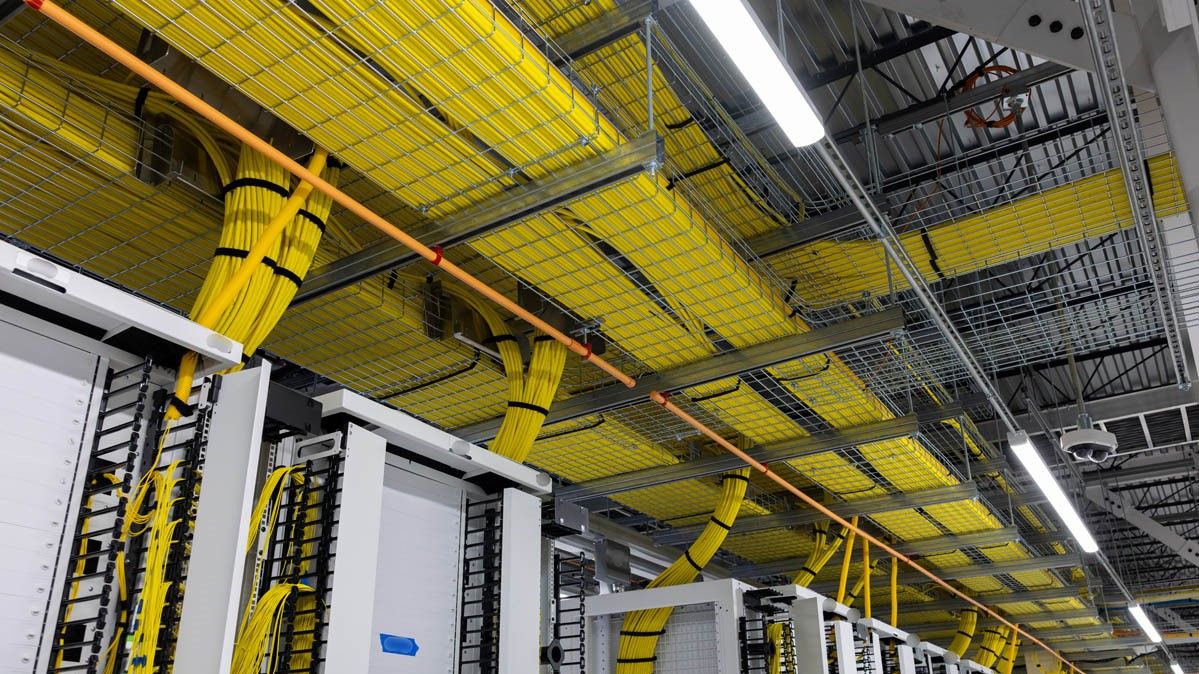
8 converted jet engines are powering xAI data centers as companies look for new energy sources

Trump Asked Grok AI About Invading Venezuela. Democrats Want His Chat History

Here’s Why You Shouldn’t Use AI to Vote
NYT demands Brave shut down its paywall blocker and end deals with AI firms
The New York Times and other newspaper companies sued Brave Software yesterday, alleging that the browser maker illegally bypasses paywalls and sells stolen news content to AI companies.
"Brave is the supplier, dealer, and distributor of stolen copyrighted content for its own users and many of the most prominent GenAI companies, including Anthropic, Perplexity, Mistral, xAI, and Cohere," the NYT alleged in a lawsuit filed in US District Court for the Southern District of New York. Citing third-party revenue estimates, the suit claimed that "Brave has made more than $100 million by copying and reselling publishers’ work without consent or permission," while "publishers have received nothing."
The lawsuit said, "AI companies pay Brave to provide them with real-time online content from the Brave search index," and use content from the Brave index "to train their own AI models" and "to respond to specific user queries." The NYT lawsuit points to Brave's website, which says the Brave Search API is "used by some of the biggest names in AI, including Cohere, Mistral, Perplexity, and You.com."
[程序员] 晚上用 Grok Bot 把我手上的项目全管起来了。
以前是挨个打开 Cursor 和 Codex ,在每个 tab 里一轮一轮地跟它们对话。现在我只对着一个 bot 聊,想到什么说什么,它会自动把事情转给对应负责的 bot 。
负责开发的 bot 会先判断这个任务适合用什么模型,再去创建对应的 Cursor 云端任务:普通发版用 Composer ,做规划用 Opus ,真正写代码用 Grok 4.7 。
这样我的注意力就被释放出来了。我只跟一个 bot 聊,它负责判断任务、分发任务、收集结果、反馈给我,我再接着和它聊、做决策,如此往复。
不用再管一堆 tab ,只管一段对话。
顺着这个思路,我也搭起了自己的产品团队:一个 bot 对应一个产品,各有各的开发习惯,我给它们定了不同的开发规则。比如 iOS 应用,涉及签名或验证的环节,必须连到我本机的 Mac 上操作;普通 Web 开发,在 Grok Bot 自己的云端主机上做就够了。
另外还建了个健康助手。最近总有些健康问题想问,干脆让一个 bot 专门回答这些,并告诉它可以去我的 Notion 和 Dropbox 里查阅、更新健康笔记和健康档案。这样它会越来越了解我。
晚上下班回到小区,我会快走散步半小时,算是做点小有氧。这 30 分钟里我一直在跟 Grok Bot 打电话,聊各种想到的问题,大多是提前记在 Todoist 待办里的:看到的好点子、好项目,想聊的、想调研的工作,就趁这个时候一个个跟它聊。
Grok Bot 的语音模式回复简短又快,很适合打电话聊。不像文字模式那样甩给我一大段文本,语音里它的回答往往很精炼,应该是专门优化过的。
用 Personal Agent 最大的感受是:碎片时间终于被用起来了。散步的时候打个电话聊聊天,调研、写作、记笔记、做开发、清理邮件,聊着聊着就都做完了。
人在散步,事情也在往前推进。
真的有点贾维斯的感觉了。

[问与答] 有没有多账户管理工具,可以同时登陆多个 claude 账户,额度用完自动切换的工具?

砸3.3亿美元阻击“富豪税”布林带头,黄仁勋妥协,马斯克早跑了
本周,加州选民将公投决定“是否向加州超级富豪们首次开征资产税”。但这些超级富豪们,尤其是来自硅谷的科技新贵们,并不打算乖乖交钱。“1亿美元对布林来说,就像一个中产家庭去连锁餐厅橄榄园(Olive Garden)吃了一顿丰盛大餐,这点钱对他来说根本不算什么。”
阅读全文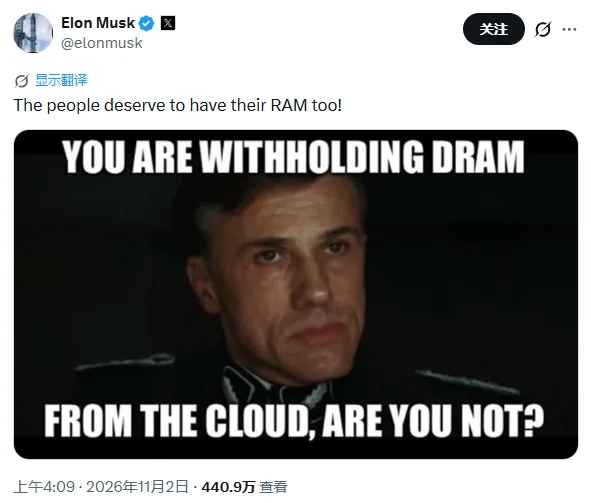
奥特曼称个人PC用内存属于资源浪费 马斯克公开回怼
最近埃隆·马斯克加入了围绕个人电脑内存所有权的公开争论。他在推上发文回应山姆·奥特曼有关DRAM资源配置的言论,并表示“人们也应该拥有自己的内存”。
阅读全文
特朗普誓言保护马斯克免遭民主党调查 并给予其他亲信人员特赦
美国总统特朗普周一表示,如果民主党人在中期选举后对埃隆·马斯克展开调查,他将采取行动保护马斯克。特朗普还暗示,如果民主党人发起调查,他可能会提前给予其身边的工作人员及其他人赦免。
阅读全文
哲学教授质疑太空散热 马斯克怒骂:你完全是个智障
北京时间昨晚,X用户扬·布鲁尔森(Jan Broersen)发帖质疑马斯克的太空算力方案。全文如下:“我对埃隆·马斯克的敬意已经消失的差不多了,但我仍以为他至少是个不错的工程师(特斯拉是好车)。可听到他说在太空里‘把东西冷却下来’更容易之后,连这最后一点敬意也消散殆尽了。事实正好相反。真空是最好的隔热体。在太空里,你只能靠辐射把热量带走。这些太空数据中心极不可能成真(当然也不会在我们有生之年成真)。”
阅读全文
马斯克盯上2350亿美元市场:SpaceX考虑收购美国手机运营商
据《华盛顿邮报》报道,埃隆·马斯克(Elon Musk)正试图通过SpaceX进军美国手机通信市场。在遭到Verizon、T-Mobile和AT&T三大电信运营商拒绝后,SpaceX已与美国折扣移动运营商Boost Mobile的母公司EchoStar展开谈判,考虑直接收购Boost Mobile,或通过合作获得其移动网络使用权,从而切入规模高达2350亿美元的美国无线通信市场。
阅读全文
马斯克对台积电立场松动?双方或重谈Terafab合作
据DigiTimes援引供应链消息报道,马斯克正在重新评估Terafab芯片工厂的推进方案,并可能与台积电重新展开谈判。与此前仅考虑向台积电出租部分厂区不同,最新讨论或赋予台积电更大的项目参与权,晶圆厂由谁建设和运营将成为谈判焦点。
阅读全文
“太空AI第一股”来了,80后造出百亿独角兽
(本文作者为 新质动能,钛媒体经授权发布)
文 | 新质动能
国星宇航通过港交所上市聆讯。
“太空AI第一股”要来了!
近日,港交所更新文件显示,成都国星宇航正式通过主板上市聆讯,预计将于11月中下旬挂牌上市,冲刺港股“太空AI第一股”。
这家成立8年的商业航天公司,最新估值已超过115亿元,身后站着红杉中国、深创投等知名投资机构。
掌舵这家百亿独角兽的,是43岁的博士陆川。从高校学者到商业航天创业者,他带领团队把AI大模型送上太空,也让国星宇航成为国内累计发射AI卫星数量最多的民营商业航天公司。
但国星宇航并未实现盈利。招股书显示,截至2026年10月,公司手握34.75亿元订单,但近三年累计亏损已达5.72亿元。
手握巨额订单的国星宇航,为何依然深陷亏损泥潭?
手握35亿订单,三年却亏掉近6亿
国星宇航的上市之路并不顺利。2025年1月和8月,国星宇航曾两次向港交所递交招股书,都因有效期届满而失效;直到2026年5月第三次递表,才终于在近半年后通过聆讯。
不过,国星宇航在一级市场很受资本追捧。
2018年5月,公司成立不到半年,就拿到了深创投、星河产业集团等机构的2500万元天使轮投资。此后融资不断,企查查数据显示,国星宇航累计融资已达32轮。
2026年4月,国星宇航一口气拿下35.5亿元Pre-IPO轮融资,投后估值从早期的9500万元飙升至115.54亿元,8年间涨了超120倍。
国星宇航的股东,同样星光熠熠。招股书显示,洪泰基金是IPO前第一大外部股东,持股8.80%;星河产业集团、深创投、红杉中国等机构均在其中,名创优品董事会主席叶国富等产业资本也参与了投资。
订单更是拿到手软。2026年5月第三次递表时,国星宇航手里待交付的AI卫星订单还是37颗、合约总值12.31亿元;到了10月20日,订单已增至114颗,合约总值高达34.75亿元,5个月内翻了近三倍。
但丰厚的订单储备,尚未转化为实打实的净利润。2022年至2025年,国星宇航营收从1.77亿元一路涨到7.03亿元;2026年上半年营收2.26亿元,同比小幅下滑6.3%。
伴随营收扩张的,是逐年扩大的亏损窟窿。2023年至2025年,国星宇航净亏损分别为1.39亿元、1.77亿元和2.56亿元,三年累计亏损5.72亿元;2026年上半年又亏了1.51亿元。
毛利率也在剧烈波动。2023至2026上半年,公司整体毛利率分别为14.0%、38.0%、20.4%和39.3%。尤其在2025年,主打的AI智算卫星毛利率一度低至7.6%。
国星宇航解释称,这主要是因为首颗采用平板式配置的试验项目定价偏低。到了2026年上半年,随着技术成熟、售价提升和批量采购降本,这项业务的毛利率回升至55.4%。
但产品开始赚钱,不代表公司整体就能扭亏。
造卫星本身就是一件烧钱的事。过去3年间,国星宇航研发累计投入超过3.4亿元;2026年上半年研发开支又达到1.09亿元,相当于同期收入的48%。同期管理费用也常年超过1.3亿元。
公司在招股书中明确提示,受折旧摊销、外包研发和上市开支影响,预计2026年全年净亏损还将进一步增加。
那么,如此烧钱的卫星生意,究竟凭什么让一众顶级资本甘愿买单?
43岁学者下海,把大模型搬上太空
支撑起国星宇航百亿估值的,是公司的商业模式。创始人陆川带队完成了一场业务转型:从在地面卖遥感数据,转向在太空建设算力中心。
陆川出生于1983年,本硕就读于电子科技大学,后拿下广东工业大学博士学位。 在创办国星宇航前,陆川已在电子科大任教近15年,长期从事AI、航天和通信工程研究,还联合学校发起成立了国内首个AI卫星科研机构。
在他的号召下,一支深谙航天工程、商业运营的核心团队迅速成型:王磊博士拥有超过15年航天投资管理经验,担任公司CEO;卫星供应链首席科学家赵瑞峰则在卫星研发领域深耕20余年,曾任职于银河航天。
2018年,国星宇航成立之初,撑起收入的并不是卫星,而是地面上的“星基解决方案”。简单来说,就是利用公司自研的“灵境引擎”技术,将卫星拍摄的二维影像转化为三维模型,提供给政府和企业,用于城市治理、文旅和游戏等场景。
2023年,这块业务贡献了4.60亿元营收,占比90.7%;而卫星及相关服务收入只有322.1万元,占比仅0.6%。
不过,陆川并不满足于做一个卫星数据服务商。传统卫星拍摄的海量数据需要传回地面处理,既受通信带宽限制,也容易把云层遮挡等无效数据一并传回来。业内统计,绝大多数对地观测卫星的数据利用率连5%都不到。
怎么解决这个问题?陆川的想法是,与其把数据传回地面算,不如把算力直接搬上太空,让卫星在天上自己把数据处理好。
由此,国星宇航开始布局AI智算卫星。2018年,公司发射首颗AI应用卫星;2024年,又发射首颗AI大模型智算卫星。
2025年5月,公司与之江实验室合作,通过“一箭十二星”将12颗AI智算卫星送入轨道,把数据处理周期从天级缩短到秒级。
此后,国星宇航继续把大模型和智能体搬上太空。2025年11月,千问Qwen3大模型被部署到在轨卫星;2026年3月,公司又联合上海交大实验室,通过自然语言指令调用太空算力,远程操控地面人形机器人。
这直接吸引了腾讯云、商汤科技在2026年与公司签署合作协议,商汤还定制了两颗AI智算卫星。10月14日,国星宇航又发射第二组8颗算力卫星。
截至10月20日,国星宇航已完成15次太空任务,发射了30颗AI卫星及6个AI载荷。在国内民营商业航天企业中,国星宇航累计发射AI卫星数量排名第一。
随着算力卫星热销,国星宇航营收主力彻底反转。卫星及相关服务收入占比从2023年的0.6%,一路飙升到2026年上半年的57.7%,正式取代星基解决方案成为第一大收入来源。
按照陆川的“星算计划”,国星宇航计划在太空部署2800颗AI卫星,并已获得超过3100颗卫星的频轨核准,目标是在2028年前先部署100颗。
从卖地面软件,到造太空算力中心,陆川把蓝图画到了大气层外。
15家企业扎堆IPO,上市不等于“上岸”
把视线拉回到整个行业,国星宇航三闯港交所的背后,是一场国内外商业航天企业的上市竞速赛,但拿到IPO“船票”,并不意味着从此高枕无忧。
2026年是商业航天的资本大年。今年6月,马斯克的SpaceX登陆纳斯达克,募资750亿美元,创下全球最大IPO纪录,首日市值冲上2.1万亿美元。
国内政策也紧随其后,2025年底,上交所出台指引,支持商业火箭企业适用科创板第五套上市标准;2026年政府工作报告更是首次将航空航天列为“新兴支柱产业”。
政策和资本双重推动下,一级市场迅速升温。投中数据显示,2026年上半年,国内商业航天领域融资总额达到127.9亿元,同比增长273%。星际荣耀、长光卫星、垣信卫星等相关企业,相继获得数十亿元级别融资。
排队上市的队伍越来越长。截至2026年10月,国内已有约15家商业航天企业推进IPO。
火箭阵营里,蓝箭航天、中科宇航已进入科创板“已问询”阶段,天兵科技、星河动力等紧随其后;卫星阵营里,微纳星空于2026年5月获科创板受理,华大北斗、福信富通则与国星宇航一起扎堆赴港。
业内人士直言,2026年是商业航天IPO的“生死窗口期”。早期投资机构逐渐进入退出周期,企业需要通过上市获得新的资金,支撑后续研发和扩产。
与此同时,中国星网和千帆星座规划的卫星数量合计近2.8万颗,低轨卫星组网进入密集建设期。谁能尽快拿到资金、扩大产能,谁就更有机会争取后续订单。
但上市不等于“上岸”,高投入、高亏损、回款难,是商业航天行业共同的痛点。蓝箭航天三年累亏近38亿元,中科宇航累亏约25亿元,同行微纳星空三年也亏了近11亿元。
具体到国星宇航身上,客户集中、回款慢、发射风险和合规问题,都是眼下绕不开的难题。
从客户结构来看,国星宇航对大客户的依赖比较明显。2026年上半年,公司前五大客户贡献了91.1%的收入,最大单一客户占比达到35.9%。
客户集中是一方面,回款慢又是另一个问题。由于买单的主要是国企和政府项目,审批、验收和付款往往需要较长时间。
截至2026年6月末,公司应收账款及票据中,73.1%来自国企客户,账龄超过一年的金额达到3.05亿元。仅2025年,公司就计提了约9500万元的坏账准备。
卫星发射环节也有风险。国内卫星制造和发射成本仍然偏高,卫星造好了,还得等火箭排期;即便顺利发射,也不代表一定能成功入轨。
2026年1月,搭载国星宇航两颗实验卫星的第三方火箭发射失败,因无法购买保险,国星宇航只能自行承担约840万元的卫星损失,还要额外花费240万元为客户重新研制卫星。
业务扩张之外,国星宇航还需要处理此前留下的合规问题。招股书显示,公司2023年底前研制的5颗卫星未及时取得国家发改委核准,存在最高30万元的潜在罚款风险。
闯过港交所聆讯,帮陆川筹到了继续造星的粮草;但如何把35亿元的纸面订单安全送上天、再变成落袋为安的真金白银?这场商业大考,才刚刚开始。
参考资料:
《百亿独角兽,冲刺“太空AI第一股”》,科创板日报;
《80后博士创业 7年估值涨70倍 国星宇航冲刺AI卫星第一股》,21世纪经济报道;
《商业航天IPO生死局,谁能突围?》,中国新闻网;
《知名商业航天公司,完成近70亿元增资》,中国基金报;
《力箭二号首担组网大任,千帆在轨规模升至274颗》,21世纪经济报道;
《融资大涨 IPO提速 商业航天企业竞逐行业第一股》,中国证券报;
《蓝箭航天,IPO新情况》,上海证券报;
《一箭十星,成功发射》,财联社。
更多精彩内容,关注钛媒体微信号(ID:taimeiti),或者下载钛媒体App

甲骨文联合创始人拉里 · 埃里森过去一年财富缩水 1590 亿美元,个人身家几乎减半
IT之家 11 月 4 日消息,甲骨文联合创始人拉里 · 埃里森过去一年财富缩水 1,590 亿美元(IT之家注:现汇率约合 1.06 万亿元人民币),个人身家几乎减半。
根据彭博亿万富豪指数,埃里森的净资产减少 49.2%,降至 1,640 亿美元(现汇率约合 1.09 万亿元人民币),全球富豪排名跌至第九。今年初,他还排在第五位,排名高于马克 · 扎克伯格,仅次于谷歌的谢尔盖 · 布林。
82 岁的埃里森主要依靠持有甲骨文股票积累财富。甲骨文是他于 1977 年联合创立的科技公司,股价今年以来累计下跌 39%,较 2025 年 11 月跌幅超过 53%。
当地时间 2 日,甲骨文宣布计划通过发行新股和债券筹集 200 亿美元(现汇率约合 1,333.08 亿元人民币),引发投资者抛售,股价下跌近 9%。3 日盘前交易中,股价再跌 1.5%。
投资者不仅担忧甲骨文此次融资规模过大,也越来越担心公司为履行 AI 合同而投入巨资建设数据中心,最终能否完成如此庞大的基础设施扩张计划。
增发新股还会稀释现有股东的持股比例,进一步举债则会加重甲骨文的债务负担,引发更多担忧。
科技股普遍遭到抛售,也反映出市场担心 AI 军备竞赛开始降温。上周,谷歌母公司 Alphabet 公布财报后股价暴跌 13%,创下财报发布后最差表现。
甲骨文的处境与 2025 年截然不同。当时,投资者看好公司成为 AI 基础设施主要供应商的前景,推动股价大幅上涨。
2025 年 9 月,甲骨文股价曾在一天内暴涨约 40%,埃里森也短暂登上世界首富宝座。而时间来到现在,埃里森在彭博亿万富豪指数中勉强保住前十名,排名落后于英伟达 CEO 黄仁勋。埃隆 · 马斯克的身家虽然从万亿美元以上回落,但仍以遥遥领先的优势稳居世界首富。
此前有消息称,甲骨文 9 月中旬启动了新一轮裁员,部分团队裁员比例达到两位数。与此同时,公司为满足 AI 业务的资金需求持续增加借款。