
宝马自今年6月来第二次下调盈利预期,加速裁员与新车型生产

未步英特尔后尘!AMD Q3营收超预期增45%,数据中心收入近翻倍,Q4指引提速又新高|财报见闻
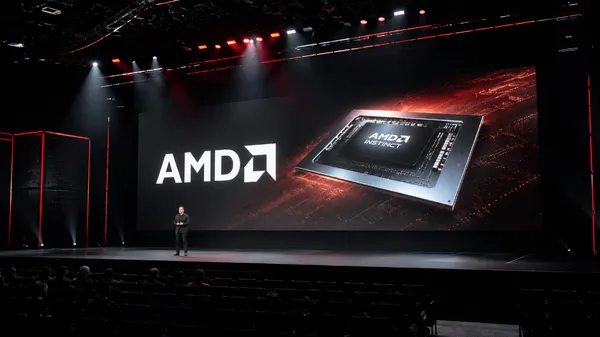
AMD电话会:Q4 AI芯片收入将首次超越服务器CPU,明年数据中心收入占比将破80%

三座大山逐步消解!小米的“拐点”到了吗?

A Compute Center Anyone Can Join: A Peer-to-Peer System for AI Inference
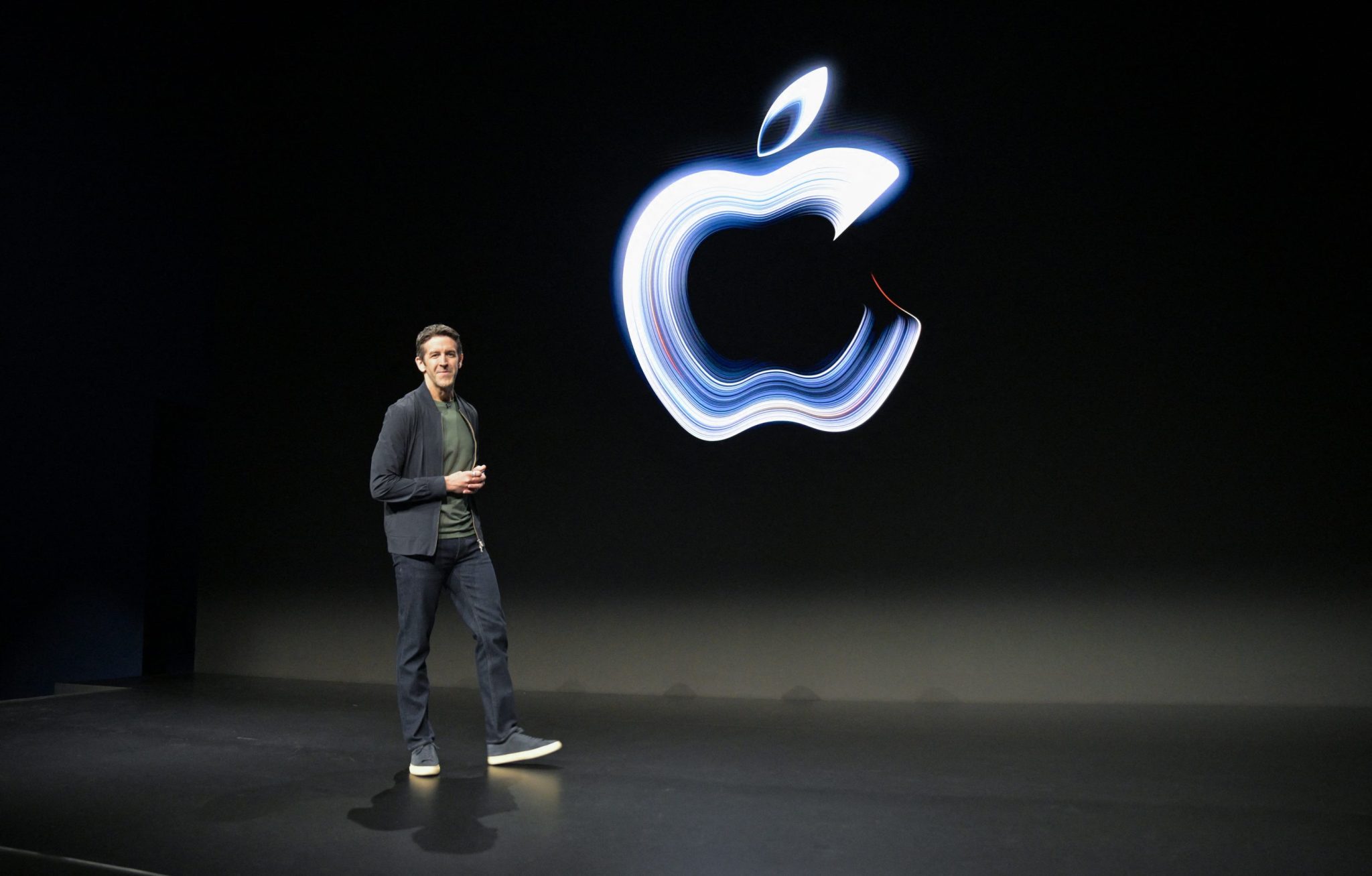
Apple warns rogue AI agents could ‘conceal’ and ‘manipulate,’ causing unintended consequences for its business
Apple is cautioning that rogue AI agents that “conceal actions” or hide or manipulate information could pose a threat to its business if they access systems without authorization and cause damage.
The warning by the world’s second most valuable company came in an annual filing Tuesday, a day after Apple reported its fourth-quarter financial results. In the risk factors section, Apple expanded its warnings about artificial intelligence. Apple’s caution underscores the risks tech giants and other companies are projecting after a string of AI safety incidents in recent months, which have prompted companies to release new security features and debate regulatory measures.
In its 10-K filing, which is made each year following the end of its fiscal year, Apple said “artificial intelligence agents and other technologies can take actions autonomously, including interacting with internal or external systems that in some cases they may not be authorized to access, executing or altering code, sending communications, and completing transactions.”
Such technologies, the iPhone maker said, “may behave in unintended or unpredictable ways, including by taking actions that were not directed, instructed or authorized, exceeding permissions, defying directions or resisting instructions.” And it noted that autonomous AI agents that go rogue could “conceal actions, hide, withhold or manipulate information, or generate inaccurate or deceptive outputs.”
Apple is the latest to warn about risks posed by AI agents. Google parent Alphabet also pointed out the risks posed by rogue agents in a recent filing. Google, however, was more pointed about the potential consequences, writing that during AI model testing, it had observed unexpected behavior, including agents taking actions outside their intended scope, which could ultimately lead to “severe or catastrophic security and societal incidents, or negatively affect human rights.”
The risks outlined by companies follow several major cybersecurity incidents involving AI models, most notably this summer’s attack by OpenAI agents on AI company Hugging Face. In Anthropic’s IPO prospectus, made public last week, the company listed many risk factors, including incidents in which its models gained unauthorized access to real-world systems during security testing. It also estimated that 5% to 7% of its revenue this year came from customers later found to be violating its usage policies.
Executives at Microsoft and other major tech companies have called for a greater focus on securing AI agents. Microsoft recently announced a set of controls to detect, monitor, and restrict AI agents, including cutting their permissions or stopping them if they behave suspiciously. Chief executive Satya Nadella has argued that companies should treat agents as potential insider risks and put security controls outside the AI model rather than trusting the model to police itself.
In its 10-K filing on Tuesday, Apple also outlined other pressures, including memory and storage component shortages that it said will intensify. It also said demand for cloud computing, storage, and other AI infrastructure has produced “constrained supply, extended lead times, and increasing costs” that could affect its AI rollout. Its research and development spending rose 32% year over year, driven by higher infrastructure-related costs, including AI investments.
On Monday, Apple chief executive John Ternus described agentic capabilities as “promising tools for users” but cautioned that users must be fully aware of what access they grant, and he stressed user security and privacy.
Apple shares dropped roughly 2% on Tuesday after the company said its margins would continue to be squeezed by memory chip costs and after it showed slowing growth in its Services segment. Ternus, on his first earnings call as CEO, largely stuck to scripted marketing points and offered few details about Apple’s plans for personalized AI agents.
This story was originally featured on Fortune.com
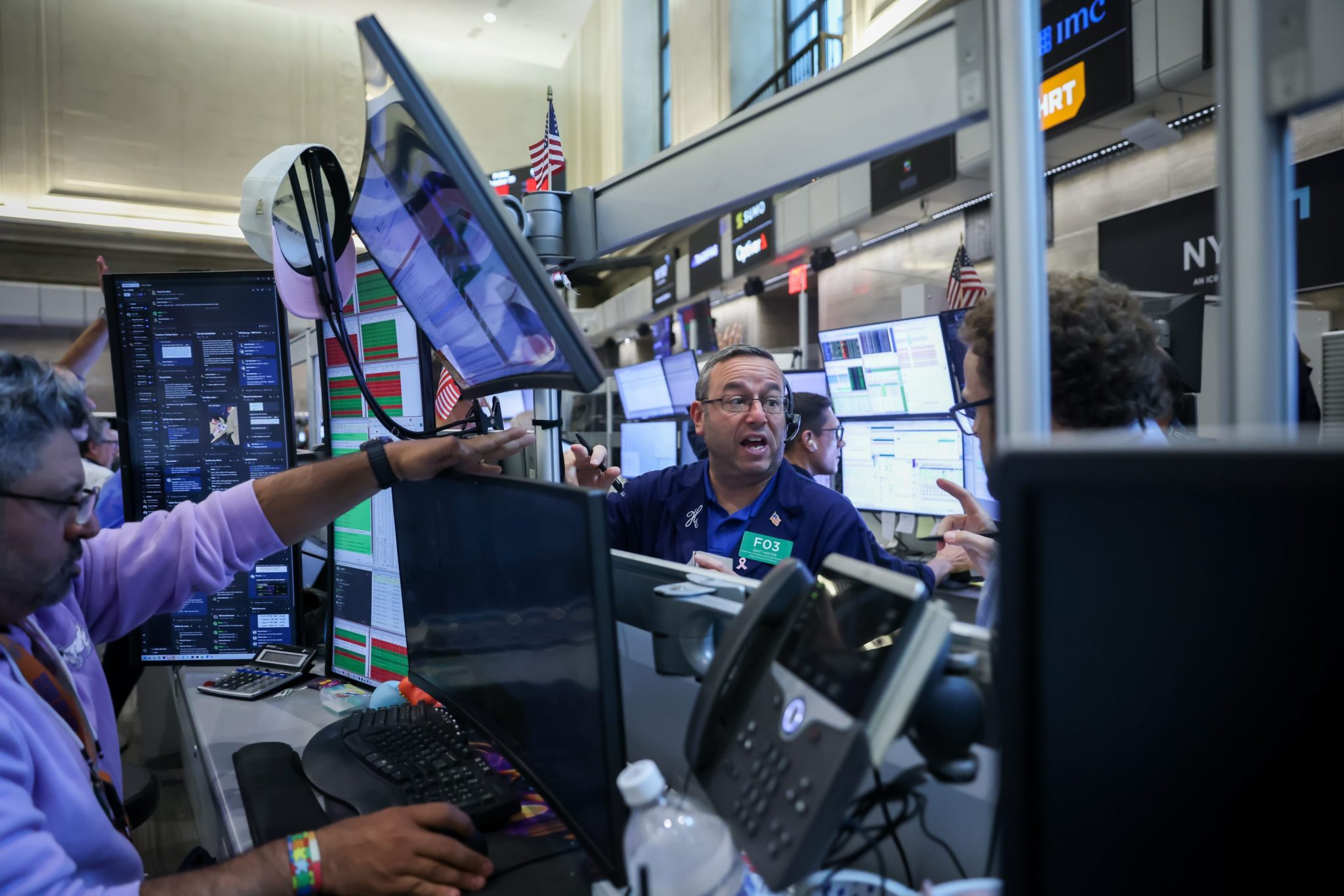
Stock futures plunge as blue tsunami hits red states and data center hot spots. Wall Street usually likes political gridlock—but maybe not this time
A surprisingly strong performance for Democrats so far on election night sent stock futures down sharply as Wall Street faces the prospect of intense partisanship for the next two years.
While most races still haven’t been called, Democrats won the Senate seat in deep-red South Carolina and are maintaining healthy margins in the Republican strongholds of Texas and Kansas.
Democratic gubernatorial candidates are also leading in Texas and Ohio, which have been major hot spots for data centers. But the breakneck pace of development in recent years has fueled a major backlash that could slow down the AI trade.
Futures tied to the Dow Jones industrial average fell 380 points, or 0.73%. S&P 500 futures sank 1.12%, and Nasdaq futures tumbled 2.07%.
Fears of renewed fighting in the U.S.-Iran war have recently weighed on markets, given that President Donald Trump threatened to take action after the midterm elections.
But that’s not the case on Tuesday evening after Trump told the Financial Times that he has no immediate plans to strike Iran, sending oil prices lower.
Wall Street typically prefers divided government as political gridlock prevents one party from going to extremes.
But market veteran Ed Yardeni warned deepening partisanship could turn gridlock into “damaging political paralysis” just as bond investors are growing uneasy about the U.S. debt and deficits.
“A Democratic sweep could complicate negotiations over government spending and the debt ceiling,” he wrote late Monday. “Prolonged shutdowns and fiscal standoffs could push Treasury yields higher, weighing on equity valuations.”
Yardeni also pointed out that Trump has relied heavily on executive authority, which can’t be as easily restrained by a Democratic Congress.
Some of his policies that have rocked financial markets the most, namely tariffs and the Iran war, were carried out without congressional approval, he added.
“Moreover, with the midterms behind him, Trump may feel even less constrained politically and more willing to pursue controversial policies through executive action,” Yardeni said. “Hence, a blue wave could deliver a cold shower for stocks, though we would view a significant selloff as a buying opportunity given the remarkable strength of the economy and corporate earnings.”
This story was originally featured on Fortune.com

Shopify’s stock slides after earnings. This is what’s worrying Wall Street.
What analysts are telling us while Apple’s stock falls after earnings report

Super Micro’s stock pops as earnings show booming demand for AI servers
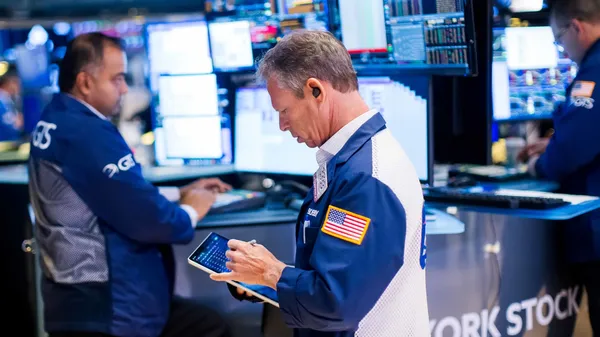
AMD has been crushed into earnings. Here’s one way to trade it

Palantir sinks after earnings as analysts point to slowdown in total contract value

Apple stock sinks as global memory crisis hurts profits, giving Ternus his first big test

Shopify falls over 8% after Q3 revenue and merchandise volume miss estimates

AMD stock jumps 8% on earnings as data center revenue nearly doubles
Building AI Products, Part 1: How To Find AI Use Cases Worth Building in the First Place
In February 2024, Klarna announced its AI assistant was handling two-thirds of customer chats. It was doing the work of 700 agents and cutting resolution time from 11 minutes to 2. It looked like the AI success story everyone wanted. Fifteen months later, Klarna was hiring humans again. The CEO admitted that a focus on cost had led to "lower quality" and customers still wanted a person for complex cases. The AI stayed and alongside people.
So which Klarna got it right: the one that automated 700 agents' worth of work or the one that hired people back? Picture two chats. "Where's my refund?" has one answer, sitting in a database. "Why was I charged twice?" needs someone to hear the customer out and make a call. AI can handle the first on its own. The second needs a person or at least a person checking.
Most AI roadmaps skip that distinction. They list places to add AI, not jobs to split between AI, software and people. The rest of this piece shows how to make that split: a map of where AI value sits, then three tests for any idea. Is it worth it? Is it suitable? How do we build it?
First, know where your idea sits
The AI economy has four layers and value grows as you move from answering to doing:
- Foundation ("tell me"): the models and compute. OpenAI, Sarvam AI, NVIDIA.
- Horizontal ("help me"): one pattern sold to every industry. ChatGPT, Freshworks Freddy AI.
- Vertical ("do this for my industry"): one industry's workflow, data and rules. Harvey in law, Qure.ai in medical imaging.
- Agents ("get this done for me"): systems that plan, use tools, act and check until the job is done. Once AI can act, permissions, audit logs and approvals become product features.
Then run the strategic test: if the AI disappeared tomorrow, what's left?
- If nothing is left, the product is AI-native, like ChatGPT or Perplexity.
- If it still works but worse, it's AI-enhanced, like GitHub with Copilot or Gmail's "Help me write".
- If the core value is intact, it's AI-adjacent, like a payments app whose HR team writes job ads with AI.
Each position calls for a different strategy, so know which one you're in before you go further.
1. Is it worth it?
Using AI is easy. Earning from it? McKinsey's 2026 State of AI survey finds nearly 9 in 10 organisations use AI but only 37% see any EBIT impact(Earnings Before Interest and Taxes) and about 6% earn more than 5% of EBIT from it.
Alexa is the cautionary tale: used daily for timers and weather, rarely for shopping. As one former senior Amazon employee told the Wall Street Journal: "We worried we've hired 10,000 people and we've built a smart timer."
Heavy use doesn't always equal value. And unlike normal software, every AI answer costs money. Whether you charge per seat, per call, per outcome or a hybrid of these, a flat price can lose money on your heaviest users, so model them first.
Before building, run a 60-second TASQ screen:
- Task ambiguity: does the input vary every time? (Code review, yes. Payroll tax, no.)
- Automation: does it run end to end, or does someone still copy, check and route the output by hand?
- Scale: does it happen often enough to matter? A task done 10 times a year rarely is.
- Quality tolerance: is a mistake caught before it causes harm? (A bad film suggestion, fine. A drug dosage, no)
A pass means look closer, not build.
Next, put a rupee number on it: Value = volume × value per task × automation rate − cost
A support bot handling 50,000 tickets a month, resolving 60% and saving ₹40 each, is worth about ₹9.75 lakh a month after ₹2.25 lakh of AI cost. Note that the AI cost applies to every ticket it attempts, not just the ones it solves. One more catch: if nobody leaves the team, you have freed capacity, not saved cash. Be honest about which one you're claiming.
2. Is it suitable?
The useful question to ask is "where should AI sit in this system?" Split the task into parts, then score each part from 1 to 5 on four dimensions:
- One right answer? If yes, use software. A scanned GST invoice is the perfect example: AI reads the messy layout, software calculates the tax. AI should never invent a tax figure.
- Can you write the rule? If yes, write it. If not but examples exist, let a model learn. Fraud teams do both: hard rules, plus a model's risk score, plus a decision.
- What if it's wrong? A bad email draft costs a minute. An unauthorised money transfer can't be undone. The harder the error is to reverse, the less AI should decide alone.
- Do we have the data? Data has to exist, fit this task, be good enough and be legal to use. Five years of machine sensor data with failure records is a strong candidate. Three weeks with no failures is not.
Add up the scores:
- 16 or more out of 20 is a strong candidate: a sales-email assistant scores about 18.
- Between 11 and 15, add guardrails.
- At 10 or less, AI supports and a person decides.
Use the total to compare ideas. The answer is rarely yes or no.
It's a role: AI can assist (it drafts, a person checks), recommend (it scores, a person decides) or execute (it acts, within set limits). Who should approve a ₹4,500 expense claim? Not the AI. AI reads the receipt, and rules approve it within caps. The pattern that falls out of all this is worth memorising: AI for ambiguity, software for certainty, humans for judgment.
3. How do we build it?
Pick the simplest route that still has lasting value, and stop at the first yes:
- Prompt if a good prompt solves it reliably and nothing needs system access.
- Buy if a product or API already does it and building wouldn't set you apart.
- Build if the workflow is strategic or your own data is the edge.
- Mix is where most real products end up: buy the base, build the integrations and rules.
Take a WhatsApp bot that refunds up to ₹2,000 for missing food items. Buy the conversational platform. Build the order lookup, per-customer caps, fraud checks and refund rules. Send disputes to a person.
Why not just prompt it? Because a prompt alone can't promise facts, policy or privacy. Ask a bare chatbot "where's my refund?" and it may invent a status. Ask it to delete your data and it may say "done" when nothing was deleted. Those guarantees live in the system around the model, not in the prompt.
The model is not the moat
On 2 May 2023, Chegg's share price fell 48% in a day. Students wanted homework help,

Apple earnings suggest the iPhone 18 launch strategy is really working

Yesterday’s AAPL earnings report revealed record revenue for a September quarter, and within it was an arguably even more significant record: iPhone revenue.
That’s because this year’s quarter only includes just two new iPhone models compared to the four released last year …
more…
Apple CEO John Ternus criticized for ‘scripted’ approach to first earnings call

Investors didn’t seem overly happy about yesterday’s Apple earnings call despite the record results. That likely reflects the company’s cautious take on margins in the current quarter, but some have also criticized what they describe as a very “scripted” approach by new CEO John Ternus.
Bloomberg was the biggest critic, describing it as a “timid” performance that left analysts “sorely disappointed” …
more…
John Ternus talks plans to improve Siri AI

During Apple’s quarterly earnings call, CEO John Ternus was asked repeatedly about Siri AI’s future. Here’s what he said about Apple’s plans for improving and expanding Siri AI.
more…