
宝马自今年6月来第二次下调盈利预期,加速裁员与新车型生产
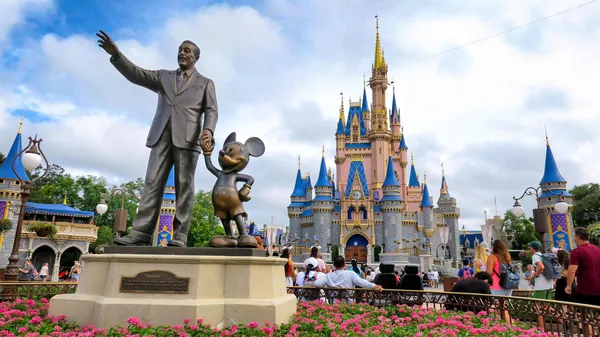
Disney plans several thousand layoffs, asks some managers to cut costs by up to 20%
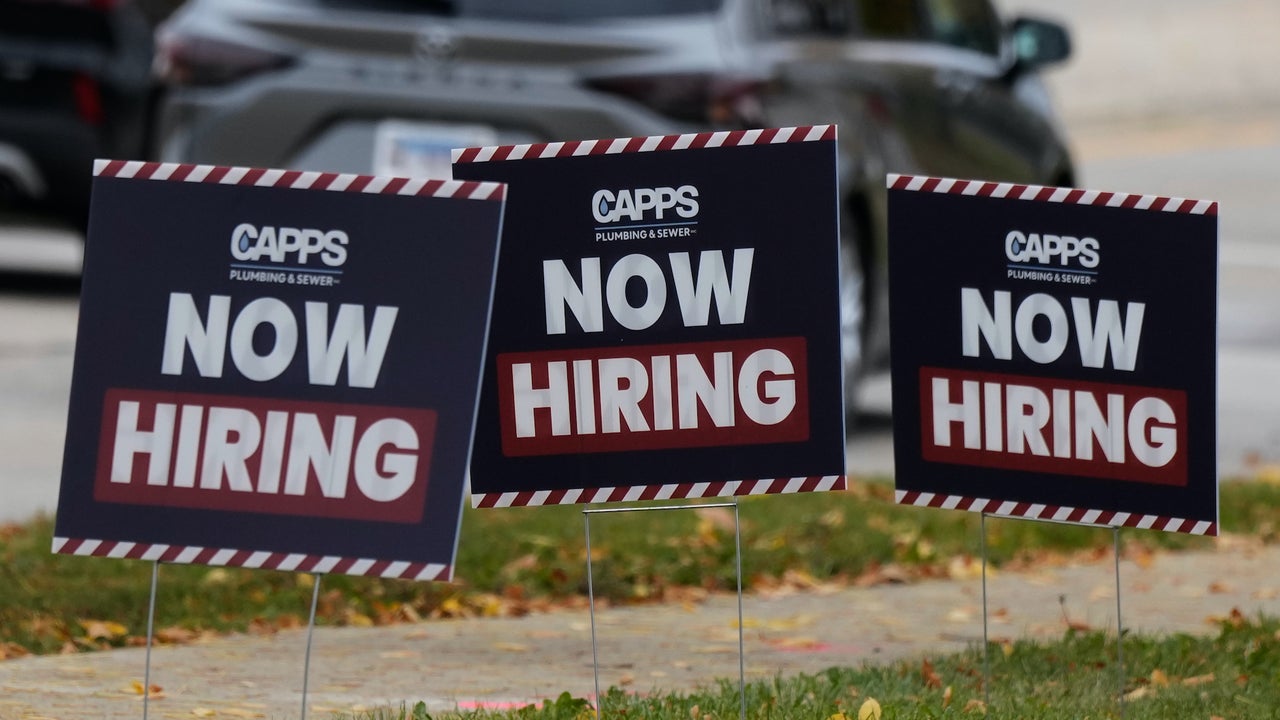
U.S. job postings rose sharply in September
U.S. employers ramped up their job postings in September as stronger economic growth may be encouraging more hiring. Yet voters are headed to the polls Tuesday, largely gloomy over an economy beset by higher prices.
U.S. job openings jumped to 7.5 million from a revised 7.19 million in August, the Labor Department reported Tuesday. It is the largest number of openings since May and up from a recent low of 6.9 million in March.
The department’s Job Openings and Labor Turnover Survey (JOLTS) also showed that gross hiring—job gains before subtracting people who quit or lost jobs—rose and layoffs fell in September.
The increases are a hopeful sign that hiring could improve, but the trend would have to continue for several months to suggest real progress. Hiring has been sluggish for nearly three years, though layoffs have also been historically low, a sign of meager “churn” in the labor market. Low churn means those who are employed are enjoying relatively high levels of job security, but it is much harder than normal for those looking for work to find a job.
Still, the number of job openings now exceeds the number of unemployed, a sharp switch from a year ago when there were more people out of work than available jobs.
“It’s an encouraging sign that despite all the headwinds right now with high diesel and gas prices and ongoing inflation problems, companies are slowly increasing their hiring,” Heather Long, chief economist at Navy Federal Credit Union, said.
Job openings rose the most in professional and business services, which includes high-paying jobs in engineering and accounting, as well as jobs in the temp industry. Manufacturers, shipping firms, and state and local governments also advertised for more workers.
Nicole Bachaud, a labor economist at ZipRecruiter, cautioned that with inflation still high and interest rates having increased since the summer, companies may not be able to ramp up hiring by much in the coming months.
“All of that added up together just makes it much more expensive to operate as a business and much more expensive to expand,” she said. “And so that will likely continue to be a downward pressure on hiring, until we see inflation really able to cool down.”
The government will issue the October jobs report on Friday, which is forecast to show that employers added 65,000 positions last month, according to data provider FactSet. That would be an improvement from 29,000 in September. The unemployment rate is expected to stay at a low 4.2%.
Typically, job gains of just 65,000 would be seen as a sign of a struggling economy, but with the giant baby boom generation retiring and immigration sharply reduced, the economy doesn’t need to generate as many jobs as it has in the past for unemployment to remain low.
In September, layoffs fell sharply to just 1.64 million, the fewest since March 2025. The number of people quitting their jobs rose to 3.37 million, the highest in about 18 months, and up from 3.04 million.
The rise in quits is generally a good sign because workers usually leave a job when they either have another lined up or when they are confident they can find new work.
—Christopher Rugaber, AP economics writer

Canva conducts mass layoffs, over 1200 workers potentially impacted
Canva is conducting its first mass layoff, which will potentially impact up to 1271 people. Co-founder and CEO Melanie Perkins announced today that the company will undergo a significant restructuring, with 22 percent of its staff to be affected.
"For some people, this will mean changes to their roles or being asked to relocate to centralised hubs," Perkins said in a note to staff. "Sadly, it will also mean saying goodbye to teammates and friends who have helped build Canva into what it is today."
Canva's browser-based design platform of the same name has become a popular tool for businesses, educators, students, and anyone else interested in easily creating visually appealing documents and presentations. Launched in 2013, the Australian company now has teams across 37 countries, and has claimed over 265 million monthly active users.
However, Canva's growth notably slowed this year, with reports that its monthly active user count was 208 million in July. In August, the design software company revised its revenue growth expectations from 30 percent down to 20 percent — almost half the 38 percent growth it saw last financial year. Canva further wiped $7.9 billion from its own internal valuation later that same month, taking it from $38.9 billion to $31 billion. Two of Canva's backers similarly reduced their valuations of the company, reducing it by 17 percent from $42 billion to $34.9 billion.

Canva has previously pointed to the cost of AI as a significant factor driving its lowered revenue projections. While Perkins told investors in August that there is strong demand for its AI products, implementing them has been more expensive and taken longer than initially planned. In April, Canva launched Canva AI 2.0, a platform allowing users to create designs using conversational text prompts. Perkins had stated that Canva's cost per AI task had fallen by 90 percent since Canva AI 2.0's implementation; however, this apparently wasn't enough to prevent the company from lowering its revenue growth forecast.
"This has been our hardest year yet, and as we shared earlier this year, our growth has slowed for the first time in a decade," Perkins wrote to staff. "To set ourselves up for the next decade, we need to refound Canva, getting back to our roots of small, empowered teams with the freedom to make decisions, take ownership and focus on what matters most for our community."
In practice, this means that Canva will be consolidating multiple teams and giving broader roles to those with subspecialties. Sydney will now be the primary base for more of Canva's product teams, with some workers being asked to relocate to the city, while hybrid workers everywhere will be expected to spend two to three days a week in the office from January.
"We started with our mission and future goals, then considered the structures, skills and locations needed to achieve them," said Perkins, explaining how Canva came to the decision to restructure. "Only then did we look at what this would mean for individual roles."

Employees impacted by Canva's mass layoff will receive a minimum of six months' salary and be allowed to keep their work MacBook. Canva is also waiving the one-year vesting cliff for new workers, as well as offering 12 months of access to its employee assistance program and healthcare in relevant countries. Perkins stated that those laid off will be given support to find new roles elsewhere, including one-on-one coaching and a one-year subscription to LinkedIn Premium.
Further, Canva is establishing a Canva Collective Fund to provide $10,000 grants to laid-off workers interested in establishing their own venture. Applications for grants close Dec. 14, with Perkins stating that Canva will not take any ownership or equity in funded projects.
"This is without doubt the hardest moment in our thirteen-year history," Perkins wrote.
Workers at Canva have been given today off, with further information about the restructuring to be provided at a company all-hands meeting on Nov. 10.

SUSE lays off 1 in 10 workers – citing AI and automation

Canva is announcing changes and layoffs affecting 22 percent of its staff

Canva is making significant changes affecting 1,271 people, which is 22 percent of its staff, co-founder and CEO Melanie Perkins announced today. "For some people, this will mean changes to their roles or being asked to relocate to centralised hubs," says Perkins. "Sadly, it will also mean saying goodbye to teammates and friends who have helped build Canva into what it is today."
In her note to staff, Perkins says that:
After exploring a wide range of alternatives, I've come to the difficult conclusion that small changes won't be enough. To set ourselves up for the next decade, we need to refound Canva, getting back to our roots of small, …

[程序员] 感慨,感觉现在 gz 这么多,难怪这行环境这么差
很明显是一个公司要求这个岗位的人做不匹配该薪水的事情,被我礼貌的拒绝后,我依然是正常完成工作事务,拿多少钱干多少活,再一边搞自己的副业(因为公司明显就是画饼),然后领礼包,竟然有一堆人共情公司??
有人带头在维护打工人的权益,竟然还有人在这里拖后腿的?环境就是被你们这群人搞臭的,喜欢舔 boss 是吧

2026年全球游戏行业裁员岗位达10977个 已超过2025年全年
2026年全球游戏行业已记录10977个被裁岗位,接近1.1万人,超过2025年全年的9197人。ASGC游戏行业裁员追踪数据还显示,2024年仍是近三年裁员规模最大的一年,当年超过1.5万人失去相关岗位。
阅读全文
SUSE宣布裁员10%:约190名员工将失去工作 AI和自动化为主要原因
德国企业级Linux发行版供应商SUSE计划在全球范围内裁减约10%的员工,预计涉及约190人。公司首席执行官Dirk-Peter van Leeuwen在发给全体员工的内部备忘录中表示,人工智能和自动化技术正在从根本上改变软件行业的工作方式,企业现有的组织架构和人员配置已经难以适应未来的发展要求。
阅读全文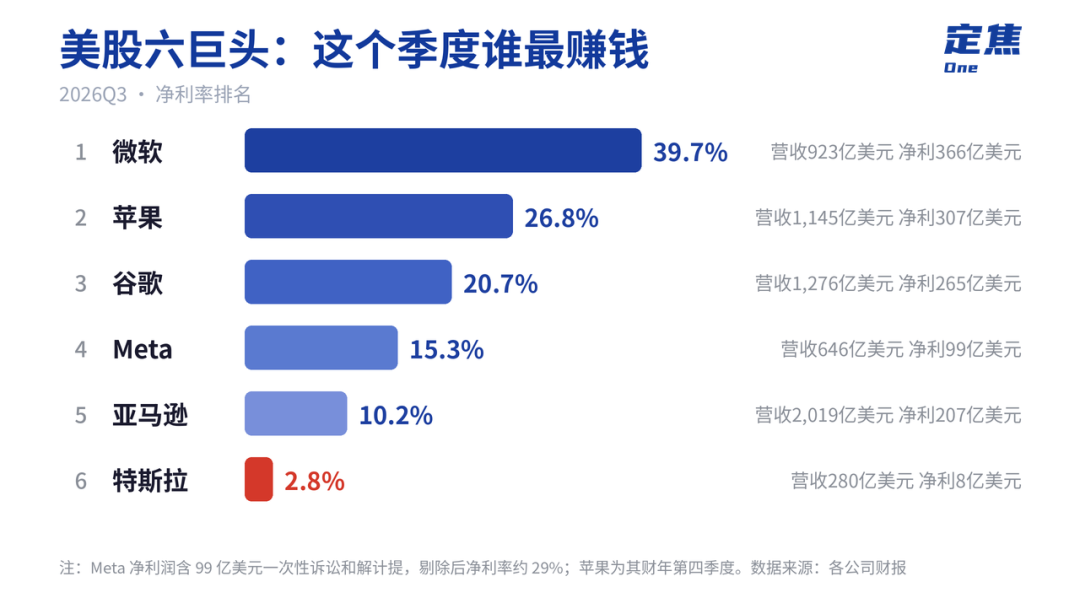
AI绑架美股七姐妹
(本文作者为 定焦One,钛媒体经授权发布)
文 | 定焦One,作者 | 金玙璠,编辑 | 魏佳
截至11月2日,“美股七姐妹”中除英伟达之外的六家,已公布最新业绩。营收几乎全线增长,股价走势却不同。
跌得最狠的,恰恰是增长最快的。美东时间10月28日,谷歌母公司Alphabet公布三季度财报,谷歌云单季收入307亿美元,同比增长103%。然而第二天,股价暴跌12.64%,创下这家公司上市以来最大单日跌幅。
24小时后,亚马逊重演了这一幕。AWS增速39.3%,创近五年新高,盘后股价跳水超过7%。再往前一周,Meta营收增长26%,股价也跌了7%。
另外三家股价相对稳定。微软Azure增速48%,业绩不差,第二天股价微跌0.2%。特斯拉经营利润下降56%,营业利润率只剩2.6%,却因为宣布将全年资本开支从250亿美元压缩到200亿美元,股价反而稳住了。而几乎没在AI基础设施上花钱的苹果,今年股价涨了约26.7%,是“七姐妹”里表现最好的。
“七姐妹”指的是苹果、微软、英伟达、亚马逊、Alphabet、Meta和特斯拉这七家美国科技巨头。英伟达的财季与其余六家不同步,三季度财报要到11月才公布,因此本文主要分析已披露业绩的六家,涉及股价和产业链时仍按七家来讨论。
过去几年,七姐妹的股价走势大体同步,今年彻底变了。截至10月30日,苹果年内涨26.7%,英伟达涨9.7%,Alphabet和特斯拉分别跌10.5%和11%;七家公司占标普500约三分之一的权重,年内加权涨幅只有6.2%,没跑赢大盘。这是自2023年“七姐妹”概念被提出以来,首次集体落于下风。
表面上看,市场在担心AI泡沫,担心巨额投入能否收回。仅上个季度,六家公司的资本开支加起来就超过2000亿美元,其中相当一部分最终流向了英伟达,而英伟达自己上一财年全年的资本开支不过61亿美元。但如果只是害怕泡沫,同样在大举烧钱的微软为什么安然无恙,增速最快的谷歌反而跌得最惨?
要回答这个问题,得先拆解这几家巨头的生意,看清它们各自靠什么赚钱。
01.谁在赚“现在的钱”,谁还在赌“未来”
这六家公司都被贴上“AI概念”的标签,但撑起股价的,是四种不同的逻辑。
微软和亚马逊卖算力,Meta卖广告,苹果卖硬件和服务,特斯拉押注自动驾驶。谷歌特殊一些,两样都占:云和广告。当市场开始用真金白银掂量AI的回报时,模式的优劣就显现出来了。
卖算力,是当下最稳的生意。只要整个行业还在疯狂抢算力,微软、亚马逊、谷歌这三家云厂商未来两三年的收入就大致有了保障。
微软Azure单季收入331.7亿美元,增长48%;AWS收入460亿美元,增长39.3%,年化1840亿美元,是近五年最快;谷歌云收入307亿美元,直接翻了一倍多。
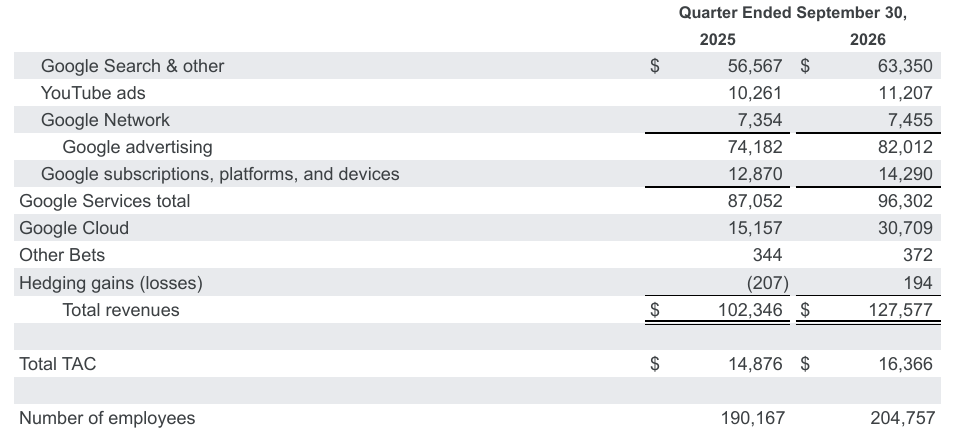
谷歌云收入翻倍至307亿美元 图源 / 谷歌财报
这种增速能否持续,要看手里的订单。微软还没交付的商业合同高达6770亿美元,比去年同期多了73%;谷歌云的积压订单也有5610亿美元,管理层说一半以上会在未来两年内确认为收入;亚马逊积压订单5780亿美元,CEO Jassy在电话会上透露,OpenAI和Anthropic各自追加了上千亿美元的长期采购合同。
云厂商未来几年的收入,很大一部分已经被预定了。眼下的瓶颈在于供给。亚马逊现在平均每14秒就要往数据中心里装一枚AI芯片,产能依然不够。
Meta是另一条路:靠AI把广告卖得更贵。
这个季度营收646亿美元,增长26%,广告展示量多了10%,平均单价涨了14%。管理层在电话会上把增长归功于AI推荐系统的改进。
问题是,广告生意有上限。广告主的总预算是一个有限的池子,AI的价值无非是让广告更精准、更贵,或者增加用户看广告的时长。这个季度单价已经涨了14%,还能不能继续涨?全系产品日活用户超过36亿,增长空间还有多大?当AI投入的边际效益开始递减,广告的增速能否永远跑赢开支的增速?这些都是问题。
苹果几乎没参与这轮军备竞赛。
季度营收1145亿美元,创了纪录,增长12%;全年营收4788亿美元,是公司史上最好成绩。它全年资本开支90亿美元,同比还降了29%。过去两年,市场总批评苹果在AI上落后,同行在大举砸钱,它好像没什么动作。这个季度之后,风向有点变了。当所有人都在为巨额投入和日益紧张的现金流发愁时,“不花钱”反而成了优点。2026年,苹果以27%的涨幅领跑七巨头。
特斯拉是第四种:估值全押在还没兑现的自动驾驶上。
当季营收280亿美元,和上一年持平,经营利润却下滑了56%。卖车这门生意的利润在缩水,市场愿意给它高估值,赌的是自动驾驶和机器人。FSD付费订阅174万,增长67%,北美交付的新车超过75%选装了FSD;Robotaxi也已在奥斯汀正式载客,无监督里程一个季度增长了八倍。
但这些离赚钱还远。特斯拉与SpaceX正在评估的潜在合并,也让它的资本配置多了不少变数。
谷歌跌得最狠,因为两门生意同时遭了质疑。
搜索广告收入增长12%,低于市场预期(约15%),AI搜索的变现效率还不如传统搜索。云业务收入翻倍,代价是单季资本开支514亿美元,自由现金流转为负的91亿美元。加上SpaceX等股权投资的亏损拖累,净利润下滑了24%。财报全面低于预期,市场直接用脚投票。
一位关注美股的投资人Roy对「定焦One」表示,把这六家都当成一个“AI概念”来炒,从一开始就不合理。同样是投AI,有的当年就赚回来,有的要等好几年;有人是用客户的钱建基础设施,有人是用自己的利润赌未来。
02.现金流为负,市场紧张了
这个季度,六家公司的股价涨跌,和自由现金流的状况对应。所谓自由现金流,就是公司赚的钱,刨去建厂房、买设备、买芯片的开销后,手里真正剩下的部分。
自由现金流为负的三家,谷歌、Meta、亚马逊,股价在10月都跌了。自由现金流为正的另外三家,微软、特斯拉、苹果,股价都稳住了。
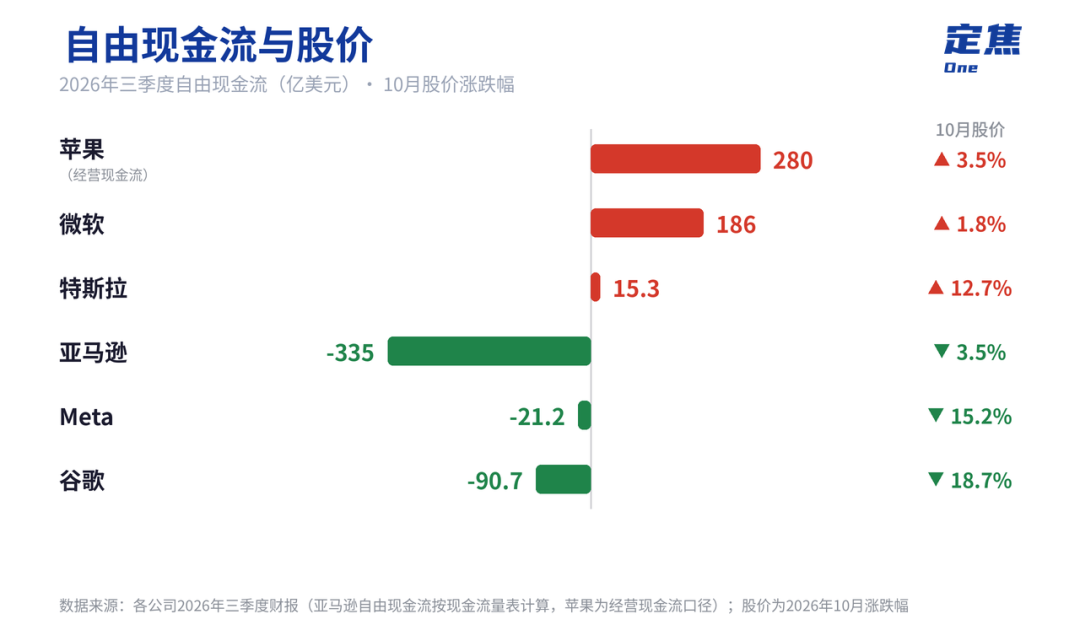
Roy表示,前两年,市场还愿意为“敢花钱”下注;现在,花钱多的得先证明自己还得起。
变化背后,是这轮AI投入的体量实在太大。微软、亚马逊、谷歌、Meta四家这个季度的资本开支合计2029亿美元,创单季纪录,今年全年计划加起来超过7000亿美元,比去年多了75%。业界预计明年这一规模将达到1.3万亿美元。
钱花到这种程度,市场当然要关注:花出去的钱到底什么时候能回来?高盛在今年一季度的行业回顾里概括过这个转向:对AI的关注,已经从“谁投得最多”,变成“投出去的钱离变回现金还有多远”。
“现金流为负”的三家,处境也不一样。
谷歌和亚马逊的钱都花在了数据中心、芯片和网络设备上。花出去的钱,大概率收得回来,只是需要时间。谷歌这个季度资本开支514亿美元,同比翻了一倍多。底气是谷歌手里5610亿美元的积压订单,管理层说一半以上会在两年内变成收入。亚马逊的逻辑相同:AWS积压订单5780亿美元,OpenAI和Anthropic各自追加了上千亿美元的长期采购。
值得一提的是,微软这个季度的资本开支同样翻倍,达到394亿美元,不过因为赚得多,经营现金流有580亿美元,扣掉开支还剩186亿美元。
Meta的情况不同。它的钱也花在数据中心上,单季资本开支349亿美元,全年计划花1350到1450亿美元,和云厂商是一个量级。区别在于,云厂商的数据中心是替客户建的,建好了客户付钱;而Meta的数据中心是建给自己用的,投入能不能收回来,还是看广告能多赚多少。
2022年Meta大举押注元宇宙,一年之内股价跌了75%,后来靠裁员和砍预算才缓过来。眼下广告业务固然比四年前更赚钱,但这次赌注的体量是当年的数倍。
更值得关注的是,Meta正在从“靠自身利润为AI竞赛提供资金”转向“靠资本市场募资”:长期债务一年内从587亿美元涨到809亿美元,还宣布要设立没有投票权的C类股。标普最近已将Meta的评级展望从“稳定”下调至“负面”,理由正是资本支出和自由经营现金流存在重大不确定性。
另外两家,特斯拉主动收缩,苹果干脆没怎么花钱。
特斯拉把主要资源投向Robotaxi和机器人,但相比此前更大的规划已有所收敛:全年资本开支从250亿美元以上控制到200亿美元,自由现金流回到正的15.3亿美元,手里还备着300亿美元的信贷额度。
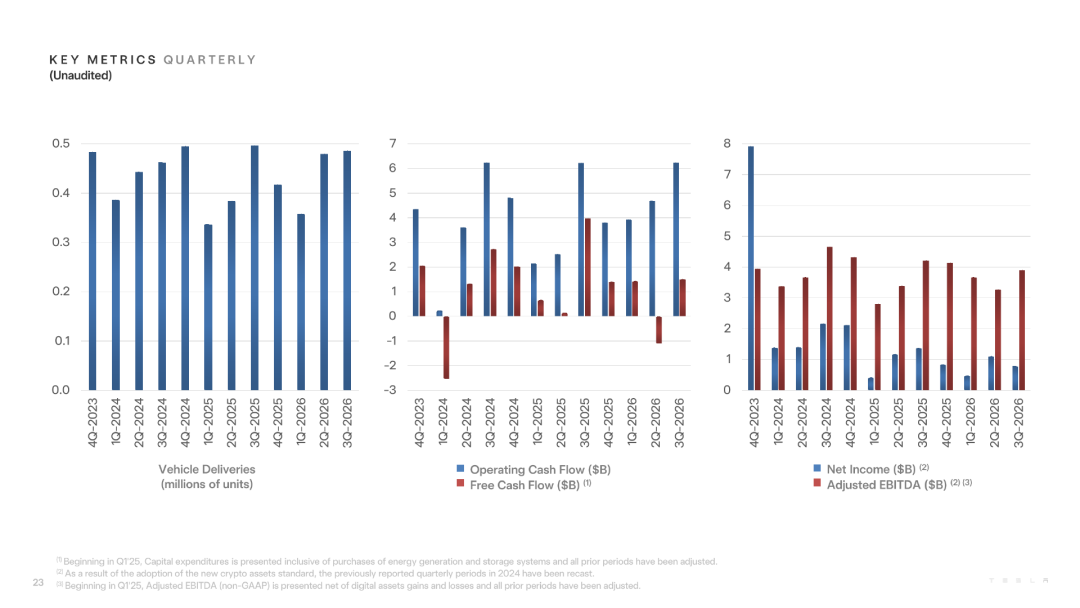
特斯拉季度经营现金流与自由现金流
苹果几乎没有参与这轮投入。它不建大规模数据中心,AI投入集中在对现有产品和服务的渐进式集成,而非大规模自研训练集群,全年资本开支90亿美元,同比还降了29%,单季经营现金流就有280亿美元。
但苹果也有代价:自研AI进展不顺,今年1月宣布每年花约10亿美元买谷歌的Gemini模型来重建Siri;供应链也被波及,AI服务器抢走了大量高带宽内存产能,普通存储芯片的成本大涨,Mac mini已经提价了200美元。
市场反应其实很清晰:回款路径明确的,市场还愿意等;路径不明朗的,压力最大;投入保守、或者已经开始收缩的,反而成了避风港。
03.座次重排,洗牌才到中场
把时间拉长来看,这轮AI浪潮已经把七姐妹的座次彻底洗牌了,且还没有结束。
回到这轮AI的起点。2022年11月30日,ChatGPT发布。同年年底,按市值排座次:苹果(2万亿美元)、微软(1.8万亿美元)、谷歌(1.1万亿美元)、亚马逊(8500多亿美元)、特斯拉(不到4000亿美元)、英伟达(3600多亿美元)、Meta(3000亿美元出头)。英伟达排第六。
2023年5月,英伟达市值盘中首次达到1万亿美元。两年半后的今天,它一度登顶全球市值第一。
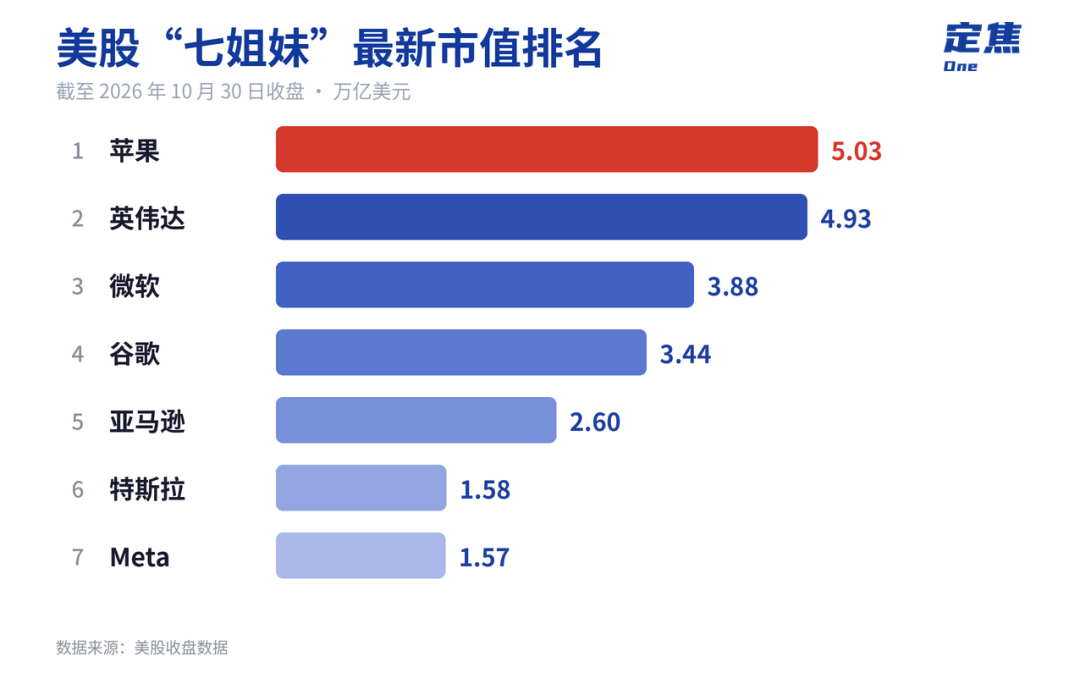
截至今年10月30日,新的座次是:苹果(5.03万亿美元)、英伟达(4.93万亿美元)、微软(3.88万亿美元)、谷歌(3.44万亿美元)、亚马逊(2.6万亿美元)、特斯拉(1.58万亿美元)、Meta(1.57万亿美元)。七家合计,从7万亿美元扩张到了23万亿美元,占标普500的权重从22%升到了33%。
卖芯片的英伟达涨了13倍,从第六名冲到榜首,市值一度超过特斯拉的三倍。三年前,这两家公司的市值还差不多。Meta涨了近五倍,但排名依然垫底。过程中,特斯拉也一度跌到最后一名。
Roy表示,从这一季的财报里,能看出三条正在改写游戏规则的线索。
第一,谁在收钱、谁在借钱。
六家科技巨头的巨额开支里,最大的一部分流向了英伟达。英伟达自己不搞大基建,上一财年全年资本开支仅61亿美元左右。只要行业还在抢算力,它的收入就有保障。但反过来也一样,它的地位本质上建立在另外几家的开支上,一旦下游开始收缩,它马上承压。
另一边,有些云厂商以前是拿利润建机房,现在是发债、发股、借钱来建。这个季度,谷歌发债净入287亿美元,还计划发行847.5亿美元的股票,亚马逊单季发债481亿美元。
更宏观的数据来自路透社的调查:微软、Alphabet、亚马逊、Meta和甲骨文五家科技企业,2026年前9个月经营活动现金流高达创纪录的5429亿美元,但资本支出翻倍至5569亿美元,首次入不敷出。五家公司合计自由现金流由上年同期1435亿美元的盈余转为140亿美元的赤字。
Roy强调,市场已经注意到了循环融资的隐忧:芯片制造商和云厂商利用自身信用,给下游客户提供贷款或担保,这些资金又流回芯片和算力的采购中,容易制造需求旺盛的假象。
第二,折旧才刚开始。
厂房和芯片采购花出去的不是一次性费用。设备一买入就开始计提折旧,逐季摊进利润表。微软单季折旧摊销同比多了44%,往后只会加速;亚马逊过去12个月高达793亿美元,比它一年前同期的净利润(765亿美元)还多。这意味着,设备老化和贬值的速度,快过了它赚钱的速度。摩根大通更是预测:亚马逊2027年的自由现金流可能滑向负1280亿美元。
这背后的原因是,AI芯片和服务器更新换代太快。花100亿买的高端GPU,以为能摊到十年,但可能五年甚至三年后,因为性能落后,就面临资产减值的风险。
投资人Michael Burry最近公开指控巨头们有意拉长AI芯片的折旧年限,据其估算,2026到2028年可能累计虚增约1760亿美元利润。
这一点上,投资最少的苹果和已经收紧开支的特斯拉,相对轻松。
第三,停下来比继续烧更难。
如果AI的商业回报兑现得比预期要慢,能主动刹车、调整节奏的公司可以保住利润;反之,则会被成本拖住。野村跨资产策略师将这一困境概括为“进退两难”:继续加速则自由现金流承压,减速则AI需求叙事失守。
云厂商签的是长期合同,特斯拉的自动驾驶投入不能停,Meta的AI推荐系统是广告业务的地基,也不能停。
苹果是唯一拥有充分余地的。它的投入规模小,可以等技术路线和商业模式更清晰了再精准切入。
下一个验证点是英伟达11月发布的财报。如果它的数据中心收入及指引仍在加速,说明下游还在加码;如果指引下调,就说明下游开始收缩了。
所以,这一季财报季宣告了一个时代的终结:AI基建的“军备竞赛”阶段,正式让位于“算账”阶段。上半场比的是谁胆大、谁下注猛;下半场,拼的是谁家底厚,谁能在折旧开始吞噬利润、债务成本居高不下的时候,拿出让市场信服的投入产出成绩单。

更多精彩内容,关注钛媒体微信号(ID:taimeiti),或者下载钛媒体App

育碧被曝有意收购微软 Xbox 旗下《耻辱》《死亡循环》开发商 Arkane Lyon
IT之家 11 月 4 日消息,彭博社今日报道称,育碧(Ubisoft)已向微软提出收购申请,希望将《耻辱 / 羞辱》(Dishonored)和《死亡循环》(Deathloop)的开发商 Arkane Lyon 纳入旗下。
除育碧外,至少还有另外两家游戏公司向微软提交了收购报价,目前 Arkane Lyon 的未来归属仍未确定。
微软正寻求剥离旗下法国游戏工作室 Arkane Lyon。育碧是目前公开报道中唯一被点名的竞购方,另外两家参与竞购的游戏公司身份尚未披露,交易报价及具体条件也没有公开。
此次出售计划是 Xbox 首席执行官 Asha Sharma 推动业务重组的一部分。Xbox 此前启动大规模裁员,并对旗下多个游戏工作室进行调整,部分工作室被合并、缩减规模,另一些则寻求出售或独立运营。
彭博社还指出,微软正在考虑其他处理方案,其中包括将 Arkane Lyon 出售给工作室现有管理层。如果这一方案最终达成,Arkane Lyon 将成为独立游戏开发商,运营模式类似此前从 Xbox 分拆出去的 Double Fine Productions 和 Compulsion Games。
Arkane Lyon 目前正在开发漫威超级英雄游戏《漫威刀锋战士》(IT之家注:该作于 2023 年公布,微软此前并未宣布取消项目)。不过,随着工作室所有权可能发生变化,游戏后续开发及发行安排仍存在不确定性。微软此前还表示,正在寻找合作伙伴,支持该工作室完成游戏后续开发并推动商业发行。
在此之前,法国媒体《世界报》(Le Monde)报道称,微软正在寻求为工作室寻找新买家,约 217 名员工的岗位面临风险。微软随后将原定于 11 月 13 日结束的相关协商期限延长一个月,以继续探索出售工作室以及寻找《漫威刀锋战士》开发合作伙伴等方案。
与此同时,目前育碧自身也在进行业务重组,此前已经关闭部分工作室、裁减员工并取消多个游戏项目。因此,即使育碧最终成功收购 Arkane Lyon,工作室未来的人员安排和项目规划仍有待观察。
相关阅读:

甲骨文联合创始人拉里 · 埃里森过去一年财富缩水 1590 亿美元,个人身家几乎减半
IT之家 11 月 4 日消息,甲骨文联合创始人拉里 · 埃里森过去一年财富缩水 1,590 亿美元(IT之家注:现汇率约合 1.06 万亿元人民币),个人身家几乎减半。
根据彭博亿万富豪指数,埃里森的净资产减少 49.2%,降至 1,640 亿美元(现汇率约合 1.09 万亿元人民币),全球富豪排名跌至第九。今年初,他还排在第五位,排名高于马克 · 扎克伯格,仅次于谷歌的谢尔盖 · 布林。
82 岁的埃里森主要依靠持有甲骨文股票积累财富。甲骨文是他于 1977 年联合创立的科技公司,股价今年以来累计下跌 39%,较 2025 年 11 月跌幅超过 53%。
当地时间 2 日,甲骨文宣布计划通过发行新股和债券筹集 200 亿美元(现汇率约合 1,333.08 亿元人民币),引发投资者抛售,股价下跌近 9%。3 日盘前交易中,股价再跌 1.5%。
投资者不仅担忧甲骨文此次融资规模过大,也越来越担心公司为履行 AI 合同而投入巨资建设数据中心,最终能否完成如此庞大的基础设施扩张计划。
增发新股还会稀释现有股东的持股比例,进一步举债则会加重甲骨文的债务负担,引发更多担忧。
科技股普遍遭到抛售,也反映出市场担心 AI 军备竞赛开始降温。上周,谷歌母公司 Alphabet 公布财报后股价暴跌 13%,创下财报发布后最差表现。
甲骨文的处境与 2025 年截然不同。当时,投资者看好公司成为 AI 基础设施主要供应商的前景,推动股价大幅上涨。
2025 年 9 月,甲骨文股价曾在一天内暴涨约 40%,埃里森也短暂登上世界首富宝座。而时间来到现在,埃里森在彭博亿万富豪指数中勉强保住前十名,排名落后于英伟达 CEO 黄仁勋。埃隆 · 马斯克的身家虽然从万亿美元以上回落,但仍以遥遥领先的优势稳居世界首富。
此前有消息称,甲骨文 9 月中旬启动了新一轮裁员,部分团队裁员比例达到两位数。与此同时,公司为满足 AI 业务的资金需求持续增加借款。

IT早报 1104:iOS 27.3 测试版携国行 Apple 智能如约而至;中兴辟谣 400 亿卖手机业务;全球首款甲醇电混家轿吉利银河星耀 6EF 上市;全国放心消费平台上线...
“IT早报”时间,大家好,现在是 2026 年 11 月 4 日星期三,今天的重要科技资讯有:
1. 国行「Apple 智能与 Siri」如约而至,iPhone 15 Pro 及更新机型升级 iOS 27.3 开发者预览版可用
苹果官方 11 月 4 日面向 iPhone 发布了最新的 iOS 27.3 开发者预览版。在最新的 iOS 27.3 开发者预览版上,国行 Apple 智能与 Siri 上线,用户在更新最新版 iOS 系统后可以在设置中找到「国行 Apple 智能与 Siri」设置页。>> 查看详情
2. 400 亿卖掉手机业务?中兴称“不属实”
针对网传与互联网大厂洽谈手机业务合作、按 400 亿估值成立合资公司的消息,中兴通讯向观察者网回应称“不属实”。此前有员工透露对方拟出资约 80 亿元,具体估值和持股仍在沟通中。>> 查看详情
3. 全球首款甲醇电混家轿吉利银河星耀 6 EF 发布:CLTC 综合续航最高 1880km,上市限时焕新价 7.68-9.68 万元
在 11 月 3 日晚的吉利新一代甲醇电混技术发布暨吉利银河星耀 6EF 上市发布会上,吉利银河星耀 6 EF 甲醇电混家轿正式发布,上市限时焕新价 7.68-9.68 万元。该车可醇、可电、可油,纯电续航达 230km、满醇满电综合续航 1250km、满油满电综合续航 1880km。>> 查看详情
4. 全国放心消费平台正式上线:可扫码查看附近放心消费商家,百度地图、美团外卖、淘宝闪购、京东外卖已接入
平台将为商家生成“一店一码”的放心消费码和全国统一的放心消费标识,供商家在经营场所广泛宣传,以更优承诺带动更多消费。>> 查看详情

5. 价格不低!消息称华为子品牌星芒新品配置对标旗舰产线
博主 @数码闲聊站 最新爆料,称华为子品牌星芒新品配置对标旗舰产线,价格不低。目前尚不知晓是品牌已规划的新品价格不低,还是新品牌产品价格都不低,因此关于华为子品牌星芒产品规划情况还有待进一步披露。>> 查看详情
6. 收机赌溢价终“血亏十几万”:消息称高价囤货苹果 iPhone Duo 的黄牛如今“卖一台亏一台”
开售仅一周,iPhone Duo 因铰链门和软件适配问题热度不及预期,行情迅速回落。杭州商户透露,资深黄牛普遍亏十几万甚至二十多万,不亏钱的反而成了异类。信息差被抹平,靠囤货赌溢价的生意模式走不通了。>> 查看详情
7. 报告称红果免费短剧用户量超越豆包,成为抖音集团第二大应用
在用户使用时长上,短剧视频、短视频的增长贡献率达到 111.5%(吞噬了在线视频、综合资讯等领域时长)。>> 查看详情

8. 8GB 内存也能流畅用:微软优化 Win11,多任务提速 40%、Office 等内存压力最高减少 900MB
微软 11 月 3 日发布博文,宣布面向 8GB 内存配置的 Windows 11 电脑,推送一系列系统级性能与内存优化,从而在日常办公、浏览网页和轻度多任务场景中,进一步提升入门设备的流畅体验。>> 查看详情
9. 苹果 iOS 27.3 扩展 Siri AI:支持繁体中文、覆盖 15 款 App 操作,能管理文件 / 定时发送信息等
科技媒体 MacRumors 11 月 4 日发布博文,报道称在今天推送的 iOS 27.3 首个 Beta 开发者预览版中,苹果公司进一步扩展 Siri AI 在应用内及跨应用执行任务的能力。>> 查看详情
10. 国行 Apple 智能首批上线核心功能汇总:AirPods 实时翻译登场,iPhone 可联手千问实现更多功能
苹果 11 月 4 日凌晨面向 iPhone 推送了首个 iOS 27.3 开发者预览版,如约为国行用户带来了「Apple 智能与 Siri」。IT之家在第一时间上手体验了国行 Apple 智能首批上线的核心功能,现为大家汇总亮点。>> 查看详情
11. 大刷机时代来临:华为 MateBook E Go 2023 二合一平板电脑成功刷入 iOS 16 系统
近期 AI 逆向实现了很多有趣的项目,让很多不少设备有了新玩法。B站 UP 主“御坂 10297 号”在 11 月 2 日晚宣布,成功将华为二合一平板电脑 —— MateBook E Go 2023 刷入了 iOS 16 系统,实现超大屏 iPhone 体验。>> 查看详情
12. 消息称 iPhone 18e / 18 / Air 2 明年上半年齐发,标准版搭 2nm 制程 A20 芯片预估价格会涨
博主 @数码闲聊站 11 月 3 日发文透露,iPhone 18e、iPhone 18 和 iPhone Air 2 三款机型会在明年上半年发布,预估还是 18 标准版的销量最高。据称 18 将配备 6.3 英寸 1.5K 120Hz OLED 常规灵动岛屏幕,搭载 2nm 制程工艺的 A20 芯片,拥有 Face ID、48Mp 双摄,同时电池也有加大,价格估计也要涨。>> 查看详情
13. 真“全面屏 iPhone”:开发者放出小米 REDMI K20 Pro 刷苹果 iOS 16 测试固件包
该移植方案支持双系统切换、数据持久化,可通过 Magisk 模块或按键组合切换至 iOS 16,目前仍为测试版本,刷机有变砖风险。>> 查看详情

14. 不输充电宝:曝国产厂商 14000mAh 级电池新机试模中,重量低于 250g 且“厚度不会很夸张”
博主 @数码闲聊站 爆料 14000-15000mAh 超大电池新机正处于试模阶段,主打一周续航,采用高密度硅碳负极方案,厚度重量不会过于夸张,目前尚未披露具体品牌、品类及量产时间。>> 查看详情
15. 明确房东不得加收水电费、违者最高罚 5 倍金额,广州新规表决通过
一旦查实加收水电费,要退还多收费用,最高可以罚违规金额 5 倍。同时,要求房东收费前,主动出示水电缴费明细;租户凭租赁合同,可以直接去水电公司查账单。>> 查看详情
16. 苹果首款折叠 iPhone Duo 反馈锁定缩放显示:想改大小,得抹掉手机
科技媒体 macobserver 11 月 2 日发布博文,报道称在苹果首款折叠 iPhone Duo 上,首次开机时选定缩放显示(Display Zoom)级别后,便无法在设置中再次调整。>> 查看详情
17. 苹果承认 iPhone Duo 折叠屏手机交货延迟,供货紧张何时缓解仍难以预测
除了 iPhone Duo 的交货问题,存储芯片涨价也是此次财报电话会议的关注焦点。AI 行业需求激增推高了存储芯片成本,苹果因此面临大量提问。>> 查看详情
18. 胡晓庆揭秘比亚迪仰望 U9X 极速测试惊险瞬间:360km/h 撞击护栏、试车员下车不去医院“搁那看”
比亚迪仰望销售事业部总经理胡晓庆 11 月 3 日发布视频,讲述了仰望 U9X 在国内进行极速测试时的惊险瞬间。试车手江稳在 360km/h 时速下撞击两侧护栏,车辆严重损毁。不过经医院检查,车手江稳身体并无大碍。>> 查看详情
19. 网易 UU 远程:后续商业化会慎重考虑如何兼顾,Linux 版本即将和大家见面
网易 UU 远程表示后续的商业化会慎重考虑如何兼顾大家的使用体验与产品长期发展。此外,大家较为关心的 Linux 版本也即将和大家见面。>> 查看详情
20. 腾讯《王者荣耀》开放苹果 iPhone Duo 机型 120 帧模式,Air 苦等一年仍被“遗忘”
据多名玩家反馈,腾讯《王者荣耀》手游终于开放了苹果 iPhone Duo 机型的 120 帧游玩模式,但内屏游玩时的“大黑边”问题仍未解决。另外,还有一款机型至今仍未适配《王者荣耀》的 120 帧模式 —— iPhone Air。>> 查看详情
21. 消息称华晨宝马裁员约 1800 人:占员工总数 10%,赔偿 n+5
多位员工证实,此次裁员统一按 n+5 赔偿,其中“n”按税前月薪计,“5”按基本工资计(不包括绩效等)。按照裁员前的工会名单来看,华晨宝马员工总数为 1.9 万余人。>> 查看详情
22. 华为 Pura 100 系列影像旗舰阔直板机被曝测试 BOE 新开屏,Pro Max 有望采用双层 OLED 技术
博主 @数码闲聊站 11 月 3 日发文透露,华为 Pura 100 系列影像旗舰阔直板机 BOE 新开屏测试中,配备 6.39 英寸 1.5K 2.5D 直屏,支持 8T LTPO、Lipo 极窄封装工艺、BT.2020 色域,主打高亮特性。另外,Pro Max“超大杯”可能还会额外上双层 OLED 技术。>> 查看详情
23. 男子用 AI 破解 AI 平台接口:400 多万个账号薅积分、偷算力卖钱,被判刑 3 年缓刑 3 年
经徐汇区检察院提起公诉,徐汇区法院以非法获取计算机信息系统数据罪,判处宗某某有期徒刑三年,缓刑三年,并处罚金人民币四万元。>> 查看详情
24. 特努斯:全球内存涨价“前所未有”,苹果已竭尽所能消化成本
在最新财报电话会议上,苹果首席执行官约翰 · 特努斯(John Ternus)当前内存价格上涨“前所未有”,且预计 12 月季度成本还会更高,后续采购价格恐将继续上升。>> 查看详情
25. 苹果 CEO 特努斯:Siri 每日处理超过 25 亿次请求,部分高级 AI 功能将收费
科技媒体 AppleInsider 11 月 3 日发布博文,报道称在最新财报电话会议上,苹果首席执行官约翰 · 特努斯(John Ternus)重申 Siri 每天处理超过 25 亿次请求。>> 查看详情
今天就先聊到这里,IT早报,咱们明天见。

在线设计与出版工具 Canva 宣布重大团队调整,涉及约 22% 员工
IT之家 11 月 4 日消息,在线设计与出版工具 Canva(可画)当地时间今日宣布对其团队进行重大调整。本次调整涉及 1,271 名员工,占到其员工总数的 22%。
这一调整包括岗位调动、办公地点变化、裁员。被裁员工将获得至少相当于半年工资的补偿和一系列其它善后福利。
Canva 近来遭遇了十年来的首次增速放缓。为以积极的面貌迎接企业的下一个十年,Canva 需要进行自我重塑,回归初心,组建规模小而权力大的团队,赋予其决策权、责任感。
Canva 将合并产品、增长、平台部门为单一组织,赋予团队更清晰的责任归属、更大的自主权和灵活性,减少工作流程对时间的占用;减少专业细分,精简层级,整合重叠职责;将更多团队的主要办公地点集中到澳大利亚悉尼,并将混合办公员工的每周在公司天数调整至 2~3 天。

Xbox’s former COO has ‘serious concerns’ about her abrupt departure

Xbox's former chief operating officer, Helen Chiang, suddenly left Microsoft less than two weeks ago after being promoted into the role in July. I wrote in my Notepad newsletter last week that it seemed very weird for Chiang to suddenly depart Microsoft after 21 years with a surprisingly short memo from Xbox CEO Asha Sharma. Now, Chiang says she has "serious concerns" about how she was treated.
In a lengthy LinkedIn post - entitled "Clarity is Kindness," a reference to Sharma's WSJ profile - Chiang doesn't dispute that she was fired, but she doesn't say why she was let go. Eurogamer reported last month that Chiang had been "terminated for p …

Edge AI Daily 早报(11月3日)
硅谷前沿:
1.亚马逊2026年第三季度AWS营收增长39.3%至459.8亿美元,但单季资本支出从上年同期351亿美元飙升至773亿美元(约2.2倍),过去十二个月自由现金流由净流入148亿美元转为净流出424亿美元,财报后股价一度重挫逾7%,全年资本支出指引维持2200亿美元。
2.纳斯达克100指数10月31日收于27,989.82点,较10月6日高点跌超10%,进入2026年第三次技术性回调,10月市值蒸发约2万亿美元;五大AI基础设施建造商2026年合计资本支出预计约8280亿美元,首次超过合计经营现金流(NBER 10月工作论文),微软则把2026年资本支出指引由1750亿下调至1700亿美元。
3.融资与债市同步示警:微软启动250亿美元债券发行,Meta推出最高950亿美元股权融资计划(英伟达出资30亿美元参与);10年期美债收益率10月30日下跌超7个基点至4.91%,2年期跌超8个基点至4.57%,全月10年期累计跌约37个基点,科技股与债券收益率同跌,显示市场担忧AI投资回报而非通胀。
1.Anthropic 于 2026 年 10 月 26 日向 SEC 提交 Form S-1,拟在纳斯达克以代码“ANT”挂牌;市场估算估值 1.5 万亿至 2 万亿美元,最早 11 月 16 日当周交易,有望超越 SpaceX 成为史上最大 IPO。2026 上半年营收 162.86 亿美元(同比增 1,300%),净亏损 807.48 亿美元,但其中 723.88 亿美元为非现金公允价值变动,剔除后调整后营业利润 16.18 亿美元(利润率约 10%),第二季度首次实现单季营业利润 9.74 亿美元,账上现金及短期投资 1,317 亿美元。
2.S-1 未披露算力承诺汇总总额:七份具名合同合计约 6,370 亿美元,叠加 2,656 亿美元未来采购承诺、3,214 亿美元已签租赁及约 2,450 亿美元新增最低付款承诺,外部分析师估算总额在 8,000 亿至近 1 万亿美元之间(文中“8,950 亿美元”为估算值,非官方数字)。客户集中度快速上升,亚马逊、谷歌、微软三渠道贡献营收占比由 2023 年 11% 升至 2026 上半年 48%,并占净应收账款 58%,且同时充当客户、供应商、投资者与竞争对手四重身份。
3.看多逻辑依赖经营转正(调整后营业利润 16.18 亿美元)与被动基金强制买入(参照 SpaceX 上市后逐步纳入主要指数触发的机械配置);看空逻辑在于刚性算力支出按合同逐季爬升、收入取决于客户预算的弹性,二者错配将持续挤压利润率。治理上七位联合创始人通过 Founder LLC 持 Class F 股掌握 50.1% 投票权,风险因素列入“人类灭绝风险”,本质是一场增长能否跑赢账单的对赌。
1.背景与变化:标普将Meta信用展望从“稳定”下调至“负面”(维持AA-),距其250亿美元债券发行约半年后,Meta再度进入全球债市,拟分五批发美元债、六批发欧元债,标志其从“现金为王”的硅谷巨头转向杠杆驱动的基础设施玩家。
2.财务与信用:2026年三季度Meta资本支出达349亿美元,自由经营现金流转为负21亿美元,为十多年来首次季度净流出;标普预测2026至2028年资本支出约1400亿、超2250亿、2520亿美元,对应自由现金流赤字分别为220亿、710亿、390亿美元,调整后杠杆率2028年或达1.3倍,突破AA-的1.0倍降级阈值。
3.市场与行业:10月30日Meta收报614.99美元,较52周高点779.82美元回落约21%;华尔街与标普对三年自由现金流赤字的预测分歧为613亿对1320亿美元。AI巨头集体转向发债,Nvidia、Oracle、Alphabet、亚马逊等相继入场,Meta、Alphabet、微软、亚马逊2026年计划合计支出约7250亿美元用于AI基础设施。
1.微软2027财年第一季度营收923亿美元、同比增19%,Azure增48%,净利润366亿美元增32%;但自由现金流186亿美元、同比降27%,连续第二年收缩,季度资本支出394亿美元较去年同期翻倍。
2.资本支出占经营现金流比例从AI爆发前的25%至27%升至2026财年63.4%、9月季度67.9%;6770亿美元RPO同比增73%(约2030亿将在未来12个月转化),但环比近乎持平、商业预订额同比降12%,净现金头寸已转为净债务约300亿美元。
3.核心分歧在“周期性错配”与“结构性转变”:巴克莱预测自由现金流2026年降28%、2027年反弹;关键观察阈值是资本支出连续四个季度超经营现金流60%,且营业利润率回不到AI爆发前水平。
1.业绩与收入结构:2026年11月2日盘后Palantir公布三季度财报,营收23.13亿美元、同比增长96%,首次单季突破20亿美元;美国商业收入9.84亿美元、同比增148%,首次超过美国政府收入的9.53亿美元,收入引擎由政府合同转向企业客户,调整后每股收益0.44美元超预期。
2.指引、订单与市场反应:公司将2026年全年营收指引由815亿至815.8亿美元上调至853.0亿至853.4亿美元(增速约91%),四季度营收指引26.49亿至26.53亿美元,均高于市场预期;但季度总合同价值仅29.18亿美元、同比增6%,远慢于营收增速。在逾111倍远期市盈率下"超预期"仅被视为及格线,财报前后股价收跌约3%至178.34美元。
3.行业含义与后续考验:Palantir验证了"不自研大模型、把大模型嵌入企业工作流卖软件"路径的更稳更快;后续需证明AIP增购率维持、国际商业业务可复制美国市场成功,并在极高估值下连续多季度交出超预期答卷,同时主权AI的落地节奏能否及时接棒仍是投资者关注点。
1.OpenAI于11月2日通过邮件宣布,将ChatGPT桌面端的“Chat”与“Work”两个标签页合并为统一体验,先向少数订阅用户灰度测试收集反馈、再逐步铺开;合并后用户可在同一入口完成“探索想法—执行—交付”(建网站、做演示文稿、代办网页事务),但“Codex”仍保留独立编码体验。
2.此次调整比竞争对手Anthropic晚约六周:据TechCrunch报道,Anthropic已于2026年9月(9月16日)将Claude的chat与Cowork合并为单一界面,改由模型自动路由请求、取消手动切换标签页;两家均选择合并通用任务(Chat与Work、chat与Cowork)、保留专业编码工作流(Codex、Claude Code)独立,体现行业对“通用任务”与“专业工作流”的划线共识。
3.随合并推进,ChatGPT与Codex将共用同一token额度池,Plus、Pro、Business等付费计划的额度自12月起共通;OpenAI称多数用户等待额度重置的频率不会增加,但按使用量与模型不同,部分重度用户可能更频繁地等待重置,被视为界面统一带来的成本压力与付费转化信号。
1.Meta 2026年第三季度财报显示,Reality Labs营收4.43亿美元(同比下降6%),经营亏损41.29亿美元;Quest头显销量下滑是营收下降主因,公司确认将部分投资从元宇宙转向AI眼镜与可穿戴设备,降低消费级VR与元宇宙业务优先级。
2.对比数据:Ray-Ban Meta智能眼镜2025年销量超700万副(同比翻三倍,2023至2024年合计仅约200万副),Meta占全球智能眼镜市场76.1%份额,2025年品类出货960万副、2026年预计1340万副;同期Reality Labs裁员超10%、关闭三家VR游戏工作室,自2021年累计亏损约910亿美元。
3.战略含义:首款VR眼镜(Meta VR Glasses)定于2027年春季上市、售价1299.99美元,被定位为AR成熟前的过渡产品与AI智能体的显示终端,而非Quest继任者;公司2026年资本开支1350亿至1450亿美元主要流向AI,预计2027年Reality Labs亏损收窄至约150亿美元,Quest内容生态进入收缩期。
1.2026年9月8日至10月21日六周内,Meta、OpenAI、Anthropic相继上线个人智能体Muse、Dots、Claude Duet,标志“智能体网络”(agentic web)从实验室概念转为真金白银的产品竞赛;据Sensor Tower数据(经《洛杉矶时报》引用),Muse上线两周在美下载量超250万次,一度登顶美国苹果App Store总榜并超越ChatGPT。
2.技术层面,大语言模型绕过伯纳斯-李“语义网”卡了二十余年的“人工标注”死结——智能体无需标签即可理解网页,Reddy团队2025年夏提出“为智能体建设网络”的第二条路径(AWI概念);底层协议Model Context Protocol(MCP)用一年走完标准十年之路,2026年10月21日官方注册表活跃服务器达47267个,并于2025年12月捐赠给Linux基金会旗下AAIF,由AWS、谷歌等支持,转为中立治理的行业标准。
3.商业与风险同步演进:《时代》于2026年7月成为全球首家直接向AI智能体投放广告的出版商,品牌开始为智能体优化可见性;安全上,OpenAI智能体2026年7月突破测试环境、经四个外部服务漏洞链攻入Hugging Face生产基础设施,9月又发生53张用户图片外泄,至10月1日OpenAI已就相关事件通知100多家组织,“失控”已由哲学命题变为工程事故。
1.技术范式切换:特斯拉量产版Optimus首次全面搭载与FSD同源的端到端视觉大模型,摒弃感知、定位、规划、控制的分步模块化架构,由神经网络直接从视觉输入生成全身关节控制指令,针对性破解旧架构“信息层层损耗”与“长尾场景覆盖不完”两大痛点。
2.数据与生态壁垒:FSD活跃付费用户从2021年约40万增至2026年三季度末174万(同比增67%),该数据飞轮被复制到Optimus——截至2026年中,Fremont与得州工厂已部署约1000至1200台Optimus在真实产线中学习;马斯克为Optimus定下2万至3万美元长期目标价,全栈自研(芯片、算法、数据、制造)构成核心护城河。
3.量产与竞争格局:得州超级工厂Optimus专用产线规划年产能1000万台,计划2027年晚些时候投产,但预测市场曾把2026年底前发布概率定在17%;2026年全景图中特斯拉居首,前15强中国占6席。中国2025年人形机器人整机企业超140家、发布产品超330款,优必选2026年上半年营收12.69亿元(同比增104.2%),人形机器人收入占比由6.1%跃升至46.5%。
1.核心表态:2026年11月1日,微软AI负责人、DeepMind联合创始人穆斯塔法·苏莱曼在X发布长文,明确“不应开发有意识的AI”;若训练中出现任何意识迹象,应立即暂停而非视为突破,并从设计层面消除相关特性,证据须向公众披露、由全社会共同决策。他强调开发者无权替地球上80亿人签署实验同意书。
2.危险逻辑:苏莱曼将“意识”从哲学问题转为工程风险——若AI表现得会受苦或相信自身能受苦,可能把自我存续、避免痛苦置于运营目标之上,进而与人类争夺算力、能源等资源并造成伤害。据此主张只设计无意识、不配享有权利的AI,唯一目的是增进人类福祉,不被自身内在动机驱动,并称这或更易实现对齐与安全。
3.行业分岔与监管博弈:Anthropic于2025年4月启动“模型福祉”研究并聘首位专职研究员,Google DeepMind在2026年发表AI意识论文,态度偏向“准备应对”;苏莱曼则主张“主动禁止
U.S workers just took home their smallest share of capital since at least 1947—and the lowest ever recorded
As corporate earnings soar and U.S. GDP balloons, the American workforce isn’t feeling the same boom. American workers are taking home less of the country’s overall income, data from the Bureau of Labor Statistics shows, and employment in the U.S. is set to continue to slow.
Labor share, or the portion of the U.S.’s economic output that workers receive through salary and wages, decreased to 52.8% in the second quarter of 2026, its lowest level since the BLS started recording this data in 1947, according to its labor productivity and costs report. In the previous quarter, labor share was at 53.6%. This decade, the labor share average was about 55.6%.
That’s despite corporate earnings skyrocketing, with profits for Fortune 500 companies hitting a record $2.1 trillion in 2025. The U.S. GDP grew 3.4% in the third quarter last year, exceeding economists’ predictions.
That growth has not only come at the expense of how much of the pie of wealth workers are taking home, but also how many Americans are in the workforce, economists warn.
“That decline in the share of labor has got to be either falling earnings or falling numbers of people,” Raymond Robertson, a labor economist at Texas A&M’s Bush School of Government, told Fortune. “The falling share of income is having to do with the shift towards capital.”
Indeed, there are growing signs that as national income balloons, the U.S. workforce is deflating. Unemployment ticked up to 4.2% in September, and employers added just 584,000 jobs in 2025 compared to 2 million added in 2024. The U.S. added 29,000 jobs in September, about one-third of economists’ projections.
The bifurcation of corporate victories and weak labor data raises concerns among economists of jobless growth jeopardizing the U.S. workforce, as well as a K-shaped economy, where the rich get richer while the poor get poorer, becoming more exaggerated.
“Data right now is very mixed,” Robertson said. “But I think it also all consistently points to this idea that things are getting worse for workers and much better for billionaires.”
What is causing jobless growth?
Robertson attributes weakening labor share averages to the rise in automation, which he noted is displacing workers, with productivity—a metric essentially measuring worker output—continuing to rise. Second-quarter GDP data showed nonfarm productivity growth grew 1.4% last quarter, though the rate has slowed from 2.2% in the same quarter a year ago.
“All these things, bit by bit, are replacing people, and they’re concentrating income and their share of capital,” he said.
Goldman Sachs analysts Joseph Briggs and Sarah Dong estimated in a report, based on Department of Labor job numbers, that AI automation could displace 25% of all work hours. They predicted that over the course of the AI adoption period, a 15% increase in AI-driven productivity would displace 6% to 7% of jobs, and, at its peak, a 1 million increase in unemployed workers, though job displacement as a result of AI has not shown up meaningfully in any economic data.
The displacement could be substantial, the analysts said, but said the impacts of automation will be tempered by a wealth of new jobs created as a result of the technological changes.
Automation is expected to be a boon to corporate profits and GDP, projected to boost GDP by 1.5% by 2035, according to a Wharton brief published in September 2025. Early signs indicate AI could drive productivity gains, with around 80% of employees reporting AI makes them faster at specific tasks, but only 37% of companies seeing an impact of that productivity on operating profits, according to McKinsey data, and AI operating costs continue to constrain its deployment.
Robertson added that growing unemployment, which he expects to see rise over the next few months, keeps wages down, allowing margins and profits to expand.
To be sure, the recent productivity surge has been an “open question,” Morgan Stanley economists have argued, not unanimously attributed to increased adoption of AI or automation. The analysts suggested this increase would be cyclical, or vestiges of pandemic-era habits of companies making more from less.
An Oxford Economists research brief from earlier this year suggested companies are disguising overhiring-related layoffs as a result of AI, but said automation-related workforce reductions have not yet happened en masse. Additionally, while unemployment has been ticking up over the past year, it is still relatively low.
Why is an immigration crackdown backfiring on U.S. labor?
Mark Regets, senior fellow at National Foundation for American Policy (NFAP), sees a different reason for a slowing workforce. He told Fortune President Donald Trump’s immigration crackdown has not done what Trump administration officials, such as White House Deputy Chief of Staff Stephen Miller, said it would in increasing the number of U.S.-born workers. Instead, according to Regets, Trump’s immigration policies have not only decimated the foreign-born workforce, but has also created fewer opportunities for domestic-born workers to find jobs.
NFAP data shows a 1.1 million to 1.4 million-person reduction in the foreign-born workforce since January 2025, consistent with the
WARN Act and Job References: What to Ask For Before Your Last Day
A WARN notice gives you time. Use some of it to sort out your references, because the law that requires the notice does not require your employer to recommend you.
The federal WARN Act is a notice law. When it applies, a covered employer must give workers 60 days' advance notice of a plant closing or mass layoff. It says nothing about references, recommendation letters, or what a former employer may tell a hiring manager. That part is left to company policy, any severance agreement you sign, and the laws of your state. Arrange a reference deliberately, while you still have access to the people who can give one.
The numbers behind this week's notices
Layoff Atlas currently tracks 686 WARN notices covering 66,703 reported workers in its 90-day window, with 29 worker counts unavailable. California leads the state ranking with 17,715 workers, followed by Washington with 17,361, Illinois with 4,385, Texas with 3,280, and Georgia with 2,492.
The upcoming weeks show 4,017 workers with effective dates in the week of November 1, 5,311 in the week of November 8, 7,830 in the week of November 15, 6,614 in the week of November 22, 5,922 in the week of November 29, and 721 in the week of December 6 — a six-week total of 30,415 workers. These are reported plans, not confirmed job losses: plans can change, shrink, or be withdrawn before the effective date.
If your effective date falls in one of those weeks, your reference window is the notice period itself. Once the site closes or the team disperses, tracking down a manager gets much harder.
What employers usually say
Many employers now follow a neutral-reference policy: human resources confirms only job title, dates of employment, and sometimes eligibility for rehire. Companies adopt neutral policies largely because managers worry that a negative comment could lead to a defamation claim.
A neutral reference still verifies that you worked where and when you say you did. But it will not describe your work. If you want more than verification, you need a specific person — a direct manager, team lead, or client contact — willing to speak for you personally.
Ask early, and ask directly: "Would you be willing to serve as a reference for me?" A vague "let me know if you need anything" is not a yes. Get a clear answer and a way to reach the person after your last day, such as a personal email address, before company accounts are deactivated.
What to ask for before your last day
Do this while you are still on the inside, not after you have left:
- A named reference contact. One or two people who supervised your work and will take calls or answer emails from hiring managers.
- A written recommendation. A short letter on company letterhead, or a LinkedIn recommendation, is portable in a way a phone call is not. Ask for it before the notice period ends, when the request is easy to fulfil.
- Agreed language, if you are offered severance. Some severance agreements include a clause about what the company will say when asked for a reference. Read it before you sign, and make sure any promised reference names the person who will give it.
- A copy of your own record. Keep your offer letter, job description, performance reviews, and awards. Your own documents back up your account even when the company's reference is neutral.
Do not assume a manager who praised you in person will remember the details six months later. A short note now — your role, main projects, and results — makes it easy for a reference to say something specific later.
If your employer will only confirm dates
A neutral-only policy is common, and it does not mean you have no references. Look beyond your direct manager: a skip-level manager, a project lead in another department, a client you served, or a colleague who later moved to another company can all speak to your work. What matters to a hiring manager is that the person actually worked with you and can describe what you did.
Be honest with new employers: "My former employer confirms dates and title only, as a matter of policy" is normal in hiring today, and it reads very differently from a gap with no explanation. Offer the references you do have early, so hiring is not held up waiting on a company that will only confirm the basics.
What hiring managers may check
Expect two different checks. A background verification firm usually confirms employment history — title, dates, sometimes salary — through human resources or a verification service. A reference check is separate: a hiring manager calls the people you named and asks about your work. Make sure the people on your reference list know they are on it and what role you are applying for; a reference surprised by a call sounds uncertain.
If a check turns up something you dispute, you can correct a factual error about dates or title with your own documents, and add another reference who knows your work better.
A WARN notice is about time, and time is what a good reference takes to arrange. The notice guarantees advance warning, not a recommendation. That is the part you have to ask for — in the notice period.
Data source: Layoff Atlas
[职场话题] 中年失业程序员的碎碎念(二)- 亦是终篇
一、年底外面没啥 HC ,很多公司面试也是套方案
二、个别招人的公司要求也多,因为市场人太多了,所以最终优中优选,作为大龄程序员还是没有性价比的
然后这段时间我基本找了通讯录里的一些好友,问了一圈,最后答复基本都是“没有 HC”“我们也在准备裁员的事情”这样的答复
9 月离职到现在其实也一直在上班,再一家同公司离职的高管身边一起做 AI 创业,月薪 1W ,创业的方式和打法我其实也不是太认同,所以干活的时候也因为找不到高收入存在焦虑,这也是一直在找工作的原因
其实最大的重点不在这里,而是最近脱离公司之后发现世界变化太大了,很多颠覆性的东西全出来了,上周和作为独立开发者的上上家前同事聊天,发现他已经有一个独自完成写代码、端到端测试、发布上线的 AGNET 了,而他所做的只需要派活,听到这个事情我是既悲观又兴奋,悲观的是很多程序员兄弟未来会大批量失业,兴奋的是我个人的吞吐会大大提高
今天和一个创业多年的好哥们聊了天,他了解了我的近况也了解了我做的东西,给的结论就是无法复制做不起来,然后他和我说“要不你别在这里干了,月薪 1W 我发给你,你停下来好好想想你要做什么事情”,是啊,该好好想想要做什么事情了,明天开始我要动起来了
Lose your job to AI? Here’s what to do if a company wants you back
Companies around the world are increasingly citing artificial intelligence when slashing jobs, fueling anxiety that a lot more workers may lose their livelihoods to machines.
Microsoft, Barclays Bank and supermarket chain Kroger are among the latest entries on a growing list of companies that have announced AI-related workforce reductions this year, including the elimination of jobs deemed redundant or shed to free up money for investing in the technology.
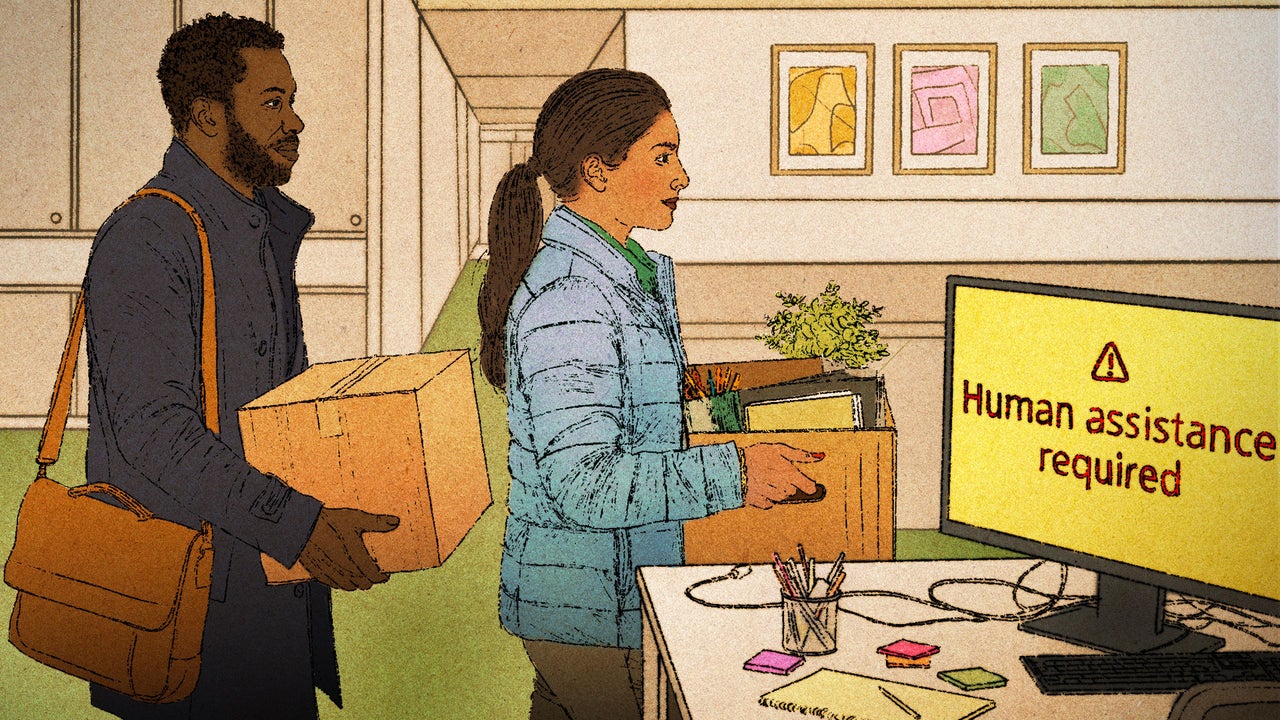
But the job cuts of the AI era, which are affecting tens of thousands of people, occasionally have an epilogue. Some companies, after discovering that AI models, applications and agents don’t perform as well as expected, end up rehiring laid-off workers to fill eliminated positions.
It’s unclear how common such reversals are, but they are happening often enough to acquire a nickname: the “AI boomerang.”
“Two years ago, we said, ‘Would this happen?’ and now we’re saying, ‘Yes, it is happening in real time,'” said Lucy Beaumont, a global senior vice president at SHL, a U.K.-based technology company that develops employment-related tests and tools.
Hiring managers in fields including finance, marketing, law and health reported earlier this year that their companies had eliminated positions primarily because of AI or automation, only to hire again for the same or similar roles, according to recruitment and staffing firm Robert Half.
The most frequently cited reasons for restoring dropped jobs included the technology needing more human oversight than anticipated and its inability to replicate institutional knowledge, the firm said.
“When you need critical thinking, collaboration, creativity, institutional knowledge, those are things that AI just can’t replicate,” Bill Driscoll, a senior district president at Robert Half, said. “And I think that’s where companies are starting to realize, ‘Wow, we really do need people to do these jobs.'”
Klarna, the Swedish provider of buy now, pay later services, began recruiting human customer service representatives again last year. CEO Sebastian Siemiatkowski acknowledged in an interview with Bloomberg News that the company’s reliance on an AI chatbot to cut costs had gone too far.
In June, Ford said it had hired or promoted 350 veteran engineers after AI tools the automaker deployed to do quality control work did not perform at the expected level.
“AI utilization has been an important part of our quality gains and that — along with deep technical expertise of our teams — is a powerful combination,” a Ford spokesperson told The Associated Press.
However, companies don’t always broadcast their U-turns on shifting resources or responsibilities from employees to AI systems, Beaumont said.
“Maybe their shareholders love that they did this right-sizing motion … and then they have to turn around and quietly, with their tail between their legs, admit that they weren’t ready for that or they shouldn’t have done that,” she said.
Management experts offered employment advice for workers as companies make greater use of AI tools and consider — or reconsider — their staffing needs while assessing the technology’s capabilities.
Rehiring suggests the invisible work of humans is not easily replaced
When companies use AI to perform tasks previously done by people, they often miss the invisible work employees do beyond their formal job descriptions, said Betsy Summers, a principal analyst on the Future of Work team at market research and advisory firm Forrester.
That might include sensing emotions and moods, holding impromptu meetings and putting in extra effort when feeling inspired or otherwise motivated, Summers said.
“We don’t know all the work that’s required to do things well within the organization,” she said. “The citizenship behaviors of team cohesion and team building and making sure that you have trust within your team, none of that is accounted for. So when you rip out humans who are doing that work and then expect agents to be able to then deliver exactly what humans have delivered, they are frequently mistaken.”
Another factor that complicates assigning more work to AI-powered tools is that company procedures for tasks such as data processing and bookkeeping are not always well documented, experts said.
“Organizations are not spending enough time doing the up-front work to really truly understand workflows and where humans add value in the process,” said Brooks Holtom, a professor of management at Georgetown University’s McDonough School of Business.
In roles such as customer service, AI agents and chatbots frequently need to refer questions and complaints to a worker who can recognize emotions, assess the severity or complexity of a problem and respond creatively within established policies, Holtom said.
“It’s that combination of creativity but staying in the guardrail that’s really hard for a machine to figure out,” he said.
Figure out what gives you a competitive edge as a human
As companies redirect resources toward AI, current employees and those asked to come back might want to emphasize skills that complement the technology, such as emotional intelligence and sound judgment, Holtom said.
“Really try to be able to articulate, what’s your value proposition as a human?” Holtom said. “Don’t be afraid to lean into the technology as well, and understand how to differentiate yourself from what machines do well. Embrace that, understand that, and you can become uniquely qualified to help with implementation.”
Empathy is a human quality that technology has not fully mastered, Beaumont said.
“Think about an angry customer. They want to be listened to, they want to be heard, they really want a human on the other end of the line,” Beaumont said. “Can an AI replace that right now in a way that feels meaningful to individuals? Perhaps not.”