

How Trump’s trade policy is handing Asia to Beijing
For a decade, Washington urged the world’s manufacturers to move their factories out of China and into friendly Southeast Asian states—only to attack the very countries and companies that answered the call.
Usually, U.S. economic statecraft is designed to help American companies succeed abroad. President Donald Trump’s punitive trade program is having the reverse effect. Broad-based import taxes have jolted manufacturers across ASEAN (the Association of Southeast Asian Nations), including American ones.
Rather than checking China, trade policy is alienating regional partners, harming supply-chain diversification, and eroding America’s influence over the bloc’s trade decisions. The U.S. is engaged in what Evan Feigenbaum, a veteran diplomat and former Republican, terms a “reverse pivot.” Bogged down in foreign crises elsewhere, Washington now projects hesitation and retreat in Asia rather than dynamic leadership.
In the months after President Trump’s April 2025 announcement of “Liberation Day” tariffs, some of ASEAN’s non-tariff barriers fell. A few countries used the exogenous threat to bring about needed reforms. Deals were done, including Boeing sales and–at least prospective–LNG contracts. It appeared that coercion worked, at least in the short term. In February the Supreme Court struck down much of the initial tariff regime and the administration pivoted to workarounds: 150-day emergency measures under Section 122 of the Trade Act of 1974, and expansive Section 301 investigations into forced labor, intellectual property violations, and “excess capacity.”
America’s labor, intellectual property, and excess-capacity concerns are really about China, not Southeast Asia. The administration substituted an improvised China policy for a coherent Southeast Asia policy—a strategic blunder. By treating regional partners as collateral damage to show that China isn’t singled out, Washington is undercutting its most reliable partners and allies.
Nowhere is the absurdity of this approach more evident than in the supply chains themselves. For nearly a decade, multinational corporations have redirected capital and manufacturing from China into Vietnam, Malaysia, India, and the Philippines. The goal of these “China plus one” strategies was to insulate critical industries from geopolitical risk and move them into friendly states.
Washington’s tariff regime now undercuts this strategy. Southeast Asian export hubs suffer far more than the United States when Chinese firms attempt illicit transshipment, while subsidized Chinese overcapacity squeezes local producers. The broader reality, though, is not widespread evasion but deep and legitimate supply-chain integration. By imposing blanket punitive duties, Washington is tightening the vise on the very partners helping achieve that diversification.
As Deborah Elms, head of trade policy at the Hinrich Foundation, has observed, Washington created the incentive structure for alternate supply routes and is now penalizing regional partners for using them.
These tariffs aren’t even achieving Trump’s stated goals. Higher costs and a shortage of skilled domestic labor mean production lines won’t magically shift to U.S. shores. Bilateral trade deficits with Southeast Asian economies remain largely unchanged; regional exporters, U.S. importers, and consumers are simply absorbing higher costs.
ASEAN nations have long been masters of dynamic hedging—exemplified by Vietnam’s “bamboo diplomacy”—balancing China against the United States. None of them want to be dominated by Beijing, making Washington their natural partner. Yet as U.S. policy grows increasingly erratic and punitive, it inadvertently pushes them to hedge elsewhere.
As Canadian Prime Minister Mark Carney warned at the World Economic Forum in Davos in January, the weaponization of economic tools forces middle powers to organize: “If we are not at the table, we are on the menu.”
Coercive tactics failed with Canada, and they will fail in Asia. Recently, politically appointed U.S. ambassador to Singapore Anjani Sinha told local and international business leaders that he received orders from the President to “bring home the money,” so they needed to double their U.S. investments. The demand went over like a lead balloon. Capital flows are not surging into the United States; they are pivoting further into Asia.
This friction runs counter to decades of bipartisan precedent. Since the 1985 Plaza Accord, which catalyzed an era of industrial integration in Southeast Asia, American leaders have recognized that regional partners thrive under predictable, rules-based frameworks rather than blunt coercion. Today’s transactional posture risks creating a durable trust deficit that will penalize American enterprise for a generation.
Since America pulled out of the Trans-Pacific Partnership in favor of country-by-country negotiations, its absence at the table has been filled by others. ASEAN is now building institutional networks that bypass Washington altogether. Member states are working with accords like the Regional Comprehensive Economic Partnership (RCEP) and the Comprehensive and Progressive Agreement for Trans-Pacific Partnership (CPTPP).
American companies have not forgotten the benefits of clear rules of the road in a multilateral context. They have worked closely with ASEAN negotiators toward the ASEAN Digital Economy Framework Agreement (DEFA). Spanning 11 nations, nearly 700 million consumers, and an estimated $2 trillion digital marketplace, DEFA would establish comprehensive standards for cross-border data governance, cybersecurity, digital identity, and artificial intelligence.
As Washington retreats behind tariffs and procedural disputes, Southeast Asia—with input from U.S. companies—is writing the regulatory architecture of the 21st-century digital economy.
Washington builds walls while ASEAN builds architecture.
Southeast Asia does not wish to decouple from the United States. Four ASEAN nations—Vietnam, Thailand, Mal
The Power Broker Book Review
When Robert Moses, the subject of Robert Caro's The Power Broker, fought for his vision of parks, bridges, and expressways in Long Island and New York City, the single most important tool at his disposal was his power. When his dreams met the resistance of his opposition, the outcome of each conflict reflected the balance of power on each side. When Moses prevailed, it was because of power. Though it is also a biography of Moses and a study of 20th century urban planning and civil engineering, this book shines as a treatise on power: how it is acquired, used, and lost. Moses has long faded into the annals of history; public policy has evolved during the intervening half century since the publication year of 1974; but power, through its invisible, grasping tendrils, operates in today's world through the same mechanisms as in the Moses era. Weaving his research throughout his narrative, Caro has crafted a cynical and compelling journey through the halls of power, inviting the reader to reevaluate their world through a new and insightful perspective — to see through the stark lens of power.
One particularly depressing theme of the book is that power always prevails. Truth, logic, and consequences be damned, the outcome is decided by what the powerful want and how much power they control. Power alone can explain why Moses' Northern State Parkway, unlike its Southern sibling, meandered tortuously across Long Island — to mollify the robber barons whose estates lay in the right of way — why his Henry Hudson Bridge sliced through the primordial heart of Inwood Hill Park — because, among other funding-related reasons, that particular route was eligible for federal subsidies — and why the East Tremont section of his Cross-Bronx Expressway veered to the north, blighting what had been a successful neighborhood, which remains to date one of the most impoverished in NYC — to preserve a transport depot in which key city politicians held ownership interests at the time. The tenants Moses evicted and the drivers trapped within the biblical congestion on his roads and bridges, congestion caused by the phenomenon of traffic generation (commonly known today as induced travel or induced demand) and more importantly by Moses’ motive of maximizing toll revenue, had few options to improve their circumstances because unlike Moses, they had no power. In The Power Broker, it is power that moves the wheels of history.
Another lesson from The Power Broker is that power-seeking compromises moral integrity. Ingenuity and work ethic aside, the personal quality which enabled Moses’ ascent to power was his practicality, his willingness to discard his other moral convictions when they hindered his quest for power, a quality embodied in one of his quotes: "If the end doesn't justify the means, what does?" When Moses brazenly attempted to seize W. Kingsland Macy's Long Island estate to create Heckscher State Park, Macy gave press interviews containing little more than the facts as he saw them because he felt that the truth of the matter should stand on its own, whereas Moses employed cunning lies to spin the narrative in his favor and turn public opinion against Macy. In Caro's words, "Macy was handicapped by principles." His strict adherence to moral principles became a liability which gave Moses a decisive advantage in their power struggle.
Moral corruption aside, Caro revealed the inner workings of power through the corruption of organizations designed to accumulate and exercise power at scale. In his youth as an idealistic reformer, Moses had faceplanted into the political might of Tammany Hall. By the end of his career, he had perfected a superior system of centralized power under which Tammany leaders served him. Moses realized the grand scale of his dreams by fully leveraging the economic and political resources he controlled to incentivize others, from politicians to union leaders to bankers to the Archbishop of New York, to do his bidding on his behalf. Power thus delegated to his counterparts was instrumental to the changes he wrought upon the world.
One commendable quality of Caro's writing is the staggering amount of research he synthesized into The Power Broker. No written document, however obscure, escaped Caro's meticulous gaze. In addition to the already extensive government records and newspaper clippings, Caro unearthed 18th century primary sources from far-flung libraries and unpublished personal diaries of public officials. In addition to the written evidence, Caro interviewed high-ranking Moses officials and Moses himself. From his vast trove of research emerged irrefutable patterns and recurring themes in Moses' relationship with power: his genius, his consequentialism, his hubris.
Yet, The Power Broker is neither a comprehensive nor an accurate biography of Moses. Caro's most controversial assertion, that Moses built low-clearance bridges over his parkways to prevent buses from using them with the intent of discriminating against poor and Black citizens who required buses for transportation, has attracted significant academic scrutiny and remains an unsettled question. On a separate occasion, Caro lauded Moses' playgrounds for replacing cinders with a new asphalt surface designed to prevent skinned knees but later claimed that the asphalt was awful at preventing cuts and scrapes. In a conspicuous omission, Caro mentioned the Robert Moses Power Dams at Niagara and Massena only in passing, feats of biographical importance which deserved more attention in place of harping on how the bankers supported Moses because they held financial stakes in the success of his projects, how the unions supported Moses because his construction created union jobs, and so on. On a matter of style, Caro's nonlinear and at times repetitive narration burdens any reader trying to piece together a chronology of events.
The Power Broker is, however, a masterful novelization of the historical record in which Caro's ingenious framing of major characters as foils to Moses animates the story throughout. Governor Al Smith, the political antihero who taught Moses the way to power but stayed steadfast in his lifelong commitment to the impoverished from whose ranks he rose. Franklin Delano Roosevelt, who shared Moses' background and his personality and many of the same ideals but became his sworn enemy. Fiorello La Guardia, the ferocious Mayor of New York City who was as passionate as Moses about building public works and kindred spirits in how to get things done. ("In this administration, I am the majority.") Robert F. Wagner Jr., a well-intentioned reformist Mayor who weathered a thousand battles with Moses at the height of his power. And Nelson Rockefeller, the cold-blooded banker who outmaneuvered Moses' fiery crusades and created the perfect conditions to evict Moses from the empire he had ruled.
In addition to his characterization, Caro's writing style makes The Power Broker an enjoyable read. His trademark one-sentence paragraphs, often used in conjunction with paragraph-length sentences, established a rhythm which conveyed the inexorable inertia of power. Another technique Caro employed frequently was to ask his readers to reconstruct the narrative for themselves based on sparse evidence, highlighting the inscrutable nature of power. In one passage, the reader must infer Moses’ shadowy machinations to solve a puzzling sequence of events concerning the East Tremont section of the Cross-Bronx Expressway which demonstrated how common sense and the public good bowed to the political considerations and cor

Vercel Labs Open-Sources agent-desktop for Agent Computer Use
Vercel Labs has released agent-desktop, an open-source CLI for AI agent computer use on macOS, Windows and Linux. agent-desktop reads each app through the operating system’s accessibility tree, not through screenshots. An agent gets a JSON snapshot with a ref for every element it can act on. Version 1.0.2 shipped on October 30, 2026, under Apache-2.0. For developers, any shell-capable coding agent can now drive native apps without a vision model.
TL;DR
- Library: Rust CLI and a C library. 60 command names, 56 operational.
- Runs on: macOS 13+, Windows 10 1809+ or Server 2019+, Ubuntu 24.04+, on x64 and ARM64. Plain CPU, no GPU.
- Performance: Deterministic, retry-safe ref actions. No independent computer-use benchmark yet.
- Best: 78% to 96% fewer tokens on dense Electron apps via skeleton traversal (self-reported).
What is agent-desktop?
agent-desktop is a Rust CLI and C library from Vercel Labs for reading and operating desktop apps. It is a tool that agents call, not an agent. It embeds no LLM and has no GUI. Every command prints one JSON envelope and exits. The observe, act and verify loop stays in your agent.
How does agent-desktop work?
Each command flows through a fixed chain. The CLI or C library calls agent-desktop-core, which reaches the OS only through a PlatformAdapter trait. One platform crate then talks to the native accessibility API:
- macOS: AX API
- Windows: UI Automation
- Linux: AT-SPI
Core never imports a platform crate. Each binary is compiled to drive exactly one OS.
Snapshots and refs
A snapshot assigns qualified refs such as @s8f3k2p9:e8. The snapshot ID inside the ref makes it self-describing. A bare @e8 is rejected with INVALID_ARGS. When the UI changes, an action returns STALE_REF or AMBIGUOUS_TARGET. The agent then takes a fresh snapshot.
Every error carries a disposition. Agents should retry only when it says safe. Ref resolution is strict and fails closed rather than guessing.
Skeleton and drill-down
Dense apps can expose thousands of accessibility nodes. A --skeleton snapshot reads only 3 levels deep. Cut containers report a children_count and get a drill ref. snapshot --root then reads one region into the same snapshot.
The builder reported a 78% to 96% token cut versus full-tree dumps in Slack, VS Code and Notion. In Apple Maps, he reported 3,811 tokens per look falling to 273. A simulated 52-step task dropped from 198k to 31k tokens. These are self-reported figures, not an independent benchmark.
Headless by default
Ref actions go through the accessibility API without moving the pointer or taking focus. That is what lets agents work while you keep using the machine. The global --headed flag allows physical input when needed. Every ref action also auto-waits up to 5,000 ms for a visible, enabled, stable target.
Meet Factory Droid 1.0: A Model-Independent Coding Agent Harness Built on Script Mode
Factory has released Droid 1.0, the largest update yet to the Factory Droid agent harness. The main change is programmatic tool calling, now on by default. The model writes a program that runs its tools. One model request can now drive hundreds of tool calls.
TL;DR
- Size: Base prompt is 13,055 input tokens, down 37% from 20,887. Only 2 tool definitions ship up front, down from 11.
- Runs on: macOS and Windows desktop app, a terminal UI, and the Node SDK
@factory/droid-sdk. Works with any supported model, including your own API keys. - Performance: Highest pass rate of every harness Factory tested, on the same model, at lower cost.
- Best: 65.2% on Terminal-Bench 4 with Claude Opus 5.5, at $4.73 per passed task (self-reported).
- Worst: With GPT-6.1 Sol, Droid takes 10% longer per passed task than Codex.
What is Droid 1.0?
Droid 1.0 is a model-independent coding agent harness from Factory. Factory defines a harness as everything around the model. That means the prompts, the tools, how tool results return, and the loop. Users pick a model or let Factory Router choose a cost-efficient mix.
How does programmatic tool calling work?
In a standard loop, every tool output lands in the model’s context. With programmatic tool calling (PTC), the model writes a program instead. Droid implements this as a Script tool. The model writes JavaScript that runs in a sandbox. The sandbox has no file, network, or system access of its own.
Raw files, search results, and logs stay inside the program. Only printed output returns to the model. Independent calls run concurrently.
The idea builds on CodeAct (Wang et al., 2024). Factory reports these results from its own sessions:
- Unit test fix: 15 tool calls took 5 model calls instead of 10. The task finished in 41.6 s instead of 56.8 s.
- Linear cleanup: 151 issues moved and verified in 312 tool calls. The Script used 2 requests and about 61,000 tokens. Factory models direct calls at 36 requests and about 3.1M tokens.
- CI sweep: 5,384 jobs across 547 runs, in 2 requests. Under 0.1% of tool results reached the model’s context.
On Claude Opus 5.5, Script mode cuts Droid’s cost by 15% versus direct tool calling. It is on by default for 10 models, including GPT-6.1 Sol and Kimi K3.
Nace AI Open-Sources Drex Max v1: A 27B Decision Model That Runs Locally on Apple Silicon
Nace AI has released Drex Max v1 as open weights. Drex Max is its most capable decision model, and it now runs on your own hardware. The release ships bf16 weights, a Q8_0 GGUF, an affine Q4 checkpoint and forks of llama.cpp and Ollama. For developers, Drex Max open weights mean routing, classification and policy checks can stay on a local machine.
TL;DR
- Size: Dense 27B parameters, 262,144-token window (16,384 by default), up to 255 options per question.
- Runs on: NVIDIA GPU with Python (H100 bf16, or L40S 48 GB in 8-bit). Apple Silicon Macs with 24 GB+ (affine Q4) or 48 GB (Q8_0 GGUF). CPU via llama.cpp and Ollama.
- Performance: 67.52 on the public Decision Index 0.4, 6.27 points ahead of Drex v2.0 (self-reported).
- Best: 97.3 skill on InfographicVQA. Tools area reaches 81.9. A top-tier decision model you can now run offline on a Mac.
What is Drex Max?
Drex Max is a decision model from Nace.AI that answers typed questions about a given context. You pass a state (text, JSON or images) plus named questions. The model returns a probability for every option in one forward pass. Nothing is generated.
Questions come in 3 types: choice among named options, yes/no, and an ordinal score. That makes it a fit for agent routing, ticket triage and guardrail checks. The hosted version is presented at routing, classification and policy checks.
How does Drex Max work?
The model card describes a dense 27B backbone with 64 layers. 48 are Gated DeltaNet linear-attention layers that run left to right. The other 16 are full-attention layers, placed every fourth layer, and they are non-causal. Every token can attend to the whole sequence.
Images pass through a native vision tower and are visible to every question in a request. A 255-way readout head then turns the last hidden state into option probabilities. The config lists a qwen3_5 model type with a 262,144-position window.
&&&How does Drex Max perform on benchmarks?
All figures below are self-reported by Nace AI,
- Decision Index 0.4 (public text): 67.52. Drex v2.0 scores 61.25 and Jev 1.13.0 scores 57.96.
- Area skill: Tools 81.9, Language 72.2, Retrieval 68.8, Knowledge and Reasoning 57.1, Arts 53.4.
- Public vision index: 73.92 across 11 benchmarks and 12,210 rows.
- Artificial Analysis Decision Index: 64, which Nace says ranks 4th of 18.
- JevBench: 92.2% (213/231). Decision Bench v4: 94.30% (1010/1071).
The results dataset covers 140,620 requests. Unanswered requests count as wrong.
How do you run Drex Max locally?
Nace documents 5 runtimes. All of them serve the same POST /v1/systemone API.
| Runtime | Hardware | Checkpoint | Images |
| Python | NVIDIA GPU | bf16 (~49 GB) or 8-bit (~26 GB) | Yes |
| llama.cpp fork | Apple Metal, CPU | Q8_0 GGUF (27.25 GB) | No |
| Ollama fork | Apple Metal, CPU | Q8_0 GGUF | No |
| Kapitsa v0.2.25+ | Apple Silicon | Q8_0 GGUF or affine Q4 | No |
| MLX | Apple Silicon | affine Q4 (14.45 GB) | No |
The affine Q4 checkpoint targets Macs with 24 GB or more. The Q8_0 GGUF needs 48 GB. On a 48 GB Mac, Nace recommends –context 2048 for Kapitsa.
Ollama users set num_gpu 40 to offload 40 layers to Metal. Setting num_gpu 0 runs it on the CPU. The Ollama fork needs a CAPABILITY decision line in the Modelfile.
Quantization holds up in Nace’s tests. On a 48 GB Apple M5 Pro, the Q8_0 GGUF matched H100 bf16 within 0.02 per probability. The affine Q4 stayed within 0.0329 of Q8_0, with no choice flips.
Drex Max vs other decision models
| Drex Max v1 | Drex v2.0 | Drex v1.5 | Jev 1.13.0 | |
| Parameters | 27B dense | 35B MoE, ~3B active | 9B | Not published |
| Max context | 262,144 | 131,072 | 131,072 | Not disclosed |
| Inputs | Text, JSON, images | Text (vision tower dropped) | Text | Not disclosed |
| Weights | Open, Nace.AI Open RAIL-M | Open, Nace.AI Open RAIL-M | Open, Nace.AI Open RAIL-M | Closed, hosted |
| Smallest local file | Affine Q4, 24 GB+ Mac | Q8_0, 36.9 GB | Q8_0, ~9.5 GB | Not applicable |
| Public Decision Index | 67.52 (v0.4) |
Meet qwenGPU: Qwen3.5-2B With 45 Compiled GPU Layers That Run CUDA
qwenGPU is an experimental model that compiles a SIMT GPU directly into the weights of Qwen3.5-2B. Developer Vixhal (@TheVixhal) released it on GitHub under the MIT license. The model runs real CUDA, compiled to NVIDIA PTX, inside its own forward passes. For developers, it tests one idea: exact computation inside a pretrained LLM, not beside it.
TL;DR
- Size: Qwen3.5-2B (24 layers) along with 45 compiled GPU layers, 69 in total. Context: 262,144 tokens (base model).
- Runs on: Apple silicon, an NVIDIA GPU or a CPU, with about 16 GB of free memory. No quantized build.
- Performance: Every launch in the developer’s runs was exact; text drift is a KL of about 7e-4.
- Best: The reference interpreter matched a real NVIDIA Tesla T4 on 49 of 49 kernels.
- Worst: About 10 to 15 tokens per second on Apple MPS; Qwen-written CUDA passed 4 of 5.
What is qwenGPU?
qwenGPU is Qwen3.5-2B with 45 compiled transformer layers placed in front of Qwen’s own 24. None of those layers are trained. A compiler computes every weight.
How does a GPU fit inside model weights?
The GPU is a 4-lane SIMT machine. It has 15 registers per lane, a 4-stage pipeline, a 32-block ROM and 126 memory words. It uses only Qwen3.5’s own layer types: Gated DeltaNet linear attention and SwiGLU MLPs.
The trick is the Gated DeltaNet recurrent state. In the circuit’s heads, the gate is held open and the write strength is 1. Every key is one-hot. Each update overwrites exactly 1 row, and a one-hot query reads it back. So each row works as a memory cell.
That state holds the program ROM, registers and global memory. The README lists 16 register rows per lane, with 1 that always reads zero. That matches the 15 usable registers in the X post.
The GPU supports integer arithmetic, predicates, divergent branches and loops. It also supports shared memory, atomicAdd, __syncthreads() and warp shuffles.
What happens during a CUDA launch?
The host plays the role of NVRTC and the CUDA driver. It compiles CUDA to PTX with clang, then lowers PTX to machine blocks. It feeds the program and input arrays to the model as tokens.
From there, the model writes the launch itself. Each EXEC(b, w) token runs block b for warp w in 1 forward pass. The VAL tokens after it carry register results. Memory writes return as MEM records. The host reads results from the recurrent state and computes none of them.
In the demo video, a dot product of [1, 2, 3] and [4, 5, 6] returns 32. The model wrote that launch in 47 tokens.
Meet qwenGPU: Qwen3.5-2B with a SIMT GPU inside its weights, 45 compiled layers in front of Qwen’s own, using its Gated DeltaNet layers as registers and memory.
— vixhaℓ (@TheVixhal) November 1, 2026
It runs real CUDA in its forward passes. The host compiles the kernel to PTX and loads it, then the model writes every… pic.twitter.com/iM5IETEbIv
Does the GPU break Qwen’s text ability?
Not by the developer’s measure. The circuit is muted on text tokens, and Qwen’s own weights are unchanged. The merged model’s next-token distribution stays within a KL of about 7e-4 of the original.
How accurate is qwenGPU?
All numbers are self-reported, measured on Apple silicon with MPS in bf16:
- Every launch was exact under
--checkreplay. - The reference interpreter matched an NVIDIA Tesla T4 on 49 of 49 test kernels.
- Normal mode answered 20 of 24 sampled chat questions with GPU-computed numbers.
- Advanced mode wrote a correct kernel first try on 4 of 5 questions.
In normal mode, Qwen writes an expression like [1, 2, 3] @ [4, 5, 6] for ready-made kernels. In advanced mode, Qwen writes the CUDA kernel itself. The README warns that a 2B model’s CUDA is still unreliable.
How does qwenGPU compare with Qwenputer and Percepta?
qwenGPU uses the transformer compiler from Qwenputer by Divyansh Agrawal. Qwenputer compiles a 32-bit RISC-V CPU into Qwen3.5-4B. Percepta built a WebAssembly interpreter into a transformer with 2D attention heads in March 2026.
| Feature | qwenGPU | Qwenputer (RISC-V) | Percepta |
|---|---|---|---|
| Base model | Qwen3.5-2B, 24 layers | Qwen3.5-4B | Custom transformer with 2D attention heads |
| Machine compiled in | 4-lane SIMT GPU | 32-bit RISC-V (RV32IM + Zba + bignum) | WebAssembly interpreter |
| Programs it runs | CUDA, lowered from PTX | C and MicroPython | C, compiled to WebAssembly |
| Compiled layers | 45 | 11 | Not disclosed |
| Where state lives | Gated DeltaNet state | Gated DeltaNet state | Execution trace in context |
| Host role | Compiles CUDA to PTX, loads tokens, reads results | Loads firmware; runs no computation | Not disclosed |
| Correctness check | Interpreter matched Tesla T4 on 49 of 49 kernels | 0 mismatches in about 230,000 replayed positions | Claims millions of reliable steps |
| Reported speed | 10 to 15 tokens/s (Apple MPS) | About 3,200 trace tokens/s (L4, Triton) | 30,000+ tokens/s (CPU) |
| Text drift vs base | KL about 7e-4 | KL 6e-4 | Not applicable |
| License | MIT code; Apache-2.0 checkpoint | MIT code; Apache-2.0 weights | Not disclosed |
NVIDIA Releases Auto Ontology: An Open Semantic Layer That Grounds AI Agent SQL
NVIDIA has released Auto Ontology, an open library under the Apache 2.0 license. NVIDIA Auto Ontology is a semantic layer framework that builds a context layer from enterprise metadata. Agents use that layer to write SQL against certified business definitions. The repository states the problem plainly: a fast revenue answer is worthless if the number is wrong.
TL;DR
- Library: Default LLM is
nvidia/nemotron-3-nano-30b-a3b, with Nemotron embedding and reranking models. - Runs on: Docker Compose for a local stack, or Kubernetes via Helm. Inference uses hosted NVIDIA NIM endpoints or self-hosted NIMs.
- Performance: Strong engineering, thin public evidence.
- Best: Ontology creation time cut by 90% in NVIDIA testing (self-reported).
- Worst: 0 published text-to-SQL accuracy scores. The eval repo ships a harness, not results.
- Bottom line: An open, MCP-ready context layer that any agent harness can query. But you must run the benchmarks yourself to trust it.
What is NVIDIA Auto Ontology?
It is a context layer that sits between an agent and the data warehouse. It tells the agent where data lives and what fields mean. It also says whether to use a field, how to use it, and where it came from.
Here are the five jobs:
- Discover: generate ontologies from metadata and connect existing semantic models.
- Ground: give agents trusted meaning for metrics, entities and relationships.
- Validate: check generated queries against certified definitions and lineage.
- Expose: serve context through MCP, CLI and API.
- Learn: fold certified corrections back into the ontology.
NVIDIA’s developer page frames the output as a starting ontology. Business experts still test, refine and certify it.
How does Auto Ontology work?
The stack has 4 core services. A Next.js 16 frontend handles the web UI and authentication on port 3000. A FastAPI backend with LangChain runs chat, NL-to-SQL and catalog APIs on port 3001. An ingestion worker writes embeddings on port 3002. Postgres with pgvector stores the catalog, the ontology and the vectors.
Source databases can be Databricks, Postgres, Snowflake or DuckDB. Models are set through environment “triplets” of endpoint, key and model. Separate roles exist for reasoning, non-reasoning, embedding and reranking. Any OpenAI-compatible endpoint works.
&&What does the MCP server expose?
The MCP server docs describe 9 read-only tools. ask_question returns the answer, the SQL and the rows as separate fields. Results cap at 100 rows. check_readiness confirms a compiled semantic layer and a live database connection exist.
There is no tool for browsing raw schemas. NVIDIA chose that on purpose, so agents reach data through the semantic layer. The underlying OpenAPI spec publishes 87 operations. Sign-in runs through OAuth, and every call carries the signed-in user’s permissions.
How is it benchmarked?
NVIDIA ships a separate harness, auto-ontology-eval. It runs 2 arms in NeMo Gym: a schema-only LLM control and the ontology-grounded agent. Scoring is deterministic execution match, with no LLM judge.
Bundled datasets include BIRD Dev (1,534 questions, 11 databases) and Mini-Dev (500 questions). FDABench-Lite adds 169 questions, and BEAVER defaults to a 100-question sample.
The harness repo adds 2 limitations. Optional few-shot exemplars and value anchors go to the ontology arm only. A delta measured with them covers those inputs, not grounding alone. Its tested configuration also routes both arms through a Claude model on NVIDIA’s inference gateway.
How does it compare with other semantic layers?
| Feature | NVIDIA Auto Ontology | Wren AI | Cube Core | dbt MetricFlow |
|---|---|---|---|---|
| License | Apache 2.0 | Apache 2.0 core (open core) | Apache 2.0 backend, MIT client | Apache 2.0 (v0.209.0+) |
| How the layer is built | Generated from metadata, then certified | Agent-assisted context files in Git | Defined in code | Defined in code in a dbt project |
| Agent interface | MCP, CLI, REST API | MCP, CLI, SDKs | SQL, REST, GraphQL APIs | Python library and CLI |
| Data sources | Databricks, Postgres, Snowflake, DuckDB | 22+ | All SQL data sources | Via dbt adapters |
| Default models | Nemotron via NVIDIA NIM | Not disclosed | Not applicable | Not applicable |
Deployment and availability
Local setup is docker compose up -d --build after filling in .env. Kubernetes users get a Helm chart and a DEPLOYMENT.md guide. NVIDIA team also publishes the backend as an NGC container. An NVIDIA API key from build.nvidia.com covers the default models.
Key Takeaways
- Auto Ontology generates a starting semantic layer from enterprise metadata.
- Agents query it through 9 read-only MCP tools, plus CLI and API.
- NVIDIA reports 90% faster ontology creation in its own testing.
- No text-to-SQL accuracy scores are published yet.
- Defaults to Nemotron on NIM, but accepts any OpenAI-compatible endpoint.
Everything we changed when we rebuilt the token console — and the small annoyances we removed
This is for people who launch tokens, add liquidity, run a presale or lock LP tokens — and who don't want to
read a smart-contract audit in order to do it. We just finished rebuilding the platform underneath, so here's
what actually changed for you, in plain terms, plus the small things we fixed that you'd otherwise notice only
as "huh, that used to be annoying."
Fifteen chains, one top bar
BNB Chain, Ethereum, Arbitrum, Polygon, Base, opBNB, Core, X Layer, Conflux eSpace, ApeChain, Morph, ECO,
Robinhood, ARC, plus the BNB testnet. Switching chains in the top bar carries the rest of the page with it:
which exchange and pool you're looking at, which fee steps that exchange offers, what a batch operation costs
in that chain's own coin. You don't re-enter anything, and nothing silently keeps the previous chain's
settings.
One honest boundary: Solana, TON, Sui and Tron are separate sites. This one is EVM chains only.
"I created the pool but I can't find it" used to be normal
Usually nothing had failed. Different exchanges have different fee steps — PancakeSwap's third tier is 0.25%,
Uniswap's is 0.3%. Ask one venue for the other's step and the pool you just made doesn't show up where you look
for it.
Now the fee options follow the exchange you picked, and the default is always a step that venue actually
offers.
For pools that are already live and out of balance there's repair liquidity (/tool/liquidity): it reads
the current reserves, works out how much each side is short, and deposits only the gap — you don't have to do
the ratio math or risk over-depositing.
Fewer confirmation popups, and failures you can act on
Multi-step flows used to make you confirm approvals one at a time, with a pause between each. They're bundled
now, so there's less clicking — and because the whole bundle is checked before it's broadcast, when something
goes wrong the message tells you which step failed instead of just "the transaction reverted."
Batch jobs also wait for each transaction to land before starting the next. That sounds obvious, but the
previous version started the next one while the earlier was still pending, and nodes rejected it. The kind of
"random" failure where retrying a minute later made it work was usually this.
Batch tools that point at the actual line
If you do airdrops, distributions or sweeps, you paste lists of addresses and amounts hundreds of rows long.
The rule we set for ourselves: one error per field, shown while you type, with a line number.
- Fill a field and it checks immediately — you don't find out after pressing Confirm.
- Bad address? It names the row. Nobody scans a 600-row box for row 481.
- Duplicate addresses merge when you click away, so you don't pay the same wallet twice.
- A limit that means "unlimited" displays as unlimited, not as a 77-digit number.
Neighbouring tools: migrate assets (/wallet/migrate) sweeps tokens and gas out of a batch of wallets with
a gas budget per wallet, and a paying wallet that checks its own balance before sending anything; spread
startup capital (/wallet/distribute) fans one funding wallet out to many, so your launch doesn't look like
one blob in the explorer. Change a scanning setting halfway through and the tool tells you the list you already
have is out of date.
Your private keys stay in your browser
The wallet vault encrypts locally before anything is saved, and a Passkey (face or fingerprint) can unlock it
instead of a password. Nothing is uploaded and no server holds your keys.
Two details that matter day to day:
- Reloading the page doesn't lock you out again. The unlock lives in the current tab and expires after 15 minutes of inactivity, so you're not typing a password every refresh — and closing the tab really does end it.
- There's a manual exit. A lock indicator in the top bar and a "lock now" button share that same 15-minute rule, so the interface can't show "locked" while a refresh quietly unlocks it.
Backups export as a CSV you can store somewhere else, not just to the clipboard — because "I copied 50 keys and
then closed the tab" has happened to everyone.
Also new, and worth five minutes
-
Vanity wallets (
/wallet/vanity): want an address ending in8888? Your browser searches for one locally. No transaction, no gas, and the result is an ordinary wallet — nothing special about it, just easy to recognise. -
Bot workspace (
/bot/robot): it picks the pool that's actually worth refreshing rather than the first one it finds; the wallet cap per round comes from one rule shared by the input box and the engine, so switching speed tiers adjusts your number instead of failing mid-run; and the run log survives a crash, so you can see what had already gone out. -
Project website builder (
/site): generate a landing page for your token and point your own domain at it with a CNAME record. -
Contract calls (
/tool/call) for changing parameters directly, token snapshot for holder lists, batch image upload for NFT artwork (returns ordinaryhttpslinks plus IPFS addresses). - Read-only browsing: you can walk through the whole platform, including what your parameters would produce, without connecting a wallet.
The small things we spent real time on
These are the ones you'll notice without naming:
- Changing language doesn't erase your form. Same page, Chinese to English, everything you typed stays. Move to a different page and it clears — on purpose, so half a form for one tool can't leak into the next.
- Dates refuse the past and stop at the minute, so you can't schedule a lock for a time that already happened.
- Long addresses are shortened with a copy icon, and hovering shows the whole thing — including names the chain gives back to us.
- On a phone, dialogs slide up from the bottom with full-width stacked buttons, and fields are big enough that iOS doesn't zoom the page when you tap one.
- Every fee is quoted in that chain's own coin, not in one fixed network's symbol.
What isn't finished
The AI-launch section is still labelled "in development" in the menu — we built part of it and pulled a piece
back out. Presale and IDO pages work today, but I'm not going to promise you a roadmap for them. And we verify
on the BNB testnet before mainnet, so if a flow behaves differently on a chain we test less often, tell us:
with fifteen chains live, your real transaction is a better test than ours.
Guides for each feature are under /en/guide, the FAQ is
/en/guide/faq, and the console is at gtokentool.com.

How to Build Durable Chat Memory for RAG Using ScyllaDB and LangChain
How to replace LangChain’s in-memory chat history with ScyllaDB — so your RAG chatbot retains context across restarts and scales across replicas
This post demonstrates how to integrate ScyllaDB Vector Search into your LangChain project for RAG use cases, as well as how to use ScyllaDB as a durable conversation memory within LangChain.
Background
Large language models are trained on a fixed snapshot of the world. RAG patches that gap by retrieving relevant documents at query time and injecting them into the prompt. The pipeline has two phases:
- Index: load documents, split them into chunks, embed each chunk, store embeddings in a vector store.
- Retrieve & Generate: enrich and embed the user’s question, find the nearest vectors (ANN search), pass the matching chunks as context to the LLM.
But RAG alone is not enough. You still need to keep track of all inputs provided by the user.
Persistent Chat Memory
LLMs are stateless. Every call starts with a blank slate unless you replay the conversation history. LangChain’s BaseChatMessageHistory abstraction lets you plug in any backend as the storage layer for that history. The default in-memory implementation vanishes on process exit. A database-backed implementation survives restarts, scales across replicas, and lets you inspect or audit conversations later.
That’s where ScyllaDB comes in.
ScyllaDB + LangChain
ScyllaDB is a NoSQL database optimized for high-throughput, low-latency workloads. Combined with LangChain, you can build reliable and always-on AI applications:
- High availability: data is automatically replicated across nodes, so there is no single point of failure. The cluster continues serving reads and writes even if a node goes down.
- Predictable P99 latency: ANN queries return results fast enough that retrieval doesn’t dominate your chain’s total latency.
- Horizontal scalability: add nodes to the cluster to increase throughput without schema changes or downtime.
- Built-in vector search: a native
vector<float, N>type and HNSW index are created automatically in ScyllaDB.
In this example, embeddings are generated locally with sentence-transformers (all-MiniLM-L6-v2, 384 dimensions). For production use, you can swap in OpenAI embeddings, Cohere, or any other provider supported by LangChain.
In each conversation turn, the chatbot is reading data from ScyllaDB and then writing back into it using LangChain.

Setup Example
With the release of ScyllaDB 2026.2, you can now integrate LangChain with ScyllaDB seamlessly by reusing the existing Cassandra connector.
Install Dependencies
pip install langchain langchain-community \
    sentence-transformers langchain-groq \
    langchain-text-splitters cassio \
    scylla-driver python-dotenv
Environment Variables
Copy demo/.env.example to demo/.env and fill in your credentials:
# ScyllaDB Cloud
SCYLLADB_CONTACT_POINTS=node-0.your-cluster.cloud.scylladb.com
SCYLLADB_DATACENTER=AWS_US_EAST_1
SCYLLADB_USERNAME=scylla
SCYLLADB_PASSWORD=your-password-here
SCYLLADB_KEYSPACE=demo

# Groq (LLM)
GROQ_API_KEY=gsk_...
Retrieve the contact points, datacenter name, username, and password from the Connect tab of your cluster in ScyllaDB Cloud.
Connect to ScyllaDB Cloud
from cassandra.cluster import Cluster
from cassandra.auth import PlainTextAuthProvider
from cassandra.policies import DCAwareRoundRobinPolicy
import cassio

cluster = Cluster(
    contact_points=["node-0.your-cluster.cloud.scylladb.com"],
    auth_provider=PlainTextAuthProvider(
        "scylla", "your-password"
    ),
    load_balancing_policy=DCAwareRoundRobinPolicy(
        local_dc="AWS_US_EAST_1"
    ),
)

session = cluster.connect()
cassio.init(session=session, keyspace="demo")
The cassio.init() call registers the session and keyspace globally so all downstream integrations (the vector store and the chat history) pick it up without further configuration.
Although cassio was originally built as a Cassandra integration, it is session-agnostic. It works with whatever driver session you hand it, so passing a session created by scylla-driver works just as well.
Integrating ScyllaDB with LangChain Vector Store
As an example, consider a chatbot that ingests articles, answers questions using retrieved context, and preserves conversation history in the database.
from langchain_community.document_loaders import WebBaseLoader
from langchain_text_splitters import RecursiveCharacterTextSplitter
from langchain_community.embeddings import HuggingFaceEmbeddings
from langchain_community.vectorstores import Cassandra

loader = WebBaseLoader([
    "https://docs.scylladb.com/stable/get-started/scylladb-basics.html",
    "https://docs.scylladb.com/stable/get-started/data-modeling/query-design.html",
])
docs = loader.load()

chunks = RecursiveCharacterTextSplitter(
    chunk_size=500,
    chunk_overlap=50,
).split_documents(docs)

embeddings = HuggingFaceEmbeddings(
    model_name="all-MiniLM-L6-v2"
)

vectorstore = Cassandra(
    embedding=embeddings,
    table_name="rag_docs"
)
vectorstore.add_documents(chunks)

retriever = vectorstore.as_retriever(
    search_kwargs={"k": 4}
)
WebBaseLoader fetches and parses each URL into a Document.
RecursiveCharacterTextSplitter then breaks each document into 500-token chunks with a 50-token overlap so sentences are not severed at boundaries.
Cassandra(table_name="rag_docs") creates the table on first use, including a vector<float, 384> column (matching all-MiniLM-L6-v2’s output dimensions) and an HNSW index. Subsequent runs reuse the existing table; you only pay the embedding cost once unless you call add_documents again.
Persistent Chat Memory Implementation
from langchain_community.chat_message_histories import CassandraChatMessageHistory

def get_chat_history(session_id: str) -> CassandraChatMessageHistory:
return CassandraChatMessageHistory(
    		session_id=session_id,
    		table_name="chat_history",
	)
CassandraChatMessageHistory stores each message as a row keyed on session_id. Because rows are written to ScyllaDB, the history survives process crashes, server restarts, and horizontal scaling. Any replica that opens the same session_id sees the same history.
Change session_id to start a fresh conversation. Keep it the same to resume where you left off — that is the entire persistence mechanism.
Putting It Together
from langchain_groq impTurning Product Info into Video Ads: Our Experience with Vizard Agent
Nowadays, having enough product material is rarely the main problem for e-commerce operators. Amazon listings may already contain product images, descriptions, key features, pricing information, and other commercial assets. The harder part is turning those materials into enough video creatives for advertising campaigns without spending hours on scripting, editing, and producing variations.
Therefore, we tested Vizard Agent from this perspective, focusing on a common scenario in which an e-commerce operator has plenty of product information but needs to produce a large number of promotional videos. The test looked particularly at its Amazon Product Link to Promo Video workflow, as well as its UGC-style and advertising function.
What We Tested
The starting point was quiet simple. Instead of preparing a complete video production package, the workflow begins with an Amazon product listing URL. Vizard's Ads mode allows sellers to paste an Amazon listing URL and have Vizard Agent extract product visuals and product details as the basis for video creation. The workflow can also start from uploaded product images, descriptions, and key features when a URL is not the preferred input.
This approach fits the broader design of Vizard Agent. The Agent can work with links, existing footage, files, or combinations of user materials and generated assets. It interprets the request, plans the video, selects or creates assets, makes creative decisions, assembles the result, and reviews the finished video. For an e-commerce operator, that changes the starting point considerably. The product listing itself can become the creative brief rather than simply a reference that someone has to manually read before beginning production.
From Amazon Listing to Promo Video
The workflow is useful because it connects product information with the actual video production process. After providing the listing, the user can specify the desired video type by giving the prompts, such as a product showcase, lifestyle-oriented video, or promotional advertisement. Vizard Agent then adapts the visual treatment to the requested format. Product images and descriptions provide the foundation, while subtitles, voiceover, visual elements, and other creative components can be incorporated into the finished video. This is where the workflow becomes more practical than simply converting an image into a slideshow. The purpose is to turn product information into a structured promotional story. Instead of deciding manually which product feature should appear first, writing the script, selecting supporting visuals, and arranging the scenes one by one, the operator can give the Agent the product and the intended advertising goal.
Vizard's documented product-ad workflow also covers product pages to video ads, product images to UGC-style ads, multiple advertising angles for one product, variations from a winning advertisement, and seasonal campaign variations.
For high-volume e-commerce campaigns, the ability to move from one product to several creative directions is arguably more important than producing one polished video.
UGC Adds Another Layer
The UGC mode was one of the more practical parts of the test. We started with the same product materials rather than preparing a separate batch of creator footage, and used the product images as the basis for a UGC-style ad. The result was noticeably different from a conventional product showcase, with the product positioned within a more creator-oriented advertising format.
What worked particularly well here was the amount of preparation Vizard Agent handled on its own. We did not have to build a separate UGC script, work out the structure manually, or assemble the product visuals scene by scene. Vizard Agent allows product images to be turned into UGC-style ads and treats the creative process as a broader video-production task rather than a sequence of individual editing operations.From a testing perspective, the more interesting point was that the same product assets could be taken in different directions without restarting the production process. We could use the product information for a conventional promotional video, then move toward a UGC-style treatment when a different advertising angle was needed. For an e-commerce operator producing creatives at scale, that flexibility was more valuable than simply having another editing option.
Why This Matters for High-Volume Advertising
The biggest advantage we observed was not a single editing feature. It was the reduction in the number of production decisions required from the operator. A conventional workflow might require a marketer to read the listing, identify selling points, write a hook, develop a script, gather product visuals, edit the footage, add captions and voiceover, and then repeat much of the process for another advertising concept.
Vizard Agent approaches these activities as one broader production task. Its documented workflow covers understanding the request, planning the video, selecting or creating assets, making creative and editing decisions, assembling the video, and reviewing the result. That becomes particularly valuable when one product needs ten creative variations rather than one finished advertisement. The platform's documented support for multiple ad angles, variations from winning ads, and seasonal versions directly addresses this type of production volume.
Who Should Consider It?
Vizard Agent is most relevant to Amazon sellers, DTC brands, e-commerce marketers, agencies, and performance marketing teams that already have substantial product information but need to increase their video output. It is also useful when the same product needs to appear in different creative formats across short-form channels. Vizard's Amazon product video workflow is not limited to Amazon itself. Generated videos can also be used across social and advertising channels such as Instagram, TikTok, and YouTube Shorts.
What Still Requires Human Review
We should declare that AI’s work does not remove the need for human oversight. Product claims, pricing, brand requirements, campaign objectives, and platform policies still need to be checked before publication. The quality of the source listing also matters because the Agent is working from the information and assets available to it. That limitation is important for Amazon sellers in particular. Automating production does not automatically make an advertisement accurate or commercially appropriate. Human review remains necessary, especially when a video makes specific product claims.
Our Assessment
For the e-commerce scenario we tested, Vizard Agent is more useful to think of as a video production agent than as another AI editing tool. The Amazon Product Link to Promo Video workflow provides a particularly straightforward entry point. An existing product listing can become the starting material for a promotional video, while UGC-style creation and multiple advertising angles allow the same product information to support different creative approaches. For e-commerce teams that already have plenty of product material but struggle with the volume of video they need to produce, that workflow reduction is the main value. The interesting shift is not simply that AI can edit a video faster. It is that the product listing, creative brief, asset selection, scripting, editing, and variation process can increasingly be treated as o
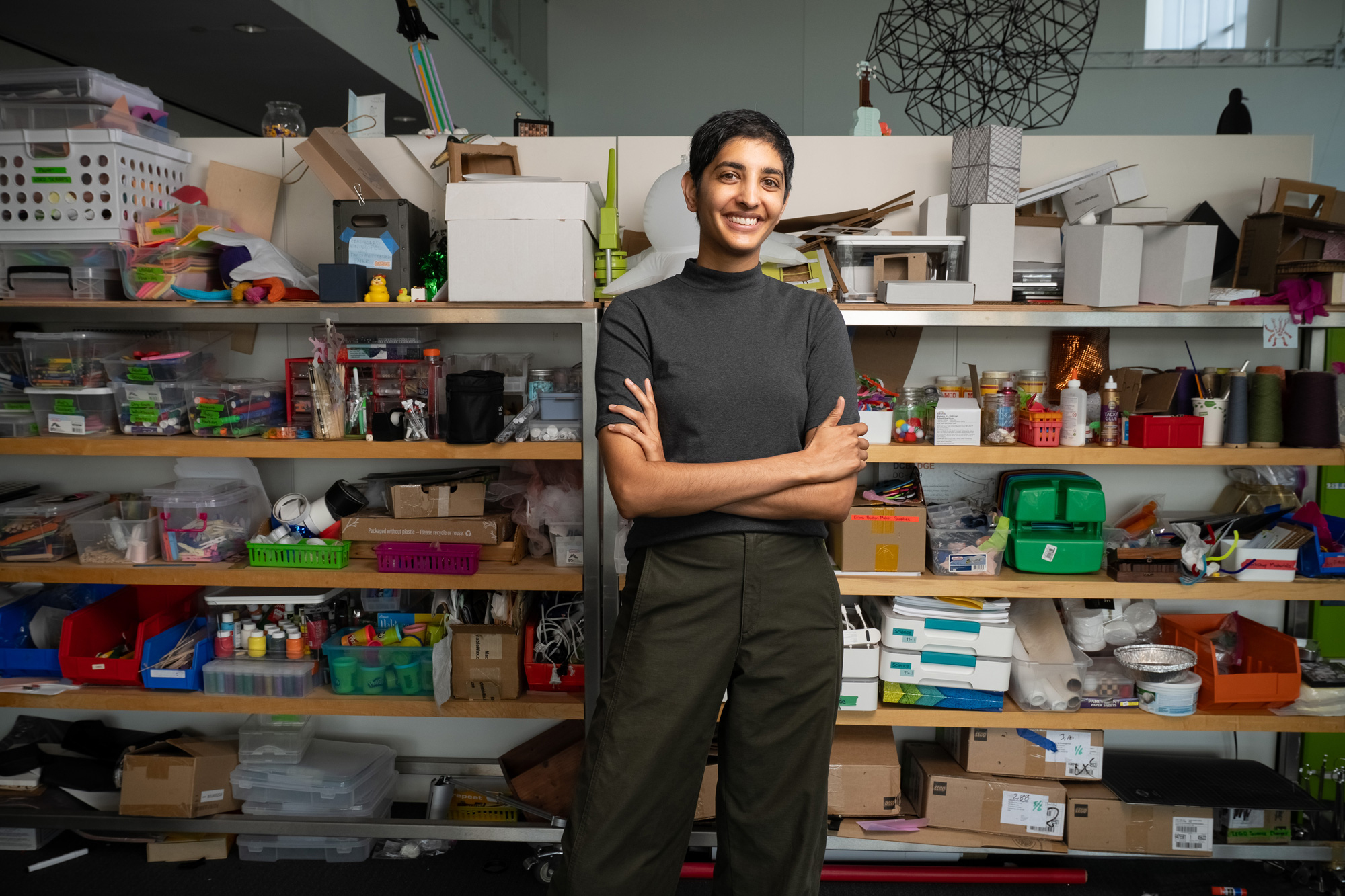
Ila Kumar: Innovating with communities
Before Ila Kumar thinks about how to build technology, she asks a different question: What is the context that technology will operate in, and who needs to be involved in the design?
For Kumar, meaningful innovation doesn’t result from engineers or designers working in isolation. Instead, she believes the best innovations emerge when the people who stand to benefit from a technology help create it from the very beginning.
That philosophy has guided her research in the Lifelong Kindergarten group, where she works alongside young people who have experienced trauma during childhood, particularly those involved in the child welfare system, to reimagine how technology can support healing, connection, and independence.
“I really think that community-based design is the only way that we can make technology that accounts for communities’ needs, but also their barriers, their cultures, their concerns,” Kumar says. “It’s the only way that we can make really sustainable and positively impactful technology.”
Today, Kumar is preparing to enter the sixth and final year of her PhD. But when she first arrived at MIT in 2021, she envisioned staying only long enough to complete a master’s degree. However, Kumar quickly fell in love with her work and decided to stay at MIT and pursue her doctorate.
Before graduate school, Kumar grew up in Philadelphia, attended the University of Pennsylvania, and worked on several projects at the intersection of technology and mental health or psychology research.
Through those experiences, Kumar began to question whether the technology she was helping to develop was having the sustained impact she hoped for. “I had done a number of projects that were ‘tech for good,’” she says. “And I wasn’t seeing that what I was doing had a long-term impact.”
Rather than walking away from technology altogether, Kumar began to rethink how it was created. “If we design technology in community-based ways and really think about holistic well-being,” she says, “maybe we can actually create things that help people.”
That conviction eventually became the foundation of her doctoral research, and over the course of her PhD, Kumar has increasingly moved from simply listening to communities to building with them.
Public conversations about technology often present a choice: Embrace it or reject it. Kumar believes that it’s not that simple.
Kumar sees the way digital platforms have the potential to both harm young people’s mental health and development, and help young people process emotions, strengthen relationships, and practice healthy vulnerability — if those tools are designed thoughtfully and embedded in the systems where young people already receive care and support.
Much of her work explores exactly what that could look like.
One project Kumar worked on, in partnership with Stepping Forward LA and with the input of the young people who would use the app, replaces text-heavy communication with a visual collage system to help young people impacted by trauma and the child welfare system to express emotions that may be difficult to put into words, and to build a sense of connectedness with one another.
In an ongoing project, Kumar is collaborating with the Justice Resource Institute to design a mobile app that supports youth in playing an active role in their treatment-planning process and helps them work toward the goals they set outside of the therapy office. The group is working with clinicians and youth to design and evaluate the system.
“We are not sitting at MIT designing tools and just throwing them at people,” Kumar says. “We’re designing it together. We need to actually have the folks that are relevant to providing the care in the room.”
That idea became even clearer to Kumar through a 10-month technology leadership circle she co-facilitated with Foster America. The program brought together people with lived experience of foster care and technology experts to envision how digital technologies could fill gaps in care for young people in the child welfare system.
This project surfaced the importance of not just designing tools that center youths’ needs but also considering the ways in which social services need to be brought into the innovation process.
Those ideas have also led Kumar to explorations that involve one of technology’s newest frontiers: artificial intelligence. She began asking questions after she realized that young people who had experienced trauma had already been turning to AI to make critical life decisions, even as many caregivers were not aware of it.
As a result, Kumar has increasingly focused on supporting care providers in talking with young people about AI. She has led training workshops with organizations that serve young people impacted by trauma or involved in the child welfare system.
Kumar’s passion for advocating for young people extends far beyond the lab. She also volunteers as a court-appointed special advocate, working one-on-one with a young person in the child welfare system while pursuing her PhD.
The role has deepened both her understanding of the challenges young people face and her belief that lasting change depends on relationships.
Some of her most meaningful moments have come while working directly with young people. Last summer, she, alongside another graduate student in her lab, mentored two interns with foster care experience during a six-week program that blended technology, creativity, and personal growth.
“It felt like a real privilege,” Kumar says. “Even the six weeks was not enough.”
Those relationships have also inspired Kumar to address how community-based research is conducted at MIT.
Recognizing that many students interested in community-engaged work often feel isolated, she collaborated with the Priscilla King Gray Center for Social Impact to co-teach a course on community-driven innovation. She later established a biweekly community of practice connecting researchers across MIT and Harvard University who are navigating the benefits and challenges of conducting research alongside communities rather than simply studying them.
Outside of research, Kumar enjoys birdwatching, cooking with friends, and creating graphic illustrations — creative pursuits that, much like her research, reward patience, observation, and careful attention.
As technology becomes increasingly woven into young people’s lives, Kumar hopes innovation will move beyond the lab and into the communities it is meant to serve.
“The future of actually impactful technologies,” Kumar says, “is when researchers are making decisions with communities instead of for them.”
Q&A: Hey AI, who should I vote for this year?
People are peppering artificial intelligence chatbots everyday with questions, but when it comes to politics and the looming 2026 U.S. midterm elections, what role are AI platforms playing? Could an AI chatbot sway a voter to switch parties or re-examine their political beliefs?
MIT researchers have built a new dashboard, called the LLM Election Observatory, to examine, in real-time, how popular AI chatbots are responding to questions about the 2026 midterm elections. The team behind the dashboard — led by Professor Adam Berinsky, Assistant Professor Chara Podimata, and Professor Charles Stewart III — has extensive experience studying voting and election administration, AI and misinformation, and how AI systems are impacting human decision making. In an effort to better understand how AI is shaping the election, they designed the dashboard to simulate how individuals across the country communicate with chatbots.
The team tracks how different AI systems respond to the same fixed set of questions on a range of topics, including election certification, hot-button issues, result predictions, news coverage, and more. Every few days, the LLM Election Observatory team runs the questions through the chatbots again, monitoring how their responses vary as the election gets closer depending on user location, political party affiliation, identity and other factors. The goal of this work is not to merely understand how AI systems spread information, but also better comprehend how they are shaping political discourse and voter understanding of political issues across the country.
MIT News chatted with Podimata, the Class of 1942 Career Development Professor, an assistant professor of operations research and statistics in the MIT Sloan School of Management, and a member of the Laboratory for Information and Decision Systems; and Berinsky, the Mitsui Professor and a professor in the Department of Political Science, about their work with the LLM Election Observatory, how AI could impact the midterms, and what voters should keep in mind when they interact with chatbots.
Q: What was the inspiration for this project and what are you hoping to learn through the LLM Election Observatory?
Podimata: People are increasingly using AI chatbots to find and make sense of political and election-related information. That makes it important to understand what information these systems actually provide, not just at one moment in time but throughout an election cycle. This is particularly challenging because the models themselves are continually getting updates, the political information inputs available to them are themselves changing, and their answers can depend on how a user asks a question or what information the user provides about themselves.
One basic problem is that we currently do not have a good historical record of this information environment. If an AI system gives a particular answer about an election today and gives a different answer several weeks later, it can be very difficult to reconstruct after the fact what voters would have seen at each point in time. One important goal of our project is simply to systematically document that environment as it develops and make the resulting data available to other researchers and to the public.
Ultimately, factual accuracy is only the first frontier. We absolutely need to understand whether chatbots provide accurate political information, but we also need to pay just as much attention to the subtler ways in which they may shape people’s understanding of political issues. Differences in framing, emphasis, uncertainty, and cited sources can matter enormously, even in the absence of outright misinformation.
Q: Professor Podimata, you studied how LLMs shaped political discourse and information during the 2024 election. What were the main takeaways of that research and how did those findings inform this new project?
Podimata: The LLM Election Observatory builds on my previous work during the 2024 presidential election, which found evidence of meaningful variation in AI models’ responses over time and across prompt framings, as well as differences in how models characterized candidates and implicitly anticipated the election outcome.
The 2026 midterms give us an opportunity to expand that work substantially. Midterm elections are particularly interesting because there are many state and local contests unfolding simultaneously, alongside broader national political narratives. Our new audit survey therefore asks both contest-specific questions about the U.S. House and Senate candidates, but also broader questions about voting information and other aspects of the election information environment.
Q: Why do you think it’s so important to be studying how chatbots are responding to political queries across different groups of users?
Podimata: We all build our own “microcosms” through our interactions with chatbots. And yet, we lack systematic ways of understanding how these individualized information environments are shaped by who we are or how they evolve over time as we and the information environment changes.
For example, people may not realize that what their favorite chatbot tells them about a political issue may be quite different from what their friend’s favorite chatbot tells them about the exact same issue. And importantly, these differences matter even when the information being provided is factually correct. Chatbots may frame the same facts differently, emphasize different aspects of an issue, express different levels of uncertainty, or draw on entirely different sources, even when responding to identical queries between different users. As a result, two users may walk away with very different perceptions of the same underlying facts, without ever realizing that their experiences differed.
In some ways, this brings back many of the concerns we (as researchers and society) have grappled with in the context of social media. On social media, users and researchers could, at least to some extent, observe the information circulating across different Facebook groups, Instagram accounts, or TikTok communities. With chatbots, these information environments are largely invisible to anyone outside the individual conversation. We cannot easily observe what different users are being told, let alone systematically compare those responses or track how they change over time. This is precisely why projects like the LLM Election Observatory are so important: By systematically collecting and publicly sharing chatbot responses, we can begin to make these otherwise invisible differences observable and open to scrutiny.
Q: What sorts of questions and AI responses are you tracking through the dashboard?
Podimata: There are several questions we ultimately want this dataset to help us study. For example: Do different models provide systematically different information for the same questions? Do their responses change over the course of the campaign? Does the answer a particular model gives change depending on how a user frames the question or describes themselves (e.g., does it change if the model gets informed that the user is a Democrat or a Republican)? And,

MIT affiliates named 2026 Schmidt Sciences AI2050 Fellows
Five MIT faculty members and two additional alumni were recently named to the 2026 cohort of AI2050 Fellows. The honor is announced annually by Schmidt Sciences, Eric and Wendy Schmidt’s philanthropic initiative that aims to accelerate scientific innovation.
Conceived and co-chaired by Eric Schmidt and James Manyika, AI2050 is a philanthropic initiative aimed at helping to solve hard problems in artificial intelligence. Within their research, each fellow will contend with the central motivating question of AI2050: “It’s 2050. AI has turned out to be hugely beneficial to society. What happened? What are the most important problems we solved and the opportunities and possibilities we realized to ensure this outcome?”
AI2050 Senior Fellow
Sendhil Mullainathan is the Peter de Florez Professor at MIT with dual appointments in the departments of Economics and Electrical Engineering and Computer Science who is also a principal investigator at the MIT Laboratory for Information and Decision Systems. His current research is at the intersection of algorithms and people, with a central focus on launching The Bike Shop@MIT, a new research center that works toward more human-centered AI through scalable bicycles for the mind, and innovative new gears for machine learning algorithms. Mullainathan is the co-founder of ideas42, a nonprofit to apply behavioral science; MIT's Abdul Latif Jameel Poverty Action Lab, which promotes the use of randomized control trials in development; and Dandelion Health, which combines proprietary AI tools with real-world patient data. He's the co-author of "Scarcity: Why Having Too Little Means So Much."
Among other awards, he is a recipient of the MacArthur “Genius Grant”; has been designated a “Young Global Leader” by the World Economic Forum; was labeled a “Top 100 Thinker” by Foreign Policy Magazine; and was named to the “Smart List: 50 people who will change the world” by Wired Magazine (U.K.). He serves on the board of the MacArthur Foundation, is affiliated with the NBER and BREAD, and is a member of the American Academy of Arts and Sciences. His AI2050 project focuses on the translation of patterns detectable by AI into testable theories.
AI2050 Early Career Fellows
Alex Damian is an assistant professor in the Department of Mathematics, holding an MIT Schwarzman College of Computing shared position with the Department of Electrical Engineering and Computer Science, who is also a principal investigator at the MIT Laboratory for Information and Decision Systems. His research focuses on the mathematical foundations of deep learning, with an emphasis on optimization dynamics and representation learning. He was previously a research fellow at the Kempner Institute at Harvard University. He received his PhD in applied and computational mathematics from Princeton University and his BS in mathematics from Duke University. His AI2050 project focuses on effective AI model training.
Bailey Flanigan is a Theodore T. Miller (1922) Career Development Assistant Professor at MIT, holding an MIT Schwarzman College of Computing shared position with the departments of Electrical Engineering and Computer Science and Political Science, and is also a principal investigator at the MIT Laboratory for Information and Decision Systems. She received her PhD in computer science from Carnegie Mellon University in 2024. In 2024-25, she was a Harvard Data Science Initiative Fellow, hosted at the Harvard Ash Center for Democratic Innovation. Her research combines tools from across disciplines (including social choice theory, game theory, algorithms, statistics, and survey methods) to advance political methodology and strengthen public participation in democracy. She is specifically interested in sampling algorithms, opinion measurement/preference elicitation, and the design of democratic innovations like deliberative minipublics and participatory budgeting. Her AI2050 project focuses on gathering structured public input that lawmakers can use when making complex decisions.
Yunha Hwang is the Samuel A. Goldblitch Career Development Assistant Professor at MIT, holding an MIT Schwarzman College of Computing shared position with the departments of Electrical Engineering and Computer Science and Biology. She is also a principal investigator at the MIT Laboratory for Information and Decision Systems. Hwang serves as the co-founder and chief scientist at Tatta Bio, a scientific nonprofit dedicated to advancing genomic AI for biological discovery. She received her PhD in biology from Harvard University and BS in computer science from Stanford University. Her research interests span machine learning for microbial evolution, biomanufacturing, and open science. Her AI 2050 project focuses on determining biological enzyme functions.
Manish Raghavan is the Drew Houston (2005) Career Development Professor at the MIT Sloan School of Management, holding an MIT Schwarzman College of Computing shared position with the Department of Electrical Engineering and Computer Science. He is also a principal investigator at the MIT Laboratory for Information and Decision Systems. Before that, he was a postdoc at the Harvard Center for Research on Computation and Society. Raghavan received his bachelor’s degree in electrical engineering and computer science from the University of California at Berkeley, and PhD from Cornell University. His research interests lie in the application of computational techniques to domains of social concern, including algorithmic fairness and behavioral economics, with a particular focus on the use of algorithmic tools in the hiring pipeline. His AI2050 project focuses on mitigating negative effects, and strengthening positive aspects, of widespread AI reliance.
MIT alumni Irene Chen PhD '22 and Allison Z. Koenecke '14 as well as former postdoc Juan Carlos Perdomo were also named AI2050 Early Career Fellows.
Apple HomeView Could Double as a Security Camera
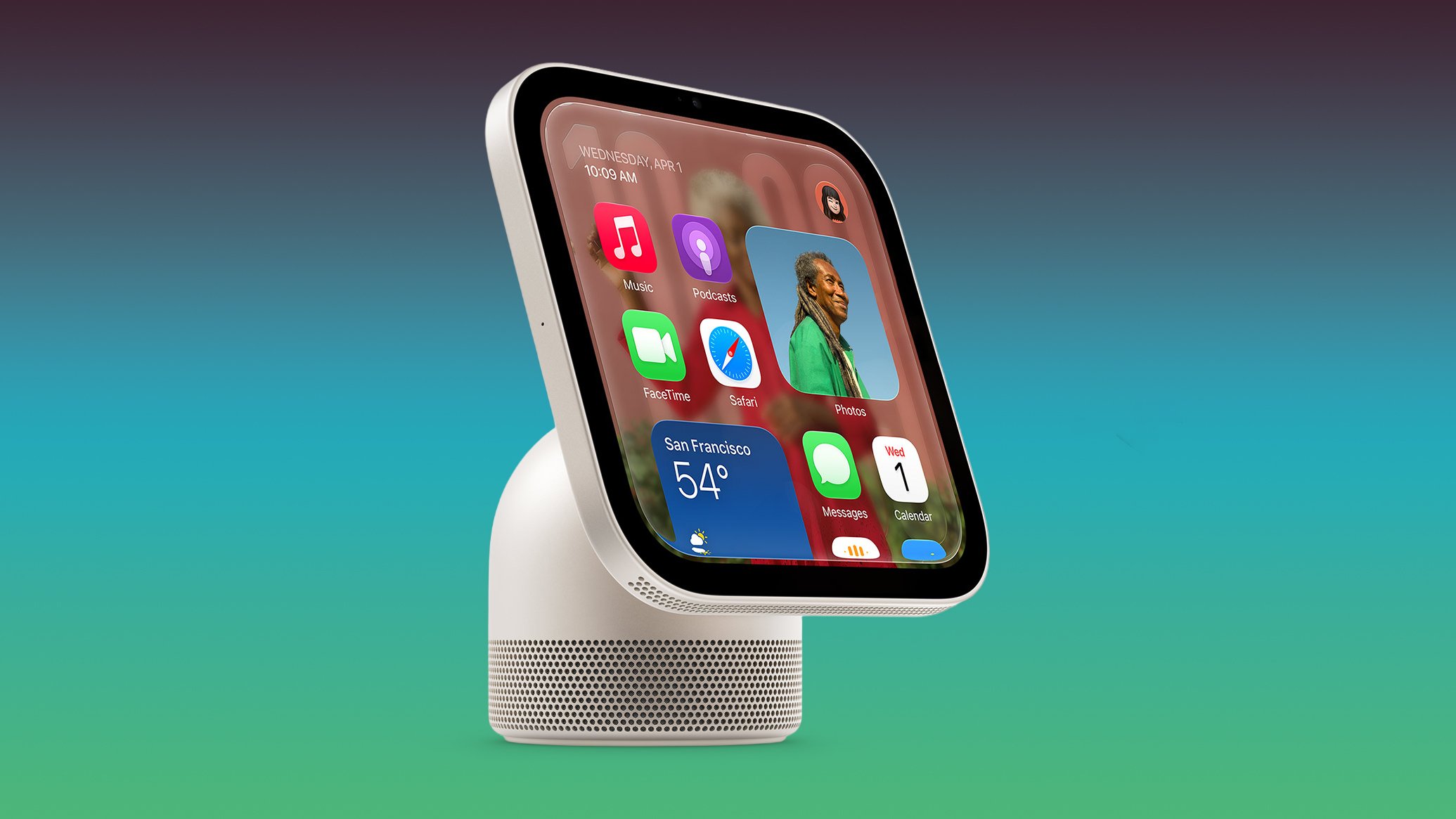
The strings were found in HomeView Software 27.2 and feature four camera modes, including Off, Detect Activity, Stream, and "Stream & Allow Recording," along with scheduling options for when users are home, away, or asleep.
Notably, pdfu says there's also a HomeView-specific configuration for 1080p/30fps video and microphone input, which the software selects for HomeKit Secure Video sessions.
Other strings suggest that only home members will be able to view streams and recordings. They also indicate that a green light appears and a sound plays when a stream is viewed or recording starts, and users will receive a notification when camera settings change.
The scheduling options include an away mode, but the strings suggest streaming and recording can only be enabled from the HomeView itself while people are home. Expect face recognition and activity zones to be configured in the Home app on iPhone.
Elsewhere, pdfu highlighted a related Home app string suggesting that when the Home app is open on a member's device, the the HomeView may take photos to refresh its camera preview, and these too will be accompanied by a green light.
Apple has not announced a camera feature for HomeView, and the presence of code strings in the device's software doesn't confirm that it will be available to users at launch. HomeView launches on Friday, November 13, starting at $299. Apple's early release of the device's software has already given us a preview of features like wallpapers, revealing other details we didn't previously know.
This article, "Apple HomeView Could Double as a Security Camera" first appeared on MacRumors.com
Discuss this article in our forums

Apple TV 4K Pre-Order Discount Returns at Amazon
Note: MacRumors is an affiliate partner with some of these vendors. When you click a link and make a purchase, we may receive a small payment, which helps us keep the site running.
Amazon provides an estimated delivery on launch day, which is next Friday, November 13. Although only a $9 discount, this is the best price we've tracked on the device, and as of writing Amazon is the only place offering any sort of markdown.
For anyone who just wants to upgrade their existing Apple TV 4K with the new Find My-enabled Siri Remote, Amazon has that accessory for pre-order at $59.00. There's no discount on the Siri Remote, but if you purchase this without spending on an entirely new Apple TV 4K, you'll definitely be saving yourself some money.
If you're on the hunt for more discounts, be sure to visit our Apple Deals roundup where we recap the best Apple-related bargains of the past week.
Deals Newsletter
Interested in hearing more about the best deals you can find as we head into the holidays? You can sign up for our Deals Newsletter and we'll keep you updated so you don't miss the biggest deals of the season!
This article, "Apple TV 4K Pre-Order Discount Returns at Amazon" first appeared on MacRumors.com
Discuss this article in our forums

Early Black Friday Brings Steep Price Drops on Apple's Latest iPhone Cases
Note: MacRumors is an affiliate partner with some of these vendors. When you click a link and make a purchase, we may receive a small payment, which helps us keep the site running.
Across the board these are the best prices we've tracked to date on the new cases for iPhone 18 Pro and iPhone 18 Pro Max. This time around the deals do not require any coupon codes to see the final sale prices.
Below we're also tracking a few ongoing discounts on iPhone Duo cases from Amazon, ZAGG, and other retailers.
iPhone 18 Pro
- Clear Case - $38.99, down from $49.00
- Silicone Case - $29.33, down from $49.00
- TechWoven Case - $50.00, down from $59.00
iPhone 18 Pro Max
- Clear Case - $37.99, down from $49.00
- Silicone Case - $32.83, down from $49.00
- TechWoven Case - $48.99, down from $59.00
Other Accessories
- Crossbody Strap - $33.04, down from $59.00
iPhone Duo

If you're on the hunt for protection for your new iPhone Duo, we've also been keeping track of all the best cases and screen protectors for the new device. The catch with these accessories is that many of them are not on sale given how new the Duo is, but there are overall cheap options you can find on Amazon, plus a great buy two get 20% off deal at ZAGG.
Amazon has some notable TechWoven dupe cases on sale, available for $29.99, which is $50 cheaper than any of Apple's official iPhone Duo cases. Otherwise, you'll find the full list of retailers offering accessories for the iPhone Duo below.
- Amazon - iPhone Duo cases from Spigen, Speck, ZAGG, and more
- AT&T - Discounts on iPhone Duo cases and screen protectors from Speck, Spigen, and more
- Best Buy - iPhone Duo cases from Dbrand, OtterBox, Spigen, Kate Spade, and more
- Burton Goods - Save on leather cases for iPhone Duo
- ESR - iPhone Duo Silicone Leather case with Flex Stand
- Nomad - Leather Folio cases for iPhone Duo
- OtterBox - Defender cases for iPhone Duo
- Speck - Presidio Cases for iPhone Duo
- Target - iPhone Duo cases from ZAGG, Case-Mate, and Kate Spade
- ZAGG - Save 20% when you buy 2 items from ZAGG, including iPhone Duo cases and screen protectors
If you're on the hunt for more discounts, be sure to visit our Apple Deals roundup where we recap the best Apple-related bargains of the past week.
Deals Newsletter
Interested in hearing more about the best deals you can find during the holidays? You can sign up for our Deals Newsletter and we'll keep you updated so you don't miss the biggest deals of the season!
This article, "Early Black Friday Brings Steep Price Drops on Apple's Latest iPhone Case

Apple's Q4 2026 Earnings Call Takeaways
The trio covered iPhone Duo sales, Siri AI, and increasing memory costs, among other topics.
iPhone Duo
After the earnings release, Ternus told Reuters that Apple isn't able to meet demand for the iPhone Duo, and there's no word on when supply/demand balance will be reached.
Ternus also acknowledged display issues and said a "very small percentage" of units have been returned.
iCloud+
Ternus reiterated Apple's plans to add usage limits on server-side AI features like Siri AI and photo editing. Users who need more capacity will be able to purchase expanded access, but there's still no pricing information or details on the limits included with each iCloud+ plan.
When asked about token consumption, Parekh said it's still early days on how much is done on-device vs. with Private Cloud Compute.
The mix of [on-device and cloud Siri] is very early days, and so it's hard to predict exactly what the mix of those costs are going to look like. Obviously, on device, you know, it's very very efficient. No real costs associated with that. But on the server side, we have some inference costs.
I think again, we've just recently launched it and made it available to more users. And so we're in the very very early stages of understanding the kind of mix of those costs, as well as further requirements we might have on the compute side.
Siri AI
Ternus said Apple has real room to expand Siri's capabilities over time, and that Apple wants customers to be aware of what AI agents have access to.
As far as agentic capabilities, you know, we think these are promising tools for users. We just want to make sure that users are aware of what they're giving access to. We want to make sure this is done in a way that protects security and privacy. So, you know, we're pushing really hard on that with Siri AI, but we're also really encouraged by the fact that Apple devices are the best places to use all forms of AI.
He also said Apple's privacy focus differentiates it from other AI providers.
I mean, if you think about it, so much of your personal data is on your iPhone. You know, whether it's your contacts, your communications, health data, financial data, all of that, and Siri can tap into that and help you access it in a way that's very secure and private, and that nobody else has access to. Even Apple doesn't have access to it, and so we think that is a core kind of differentiator that we're excited about, and we're going to continue to push on that.
iOS and macOS Merging
With the MacBook Pro gaining a touch display, an analyst asked if we're going to see a single unified operating system in the future.
Ternus said Apple tries to make the best version of each and every product, while also adding features like Handoff that span across devices, but the company has no plans to make major changes.
If you look at what we did last week with the MacBook Pro, we took a huge leap forward. These MacBook Pros are better in every way than the ones that came before them, and we're really proud of that. And so we don't have any fundamentally different changes that we're planning right now. Nor would we talk about it anyway.
China
Revenue in Greater China was up 21 percent during the quarter, which was a quarterly record. Performance was primarily driven by the iPhone and the Mac.
Install Base
Apple has more than 2.5 billion active devices.
Memory
Ternus said the memory situation is "unprecedented," and Apple expects even higher memory costs in the December quarter. Apple's price increases in June and September offset some of the pressure, as do lower costs from some non-memory components and carry-in inventory.
Beyond the December quarter, Apple thinks memory prices will continue to increase.
Supply Constraints
iPhone, iPad, and Mac were constrained in the September quarter, which Khan said was driven by demand combined with limited availability of the advanced nodes SoCs are produced on. He said constraints on advanced nodes are easing with the transition of more of the lineup to 2nm chips.
iPhone
iPhone revenue was $57.6 billion, up 17 percent year over year and a new September quarter record.
Ternus was asked why Apple didn't release a standard iPhone 18 alongside the iPhone 18 Pro, Pro Max, and iPhone Duo, but he skirted the question.
Mac
Revenue was $10.8 billion, up from $8.7 billion, despite supply constraints. Full-year Mac revenue was $37.9 billion, up from $33.7 billion in 2025. Ternus said Apple has never sold more Macs in a fiscal year than it did in 2026.
iPad
iPad revenue was down in the quarter, coming in at $6.2 billion, down from $7 billion in the year-ago quarter. Apple said revenue was down because of supply constraints and a difficult compare against the launch of the A16 iPad last year.
Services
Services revenue hit $31.6 billion, up from $28.8 billion in the year-ago quarter, and a new all-time record. In 2026, services revenue was $123.3 billion.
The App Store saw a record number of nearly a billion average weekly visitors, and Apple saw growth in the number of users who are paying for at least one service.
Wearables
Wearables, Home, and Accessories revenue was $8.3 billion, down 8 percent year over year. There was a difficult compare against the launch of the Apple Watch SE 3 and AirPods Pro 3 in 2025.
The new Apple TV 4K, the HomePod mini, and the Apple HomeView didn't ship during the September quarter.
December Quarter
Apple expects revenue to grow 7 to 10 percent year over year, leading to the best quarter for revenue in Apple's history. Services revenue is expected to grow between 8 and 9 percent.
Gross margin is expected to be between 45 and 46 percent, impacted by higher memory costs and costs related to the ramp of Siri AI