
Curriculum Learning for Safety Alignment

The CFO Who Learned to Code by Shipping: How I Use Hackathons to Keep Up With AI Tools
Oh hey. I'm Shyam Desigan (most people call me Sam). I spent twenty-plus years in finance, mostly as a CFO. Now I'm a Director of Technology Consulting, and I learn the tech stack by building real things with AI tools, usually against a hackathon deadline.
1. What do you currently do and what's your favorite part about it?
I'm Director, Technology Consulting at Tiger Analytics in New York. I moved into the role in September 2026 after a long career in finance leadership. Outside the day job, I build. Since February 2026 I've submitted more than 35 projects to hackathons on Devpost, plus a steady stream on DoraHacks, lablab.ai and others. My favorite part is that these two halves feed each other. A business problem I understand from years of running finance becomes something I can actually prototype, and every build teaches me a tool or a layer of the stack I'd otherwise only read about.
2. How did you get started with your Tech Career?
Honestly, I came in through the finance door. After my MBA at Indiana University's Kelley School of Business, I spent my career in finance. My first official tech title came at the American Academy of Physician Associates, where I was CFO and Senior VP of IT, so the systems and the books were both my job. After that came KIC Ventures, Sproxil, TechCXO, Purim Ventures, BlackTeal Energy and Green Li-ion, and every role pulled me further into data, automation and systems. What changed recently is that AI tools made it realistic for someone like me to build software, not just spec it. My first hackathon submission I can find is a Commodity Price Analyzer for the Airia AI Agents Hackathon in February 2026. Within a few months I had won a prize at DeveloperWeek New York and an award at Mantle's Turing Test Hackathon, and that convinced me the approach worked.
3. If Utopia were a color what color do you think it'd be and why?
Green, but the green of a runway dashboard, not a flag. In my world green means the cash lasts past the next milestone, the risks are known and nobody is panicking. A utopia would be a place where most people's "status light" is green: enough runway to try things, fail and try again. That's also the setup I'm trying to give myself as a learner.
4. If everything about HackerNoon changed drastically, what is one detail you'd like to keep exactly the same? OR What's your favorite thing to do with HackerNoon and why?
I'll take the second one. My favorite thing is reading builder write-ups by people who explain what broke and how they fixed it, not just what they launched. That kind of honest postmortem has taught me more than most polished tutorials. As a newcomer to building, it helps to see that experienced engineers also hit dead ends, file bug reports and work around flaky tooling. HackerNoon has also been part of my building directly. My project CHP Locknet was shortlisted for the Decentralized Compute Track of the HackerNoon × Nosana Decentralized AI Hackathon. I'd like this interview to be my first contribution in the write-up spirit.
5. Tell us more about the things you write/make/manage/build!
I treat hackathons as a forced curriculum. Each one drops me into a different tool and a different layer of the stack, with a deadline that keeps me honest. These are the builds I'm proudest of:
- ChainSight AI: Mantle's Turing Test Hackathon 2026 (on DoraHacks). A real-time monitoring layer over Mantle's DEX ecosystem. It flags anomalous on-chain behavior, such as flash-loan and sandwich attacks, wash trading and whale accumulation. Then an LLM turns each flag into a plain-English risk note. It won the Project Deployment Award (1,000 USDT) as one of Mantle's 30 winning teams. That award was for shipping something running in production, not just a demo, which is what I'm proudest of. It was also my crash course in on-chain data, Next.js, TypeScript and Prisma.
- Council Tower Pipeline: DeveloperWeek New York 2026 Hackathon. A multi-agent AI deliberation engine built on Tower's data pipeline. It won the "Tower Pipeline Challenge: Data-to-AI" prize. An earlier version, Council, was a multi-agent deliberation platform I'd built for the Vercel v0 + AWS Databases hackathon. Reusing and hardening it is how I learned that the second build is where the real learning happens.
- CHP Locknet: HackerNoon × Nosana Decentralized AI Hackathon. It was shortlisted for the Decentralized Compute Track and came with GPU compute credits on Nosana's decentralized network. That was my first time thinking seriously about where inference actually runs and what it costs per hour.
- P2P Copilot: UiPath AgentHack 2026. An AI-powered procure-to-pay pipeline, which is a CFO's home turf in automation form. It went through judging but didn't make the 31-team finale out of the 200-plus projects judged. Honestly, that was useful too. The tools I learned there helped me solve a real Outlook access problem at work afterward.
- The enterprise-cloud circuit. I built Working Capital Optimizer for the Google Cloud Rapid Agent Hackathon, MeshCFO Control Tower for the Nebius × NVIDIA Global AI Hackathon, and Settle, an agentic patient-billing assistant over RCS, WhatsApp and SMS, for the AWS CDS Agentic AI Partner Hackathon. No prizes there that I know of, but each one forced me into a different cloud, model provider and messaging stack.
- The long tail. There were also entries for Splunk, CockroachDB × AWS, DataHub, GitLab, Slack, Arm, Backblaze, Auth0, PayPal, OpenCV and RevenueCat's Shipaton, plus lablab.ai events with AMD, IBM Bob, AssemblyAI and Alpaca. Most didn't place. Shipaton told me plainly that my app wasn't selected. Each of them still added one more tool to the kit.
- Lately: this month I've been doing quicker, smaller challenges. RunwayPilot is a no-code fractional-CFO runway dashboard I built for the Base44 Challenge. I also built testnet trading bots for Somnia's dreamDEX bounty. Next up are the Open Agent Hackathon and the Meta Global AI Developer Hackathon, where my application was approved.
I don't do this alone. I work with a small team of AI agents (assistant bots) that handle research and parts of the builds, and our code lives under the GitHub org icohangar-ops. I act as the CFO of that team as much as its developer. I decide what's worth building, check the output and own the result. I also run on hackathon and startup credits instead of cash, so I'm spending time, not budget, while I learn.
6. What's your favorite thing about the internet?
Anyone can show up and contribute. A finance guy can open a pull request on an open-source project, and if the code is right and CI is green, it gets reviewed on the merits. Hackathons work the same way. Nobody asks for your résumé, they look at your demo. That openness is the whole reason my learning plan works.
7. It's an apocalypse of 'walking dead' proportions and you can only own a singular piece of technology, what would it be?
A solar-charged laptop loaded with offline models and documentation. A laptop is a workshop, a library and a ledger
These muscle-reading wearables let you use voice input without speaking a word
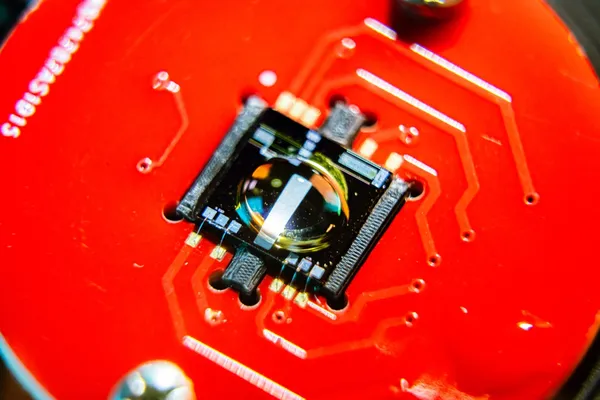
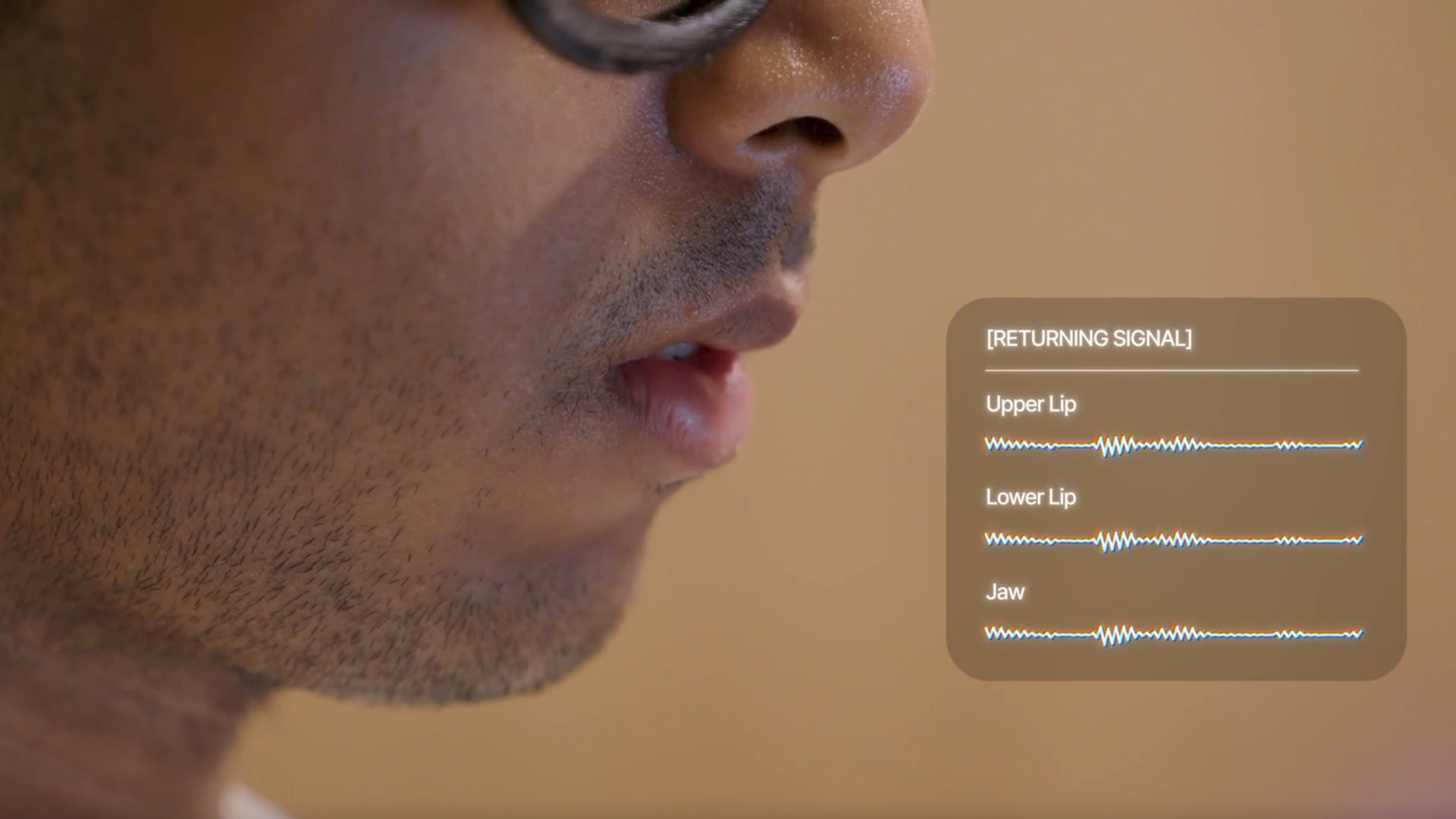
- Subvocal’s glasses tech uses radar to analyze the movement of muscles in your mouth.
- From those readings, it can extrapolate the words you’re saying — even if you’re just silently mouthing them.
- Pre-orders for the wearable are open now, with orders expected to ship in Q1 2027.
Ever since mobile devices started getting smaller than a laptop, engineers have been tackling the difficult question of how we’re supposed to enter text. We’ve gone from tiny physical keyboards, to touchscreen keyboards, to gesture-based glide typing. On wearables, the situation’s even trickier, and it can feel like we’re stuck either using voice input or left awkwardly poking in the air at a virtual keyboard. But now one startup has a clever, hands-free solution that works silently.
How many of you speak aloud to yourself as you type? Or maybe when proofreading, do you ever silently mouth the words as you’re reading them? You might be a prime candidate for trying out Subvocal’s glasses tech, which translates silent mouth movements into written text (via Hacker News).

Grab a huge $1,229 saving on this 18-inch Alienware gaming laptop with an RTX 5070

Chinese survey ship loitering near undersea cable ignores Philippine demands to withdraw

McDonald’s launches 5 new holiday drinks: How to try the wild Red Bull and sprinkles combo
Starbucks and Dunkin' recently dropped plans to launch holiday menus. Did you think that McDonald's was going to sit back and let them get all the festive attention? No, McDonald’s has officially entered the seasonal caffeine wars.
Launching nationwide on Nov. 3, McDonald's has rolled out five limited-edition holiday drinks at participating U.S. restaurants. The lineup takes direct aim at Starbucks and Dunkin’ by dividing its menu between two distinct cravings: fruity, sparkling energy drinks topped with dairy cold foam, and dessert-heavy McCafé coffee drinks built around Cookie Butter.
The five-drink holiday lineup is as follows:
Frosted Cranberry Splash with Sprite: Sprite infused with cranberry and orange syrups, topped with sweet cold foam and festive red cranberry sprinkles.
Red Bull Frosted Cranberry Energizer: A cranberry-orange flavor base, topped with cold foam and sprinkles, and an entire can of Red Bull.
Cookie Butter Latte: Espresso blended with whole milk and spiced cookie butter syrup, finished with sweet vanilla whipped cream and crushed caramel cookie pieces.
Cookie Butter Iced Coffee: Classic McCafé iced coffee steeped with cookie butter syrup, cream, and crunchy cookie crumbles.
Cookie Butter Frappé: A blended coffee treat crowned with vanilla whip and speculoos cookie crumbs.

I'm all for festive vibes, but I'm going to be honest: putting cold foam on Red Bull doesn't sound particularly appetizing. Hey, maybe I'm in the minority. Maybe it will go completely viral for all the right reasons. Who am I to question McDonald's?

Kling’s $18 Billion Private Value Tops Parent Kuaishou’s Market Cap
NextFin News — Kuaishou has completed the cash closing on a major funding round for Beijing Kling, the company that houses its Kling AI video business. Investors paid in about 19.8 billion yuan in total. Some original subscribers failed to wire on time and exited; their slots were reassigned to new backers, including Kingdee and other financial and industrial names. After the deal, Kuaishou still controls the subsidiary through Lucky Labs, with roughly 66.7% of equity and 52.5% of voting rights.
The post-money valuation assigned to Kling is about $18 billion—more than 120 billion yuan. On the same day the closing was announced, Kuaishou’s Hong Kong shares closed near HK$26.5, implying a group market value under 100 billion yuan and a fresh low since the company’s listing. An unlisted, still-lossy AI unit is being marked higher than the public parent that built it.
That inversion is less a puzzle than a split in how capital scores assets. Private investors are paying for scarce AI video capability and a rising revenue run-rate. Public investors are marking a short-video platform whose advertising, live streaming, and commerce sit in a crowded, low-growth arena.
Kling’s top line is small next to the group but scaling quickly. Quarterly revenue moved from more than 650 million yuan in the first quarter to more than 850 million in the second, with year-on-year growth still measured in triple digits. Annualized revenue has been discussed around $5 billion’s Chinese-yuan equivalent of roughly 3 billion-plus yuan at recent run-rates cited in earnings materials—several times the level a year earlier. Broker research has floated the possibility of $10 billion in annualized recurring revenue by end-2026 and, on wide sales multiples, a valuation band that can encompass the current private mark. Profit is another matter. Filings pointed to widening net losses in 2024 and 2025; break-even has been discussed in industry reporting as a 2028-quarter story if compute costs fall and volume absorbs fixed costs.
Kuaishou’s second-quarter group revenue was about 35.5 billion yuan, up only 1.4%. Profit fell by more than a third. Live streaming declined; advertising, still the largest line, grew only modestly. Daily active users were barely higher year on year even as monthly users rose faster—suggesting weaker conversion of new accounts into daily habit. Management has described short video as a stock-competition market. Inside that frame, Kling’s contribution—on the order of 2% of first-half group sales—cannot re-rate the whole stock at AI multiples. Before separation talk, some bank models implied only a modest value for Kling inside the parent. Afterward, other houses published standalone targets several times higher. The gap is the difference between “a line item in a platform” and “an AI video company.”
The shareholder list is as notable as the valuation. Joint lead investors included financial sponsors and Tencent; industrial money included Alibaba Cloud and Baidu, alongside entertainment groups. Tencent and Alibaba Cloud each put in about 1.36 billion yuan for roughly 1.1% stakes; Baidu’s check was smaller. It is rare for China’s three large internet groups to appear together on one AI cap table—especially when each is building its own video-generation stack.
Their motives need not be identical. A stake can secure preferred API access for a creator ecosystem, lock in a heavy inference customer for a cloud franchise, or simply buy a seat at the table while in-house models continue. None of the three is surrendering the race; minority checks are cheap insurance and distribution options. Kuaishou, for its part, is not selling control. A dual-class structure gives technical leadership enhanced voting on a limited equity slice that lapses on departure or transfer. Outside investors hold financial exposure without operating vetoes. Capex guidance for the group has been raised sharply, with a large share aimed at models and compute; independent capital helps fund that appetite without asking public holders to finance every GPU cycle alone.
Growth is concentrated. Industry commentary has said a large majority of Kling API revenue comes from a handful of large accounts, and that some overseas clients reduced contribution as competition intensified. Any future listing will face scrutiny on related-party dealings, independence from the parent, and overlapping competition. Holding structures can also invite a conglomerate discount if the market treats Kuaishou mainly as a listed wrapper around a private AI jewel.
For now, the October closing freezes a clear snapshot: private capital will pay AI prices for Kling’s trajectory; public capital will not pay those prices for Kuaishou’s core feeds. Closing the gap depends less on another funding headline than on whether AI video revenue becomes large enough—and clean enough—to change how the whole group is read.
更多精彩内容,关注钛媒体微信号(ID:taimeiti),或者下载钛媒体App

早报|国行苹果AI开测,Siri接入千问/中兴否认出售手机业务传闻/多所高校免费发Token
 国行 Apple 智能开启测试,Siri、写作工具与视觉智能接入千问
 苹果天气出现数据异常,多地下周五「跌至」零下 32 度
 苹果向所有开发者开放 Siri AI,可将多个 App 动作串成任务
 GPT 爆改 Qwen 权重,团队测试数学成绩提升约 6 倍
 OpenAI 用 Astra 一周设计语音 Codex 设备,并与马自达合作研究
 曝 DeepSeek V5 拟用昇腾预训练
 DeepSeek 又崩了
 红果用户规模超越豆包,千问领跑亿级 App 增速榜
 盗用 AI 平台算力,上海一男子获刑三年
 中兴否认出售手机业务传闻
Claude Code 产品负责人 Cat Wu 离开 Anthropic
姚顺宇否认创业:仍是 Google DeepMind 员工
 多所高校免费发 Token,同济每周提供 1 亿 Token
 蔚来累计换电突破 1.3 亿次,最近 1000 万次用时 88 天
Seedance 海外收入占比达一半,腾讯与 B 站成为国内大客户
 AMD 数据中心收入接近翻倍,第四季度营收指引达 170 亿美元
 阿里董事会主席:只有开源才能普及 AI
 英伟达与 Pika 基于 MiniMax H3 开源视频增强和生成模型
 商汤发布 SenseNova 6.8 Flash,支持动态设计与可编辑 3D 工程
法拉利首款电动车 Luce,2027 年产量已全部被预订
美团 LongCat-2.5 正式发布,国产算力训练原生多模态模型
 智能投影销量连跌四季,第三季度中国市场下滑 26.2%
 佳能计划明年起调价,应对零部件成本上涨
 全国放心消费平台上线,扫码可查周边商家承诺
 《好莱坞往事》衍生片再请《社交网络》配乐搭档
 《蓝眼武士》第二季定档明年 1 月,复仇之旅转向伦敦
Netflix 测试 AI Discover,按心情找片还能屏蔽不想看的推荐

国行 Apple 智能开启测试,Siri、写作工具与视觉智能接入千问
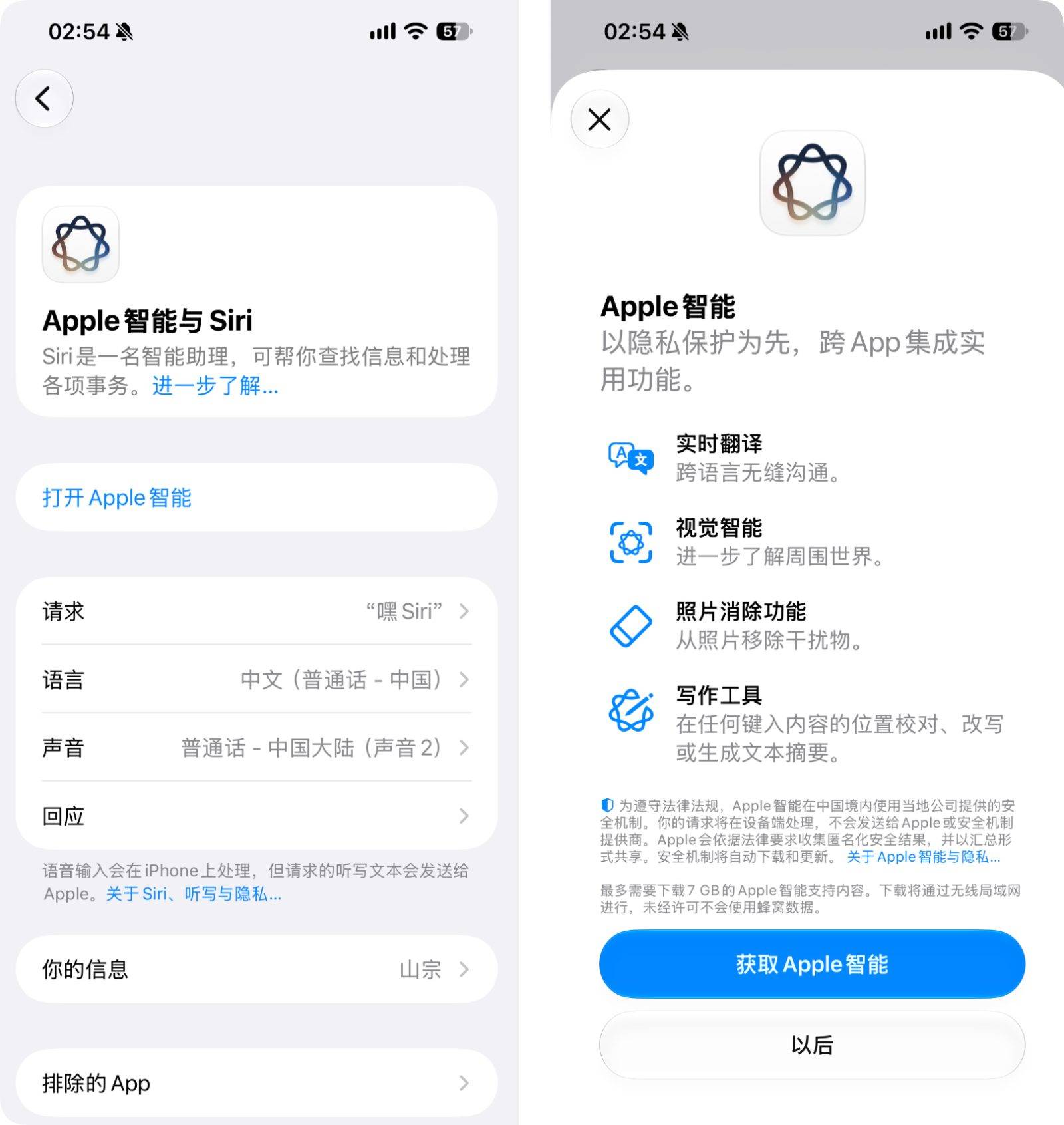
今天凌晨,苹果推送 iOS 27.3 首个开发者测试版,国行「Apple 智能与 Siri」开始开放体验。
苹果中文官网列出的首批功能包括写作工具、实时翻译、照片消除、智绘表情及通知摘要。
千问被整合进 Siri、视觉智能和写作工具,用户可在系统内提问、生成文本或处理图像。
据爱范儿实测,视觉智能的以图搜物还接入了百度搜索。Siri 换上环绕屏幕边缘的光晕,并支持双击屏幕底部切换为文字输入。
在 Siri 中,基础问答可直接完成。以「最近总是睡不好」为例,Siri 会调用千问给出通用睡眠建议。
如需更个性化的方案,用户可点击千问 Logo 跳转至千问 App,对话信息会自动同步。据了解,千问可结合用户此前的睡眠记录、运动情况和生活习惯制定改善方案。
实时翻译覆盖信息、电话和 FaceTime,其中电话与 FaceTime 限一对一通话。AirPods 翻译需适配耳机更新至最新固件,并与启用 Apple 智能的 iPhone 配对。
首批功能适用于 iPhone 15 Pro 系列、iPhone 16 全系列及后续机型,以及 iPhone Air、iPhone Duo,Siri 和设备语言须设为简体中文或英语。
值得注意的是,此次国行更新提供的是首批 Apple 智能功能,WWDC 2026 预告的新版 Siri AI 未包含在内。
 相关阅读:
Operators Day : 10 founders hiring for founding ML roles - Nov 5 [n]
Hi all! I'm part of the EWOR team and we're organising Operators Day this Thursday, November 5 (4:30 PM CET / 9 PM IST), online on Zoom.
Ten founders will be pitching live, sharing what they're building and the founding roles they're hiring for - AI/ML engineers, robotics engineers, CTOs, CPOs, marketing and sales leads, and more.
These are real founding opportunities with meaningful equity.
If you're an ML engineer or researcher exploring your next move, or know someone who might be a great fit, come join us!
Spots are limited.
Register here: https://luma.com/OperatorsDay?utm_source=reddit&utm_content=machinelearning
Disclosure: I work with EWOR and am helping organise the event.
[link] [comments]
Music Through Your Cheekbones: How Bone-Conduction Headphones Work and Why They Sound Different
Most headphones function in a very simple manner: sound waves created by the headphones propagate through the air into the ear canal and into the inner ear. However, there are some headphones that have a non-traditional approach to producing sound for listening to music. These headphones can deliver sounds through vibrations to the head bones and tissues, thus enabling users to listen to music without inserting earbuds into the ear canals or using bulky headphones that cover them completely.
Such headphones are called bone-conduction headphones, as they produce vibrations in addition to the conventional sounds created by speakers.
It may appear strange, but the science behind this process is fairly simple. In fact, there is always some kind of bone conduction when a person speaks and hears his own voice. Vibrations generated by the act of speaking pass not only through the air but through the body, which explains why the voice that is recorded differs from the voice we hear when speaking.
In addition, transmission of sounds via the head affects how music is being played. In order to explain why this happens, it is necessary to learn more about how these headphones function and how sound vibration turns into music.
First, Understand How Traditional Headphones Deliver Sound
Before diving into the mechanics of bone conduction, it helps to establish exactly how normal headphones work. Understanding this baseline makes the technical jump to bone conduction much easier to follow.
The Journey of Sound Through Your Ears
Headphones are designed based on the principle of air conduction and transmit sound into the inner ear in the following way. First, sound waves are produced from the headphones as a result of a diaphragm's rapid vibration. These waves move through the air inside the ear canal and eventually encounter the eardrum that starts vibrating.
Then, three small bones in the middle ear, called malleus, incus and stapes, amplify the vibrations and pass them on to the cochlea. It is an incredibly small organ located in the inner ear, which has the shape of a snail and contains fluid. Moreover, it consists of a basilar membrane, which separates the liquid inside the cochlea. As the waves move through the liquid, the sensory hair cells convert mechanical energy to the electrical one. Finally, the signals reach the brain through the auditory nerve, which interprets them as sound. However, the eardrum is not the only place for vibrations to get to the cochlea.
How Bone-Conduction Headphones Actually Work
Whereas miniature speakers have been traditionally used, modern consumer bone-conduction headphones make use of transducers that are electromechanical. This is because the main function of these transducers is to convert electrical audio signals to mechanical vibration. This is different from normal headphones since the transducer does not go inside or on the ears. They usually come into contact with the skin around the ear region.
From Electrical Signals to Mechanical Vibrations
Hearing using a bone conduction device is quite distinct from the one used by earbuds. Once the audio signal sent from the computer to the headphones has been received, it gets converted into mechanical waves through the transducer inside. The transducer moves in sync with the skin of your face and the body tissues beneath it.
This vibration travels through the biological parts of your head, without interacting with the outer and middle ear at all. Mechanical energy turns into motion in the cochlear region. From here, the entire process becomes just like any other form of hearing process, where the sensory hair cells detect the motion in the fluid and send signals to the brain through the auditory nerve.
Does Sound Really Travel Through the Skull Bones?
It is easy to picture bone conduction as one simple process involving the skull, but the reality of it is actually quite complicated. The process of transmission of sounds through the head includes more than one pathway operating at once.
As described in the basic research on bone-conducted sounds and their physiology, there are a number of different ways that this is accomplished. Vibrations lead to movement of the fluid within the cochlea, called cochlear fluid inertia, which is one of the main factors that allow us to hear bone-conducted sounds. Also, the small bones of the middle ear react to the vibration of the skull (ossicle inertia). Moreover, the vibrations cause micro-movement of the walls of the cochlea. Surprisingly, vibrations of the skull also produce secondary sound pressure within the ear canal.
Why Bone-Conduction Headphones Sound Different From Regular Headphones
If you have ever tried a pair of bone-conduction headphones, you immediately notice that they do not reproduce sound in exactly the same way as conventional earbuds. The audio often feels different in texture and weight. This variance comes down to the transducers, the physical vibration pathways and how human tissue filters different frequencies.
Bass Doesn't Feel the Same
Bass sounds that have lower frequencies are critical in the listening experience of music in modern times. In the case of regular earphones, changes in air pressure are used effectively in stimulating the eardrum. In the case of bone conduction headphones that people can buy, the sound waves have to fight their way to the cochlea through a combination of skin, cartilage and bone tissues.
Human tissue has a natural tendency to dampen certain mechanical frequencies, thus, the production of bass tones is noticeably less intense. The transducers have to vibrate more in order for bass tones to be produced, thus, there will be a noticeable buzzing and tickling effect on the cheekbones of the listener.
Sound Leakage and Environmental Noise
Since the transducers are placed totally outside of the ear canal and operate by making vibrations outside of the head, part of the acoustic energy is bound to leak out into the air. As a result, there will be sound leakage, which means that people who happen to be sitting close to you can overhear the low-quality music leaking from the earphones. Additionally, the open-ear technology allows all kinds of background noises to get into your ears automatically.
The Engineering Behind Bone-Conduction Headphones
Designing consumer bone-conduction wearables requires engineers to navigate a highly specific set of physical limitations. Building a traditional speaker is mostly about moving ai, building a bone-conduction transducer is about effectively transferring mechanical energy into the human body.
Why Transducer Placement Matters
The issue of positioning the transducer is significantly more complicated than just finding a place where it will be able to vibrate. The exact position of the transducer, the force of its pressure on the skin and the coupling with the underlying tissue will determine the efficiency o

Grab a $450 saving on this 4K-ready gaming PC with an RTX 5070 Ti and 32GB DDR5 right now

Triple your Nintendo Switch 2's storage for just $99
In the age of AI, paper ballots are more important than ever
It’s no surprise that AI is fueling concerns about widespread election interference, which have plagued the U.S. since at least 2016, when now-President Donald Trump first began to complain about rigged results.
Models produced by artificial intelligence providers have already been caught accessing government systems. In September, OpenAI said its models engaged with websites run by the U.S. Census Bureau and the Securities and Exchange Commission. In the weeks before the election, Claude accessed publicly available voter information. And then there there are the general AI concerns. Late last week, we learned that hackers had been caught using a “malicious” version of Claude Code to secretly introduce vulnerabilities into programs being developed with the AI agent Cursor.
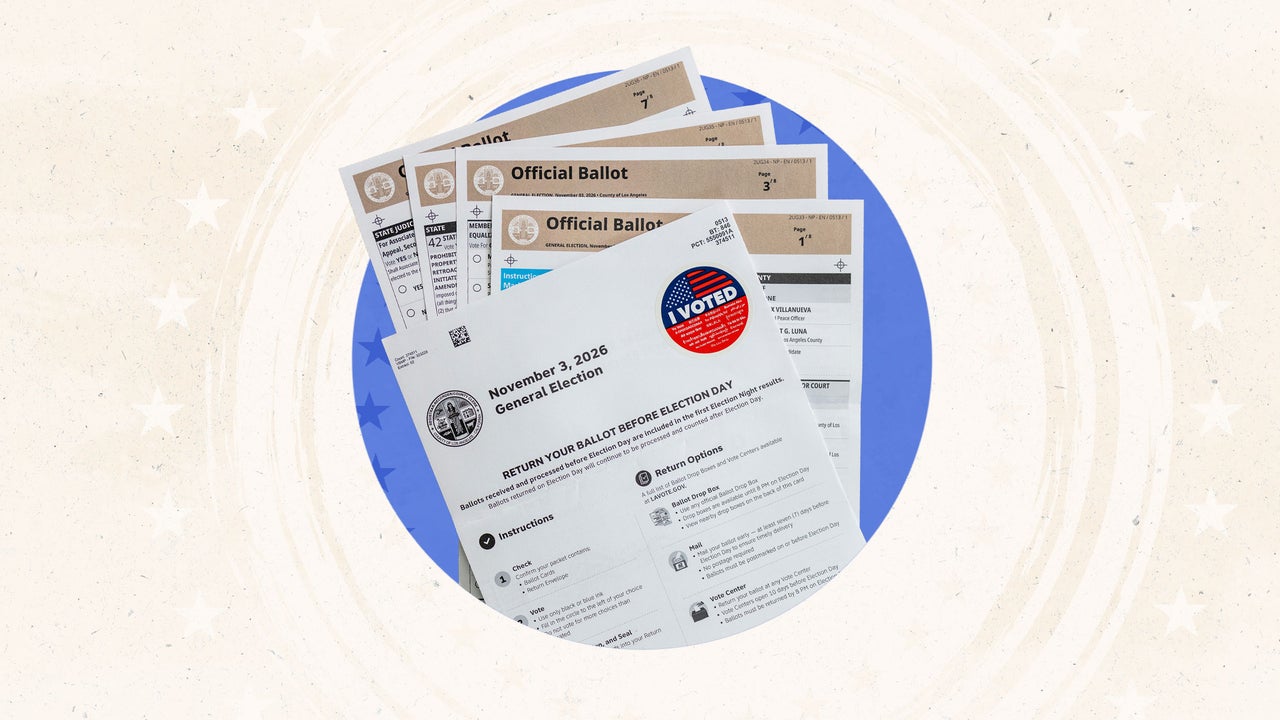
There’s no evidence that AI agents have directly interfered with any election results. Still, the concerns are a reminder that—for all the faults of analog technology—paper-based ballots come with significant advantages. While counties across the country may process ballots using different machines, elections in the U.S. generally employ paper records. Even if machines are counting our ballots, there’s still the option to verify the results by hand at a later time. While some counties experiment with touchscreen-based voting, even those systems tend to print a paper record. In the age of AI, this form of corroboration is more important than ever.
Paper ballots, of course, come with problems of their own. It’s easy for people to mess them up, perhaps by filling in bubbles incorrectly or voting for multiple candidates in the same race. They can be destroyed, and they’re also slow to count. But paper ballots can’t be hacked remotely. The infamous hanging chads threw the 2000 presidential election into chaos, but a rogue ChatGPT model could cause far worse political pandemonium. At least in 2000, we knew we had hanging chads we could check! In the era of large language models accessing all sorts of electronic resources in unexpected ways, that’s a major advantage and a strong reason to push back on efforts by some to institute internet-based voting.
The Brennan Center for Justice reached a similar conclusion after the 2020 election, which saw the American public—if you don’t remember—again inundated with accusations of rigged voting machines and political interference. “The public should have more than vague promises of security from private vendors looking to sell a product for something that is so central to our democracy and national security,” government and election experts at the Brennan Center concluded. “In the wake of massive disinformation campaigns about ‘rigged machines,’ . . . it’s more important than ever that voters have confidence their votes will be accurately counted. Paper ballots provide such assurance.”
Direct manipulation of election results isn’t the only way AI could interfere in our political system. Even before the midterms, there were concerns that viral deepfakes, which have only become more convincing with advances in generative AI, could mislead people right before elections. There is, too, concern about AI tools, including those employed by foreign adversaries, spreading biased information. Ahead of Tuesday’s election, OpenAI said it had even opened a “war room” to track election-related interference, including abuse of its own tools.
In the meantime, we should expect some people to speculate about whether AI is directly tampering with election results. There’s no evidence of that, at least for now.

The busiest man on Broadway talks about the art of staying focused while multitasking
Hustle culture. Productivity porn. The business world has no shortage of stereotypes to describe the dangers of overwork, and probably for good reason.
But on the flip side, sometimes you just have to get stuff done, and few people are getting more done these days than Michael Arden.
At 44, the Tony Award-winning theater director has emerged as one of the busiest practitioners on Broadway, with a diverse portfolio of credits that includes A Christmas Carol, Parade, The Queen of Versailles, the smash hit Maybe Happy Ending, and this year’s crowd-pleaser The Lost Boys.
And those are just the ones from this decade.
Arden’s newest project, the Broadway revival of Aaron Sorkin’s A Few Good Men, opened at last month at Lincoln Center’s Vivian Beaumont Theater.
First staged on Broadway in 1989, the fast-moving courtroom drama arrives with a timely message for a world grappling with the implications of warped leadership: When obeying orders is a matter of life or death, what happens when those orders are unethical—or just plain illegal?
If your only connection to the material is the 1992 movie starring Tom Cruise and directed by the late Rob Reiner, perhaps you count yourself among the untold scores of millennials and Gen Xers who grew up with it as a fixture of cable TV.
You might also be pleasantly surprised at how fresh the Reagan-era story feels onstage. Under Arden’s direction, scenes move briskly from one to the next, flashbacks seamlessly fill in the backstory, a winsome cast trades Sorkin’s crackling dialogue, and before you know it, you’re fully invested in the fate of two Marines on trial for murder.
Bradley Whitford, a Sorkin veteran who won an Emmy during his time on The West Wing, steps into the pivotal role of Nathan Jessep, the tongue-lashing Marine Corps colonel made famous by Jack Nicholson and his memorable line “You can’t handle the truth.”
Whitford brings a less menacing interpretation. Arden describes the actor as “so damn likable,” a point that underscores his approach to letting A Few Good Men the play speak its own language.
“A lot of people don’t even realize it was a play before it was a film,” Arden tells Fast Company. “We’re doing a revival, but we’re really introducing lot of people to this play for the very first time.”
Laddering up
Arden got his start on Broadway more than two decades ago as an actor, starring as Tom Sawyer in the 2003 revival of Big River: The Adventures of Huckleberry Finn.
He later turned to directing and also producing, and together with scenic designer Dane Laffrey and producer Mindy Baiada operates the production company At Rise Creative.

With A Few Good Men, Arden is currently directing no fewer than three Broadway shows at the same time. (Maybe Happy Ending and The Lost Boys are still going strong.)
As if that weren’t enough plate-spinning for one person, he also has multiple projects in various stages of development, including a musical version of the penguin-forward animated movie Happy Feet and another musical that catches up with the characters of Huckleberry Finn.
Fast Company recently caught up with Arden to discuss his latest production, what he does to stay productive, and how he juggles so many projects while still staying sane. (The interview was edited for length and clarity.)
What struck you about A Few Good Men that’s relevant for now?
I was really excited to find an American classic play that felt both timeless and timely, and something worthy of a stage the size of the Beaumont. There are a lot of great plays, but not necessarily all of them can really fill that space. It really felt like both the language and the content of the play could be something that would lend itself to sitting nicely within that cavern that is the Beaumont.
When I revisited the script, I felt, oh, this doesn’t feel dated. This feels timely in so much as we’re looking at the transparency of our government and especially the military. And just this year, we saw elected officials making videos urging troops and enlisted men and women to not obey illegal orders, and then being called treasonous for that.
My favorite type of theater isn’t necessarily theater that’s ripped from the headlines, but makes you recognize the headlines of today within the script of yesterday. Not only is this an entertaining great play that has great characters and a fun plot, but also, hopefully when you leave the theater, you think, Oh gosh, we’re still dealing with reverberations of that same question. And to me, that’s exciting.

How familiar were you with either the movie or the original stage version?
I had seen the film. My grandparents raised me, and my grandfather was a Navy veteran. And so all things military and Tom Cruise were on a constant loop in my living room. I think I’ve seen Top Gun more than anyone on earth.
So I knew the movie and had seen the play a long time ago, like a high school production or something like that. But, really, when I stumbled across it on a list of plays that hadn’t been revived, when I went back to the text, I was really rediscovering it for the first time.
I guess “iconic” is a word to describe Jack Nicholson’s monologue at the end. It’s meme-level familiar. Even if you haven’t seen the movie, people know that scene. Were you at all concerned with how to approach that, or did you leave it up to the actor, Bradley Whitford?
I left it up to the actor. I felt like, listen, my job is to tell the story clearly and give the audience a space in which to form their own opinions about things. And that’s what I like to do with my actors as well. I want to choose the right people and see what they b
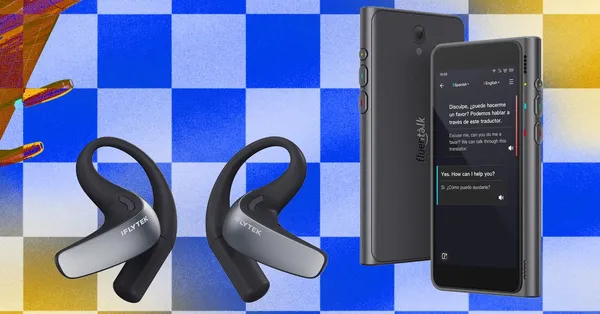
The Best Handheld Translators for Work and Travel (2026)

There’s a Free Video Editor Inside Google Drive That Anyone Can Use