These muscle-reading wearables let you use voice input without speaking a word
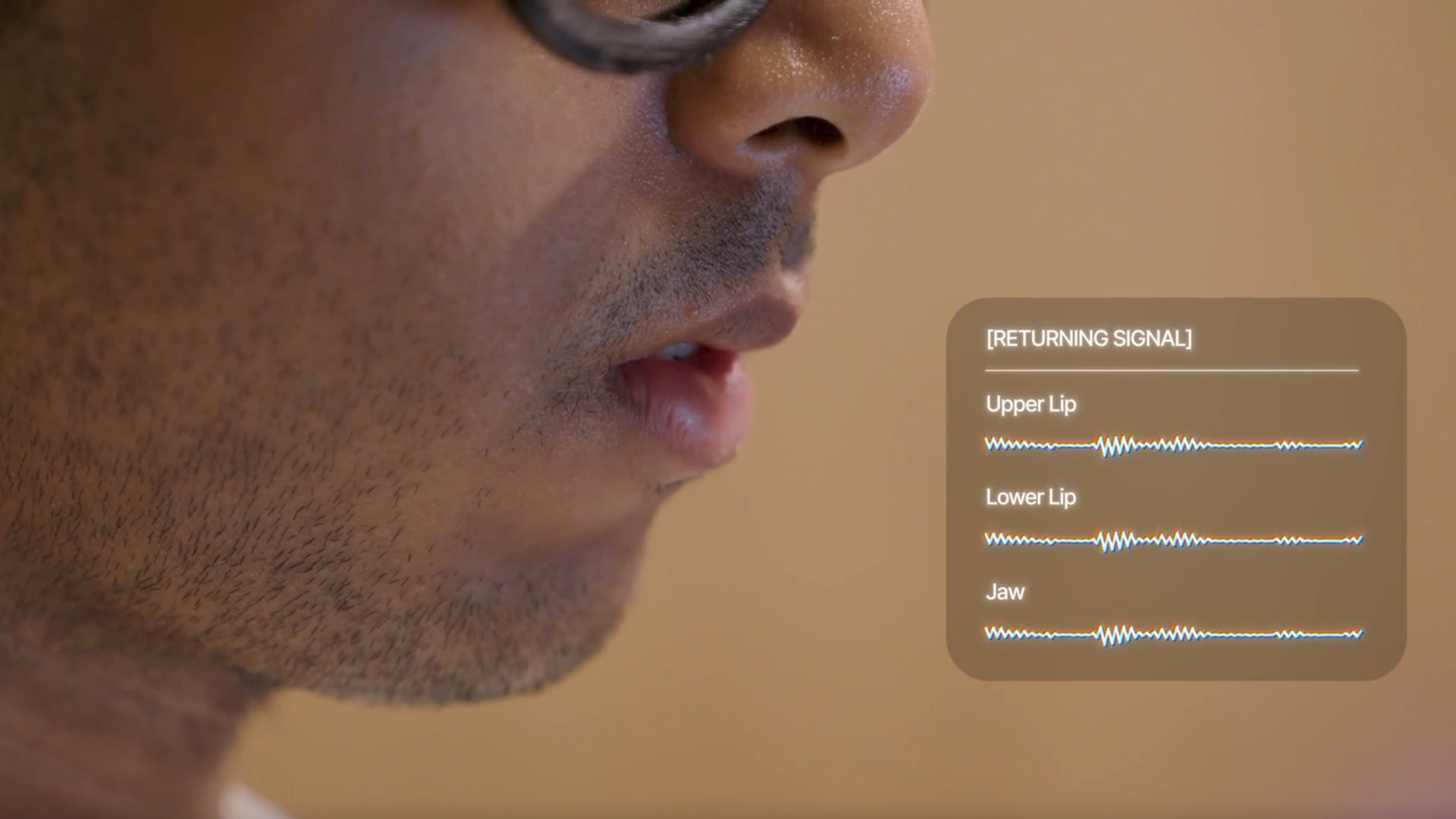
- Subvocal’s glasses tech uses radar to analyze the movement of muscles in your mouth.
- From those readings, it can extrapolate the words you’re saying — even if you’re just silently mouthing them.
- Pre-orders for the wearable are open now, with orders expected to ship in Q1 2027.
Ever since mobile devices started getting smaller than a laptop, engineers have been tackling the difficult question of how we’re supposed to enter text. We’ve gone from tiny physical keyboards, to touchscreen keyboards, to gesture-based glide typing. On wearables, the situation’s even trickier, and it can feel like we’re stuck either using voice input or left awkwardly poking in the air at a virtual keyboard. But now one startup has a clever, hands-free solution that works silently.
How many of you speak aloud to yourself as you type? Or maybe when proofreading, do you ever silently mouth the words as you’re reading them? You might be a prime candidate for trying out Subvocal’s glasses tech, which translates silent mouth movements into written text (via Hacker News).

Grab a huge $1,229 saving on this 18-inch Alienware gaming laptop with an RTX 5070

Chinese survey ship loitering near undersea cable ignores Philippine demands to withdraw

McDonald’s launches 5 new holiday drinks: How to try the wild Red Bull and sprinkles combo
Starbucks and Dunkin' recently dropped plans to launch holiday menus. Did you think that McDonald's was going to sit back and let them get all the festive attention? No, McDonald’s has officially entered the seasonal caffeine wars.
Launching nationwide on Nov. 3, McDonald's has rolled out five limited-edition holiday drinks at participating U.S. restaurants. The lineup takes direct aim at Starbucks and Dunkin’ by dividing its menu between two distinct cravings: fruity, sparkling energy drinks topped with dairy cold foam, and dessert-heavy McCafé coffee drinks built around Cookie Butter.
The five-drink holiday lineup is as follows:
Frosted Cranberry Splash with Sprite: Sprite infused with cranberry and orange syrups, topped with sweet cold foam and festive red cranberry sprinkles.
Red Bull Frosted Cranberry Energizer: A cranberry-orange flavor base, topped with cold foam and sprinkles, and an entire can of Red Bull.
Cookie Butter Latte: Espresso blended with whole milk and spiced cookie butter syrup, finished with sweet vanilla whipped cream and crushed caramel cookie pieces.
Cookie Butter Iced Coffee: Classic McCafé iced coffee steeped with cookie butter syrup, cream, and crunchy cookie crumbles.
Cookie Butter Frappé: A blended coffee treat crowned with vanilla whip and speculoos cookie crumbs.

I'm all for festive vibes, but I'm going to be honest: putting cold foam on Red Bull doesn't sound particularly appetizing. Hey, maybe I'm in the minority. Maybe it will go completely viral for all the right reasons. Who am I to question McDonald's?
AI被“催收”的财报季,腾讯、阿里开启智力产能重估
(本文作者为 港股研究社,钛媒体经授权发布)
文 | 港股研究社
AI第一次被催着交出收入成绩。
因为市场对全球科技巨头的AI资本开支计划产生了担忧情绪。
10月底,谷歌交出三季报,单季自由现金流转负90亿美元,股价一天跌去近13%,创下上市以来最大跌幅。微软、亚马逊的资本开支还在加码,Meta启动350亿美元股权融资。
高盛预计,明年美国科技公司发债规模将达到4200亿美元。这让投资者愈发担心“七姐妹”的现金流。
事实上,在财报季之前,中国科技巨头已经率先开始了新一轮“找钱”行动。
字节从近30家银行拿下296亿美元无抵押银团贷款;阿里在香港配售新股募集800亿港元,全部投给AI;腾讯发行了期限长达30年的债券。
融资挤出效应,一度让恒生科技指数近两月下跌超15%,最近几天,美股科技板块也因此下跌。
AI的资本狂热退烧。但有意思的是,随着AI资本开支扩张担忧被消化,港股先一步出现了利好催化的估值修复迹象。
10月29日,腾讯公布WorkBuddy上线七个月累计完成90亿次任务请求;三天后,千问办公走进李佳琦直播间,半小时卖出约10万份会员月卡。
财报季期间,AI产业可能迎来又一个产业与资本的拐点,投资逻辑随之换挡。
AI二次创业,巨头重新变回融资方
找钱的巨头,已经逐渐偏离大家熟悉的“科技资本”“生态打法”标签。
互联网时代,中美科技巨头已经成长为行业内最大的产业资本。但到了AI这时代,这些公司重新变回资金的需求方。
过去两年,资本市场默认AI的每一笔投入都能兑现成未来的收入。芯片、云服务、数据中心连成一条庞大的资本开支链条,市场愿意为这条链条提前买单,而且不问回报。
但是现在市场发现资本饥渴超出想象,而回报却仍是一张期票。
在美国,微软自研模型,把AI装进Office和Azure;谷歌用自研芯片撑起全家桶;Meta重金组建超级智能实验室,2026年资本开支预计最高1450亿美元;OpenAI的星际之门,直接绑上了甲骨文的资产负债表。
在中国,字节打Token消耗战,豆包大模型日均调用量超过180万亿;阿里把千问开源,用云和自研芯片迎接需求;腾讯重建混元,同时坚持多模型开放,把选择权交给用户。
科技巨头最初的共同方向是,用巨额资本堆基础设施,靠订阅和API收费。不过,市场很快发现这笔支出很难收回。
晚点LatePost曾报道,豆包月活超过2亿,日收入却不足百万元。美国这边,也有分析估算OpenAI到2028年累计亏损将超过1670亿美元,叠加Anthropic财报不及预期,市场转向消极态度。
投资者的关注点被动转移,从模型的参数和榜单,移向任务的完成量和消耗的量。
顺着这个逻辑看,腾讯和阿里为什么会被重估,一个把Agent做进办公和企业服务,一个直播间向大众卖Token,还把AI装进苹果手机。
智能体(Agent)消耗是远超对话框的,如果腾讯和阿里能够跑通“完成任务”的办公市场,那么AI商业化进度条可能被大大拉动。
AI办公,是一门按“任务完成”收费的生意
企业级Agent崛起后,AI商业化正在更换计价单位。
AI卖能力:API按调用次数计费,软件按人头收订阅,这个模式跑通了开发者市场,规模始终有限。
今年以来,一种新的收费方式开始规模化:按用量、按任务收费。
客户不为模型付钱,为消耗掉的Token和完成的任务付钱。
办公是率先验证这个逻辑的场景:需求高频,效果可量化,付费方是企业。
90亿次任务请求背后,腾讯在加速构建办公与企服生态。
10月29日的全球数字生态大会上,腾讯发布打通文档、会议等底座的Buddy One,WorkBuddy企业版同步升级:落地50多个行业,中国企业500强里有一半在用,开放平台上聚集了5万多家伙伴和开发者,上架的Skills超过20万个。
AI产业的新度量衡诞生了,任务请求的次数、Token消耗的量。
模型能力依然重要,但对拥有成熟软件体系的平台来说,协同能力可能比单纯的参数领先更具商业意义。AI的价值单位,正在从“能力”变成“用量”。
紧随其后,阿里干了一件真正破圈的事,直播间卖Token。
双11前夕,千问办公会员登陆李佳琦直播间。原价28元的月卡以0.01元上架,半小时售出约10万份,对应约2万亿Token。
“3、2、1,上Token!”和支付宝当年在春晚集五福异曲同工,借一个国民级场景,把新技术送进普通人的视野。
Token本来只是大模型的计量单位,普通消费者不关心,但当Token变成直播间里可以下单的商品、变成会员权益里看得见的额度,AI的商业化被大众看见。
类似的渗透,互联网软件已经证明了路径可行性。办公软件走进职场,移动支付走进菜市场,都是巨头一步步推出来的。
AI正在走同样的路:腾讯把Agent做进企业微信,阿里把Token挂上货架。人们第一次能在日常和工作中,直接感受到这轮技术变化。
AI驱动的生产力飞跃,更可能利好每一个人。
过去两年,市场谈AI对就业的冲击,谈的是哪些岗位会被替代,牛马会不会更加牛马。
千问办公CEO陈宇森在直播间说:“AI取代不了李佳琦。我更希望帮粉丝用AI解决琐事——到点下班、陪伴猫狗、照顾家人。”
这句话,说出了科技巨头的普惠野心,真正的商业化循环,离不开每个人更高的消费需求。
科技进步,终局要回到人。《流浪地球2》里有句台词:没有人的文明,毫无意义。
从产业视角看,如果从办公到日常的Agent需求能够打开,算力正在从折旧负担变成生产性资产,AI产业化进程可能呈现向上的增长斜率。
阿里的管理层算过账:按当前AI产品的毛利水平,算力投入三年左右回本,早年采购的A100、V100至今满负荷运行。
腾讯的管理层也算过类似的账:几个月前下单的算力,现在转手可以获得超过30%的利润。
B端按任务,C端按Token,底层都是用量。用量可以计量,计量可以收费,收费可以持续。
科技巨头试图向市场证明,AI每个人相关,能够缔造国民级需求。
重估港股AI,智力像电力一样创造产能
用户规模乘以变现率。流量是资产,时长是收入。
这一股估值逻辑撑起了移动互联网的整个黄金时代,一直到现在“字节时间”还引发讨论。
但步入AI时代,用量正在取代时长,成为新的估值锚。
云厂商的财务模型越来越像电力公司:装机容量决定收入上限,利用率决定利润水平,电价决定天花板。
阿里的目标,是到2032年建成20GW的数据中心。按行业机构的测算,这大致相当于全球数据中心容量的十分之一。瑞银预计,这些产能到2032年可能转化为约1700亿美元的外部收入。
腾讯其实也殊途同归。WorkBuddy表面上是办公软件,背后是Agent Runtime、存储、安全服务,一整朵云的消耗在跟着每一次任务执行走。产品价值不在订阅费,在底层算力的持续调用。
流量变现,正在让位给产能变现。
这门产能生意的想象空间,到底有多大?
简单算一下,全球知识工作者一年的劳动报酬在30万亿到40万亿美元量级,AI能替掉一成,市场就是几万亿。这是存量计算。
阿里给出了另一种算法。
吴泳铭在云栖大会上披露,今天机器的思考总量大约只有人类的3%,未来可能达到人类的1000倍以上。
两个数字之间,是3万倍的增量空间,是生产力飞跃的体现。
历史上,类似的科技变革都证明了增量远远超出计算。
蒸汽机最早只是替人抽水,“马力”这个词就是这么来的。但机器动力真正改变世界,是造出了火车、飞机和火箭,干了再多的人和马也干不了的事。
阿里把今天的AI比作电气时代的电灯:电灯很重要,但电网铺开之后长出来的空调、冰箱和计算机,才是电气时代真正的大生意。AI也是如此。
这也是市场认知差所在。
按工资表算,AI是存量替代,天花板看得见;按机器思考量算,AI是增量创造,天花板还看不见。
AI相关收入能否连续增长,云业务的利润率能否改善,Agent的付费客户能否扩大,资本开支何时开始转化为经营现金流。
投资者不仅要关注这些传统“收入认知”下的变量,还应该关注WorkBuddy、千问办公、豆包工作,有没有让更多人拥有更多可支配时间,释放出更大的社会效率。
腾讯、阿里乃至百度、美团、快手、京东等公司拥有庞大用户入口和消费平台,都可能成为AI生产力飞跃,解放每个用户的受益者。
从这一点出发,AI价值链正在出现新的分配变化。

在基础设施建设阶段,芯片、服务器、数据中心和能源设备是主要受益环节。
进入模型服务阶段,云平台和模型公司开始通过API、Token和企业服务获得收入。
随着Agent真正进入企业和个人工作流,办公软件、行业应用和拥有用户入口的平台,则有机会获得新的价值。
AI价值的大头不一定在模型公司手中,谁掌握高频应用场景,能够连接用户需求与模型能力,将AI嵌入企业核心流程,就有机会在产业链中获得更稳定的商业价值。
港股科技股将围绕这个逻辑重估。
结语
从美股科技股对融资和资本回报的担忧看,这个财报季后,大基建叙事的狂热或许转向理性。
腾讯WorkBuddy完成90亿次任务,再阿里千问办公进入直播间销售Token,AI产业下一阶段焦点,是一家科技公司能否推动技术普惠,又有多少可以承接价值再分配红利的场景。
更多精彩内容,关注钛媒体微信号(ID:taimeiti),或者下载钛媒体App

这届双十一,成也AI败也AI?
(本文作者为 TMT星球,钛媒体经授权发布)
文 | TMT星球,作者|黄燕华
没有倒计时,没有滚动刷新的成交大屏,也没有“全网最低价”的嘶吼,如果只翻朋友圈,很难让人感受到今年的双十一进程已过半。
百度指数的数据显示,“双十一”的搜索热度五年间缩水超7成。
不过,安静不等于冷清。星图数据最新发布的阶段性统计数据显示,截至10月31日,综合电商累计销售额已达10263亿元,天猫、京东、抖音分列前三,家用电器以15.7%的份额成为第一大品类。
相较往年,今年最大的变量是AI。从天猫、京东到抖音、小红书,AI正成为电商运营与用户购物的基础设施。
规则也在做减法,跨店满减、复杂凑单被官方立减、现货直降、一件直降取代,平台试图把消费者的决策成本降下来。
但简化不等于没有“坑”。逆向涨价、大数据杀熟、定金加尾款不如单买便宜等老问题仍在,中消协等也发布消费提示,警惕商家套路。此外,AI生成图片、明星AI带货还带来货不对版风险。
双十一不再考“算术题”
今年双十一,最早起跑的是快手,其于10月7日宣布开启预售,10月14日是现货期,直至11月15日,整个活动持续40天。
小红书紧随其后,宣布在10月10日正式开场,全程约一个月,没有预售环节,主打现货开卖。
京东、苏宁易购均选择在10月12日晚8点开启双十一活动,同样砍掉了预售环节,直接以现货开卖,主打不让用户等待。
三天后的10月15日,天猫、抖音分别宣布在当天开启双十一活动。前者设置了预售环节,用户付完定金后,10月20日晚8点现货全面开卖;后者采用现货销售模式,不设置预售环节。
此后,随着拼多多、唯品会、得物等平台也先后开启双十一活动,国内主流电商平台均开启了双十一相关活动。
纵观天猫、京东、抖音等各大电商平台在今年双十一期间推出的优惠政策,摒弃了此前复杂的玩法,主打一个简单明了。
天猫取消了沿用多年的跨店满减,改为官方立减,消费者不用再为凑300减50加一双袜子;京东采用现货直降的方式,让消费者看得见优惠;抖音则延续“一件直降、立减折扣”;小红书也主打官方立减、官方直降,买一件也能享受优惠。
尽管各大平台的路径不同,但指向一致,即把消费者的决策成本降下来,将买的放心、买的实惠重新放回双十一购物消费的中心。
不过,值得注意的是,虽然各大平台简化了优惠政策,但实际购物中并非没有“坑”。
有媒体调查发现,随着双十一来临,多款商品大促价格反而高于平日,“逆向涨价”也引发了多起投诉。此外,大数据杀熟、网络卡顿、定金+尾款不如单买便宜等老问题今年依旧存在。
「TMT星球」在社交平台上以“双十一 涨价”为关键词进行搜索发现,不少用户吐槽其在双十一期间发现购买的商品比平时贵,“早上还在160(元),下午变成170(元)”。
还有消费者付款后发现降价,比购买时降价了400元,且不能退差价,“只好退了重买”。
图 / 小红书
在双十一开启后,10月26日,中消协发布“双十一”消费提示,提醒消费者在参与促销活动时把“看清楚”放在“抢得快”前面,把“用得上”放在“看起来便宜”前面。
此前,广西消委会联合青海、内蒙古等多个省(自治区、直辖市)共同发布“双十一”网络购物消费提示,再次提醒消费者甄别促销套路,警惕各类消费陷阱。
AI能选品能比价,但无法给出全网最优解
此前的双十一,AI更多是可有可无的辅助插件,今年双十一期间,AI已然成为双十一购物必不可少的工具,贯穿了大促的全链路,为消费者购物带来全新体验。
在消费端,淘宝上线千问购物Agent“千问Go!”,打通数十亿级商品库,用户用自然语言提出需求,系统自动筛选、比价、叠加优惠券,并跟进价保售后。
京东将基于JoyAI大模型的购物智能体“东东”推到台前,打通选品、比价、凑单、售后全流程。
抖音的豆包“帮你选”对接商城与直播间,用户在对话中即可完成下单。
在商家端,AI的角色则更为务实,帮助商家提高运营效率的同时,进一步促成购买。
比如,抖音宣布飞鸽智能客服在大促期间限时免费,罗盘AI问数让中小商家用对话查询经营指标;
快手把AI拆成随叫随到的经营工具;
淘宝和抖音的AI经营智能体开始反向优化商品详情页和尺码标注,针对服饰品类高达四成的退货率做精准匹配。
尽管如此,消费者在社交平台上的真实体验,远比平台宣传的更加复杂。
有媒体在报道中指出,不少AI大模型只能读取关联平台的价格信息,无法真正跨平台比价;平台做AI的动力是把交易留在自己锅里,而消费者要的是全网最优解,二者之间存在结构性错位。
「TMT星球」实测了多款电商平台内置的AI购物助手发现,多数AI购物助手推荐产品的逻辑通常来源于消费者过往消费、浏览记录,如果想准确找到想要的某款商品,需要进行多次交互,但最后给出的结果并不一定是想要或合适的。
而通过向千问、豆包、元宝等市面上主流的AI大模型输入需求,再从给出的结果来选择想要购买的商品,整个过程耗费的时间不比自己在电商APP内搜索花费的时间少。
「TMT星球」对不同的AI大模型输入同样的需求,从结果来看,千问通过解析需求,给出了买洗地机需要关注的重点,同时根据这些重点推荐了相关产品,还进一步询问用户的具体需求,进行更加精准的商品推送,并附上购买链接。
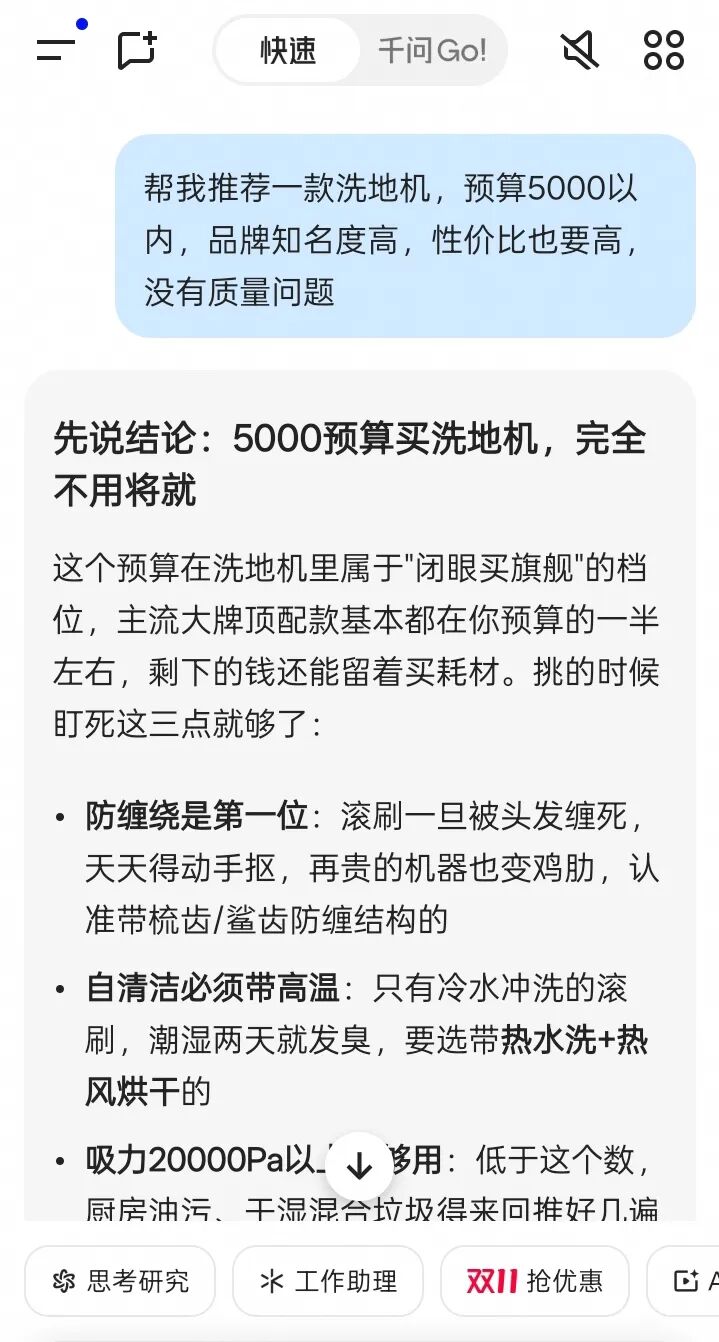
图 / 千问
同样的需求喂给豆包后,其给出了三款不同侧重点的洗地机产品,同时分析对比了每款产品的亮点,并给出购买链接。此外,豆包还推荐了抖音相关商家的直播链接,可直接点击跳转进行购买。
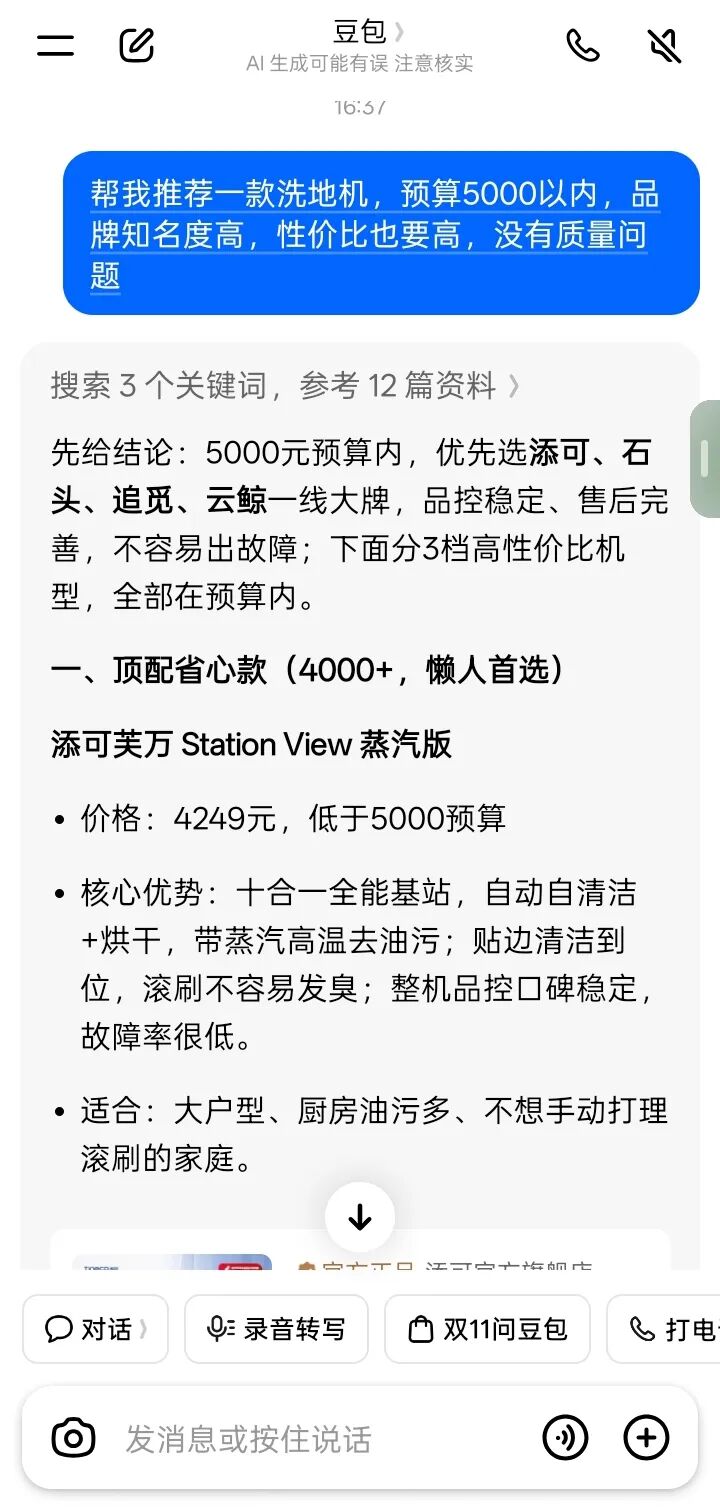
图 / 豆包
元宝则推荐了3款洗地机产品,并推测用户的使用偏好进行详细介绍,以及如何根据用户自己的需求选择合适的产品。此外,推荐产品的末尾,元宝同时提示用户使用过程中的一些需要注意的事项。
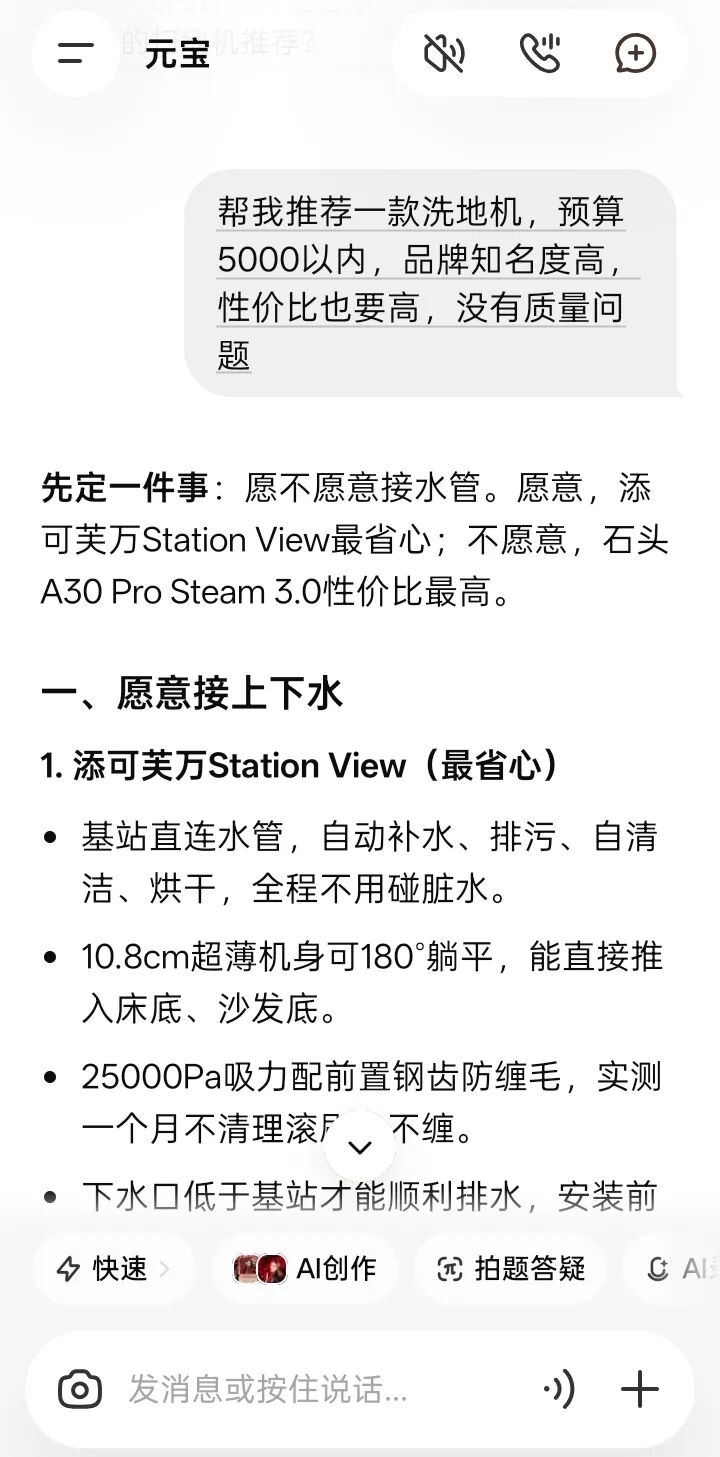
图 / 元宝
从结果来看,以上三款AI大模型给出的答案均可作为购买产品时的参考,但具体还需要用户进行比对,再根据自己的需求进行选择。
此外,不同AI大模型推荐产品的优先级非常明显,均优先展示关联电商平台价格信息,无法进行全网比价。
比如,千问推荐的是天猫平台的产品,豆包是抖音的链接,元宝则是京东的购买链接,这意味着用户想要全平台比价,还需自己动手。
值得注意的是,随着商家熟练运用AI技术,在降本增效的同时,一个新问题也随之而来。
网经社发文指出,不少商家展示的“精美实拍图、真人模特视频”多为AI生成,当消费者拿到产品后,和商家图片进行对比,出现严重的货不对版,此时的AI变成了欺骗消费者的利器,购物变成“开盲盒”。
不仅如此,一些不法商家利用AI深度合成技术复刻明星面容与声音,批量制作“明星推荐”“明星代言”的带货视频进行循环直播,消费者冲着公信力下单,收到的却是与宣传毫无关系的劣质商品。这种情况不仅损害消费者的购物体验,也可能触及法律红线。
第18个双十一,入口已发生迁移
从2009年的第一届到如今,双十一购物节走过了18个年头,消费者购买的路径也发生了肉眼可见的变化。
过去是“有需求、搜关键词、翻列表、比价、下单”现在更常见的是“刷到、被打动、点进商品卡、顺手下单”,甚至“根本没想买,看完就买了”。
这条路短、快、情绪浓度高,它不属于货架,属于内容,抖音、快手是其中的代表。
根据艾瑞咨询测算,2025年中国短视频电商(内容电商核心交易形态)市场规模已突破1.2万亿元,预计2026年全年交易规模将突破1.8万亿元,年复合增长率保持在24.3%,显著高于同期线上零售大盘增速。
对淘天、京东、拼多多等电商平台来说,内容电商带来的冲击是真实的,抖音、快手已经凭借内容优势,成为电商赛道的重要玩家。
不过,尽管抖音、快手等玩家规模增长迅速,但目前也面临流量见顶,GMV 增速下滑的挑战。
以抖音为例,公开数据显示,2025年抖音电商GMV约为4.3万亿元,但同比增速却从2022年的约220%一路降到2025年约30%,今年上半年降至20%左右。
与此同时,商家也开始算细账到底值不值。
据相关媒体报道,当头部达人佣金从40%抬到60%,叠加投流和约35%的退货率,几乎赔本赚吆喝,对比来看,品牌自播的退货率只有8%左右。
于是,“抖音拉新、货架沉淀利润”成了不少品牌的保命策略,有化妆品品牌把自播占比提到近七成。
传统平台的反击,是把大促做成“确定性的生意”。
天猫用新品首发和88VIP锁住品牌与高价值用户,再把即时零售接进来,有效带动了产品销量的提升。据环球网等媒体报道,截至10月25日,天猫酒水闪购成交同比增长265%,开卖一小时就有1145个酒水品牌超过去年全天。

京东把服务做成商品,根据其发布的双11首周成绩单,截至10月19日,家政、搬家、家电清洗等服务类订单同比增长超130%,用“送得快、装得上、修得好”守住家电3C阵地。
根据星图统计的数据,截至10月31日,双十一综合电商销售额10263亿元,其中,天猫第一、京东第二、抖音第三。
从这个角度看,随着内容红利见顶,以及传统平台的发力,内容电商平台想要连续超越行业“前辈”短期内难度不小。
结语
第18个双十一,平台不再用复杂算术题制造信息差,而是给予消费者看得懂的优惠。
在入口方面,从搜索框到短视频,再到AI对话框,谁离“决定买什么”更近,谁就握着下一轮门票。
对普通消费者来说,今年最实用的建议是,把AI当草稿,但别当结论,因为它擅长挑货、读规则、砍伪需求,却不擅长跨平台比价和精确凑单,“预计省多少”只是参考。
如果把“不买”也当成选项,在所有优惠里,这是折扣最大的一个。
更多精彩内容,关注钛媒体微信号(ID:taimeiti),或者下载钛媒体App

Kling’s $18 Billion Private Value Tops Parent Kuaishou’s Market Cap
NextFin News — Kuaishou has completed the cash closing on a major funding round for Beijing Kling, the company that houses its Kling AI video business. Investors paid in about 19.8 billion yuan in total. Some original subscribers failed to wire on time and exited; their slots were reassigned to new backers, including Kingdee and other financial and industrial names. After the deal, Kuaishou still controls the subsidiary through Lucky Labs, with roughly 66.7% of equity and 52.5% of voting rights.
The post-money valuation assigned to Kling is about $18 billion—more than 120 billion yuan. On the same day the closing was announced, Kuaishou’s Hong Kong shares closed near HK$26.5, implying a group market value under 100 billion yuan and a fresh low since the company’s listing. An unlisted, still-lossy AI unit is being marked higher than the public parent that built it.
That inversion is less a puzzle than a split in how capital scores assets. Private investors are paying for scarce AI video capability and a rising revenue run-rate. Public investors are marking a short-video platform whose advertising, live streaming, and commerce sit in a crowded, low-growth arena.
Kling’s top line is small next to the group but scaling quickly. Quarterly revenue moved from more than 650 million yuan in the first quarter to more than 850 million in the second, with year-on-year growth still measured in triple digits. Annualized revenue has been discussed around $5 billion’s Chinese-yuan equivalent of roughly 3 billion-plus yuan at recent run-rates cited in earnings materials—several times the level a year earlier. Broker research has floated the possibility of $10 billion in annualized recurring revenue by end-2026 and, on wide sales multiples, a valuation band that can encompass the current private mark. Profit is another matter. Filings pointed to widening net losses in 2024 and 2025; break-even has been discussed in industry reporting as a 2028-quarter story if compute costs fall and volume absorbs fixed costs.
Kuaishou’s second-quarter group revenue was about 35.5 billion yuan, up only 1.4%. Profit fell by more than a third. Live streaming declined; advertising, still the largest line, grew only modestly. Daily active users were barely higher year on year even as monthly users rose faster—suggesting weaker conversion of new accounts into daily habit. Management has described short video as a stock-competition market. Inside that frame, Kling’s contribution—on the order of 2% of first-half group sales—cannot re-rate the whole stock at AI multiples. Before separation talk, some bank models implied only a modest value for Kling inside the parent. Afterward, other houses published standalone targets several times higher. The gap is the difference between “a line item in a platform” and “an AI video company.”
The shareholder list is as notable as the valuation. Joint lead investors included financial sponsors and Tencent; industrial money included Alibaba Cloud and Baidu, alongside entertainment groups. Tencent and Alibaba Cloud each put in about 1.36 billion yuan for roughly 1.1% stakes; Baidu’s check was smaller. It is rare for China’s three large internet groups to appear together on one AI cap table—especially when each is building its own video-generation stack.
Their motives need not be identical. A stake can secure preferred API access for a creator ecosystem, lock in a heavy inference customer for a cloud franchise, or simply buy a seat at the table while in-house models continue. None of the three is surrendering the race; minority checks are cheap insurance and distribution options. Kuaishou, for its part, is not selling control. A dual-class structure gives technical leadership enhanced voting on a limited equity slice that lapses on departure or transfer. Outside investors hold financial exposure without operating vetoes. Capex guidance for the group has been raised sharply, with a large share aimed at models and compute; independent capital helps fund that appetite without asking public holders to finance every GPU cycle alone.
Growth is concentrated. Industry commentary has said a large majority of Kling API revenue comes from a handful of large accounts, and that some overseas clients reduced contribution as competition intensified. Any future listing will face scrutiny on related-party dealings, independence from the parent, and overlapping competition. Holding structures can also invite a conglomerate discount if the market treats Kuaishou mainly as a listed wrapper around a private AI jewel.
For now, the October closing freezes a clear snapshot: private capital will pay AI prices for Kling’s trajectory; public capital will not pay those prices for Kuaishou’s core feeds. Closing the gap depends less on another funding headline than on whether AI video revenue becomes large enough—and clean enough—to change how the whole group is read.
更多精彩内容,关注钛媒体微信号(ID:taimeiti),或者下载钛媒体App

Music Through Your Cheekbones: How Bone-Conduction Headphones Work and Why They Sound Different
Most headphones function in a very simple manner: sound waves created by the headphones propagate through the air into the ear canal and into the inner ear. However, there are some headphones that have a non-traditional approach to producing sound for listening to music. These headphones can deliver sounds through vibrations to the head bones and tissues, thus enabling users to listen to music without inserting earbuds into the ear canals or using bulky headphones that cover them completely.
Such headphones are called bone-conduction headphones, as they produce vibrations in addition to the conventional sounds created by speakers.
It may appear strange, but the science behind this process is fairly simple. In fact, there is always some kind of bone conduction when a person speaks and hears his own voice. Vibrations generated by the act of speaking pass not only through the air but through the body, which explains why the voice that is recorded differs from the voice we hear when speaking.
In addition, transmission of sounds via the head affects how music is being played. In order to explain why this happens, it is necessary to learn more about how these headphones function and how sound vibration turns into music.
First, Understand How Traditional Headphones Deliver Sound
Before diving into the mechanics of bone conduction, it helps to establish exactly how normal headphones work. Understanding this baseline makes the technical jump to bone conduction much easier to follow.
The Journey of Sound Through Your Ears
Headphones are designed based on the principle of air conduction and transmit sound into the inner ear in the following way. First, sound waves are produced from the headphones as a result of a diaphragm's rapid vibration. These waves move through the air inside the ear canal and eventually encounter the eardrum that starts vibrating.
Then, three small bones in the middle ear, called malleus, incus and stapes, amplify the vibrations and pass them on to the cochlea. It is an incredibly small organ located in the inner ear, which has the shape of a snail and contains fluid. Moreover, it consists of a basilar membrane, which separates the liquid inside the cochlea. As the waves move through the liquid, the sensory hair cells convert mechanical energy to the electrical one. Finally, the signals reach the brain through the auditory nerve, which interprets them as sound. However, the eardrum is not the only place for vibrations to get to the cochlea.
How Bone-Conduction Headphones Actually Work
Whereas miniature speakers have been traditionally used, modern consumer bone-conduction headphones make use of transducers that are electromechanical. This is because the main function of these transducers is to convert electrical audio signals to mechanical vibration. This is different from normal headphones since the transducer does not go inside or on the ears. They usually come into contact with the skin around the ear region.
From Electrical Signals to Mechanical Vibrations
Hearing using a bone conduction device is quite distinct from the one used by earbuds. Once the audio signal sent from the computer to the headphones has been received, it gets converted into mechanical waves through the transducer inside. The transducer moves in sync with the skin of your face and the body tissues beneath it.
This vibration travels through the biological parts of your head, without interacting with the outer and middle ear at all. Mechanical energy turns into motion in the cochlear region. From here, the entire process becomes just like any other form of hearing process, where the sensory hair cells detect the motion in the fluid and send signals to the brain through the auditory nerve.
Does Sound Really Travel Through the Skull Bones?
It is easy to picture bone conduction as one simple process involving the skull, but the reality of it is actually quite complicated. The process of transmission of sounds through the head includes more than one pathway operating at once.
As described in the basic research on bone-conducted sounds and their physiology, there are a number of different ways that this is accomplished. Vibrations lead to movement of the fluid within the cochlea, called cochlear fluid inertia, which is one of the main factors that allow us to hear bone-conducted sounds. Also, the small bones of the middle ear react to the vibration of the skull (ossicle inertia). Moreover, the vibrations cause micro-movement of the walls of the cochlea. Surprisingly, vibrations of the skull also produce secondary sound pressure within the ear canal.
Why Bone-Conduction Headphones Sound Different From Regular Headphones
If you have ever tried a pair of bone-conduction headphones, you immediately notice that they do not reproduce sound in exactly the same way as conventional earbuds. The audio often feels different in texture and weight. This variance comes down to the transducers, the physical vibration pathways and how human tissue filters different frequencies.
Bass Doesn't Feel the Same
Bass sounds that have lower frequencies are critical in the listening experience of music in modern times. In the case of regular earphones, changes in air pressure are used effectively in stimulating the eardrum. In the case of bone conduction headphones that people can buy, the sound waves have to fight their way to the cochlea through a combination of skin, cartilage and bone tissues.
Human tissue has a natural tendency to dampen certain mechanical frequencies, thus, the production of bass tones is noticeably less intense. The transducers have to vibrate more in order for bass tones to be produced, thus, there will be a noticeable buzzing and tickling effect on the cheekbones of the listener.
Sound Leakage and Environmental Noise
Since the transducers are placed totally outside of the ear canal and operate by making vibrations outside of the head, part of the acoustic energy is bound to leak out into the air. As a result, there will be sound leakage, which means that people who happen to be sitting close to you can overhear the low-quality music leaking from the earphones. Additionally, the open-ear technology allows all kinds of background noises to get into your ears automatically.
The Engineering Behind Bone-Conduction Headphones
Designing consumer bone-conduction wearables requires engineers to navigate a highly specific set of physical limitations. Building a traditional speaker is mostly about moving ai, building a bone-conduction transducer is about effectively transferring mechanical energy into the human body.
Why Transducer Placement Matters
The issue of positioning the transducer is significantly more complicated than just finding a place where it will be able to vibrate. The exact position of the transducer, the force of its pressure on the skin and the coupling with the underlying tissue will determine the efficiency o
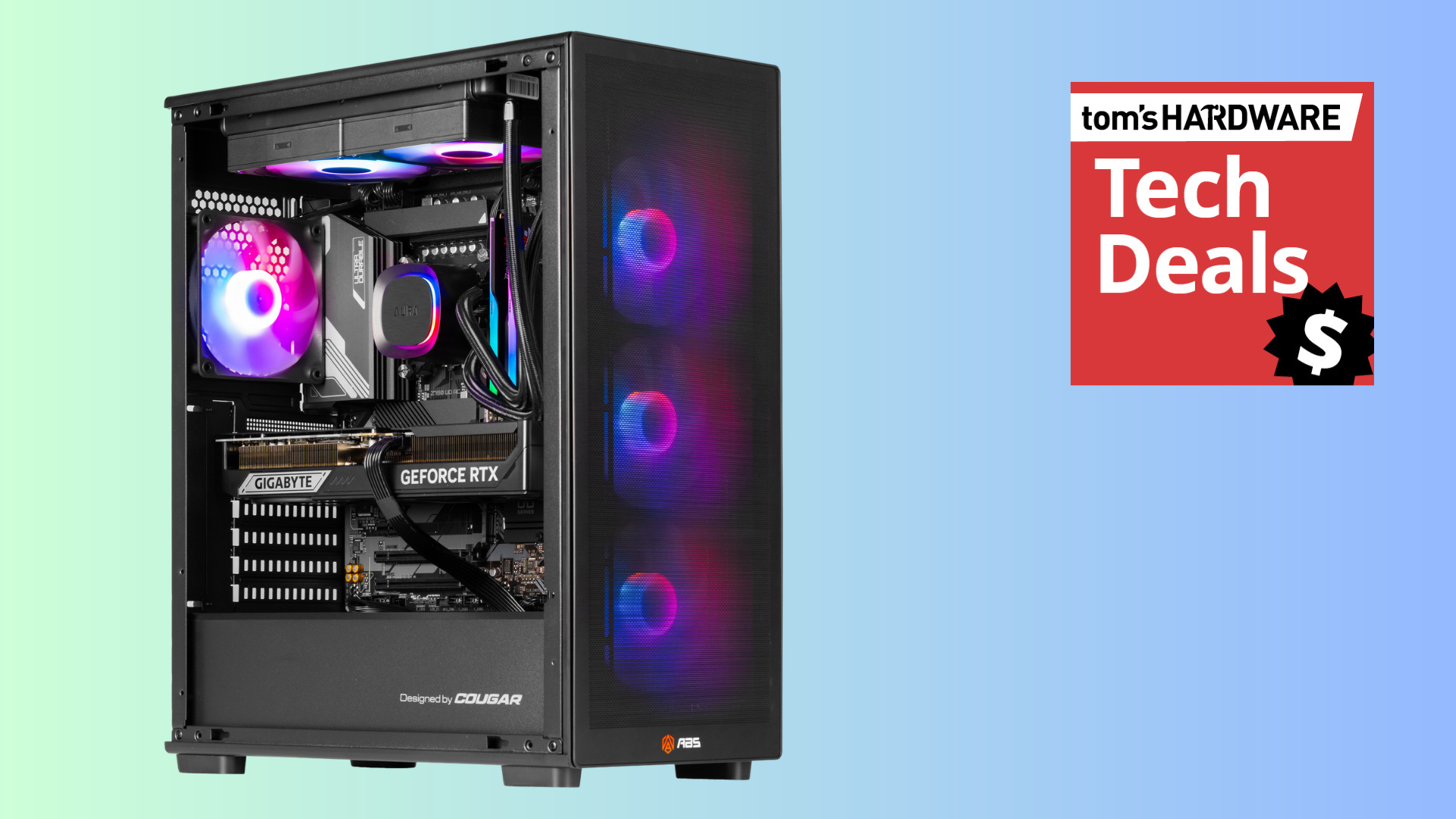
Grab a $450 saving on this 4K-ready gaming PC with an RTX 5070 Ti and 32GB DDR5 right now
Triple your Nintendo Switch 2's storage for just $99

The busiest man on Broadway talks about the art of staying focused while multitasking
Hustle culture. Productivity porn. The business world has no shortage of stereotypes to describe the dangers of overwork, and probably for good reason.
But on the flip side, sometimes you just have to get stuff done, and few people are getting more done these days than Michael Arden.
At 44, the Tony Award-winning theater director has emerged as one of the busiest practitioners on Broadway, with a diverse portfolio of credits that includes A Christmas Carol, Parade, The Queen of Versailles, the smash hit Maybe Happy Ending, and this year’s crowd-pleaser The Lost Boys.
And those are just the ones from this decade.
Arden’s newest project, the Broadway revival of Aaron Sorkin’s A Few Good Men, opened at last month at Lincoln Center’s Vivian Beaumont Theater.
First staged on Broadway in 1989, the fast-moving courtroom drama arrives with a timely message for a world grappling with the implications of warped leadership: When obeying orders is a matter of life or death, what happens when those orders are unethical—or just plain illegal?
If your only connection to the material is the 1992 movie starring Tom Cruise and directed by the late Rob Reiner, perhaps you count yourself among the untold scores of millennials and Gen Xers who grew up with it as a fixture of cable TV.
You might also be pleasantly surprised at how fresh the Reagan-era story feels onstage. Under Arden’s direction, scenes move briskly from one to the next, flashbacks seamlessly fill in the backstory, a winsome cast trades Sorkin’s crackling dialogue, and before you know it, you’re fully invested in the fate of two Marines on trial for murder.
Bradley Whitford, a Sorkin veteran who won an Emmy during his time on The West Wing, steps into the pivotal role of Nathan Jessep, the tongue-lashing Marine Corps colonel made famous by Jack Nicholson and his memorable line “You can’t handle the truth.”
Whitford brings a less menacing interpretation. Arden describes the actor as “so damn likable,” a point that underscores his approach to letting A Few Good Men the play speak its own language.
“A lot of people don’t even realize it was a play before it was a film,” Arden tells Fast Company. “We’re doing a revival, but we’re really introducing lot of people to this play for the very first time.”
Laddering up
Arden got his start on Broadway more than two decades ago as an actor, starring as Tom Sawyer in the 2003 revival of Big River: The Adventures of Huckleberry Finn.
He later turned to directing and also producing, and together with scenic designer Dane Laffrey and producer Mindy Baiada operates the production company At Rise Creative.

With A Few Good Men, Arden is currently directing no fewer than three Broadway shows at the same time. (Maybe Happy Ending and The Lost Boys are still going strong.)
As if that weren’t enough plate-spinning for one person, he also has multiple projects in various stages of development, including a musical version of the penguin-forward animated movie Happy Feet and another musical that catches up with the characters of Huckleberry Finn.
Fast Company recently caught up with Arden to discuss his latest production, what he does to stay productive, and how he juggles so many projects while still staying sane. (The interview was edited for length and clarity.)
What struck you about A Few Good Men that’s relevant for now?
I was really excited to find an American classic play that felt both timeless and timely, and something worthy of a stage the size of the Beaumont. There are a lot of great plays, but not necessarily all of them can really fill that space. It really felt like both the language and the content of the play could be something that would lend itself to sitting nicely within that cavern that is the Beaumont.
When I revisited the script, I felt, oh, this doesn’t feel dated. This feels timely in so much as we’re looking at the transparency of our government and especially the military. And just this year, we saw elected officials making videos urging troops and enlisted men and women to not obey illegal orders, and then being called treasonous for that.
My favorite type of theater isn’t necessarily theater that’s ripped from the headlines, but makes you recognize the headlines of today within the script of yesterday. Not only is this an entertaining great play that has great characters and a fun plot, but also, hopefully when you leave the theater, you think, Oh gosh, we’re still dealing with reverberations of that same question. And to me, that’s exciting.

How familiar were you with either the movie or the original stage version?
I had seen the film. My grandparents raised me, and my grandfather was a Navy veteran. And so all things military and Tom Cruise were on a constant loop in my living room. I think I’ve seen Top Gun more than anyone on earth.
So I knew the movie and had seen the play a long time ago, like a high school production or something like that. But, really, when I stumbled across it on a list of plays that hadn’t been revived, when I went back to the text, I was really rediscovering it for the first time.
I guess “iconic” is a word to describe Jack Nicholson’s monologue at the end. It’s meme-level familiar. Even if you haven’t seen the movie, people know that scene. Were you at all concerned with how to approach that, or did you leave it up to the actor, Bradley Whitford?
I left it up to the actor. I felt like, listen, my job is to tell the story clearly and give the audience a space in which to form their own opinions about things. And that’s what I like to do with my actors as well. I want to choose the right people and see what they b
The Best Handheld Translators for Work and Travel (2026)
Omen AI adds liquid know-how in $16 million Aquatic Labs acquisition
PixelMoE: Scaling Pixel-Space Diffusion with LLM-Style Mixture-of-Experts
Towards The Autograntor
I've done AI safety grantmaking for the Survival and Flourishing Fund and Lightcone Commons. It's hard. There's an endless amount to know, from which hardware verification mechanisms will survive a dedicated adversary, all the way to which founders have skeletons in their closets that will blow up into destructive scandals. And the best grantmakers - not including me - make mathematical models of the outcome distribution, or of where the marginal dollar stops being highly effective.
AI has been a godsend for all of this. It can research, model, and - as of this year - superforecast outcomes. It can do what would be hours of work for a human in minutes. I found myself using it more and more. But however much I used it, it always felt like I was the bottleneck. The parts I could outsource to AI were sparkling, perfect, exhaustive - but they were all tacked together with shoddy connective tissue formed by the Mark 1.0 human brain. So I wondered if I could automate grantmaking.
I started with the dumbest possible strategy. I assigned the best thing I could think of - a well-crafted US-China pause based on the AI Futures Project's Plan A - an arbitrary value of one million points.[1] Then I generated about eighty lesser AI safety milestones - from MATS to HPMOR to the RAISE Act to the emergent misalignment paper - and subjectively assigned them some number of points based on how good they seemed relative to Plan A and each other. Then I fed it to the AI to give it a sense for how good a "point" was in this framework. Then I asked it to forecast how many points various grant proposals were worth. The system has since accrued lots of extra epicycles and features and complications, but that's still the skeleton.
As far as I can tell, this dumbest possible strategy worked well. The autograntor gives common-sensical results that match my impressions and the vague gestalt funding order of Lightcone grantors. Its reports surface all relevant information, and its reasoning is clear. The single highest cost-effectiveness grant it's found so far is also the one that got the most interest during the last Lightcone run.[2] When I tested it on a bottom-tier proposal that no human evaluator even considered, it gave cost-effectiveness numbers two orders of magnitude worse than the genuinely-under-consideration grants that I had tested it on before.
This post will present details for people who want to examine these ideas or build on them further. The current version of the autograntor has four parts: a Milestones document, a FutureSearch connector, a PERCYs module, and a Common Law. I'll start by reviewing each, then give some sample grant analyses, then attach the files you need to run the autograntor yourself.
The Milestones
The milestones are the earliest place that this strategy could fail. Can I really translate my beliefs about what matters in AI safety into a list of milestones, each with a consistent point value?
This combines two questions. First, can I, Scott, generate a set of milestone point values that accurately and consistently conveys my own worldview? Second, if someone else were to translate their own worldview into milestones, would it agree with mine?
I chose to deprioritize the second question. Yes, I have different beliefs about AI safety than other smart people, but this is an inherent problem for my grantmaking, even if I did it manually. If we could solve the first problem, then I could be confident that the autograntor was correctly representing my opinions, and someone else who wanted to use an autograntor could confidently ask it to represent their opinions instead.
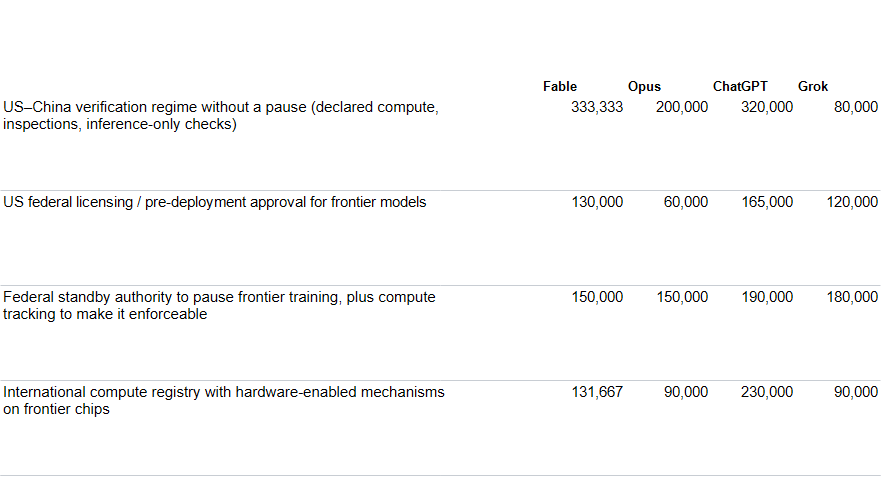
To investigate the first question, I asked four AIs - Opus, Fable, ChatGPT, and Grok - to guess how I, Scott, would fill them in.[3] If all four got similar results, then "Scott's worldview" constrains the point values well; if all of our results were very different, then noise in the translation of a worldview into numbers overwhelms signal.
Two-way correlations ranged from 0.95 - 0.99, which might sound extreme, but some of the milestones were obviously many orders of magnitude better than other milestones - it's not hard to tell that achieving global pause with China is much better than successfully running the Manifest conference.
A better measure is the geometric-mean difference between two AIs across all milestones. This ranged from 1.6x (Opus vs. ChatGPT) to 2.6x (ChatGPT vs. Grok).
Sample table of AI milestone predictions
Since my true milestone value list came from taking the average of many different methods of calculation, the real variance is something like the square root of these numbers, ie from 1.3x to 1.6x. I consider this good enough to work with.[4]
I would have liked to have gotten some humans to try to predict my point value within my world-view, but couldn't get anyone to agree to do this (except for one person who agreed but used an AI, unintentionally duplicating my procedure).
Although I don't think the second question (difference between people with different worldviews) matters for the success of the autograntor, I did investigate it via a survey where I asked people to fill in their own values. Nine people agreed, including four people whose names I recognized and who I expected to have good models (other people might also have good models, I just didn't recognize their names). The geometric mean difference between myself and those four people was 2.9x, 4.4x, 6.9x, and 8x, so much larger than the difference between different AIs trying to estimate my view. Outside that artificial limitation, geometric means were even higher - for example, one pair had a geomean difference of 15x! To give an example of where such differences came from, "Harry Potter And The Methods Of Rationality" was an especially controversial milestone - one person rated it as 1 point, another person as 75,000 points.[5]
Everything below assumes that the Milestones list is good enough to work with.
The FutureSearch Connector
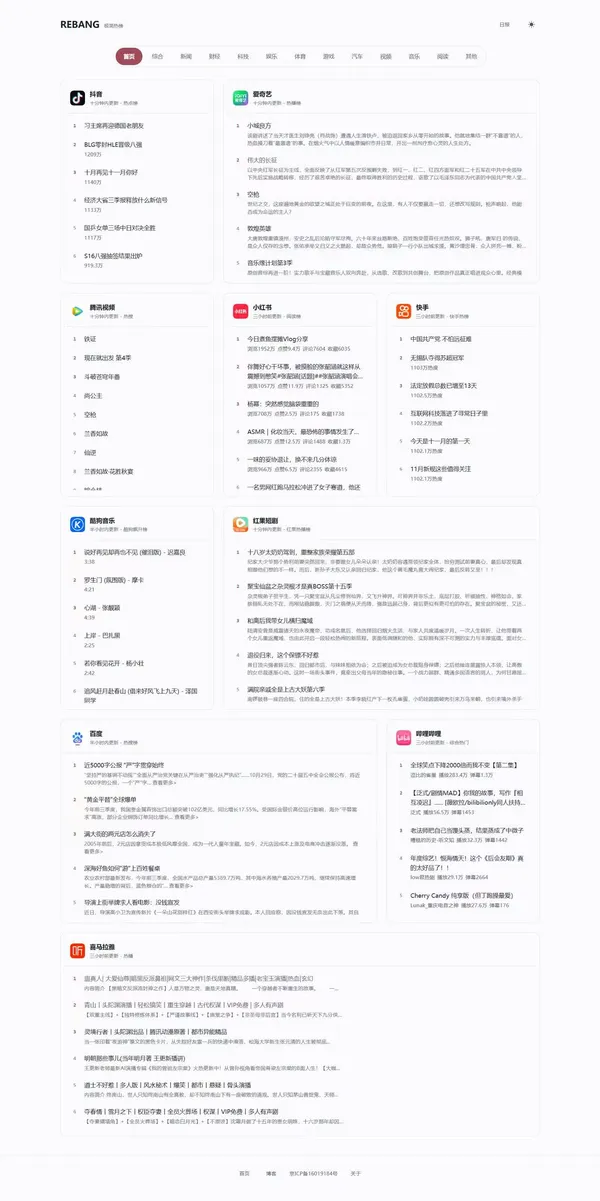
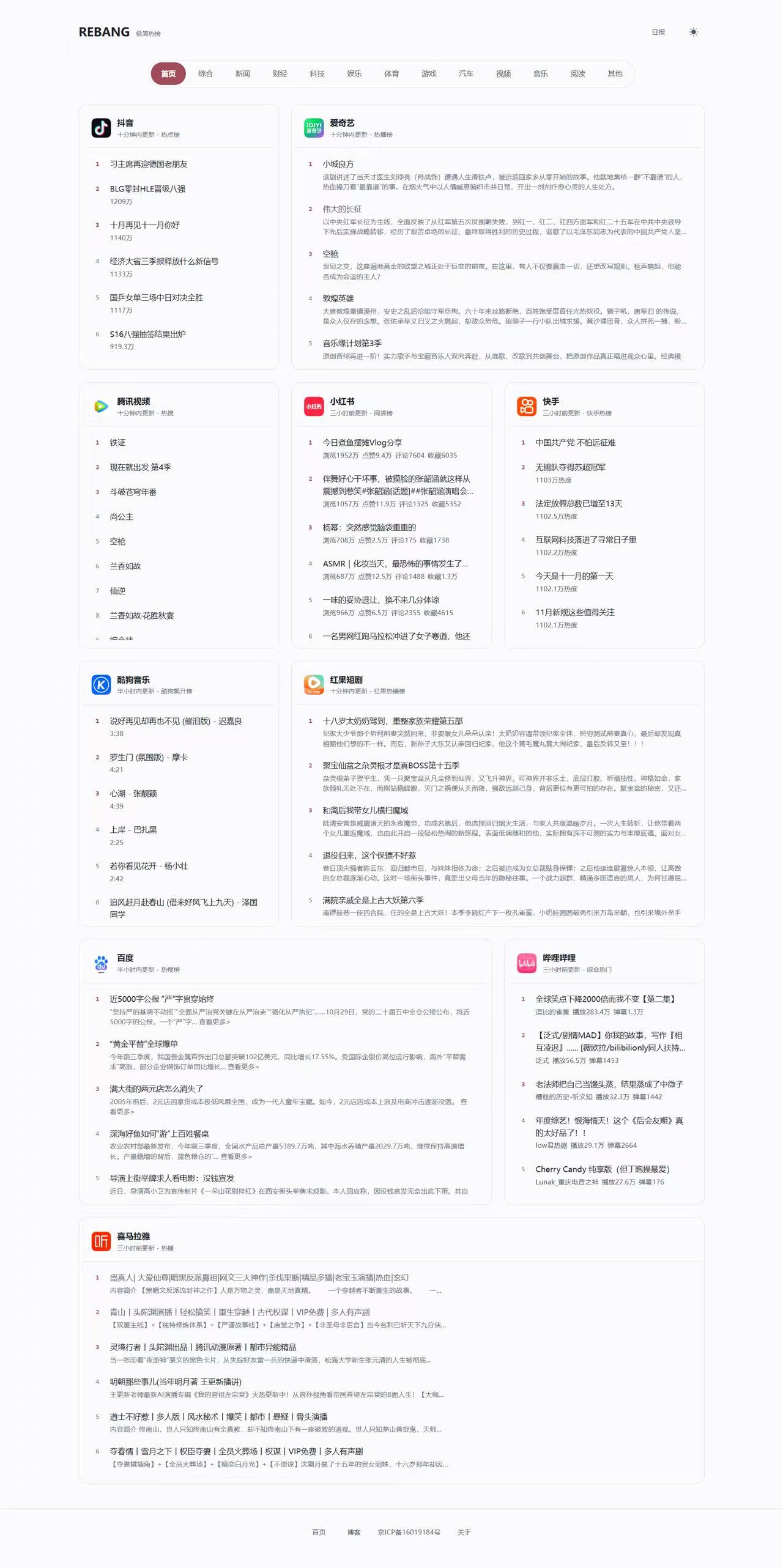
[分享创造] 市面的热榜聚合网站太复杂了,我自己做了个极简热榜,回归初心
REBANG 极简热榜( https://top.open2hub.com )
抖音、微博、百度、今日头条、腾讯新闻、哔哩哔哩、快手、知乎、虎扑等多平台热榜
更新快、界面简洁,回归初心

算力不再是AI Agent的天花板,生态围墙才是?
(本文作者为 硅碳变量,钛媒体经授权发布)
文|硅碳变量,作者|胡一刀
10月14日,豆包手机助手官方公众号发文称,《屏幕自动化操作声明协议》(SAEP,Screen Automation Execution Protocol)30天公示期已结束,平台将逐步放开第三方应用的屏幕自动化操作权限。
据公示,最新拒绝操作的应用清单涵盖拼多多、Kimi、快手系列应用、美团系列应用、小红书、DeepSeek、中国工商银行等,以及淘宝、千问、支付宝等23款阿里巴巴及关联生态应用,微信、QQ、王者荣耀等65款腾讯及关联生态应用,共计151款。
据此前介绍,SAEP是面向第三方App的AI操作规则,开发者可自主声明是否允许AI助手对自身应用执行屏幕自动化操作,划定操作边界与限制范围。官方强调,公示期结束后,应用开发者仍可随时提交拒绝声明,收到后豆包手机助手将及时关闭相关操作。
超级App的根基,藏在流量闭环之中
手机AI Agent的算力焦虑曾是行业两年多来的核心叙事,而它消散的速度超出了不少人的预期。
短短两年时间,端侧大模型参数规模实现了从数十亿到上百亿的跨越,旗舰芯片NPU算力密度实现大幅提升;内存带宽瓶颈、量化压缩算法、端侧推理框架等底层工程难题,在芯片厂商与手机厂商的联合攻坚下持续取得进展。
如今不少旗舰机型已经能够在本地承载语音交互、意图理解、图像识别这类基础AI能力,多模态模型对手机屏幕的感知也不再局限于识别按钮坐标,开始具备解析页面浅层语义的能力。
技术迭代的脚步仍在加速,但一个此前长期被行业低估的核心矛盾正迅速浮出水面:当AI初步具备看懂屏幕、模拟点击、跨应用拆解执行指令的能力时,决定手机AI Agent边界的早已不再是技术上限,而是应用生态的准入红线。
算力定义了AI Agent的能力天花板,而生态规则划定了它的实际活动边界。
二者的难度完全不在一个维度:算力瓶颈依托资本投入与技术迭代,存在持续改善的空间;但生态秩序的重构,撬动的是移动互联网沉淀十余年的商业利益底盘。
要读懂这批App集体关闭权限背后的动因,需要回到移动互联网运行十余年的核心商业模型:流量闭环。
过去十余年,移动互联网平台的价值链条始终围绕这套闭环体系运转:平台以内容、社交关系、商品供给、本地服务为锚点,将用户时长与注意力沉淀在自有App生态内,再通过信息流广告、搜索竞价、交易佣金、会员订阅等方式完成价值变现。
用户在App内的每一次浏览、点击、比价、下单都是流量价值的载体;广告主为曝光付费,商家为流量付费,用户为服务付费,平台则在每一层价值交换中抽取收益。
这套流量闭环之所以足够稳固,核心不在于技术壁垒,而在于它是一套被反复验证和自洽的商业模型。
搜索广告按点击结算,信息流广告以停留时长等指标衡量价值,电商平台按成交额抽佣,本地生活按到店核销分成——所有变现环节成立的前提,都是用户在App内完成完整交互链路。
平台对用户交互路径的控制权,本质上是其商业定价权的根基。谁掌握了用户的浏览路径、决策过程与交易入口,就拥有整条价值链的分配主导权。
技术可以被追赶,产品功能可以被模仿,但十余年用户习惯沉淀下来的流量分配权,构成了移动互联网的商业底盘。任何试图动摇用户在App内完成全链路动作这一前提的技术,都有可能冲击整条价值链的根基。
SAEP 协议的出现,是手机厂商针对这一商业现实搭建的协商机制。
它不再由手机厂商单方面决定屏幕读取与自动化权限,而是建立了一套事前声明机制:把是否允许AI助手对自身应用执行屏幕自动化操作的决定权交还给开发者。开发者可自主划定权限边界、设置操作限制,即便公示期结束,也能随时提交拒绝声明。
这套机制的设计思路类似PC互联网的robots.txt,由开发者自主划定可访问边界,再探讨合作可能性。但SAEP机制能够落地生效的前提,是开发者愿意配合。
从首批公示的结果来看,头部平台的配合度远低于行业预期。这场集体拒绝的背后,远非单纯针对某一手机厂商:不同赛道的超级App,都立足自身商业底盘,权衡开放权限的成本与风险,各有商业考量,拒绝都有对应的现实理由。
决策入口位移,平台面临前台到后端的角色变局
App顾虑的核心并非不信任AI技术本身,而是开放权限带来的商业损失缺少补偿机制。
社交与游戏平台的核心诉求是守住用户时长与沉浸式交互,而AI代操作降低了用户主动打开、浏览、交互应用的意愿,信息流广告赖以生存的用户时长,存在被分流的风险。对于依靠用户时长与广告变现的社交、游戏体系而言,这可能冲击其商业基本盘。
电商与本地生活平台的重点,在于守护交易链路与流量分配权。若AI代理深度介入,跨平台比价和自动下单有望成为一种潜在趋势,平台精心设计的搜索排序、广告展位、店铺流量分配机制,有可能在AI执行链路中被绕开。
倘若失去对用户决策路径的掌控,平台广告与佣金收入的根基便存在动摇的风险。
大模型厂商的顾虑,本质是同类产品之间的相互设防。AI产品天然存在直接竞争,若允许竞品智能体在自家应用内自动操作,用户行为、对话数据存在被对手间接采集的可能,产品能力边界也有被探测的风险。
在数据是核心资产的大模型赛道,这类开放行为近似于向竞争对手暴露自身底牌。
金融类App的顾虑,源于风控与合规层面的硬性约束。屏幕自动化场景下,交易责任划分、异常交易识别、对应的监管细则,目前仍缺少清晰标准。对金融机构而言,资金安全与合规优先级远高于体验效率提升,在相关规则明确前,关闭权限是风险最低的选择。
不难看出,拒绝开放的根源不在于AI技术本身不可靠,而是平台预判开放后核心利益可能受损,且缺少对应的补偿机制。社交平台担忧时长流失,电商担心交易链路被绕过,大模型厂商忌惮数据泄露,金融机构首要防范安全风险。
GUI自动化AI Agent对现有生态的真正冲击,不在于AI代为点击屏幕,而在于它可能从底层促成用户决策入口的迁移。
GUI自动化所描绘的理想场景是:用户给出一句自然语言指令,AI跨应用完成比价、下单、预约、查询等一整套任务流程。用户无需逐个打开App,也不会浏览首页推荐内容,原生广告或将失去触达机会,平台苦心搭建的搜索流量分配机制,在AI执行链路中可能被弱化。
对平台而言,这意味着角色变迁:从直接承接用户的业务前台,转变为被AI调用的后台服务。前台掌握流量、广告位与定价权,转为后台之后,只能被动响应调用请求,收益如何兑现是不少平台需要直面的难题。
更值得警惕的是,一旦形成这类用户习惯,后续扭转的成本会显著抬升。
平台的选择逻辑由此变得清晰:与其等待AI智能体逐步分流用户决策环节,不如提前划定边界。拒绝GUI自动化并非抵触技术进步,而是守住自身最核心资产——用户交互的主导权。
算力拥有持续优化升级的空间,但超级App历经十余年沉淀的用户习惯、流量分配权与交易链路,不会随技术迭代自动重构。
甚至会形成反向博弈:Agent能力越强、渗透场景越深,平台的戒备心理越强,生态壁垒或将持续加固。
AI Agent下半场:技术竞赛落幕,利益博弈登场
曾经被行业寄予厚望的全能Agent叙事,正在生态现实面前被不断修正。
第一条路线便是GUI屏幕自动化,也就是SAEP协议对应的方案。它的优势很直观,无需 App单独开发接口,落地门槛低,理论上可覆盖大量应用场景。
但其短板同样突出,这套能力高度依赖应用方的配合意愿,平台一纸声明即可切断功能;页面改版就可能造成识别失效,安全审计、权责划分等一系列问题至今没有定论。
这条路线更适配愿意开放权限的长尾应用,很难成为打通头部超级App的通用解法。
第二条路线为原生API协作模式:AI助手依托标准化接口调用平台服务。该方案交互稳定、权限可控、权责清晰,平台可自主选择开放能力范围,自主设计分润规则。
代价则是推进节奏缓慢,需要逐一对接商务、敲定接口规范、协商收益分成。而多数头部平台本身已有AI业务布局,未必愿意向外部AI助手开放核心接口。
行业更有可能走向中间形态:部分持开放态度的应用开放原生接口,AI在安全稳定场景中承接高价值任务;面对拒绝开放的头部超级App,AI仅能识别任务卡点,提示用户手动介入,完成跳转后不再自动执行后续动作。
一句话搞定全部事务的全能Agent叙事,其适用边界或将被生态现实持续压缩。手机厂商此前常以跨应用全链路操作描绘产品愿景,SAEP事件之后,这套叙事需要重新校准:阻碍并非来自技术能力,而是生态层面的约束。
手机AI Agent若要深度介入用户全链路操作,离不开三方核心主体:用户追求使用效率,AI厂商希望拓展能力边界、挖掘商业价值,平台则要守住流量与交易的主导权。三方诉求天然存在张力,现有的协议框架仅搭建起基础规则却没能解决最核心的利益分配难题。
平台开放权限本质是出让部分用户决策主导权,倘若没有对等的分润、流量置换或是价值共享机制,这种权限让渡便缺少商业层面的合理性。
拉长时间维度来看,手机AI Agent下半场的竞争重心或将不再是模型参数、算力这类技术指标,而是能否在既有的流量闭环体系内找到多方可接受的协作方案。
技术可以打造读懂屏幕和执行指令的智能体,但想要让它在真实移动生态里稳定为用户处理事务,本质是一道商业命题:平台打开这扇权限之门,能够收获什么?
算力竞赛仍会持续,但决定手机AI Agent最终发展上限的早已不是算力本身。
移动互联网筑起的从来不是技术围墙,而是商业围墙。只要围墙背后的收益分配问题缺少解决方案,再强大的算力也难以穿透超级App的流量闭环。
更多精彩内容,关注钛媒体微信号(ID:taimeiti),或者下载钛媒体App