🤖 AI 资讯

每日 05:00 更新 · 11-04 · 主站 liuch.name ↗
全部标签 →
筛选标签:世界模型 · 返回个性化推荐 · 清空筛选
AI 资讯

AgiWorld: An Agentic Video World Model for Building Persistent Worlds

arXiv cs.AIarXiv:2611.02341v1 Announce Type: cross Abstract: Recent interactive video world models generate visually compelling videos from a single image, following user-provided camera motion and text prompts. However, such low-level control demands substantial user effort to realize a high-level intent, and the generated world struggles to remain persistent as the exploration proceeds. In this work, we present AgiWorld, an agentic video world model that explores and builds a persistent world from a single image and a free-form instruction. For high-level planning, our agent AgiWorld-Agent designs the world and the journey through it in a world state and directs the exploration. For low-level realization, our video world model AgiWorld-WM generates the video chunk by chunk and stores it with its geometry in a spatial memory, from which the agent updates its world state. This closed loop keeps the world faithful to the user's intent and keeps the agent's world state consistent with the generated content throughout the exploration. We co-design the two levels around the shared spatial memory and an interface of metric camera trajectories and structured prompts. In AgiWorld-WM, to handle occlusion and accumulated geometric errors in the spatial memory over long rollouts, we propose occlusion-aware history selection, which retrieves past views by surface visibility, and reliability-based memory maintenance, which prefers reliable geometry and earlier observations. AgiWorld-WM achieves state-of-the-art overall performance on world revisiting and exploration benchmarks, and qualitative results and ablations show that AgiWorld builds persistent worlds from free-form instructions over minute-long journeys. Persistence thus arises not from the video model alone but from its closed loop with the agent.
2026-11-04 05:00:00 · AI应用,Agent智能体,微调蒸馏,模型评测,世界模型,提示工程,招聘HR,论文
AI 资讯

OpenNWM: A Generalist Navigation World Model with Latent Action Pretraining

arXiv cs.AIarXiv:2611.01844v1 Announce Type: cross Abstract: Navigation world models predict future observations conditioned on navigation actions to support planning, but their generalization across real-world environments remains constrained by the limited coverage of action-labeled data. Action-free navigation videos provide diverse visual experience, yet lack the recorded actions required for action-conditioned training. We introduce OpenNWM, a generalist navigation world model with latent action pretraining. It learns universal latent actions from large-scale action-free videos through visual prediction pretraining, and further aligns them with physical motions via action-conditioned post-training. To support video pretraining, we curate NavAnywhere, a large-scale action-free navigation video dataset comprising 17.5 million visual observations from 15 heterogeneous sources. It captures navigation by ground robots, humans, and drones, with diverse viewpoints and motion patterns across five broad scene types: residential areas, public and commercial spaces, urban settings, parks, and natural landscapes. Experiments demonstrate improved visual prediction on in-domain and out-of-domain benchmarks, together with improved navigation performance. These results show that latent-action pretraining enables diverse, action-free videos to improve dynamics learning and generalization for open-world navigation.
2026-11-04 05:00:00 · AI应用,具身智能,搜索RAG,扩散模型,强化学习,预训练,模型评测,世界模型,招聘HR,论文
AI 资讯

SCOUT: Planning under Occlusion via Object-Centric World Model Rollouts

arXiv cs.AIarXiv:2611.01600v1 Announce Type: cross Abstract: Robots manipulating in cluttered spaces must often plan from partial views where foreground objects occlude the target, surrounding geometry, and usable free space. Reactive policies often miss these hidden constraints, while exhaustive search becomes computationally prohibitive in dense clutter. We present SCOUT, an occlusion-aware planning framework that bridges high-level deliberation with grounded physical rollouts. SCOUT leverages an object-centric scene representation to reconstruct hidden geometry and derive a relational planning state capturing blocker hierarchies and accessibility corridors. To navigate the vast action space in clutter, an LLM proposes structured action candidates which are then rigorously evaluated via Monte Carlo Tree Search (MCTS) using a learned action-conditioned world model. Evaluations on 'Reveal' and 'Placement' tasks show that SCOUT outperforms Vision-Language-Action (VLA) policies, embodied agents, and 3D world models, with significant gains in long-horizon tasks requiring reasoning over occluded geometry. We further validate the framework's robustness through real-world robotic manipulation in a cluttered shelf environment.
2026-11-04 05:00:00 · 大模型,AI应用,具身智能,Agent智能体,推理思考,搜索RAG,扩散模型,世界模型,招聘HR,论文
AI 资讯

World Models Need Not Be Right to Rank Policies Right: Relative Bounds and Audit Limits

arXiv cs.AIarXiv:2611.01139v1 Announce Type: cross Abstract: Selecting a reinforcement-learning (RL) policy usually requires additional environment interaction, while learned world models offer cheap but potentially biased evaluations. This raises two distinct questions: can shared model errors preserve pairwise rankings despite poor absolute values, and do they make a small number of real audits more informative? We derive an exact pairwise simulation identity and a relative bound separating common-mode Bellman residuals from policy-specific error. The analysis motivates RAVEL (Relative Auditing of Value Errors in Learned models), a selective policy tournament whose eliminations use held-out real outcomes. We test 45 SAC, TD3, and PPO policies per task in DMC cheetah-run and walker-walk. At rollout horizon 500, model rankings remain strong (Kendall tau = 0.962 and 0.800), and same-run differential-error ratios are 0.674 and 0.106. Yet mean paired audit-error correlations are only 0.007 and 0.090, and pairing changes standard deviation by -2.5 percent and +1.9 percent. Simultaneous intervals attain 99.98 percent and 99.75 percent coverage, but certify only 13.2 percent and 0 percent of decisions at eight audits. RAVEL improves low-budget walker-walk regret, whereas real-only successive halving is better at the largest budget, rejecting the precommitted twofold efficiency target. Frozen-model optimization lowers real return without increasing predicted return on average. Thus ranking fidelity, useful audit covariance, and upward model exploitation are distinct properties, separated in part by closed-loop trajectory divergence.
2026-11-04 05:00:00 · 大模型,AI应用,搜索RAG,扩散模型,强化学习,世界模型,论文
AI 资讯

Old Is Not False: Valid-Time Memory for Interactive Video World Models

arXiv cs.AIarXiv:2611.00758v1 Announce Type: cross Abstract: Interactive video world models draw each frame from a memory bank of earlier frames stamped with their capture times. With frames, weights and noise fixed, reversing the timestamps of two views flips the state that generators of two families draw: they take the newest timestamp as the truth. That reading is right as long as states never return. After an agent undoes an action, the newest view of a region is outdated and the only view of the present is older; memories for changing worlds delete that older view, and memories that keep it hand the generator the past. Temporal databases separate when a record is stored from when its content holds, its valid time. ReDate keeps every frame and dates each retrieved token by its valid time, read from the agent's action log. The frozen generator then reads a reverted region as one that has just reached a new state, so ReDate needs no training. We prove that trusting the newest timestamp is right exactly when every current view is dated after every outdated one, that without a view taken after the return only the action log tells a reverted region from an up-to-date one, and that a generator able to draw from its own prediction gains more from re-dating than from deletion when the moved tokens keep little weight. After an undo, ReDate raises the share of FAR's steps showing the current state from 0.36 to 0.62 and HY-WorldPlay's from 0.003 to 0.19. We also propose a calibrated state metric to test any memory after undos.
2026-11-04 05:00:00 · AI应用,Agent智能体,世界模型,论文
AI 资讯

Creating Hybrid Interactive Narrative Systems with LLM: From Formal Description to Evaluation

arXiv cs.AIarXiv:2611.02807v1 Announce Type: new Abstract: Interactive narratives let users shape a story while an Experience Manager (EM) keeps it coherent, balancing player freedom against authorial control. Large Language Models now enable a new generation of hybrid EMs, which combine run-time generation from free-text input with symbolic narrative control. However, their heterogeneity makes them hard to compare: A manager's behaviour is generally tied to the unique and specific scenario in which it operates, and much of its decision-making takes place outside of any explicit and verifiable structure. We address this with an LLM-based narrative platform whose managers are interchangeable modules operating over a shared symbolic world model of facts, operations, and goals. Because every applied operation carries explicit preconditions and effects, each session can be analysed as a plan through a common state-transition representation and evaluated, independently of how the manager works internally, with shared indicators of four properties: player agency, EM controllability, author intent, and robustness. We implement three contrasting managers, based respectively on open generation, Monte Carlo repair, and autonomous characters, and compare them through functional analysis on an interactive Little Red Riding Hood scenario. The results show that no manager dominates on every property, giving authors and EM designers a concrete basis to select a manager according to their priorities.
2026-11-04 05:00:00 · 大模型,扩散模型,世界模型,端侧AI,招聘HR,论文
AI 资讯

Human-Oriented World Model

arXiv cs.AIarXiv:2611.02690v1 Announce Type: new Abstract: Supporting a person over repeated interactions requires interpreting their current state in context and anticipating its subsequent evolution. We formulate the \emph{Human-Oriented World Model} (HOWM) as a conceptual framework centered on task-relevant human states and their evolution. HOWM connects current observations and individual history with environmental and social context to organize continuing state estimation, personalized dynamics prediction, and action support. Dynamic expectations and new observations jointly inform the current estimate, which in turn anchors personalized forecasts based on shared knowledge and individual experience. An external policy relates forecasts under alternative conditions to the person's goals, preferences, and constraints when considering support. Actual responses and outcomes provide evidence for revising the state estimate and personal dynamic patterns, thereby informing subsequent estimation, prediction, and support. We illustrate the framework through hypothetical training and learning scenarios. Our research agenda asks whether accumulated interaction experience improves subsequent estimation and prediction, and whether using the model helps the person pursue their goals over time.
2026-11-04 05:00:00 · 扩散模型,强化学习,世界模型,招聘HR,网络安全,论文
AI 资讯

RubricWorld: World Model-Guided Rubric Optimization for LLM Graders

arXiv cs.AIarXiv:2611.01986v1 Announce Type: new Abstract: Rubric optimization improves LLM grading by revising scoring instructions while keeping the grader's parameters fixed. Existing optimizers often judge edits by aggregate validation performance, limiting the supervision they retain about which errors an edit corrects or introduces. Testing each candidate also requires rescoring validation answers, which limits how many edits can be explored within a fixed budget. We propose RubricWorld, a framework that learns from previous edit evaluations to guide further search. Its world model predicts an edit's correction and degradation rates at score boundaries, conditioned on the current rubric state. The training signal comes from paired grading results: scores for the same answers before and after an edit. Predictions select one candidate for direct evaluation, and held-out confidence bounds determine whether it corrects enough target errors while keeping new errors within prespecified limits. Measured effects update the model even when the edit is rejected. Across EIR (National), ASAP2.0, and ASAP-SAS with three frozen LLM graders, RubricWorld achieves the highest score in 20 of 27 metric comparisons. On ASAP2.0, it raises gpt-5-mini accuracy from 18.20% with the original rubric to 46.70%, exceeding the strongest baseline, APO, by 22.60 percentage points. code will be released upon acceptance.
2026-11-04 05:00:00 · 大模型,OpenAI,扩散模型,世界模型,招聘HR,论文
AI 资讯

Xiaomi Auto World Model 2.0: Causal World Models for Real-World Driving and Embodied Intelligence

arXiv cs.AIarXiv:2611.01677v1 Announce Type: new Abstract: We present Xiaomi Auto World Model 2.0, a unified streaming causal world model for Physical AI. It models and generates causal physical evolution in the real world, and unifies heterogeneous conditioning inputs for view-consistent generation. The architecture integrates View-Temporal Attention (VTA) to capture cross-view spatial dependencies and temporal dynamics, together with Multi-view Rotary Position Encoding (RoPE) to encode positional relationships across views and time. WorldRec 2.0 reconstructs static and dynamic 3D Gaussians from multi-view, multi-temporal observations in a single forward pass and uses their renderings as explicit scene context to preserve geometry and appearance during long-horizon generation. Conditioning inputs are fused through VAE latent concatenation in a shared representation space. We incorporate Gated Linear Attention (GLA) into the temporal layers of VTA for efficient streaming inference, reducing computation and KV-cache memory during multi-view rollouts. A physical-interaction data pipeline covers diverse interactions and long-tailed events. From Pre-train onward, these data are combined with large-scale videos and heterogeneous visual modalities to learn visual, geometric, and dynamic priors. During Mid-train, training across diverse view configurations further improves the model's ability to capture how actions and object states shape subsequent scene evolution. After distillation-based Post-train, we apply the model to closed-loop simulation, closed-loop training, and World Action Model (WAM) applications. These applications generate physically consistent future states and support world-state prediction, policy learning, and action generation for Physical AI.
2026-11-04 05:00:00 · 具身智能,Transformer,扩散模型,强化学习,微调蒸馏,世界模型,端侧AI,招聘HR,论文
AI 资讯

GURU: A Hierarchical Neuro-Symbolic Multi-Agent System for Verification-Aware Automation of Mission-Critical Digital Engineering and Operations

arXiv cs.AIarXiv:2611.01001v1 Announce Type: new Abstract: An AI can find a safe action faster than any human, but it must never decide what counts as safe. We present GURU, a hierarchical neuro-symbolic multi-agent system for mission-critical digital engineering and operations, built on one partition of authority: learned models propose, rank, and accelerate; a symbolic rules engine checks every consequential action against hard limits before it executes; and validated physics confirms and decides. GURU runs a workflow as a closed control loop, with Navigation, Action, and Planning agents sharing one Common Internal Language and one training factory. Nuclear, aviation, and national-security guidance now requires this pattern; a harnessed language model keeps the model at the center, GURU puts a validated reference there. In computational fluid dynamics, the workflow raised the converged-simulation rate on unseen aircraft geometries from under 1 percent to 74 percent over 100 single-attempt cases, ran 54 live cases to Mach 6 on three facilities, and an ablation put the symbolic layer at 13 points of boundary-layer capture. Knowledge-graph retrieval and role adapters raised ParaView control success from 55 to 75 percent. In space domain awareness, where a language model cannot be trusted to decide, a frozen self-supervised world model under validated propagation scored highest of five methods at conjunction risk, including fully fine-tuned language models, with several-times-lower seed variance: the trustworthy design gives up nothing in accuracy, and the recipe transferred to reactor anomaly detection. A radar-to-avoidance debris pipeline was demonstrated in stages on a 2026 reentry; the hierarchy coordinates simulated teams of 200 aircraft. Training scaled near-linearly past 1,000 Aurora nodes and ran at 8,000. The approach extends to a control-grade microreactor digital twin with validated physics, not a learned model, as the safety basis.
2026-11-04 05:00:00 · AI应用,Agent智能体,微调蒸馏,预训练,世界模型,招聘HR,论文
AI 资讯

X-World 1.6: Building Controllable Virtual Cities with World Models

arXiv cs.AIarXiv:2611.00596v1 Announce Type: new Abstract: Deploying generative world models for end-to-end closed-loop evaluation and policy learning requires precise scenario control, consistent observations, and sustained generation quality during extended interactions. This report presents \emph{X-World~1.6}, advancing X-World~1.0 toward a more reliable and versatile driving simulator. The upgraded base model offers finer-grained control over traffic semantics, including traffic lights and road markings, together with improved spatial consistency across cameras. Virtual City capabilities broaden scenario construction through a family of models conditioned on diverse 2D and 3D references, including support for generating multi-camera future videos from a single image. An enhanced post-training framework enables efficient causal, few-step generation with stronger temporal coherence, better quality retention over longer rollouts, and improved alignment with human preferences. We also introduce a dedicated evaluation suite to support systematic assessment and guide model iteration. Together, these upgrades expand the scenarios X-World can simulate and improve the efficiency and reliability of its generated observations, supporting broader use in autonomous-driving development.
2026-11-04 05:00:00 · 扩散模型,强化学习,世界模型,模型安全对齐,招聘HR,论文
AI 资讯

AuroraWorld: Structured 4D World Modeling for Exo-to-Ego Video Generation in Robot Manipulation
arXiv cs.AIarXiv:2611.00177v1 Announce Type: new Abstract: Egocentric observations provide a robot-centric view of manipulation processes, capturing contact interactions and object-state changes that are important for visuomotor policy learning but difficult to observe from external cameras. However, collecting such data at scale remains expensive due to additional hardware requirements and platform-specific deployment costs. Synthesizing egocentric observations from large-scale exocentric manipulation videos provides a scalable alternative. However, existing methods struggle to synthesize physically consistent and policy-relevant egocentric videos under substantial viewpoint transformations, severe occlusions, complex object interactions, and inherently sparse observations from available exocentric viewpoints.
2026-11-04 05:00:00 · 具身智能,扩散模型,世界模型,论文

Cities Worldwide Build and Scale AI Services With NVIDIA Physical and Agentic AI

NVIDIA Blog

Cities generate enormous amounts of data from cameras, sensors and operational systems, but turning it into useful action — for planning, maintenance and public services — remains a challenge.

Physical and agentic AI offer new ways to close that gap, from digital twins for infrastructure planning to vision and service agents, while keeping local governments in control of how sensitive data is processed and used.

Building on initiatives announced at GTC Berlin, NVIDIA and its partners are expanding physical AI and AI agents to cities worldwide. Shared computing infrastructure gives city departments, neighboring municipalities and local developers a common foundation to build on — extending services without each organization having to acquire and manage resources of their own.

Agentic AI for Cities

From resident services to vision agents, cities are adopting NVIDIA agentic AI to deliver faster, more responsive public services. City teams don’t need a massive infrastructure investment to get started building these AI services: depending on the workload, NVIDIA RTX workstations or a small GPU system may be enough. 

In Spain, 1MillionBot combines open source ALIA models trained at the Barcelona Supercomputing Center with NVIDIA Nemotron and other models in resident-service agents for Madrid Digital (Comunidad de Madrid), Administració Oberta de Catalunya  and 150+ deployments across Spain, handling municipal procedures, appointment requests, urban-planning incidents and service inquiries.

In the San Francisco Bay Area, LiveX is bringing its AI City vision to life with NVIDIA Cosmos world models and Nemotron open models, and Omniverse and Metropolis libraries on NVIDIA RTX PRO GPUs. The interactive, conversational AI hosts understand people’s needs, provide answers and take action, and can be tailored to local languages and service needs in airports, hospitals, local events and other public spaces.

Vision AI agents can turn existing city camera feeds into operational insights, helping teams identify mobility and safety issues and coordinate emergency responses across city services.

In Wrocław, Poland, K2K is building shared AI infrastructure using NVIDIA accelerated computing, NVIDIA Cosmos world reasoning models, and NVIDIA Metropolis Blueprint for video search and summarization (VSS) to transform existing camera streams into actionable intelligence for mobility, safety and event response — using the same infrastructure across several city functions.

In Malaysia, ITMAX bundles infrastructure and agentic AI applications into long-term managed services for cities, including for traffic management. Built with reference to Cosmos, Nemotron and the Metropolis VSS blueprint, ITMAX’s SamurAI V2 vision agents are scaling on NVIDIA RTX PRO 6000 GPUs to support 17,000+ cameras by 2027. ITMAX integrates TeraSim, an open source traffic simulation platform from Laplace Intelligence, to test signal timing, reducing peak-hour corridor travel times by up to 26%.

Plan and Operate Critical Infrastructure With Digital Twins

Beyond public-facing services, digital twins can help cities expedite infrastructure planning, minimizing disruption to local communities. City digital twins can also serve as a real-time operational simulation to facilitate faster decision-making. 

At Dangote’s Lekki refinery in Nigeria, Honeywell Technologies’ Forge Plant Cognition uses Nemotron-powered AI agents to understand operational data. A digital twin of the plant and its processes, built using Omniverse libraries, is also planned to support simulation and training. The platform, built on Dell PowerEdge servers with NVIDIA RTX PRO accelerators, helps operators identify bottlenecks, anticipate equipment and process issues, and optimize plant performance.

In Taiwan, Linker Vision and Dutch architecture firm MVRDV are using NVIDIA Omniverse and Nemotron to build environmental, social and governance agents that can assess the environmental impact of various urban planning scenarios, simulating 15-year outcomes of an urban forest canopy in 10 minutes — increasing design iteration speed from two weeks per iteration to less than an hour. 

Build a Broader Local AI Ecosystem

Cities can extend AI to more services by building on infrastructure already in place and adding capacity. Shared resources and managed services can help extend those capabilities across departments and municipalities.

At Morocco’s Tanger Med port, Cires Technologies is expanding a sovereign AI factory for planned applications in worker safety, congestion analysis, cargo routing and port operations. Cires Technologies is also building an ecosystem of application providers to develop local models and applications for ports and cities.

Beyond city services, Barcelona Supercomputing Center’s AI Fact

2026-11-03 07:00:12 · 算力芯片,AI应用,开源,NVIDIA,Agent智能体,推理思考,扩散模型,强化学习,世界模型,招聘HR,网络安全,收购并购

AI 训练 AI!百度首次披露 Apollo World 世界模型,让无人驾驶突破“不可能三角”

开源中国“世界模型,重点不是渲染的画质是否好看,而是模拟器是否能忠实还原现实物理规律和行为的因果”。11月3日,在深圳举行的百度AI Day·Apollo专场上,百度Apollo首次披露面向物理AI的智能体驱动全模态世界模型Apollo World,并提出世界模型 “2+3”判断标准。目前,该模型已用于萝卜快跑全球化测试与验证,助力无人驾驶规...
· AI应用,百度,Agent智能体,世界模型

42AI comes out of stealth with $62.5M and a world model that can ‘predict human behavior’

TechCrunchHere's a question straight out of sci-fi: What if AI could predict what you were going to do before you decided to, even in a completely new situation?
2026-11-02T16:30:00+00:00 · 世界模型

产业资本继续押注具身:斯坦福双子星创办的黑马公司 RoboScience 机器科学,宣布完成 A2 轮融资

雷锋网 具身智能的资本筛选标准,正在从"讲得动人"转向"兑现得动"。

    作者丨齐铖湧

    编辑丨岑   峰


AI 科技评论获悉,11 月 2 日,RoboScience 机器科学完成 A2 轮融资。

据悉,本轮由琥珀资本、鸿瑞达投资、上海半导体产投 联合领投,360 战投、爽资本、国联民生资本、金鼎资本及多家上市公司平台跟投,融资金额达到了数亿元。

这意味着,这家 2025 年 3 月才正式开始运营的具身公司,先后已完成五轮融资。

据 AI 科技评论了解,近期具身行业融资市场并不乐观。过去一年,这个赛道的融资叙事换了好几轮:最早讲世界模型就能拿到钱;后来光讲技术不够了,得讲落地,讲进工厂的 ROI ;再后来,得有"具身 RSI "(递归自我改进)的想象空间。

故事通胀的背后,是大多数团队的底子撑不起叙事的升级,每次风口转向,就得重新攒一套说辞。资本也随之变得挑剔,同样的 BP,去年能融到,今年连会都约不上。(雷峰网)

但 RoboScience 机器科学的节奏完全不同,逆势不断受到资本青睐,也因此成为具身领域里一个值得研究的样本公司。

回看机器科学过去五轮融资的时间点,几乎每一轮前后,都有可验证的产品技术落地:ICRA 最佳论文、仿真平台 RoboMirage、通用具身大模型 Visics、与腾讯云共创的云端具身智能服务 EaaS、首款轮式仿人形通用机器人 REX G1 以及真实的项目落地。

某种意义上,这意味着,具身市场的融资,不该是技术跟着融资的故事走,反过来,融资应该跟着技术的兑现走。

在 AI 科技评论看来,这是本轮融资最值得关注的信号:具身智能的资本筛选标准,正在从"讲得动人"转向"兑现得动"。

一家公司的融资节奏如果能与技术节奏对齐,说明它手里握着可以持续拿出来的东西。在 AI 科技评论看来,这跟创始人团队有着分不开的关系。

01


斯坦福双子星,

如何撑起一家中国具身头部公司

在中国具身行业,从占据头部公司的创始人学术履历已经能看出几条清晰的派系:清华系、伯克利圈、斯坦福圈等等。
2026-11-02 10:23:00 · 大模型,AI应用,具身智能,融资,腾讯,搜索RAG,世界模型,模型安全对齐,工业制造,传媒内容,产品更新,榜单评测,论文

不与大模型对抗,星尘智能想用AOS接住通用智能的红利

钛媒体

通用智能和具身智能之间的那条线正在变得模糊。过去两年,机器人公司们共享着一个前提:通用大模型长于理解数字世界,而物理世界需要一套从头训练的基座模型。这个前提撑起了行业的融资叙事,也撑起了一批公司的技术路线。9月初,它第一次受到来自大模型侧的正面挑战。

9月3日,OpenAI发布GPT-6 Astra,发布的第二天,就有团队把它接上机械臂,结果发现:Astra不只能理解任务、拆解任务,还能直接输出机器人末端执行器的位姿,完成了本该属于VLA等策略模型的那部分工作,在部分测试里成功率甚至超过专门为机器人任务训练的具身模型。

很快,通用大模型即将覆盖具身模型的说法在社交平台上快速扩散,而同一时间公开表态的具身公司创始人们,大多站在另一侧。他们的观点基本可以概括为:通用模型的能力来自各自领域的大量数据,而物理交互这一侧还没有同样的积累,所以复杂交互仍是具身公司的阵地。但也有创业者判断,留给具身和世界模型公司兑现预期的时间可能只有一到两年。

星尘智能创始人来杰并不认同这种具身模型和通用模型之间的简单对立。他认为有第三条路,AI是一波大势,具身公司肯定要做自己的模型,星尘的AI团队很快会发第三代基座模型,又要想办法吃下GPT-6 Astra之类通用模型带来的红利,而不是“拧着来”,“AOS会是模型之间最好的桥梁。黑客松已经持续验证了这一点”。

“我从来没有认为我们和通用大模型之间是对抗关系,也不认为它们是简单的分层关系。我更认可,它们通用智能和专用智能之间是一种伙伴关系,有着同等价值,需要各司其职,携手共进。”来杰表示,“星尘觉得对待AI的合理姿态,就是既要从第一天起就自己研发,也要尽早搭建这些智能所需要的‘脚手架’。当你搭建好这些底层架构之后会发现,两个伙伴协作,对机器人这些底层能力的发挥效果,是远超于一个人单干的。”

早在2024年训练自己的具身基模时,来杰曾突发奇想地给团队出了一道题:他用三支笔在桌上摆了一个箭头,让机器人把东西抓到箭头前面。结果,通用大模型理解“箭头”并放对位置,具身模型却理解不了。

“箭头这类抽象概念在专用模型的训练数据里几乎没有。”来杰的判断是,“我们要去相信大模型的发展,并且结合大模型的能力,从一开始训模型的时候就要找到分工。而并不是说我们一定要训出一个取代大模型的模型。”也是从那时起,Design for AI 成为星尘搭建操作系统的一条主线。

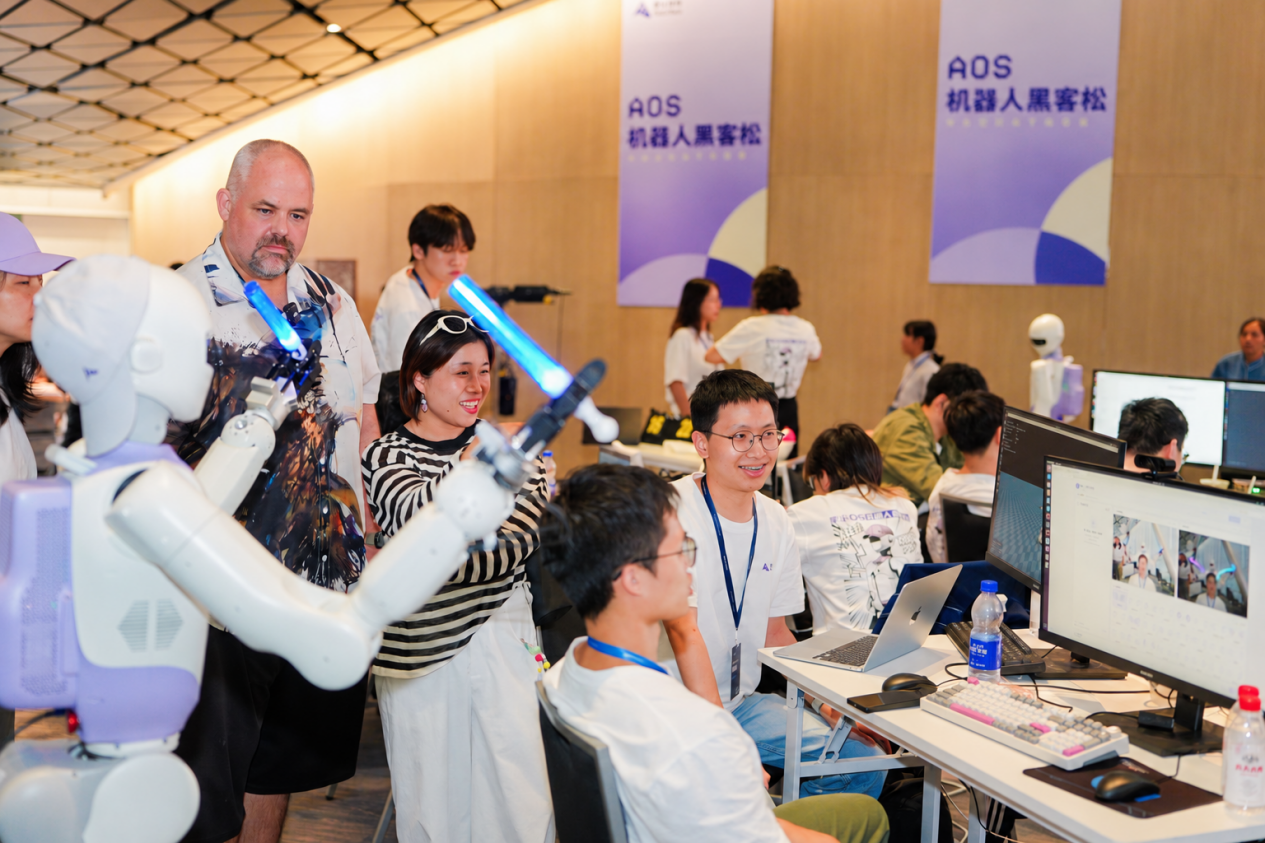
10月24日至25日,星尘智能在深圳举办机器人黑客松总决赛,这是该系列黑客松的第三场活动。“一句话生成机器人App”是该系列黑客松的核心表达,创作者大多是来自全国各地的学生、产品经理、独立开发者等。决赛现场的17支队伍在36小时里将想法推进到真机测试,16个App跑通真机,上真机率达94%。更值得注意的是,其中不少参赛者此前没有机器人开发经验。

之所以能做到这一点,正得益于星尘OS操作系统(Astribot OS,简称AOS)。这套系统将感知、移动、操作和交互等复杂能力封装为可调用、可组合的Meta能力包和Skill,并与最新的AI模型和Agent适配。创作者结合GPT、DeepSeek等大模型和AI编程工具,无需从零编写底层代码,便能从一句话需求出发,完成能力组合、流程设计、仿真测试和真机验证。星尘从2024年开始搭建这套系统,直到今年8月第一届黑客松启动时才定下AOS这个名字;此前,团队也考虑过AIOS。

写给模型看的接口

来杰曾在多个公开场合以苹果的模式解释星尘的战略布局:苹果通过硬件、操作系统和应用生态的协同,让更多人参与开发,也让用户更方便地使用产品。星尘希望在本体、AOS与未来的应用生态之间建立类似的联系,而自研Lumo系列模型则与AOS、本体共同构成星尘的三位一体架构。

“苹果图形界面把开发者从会写代码的那一小圈人,扩张到设计师、科学家和各行业的普通人,也让使用门槛从读懂命令行降到会使用鼠标就行。”来杰认为。而在今天的机器人行业,开发者仍主要集中在会写代码的专业圈层,App少,使用者也少。在来杰的设想中,AOS希望承担的,正是类似的角色。

来杰曾给AOS开发负责人提过一个要求:设计调用接口时,要优先考虑GPT能不能看懂。要让普通人参与机器人编程,就必须把自然语言翻译成能力要求、约束和执行规划的工作交给AI,接口因此也必须写成AI能读懂的样子。这就是AOS“Design for AI”的核心思路。

为了让GPT能够看懂接口,星尘的工程师需要多做一层工作。“程序员写接口的活变得像文字工作者,写完还得把这份能力讲给模型听。”来杰笑着说,“这些描述并非附在文档里就够了,而要写进接口本身,因为模型不会去查文档;描述不到位,这个能力在模型那里就等于不存在。它不知道有这个工具,自然不会调用。”

另一方面,星尘的工程师还必须为模型补足一部分能力。“模型算不准的地方要一项项包成工具,六自由度估计、握力估计、打滑检测,每一样都得先知道模型在哪里会失手,再把它做成模型能调用的形态。”来杰说,“大量的工作反而不是在于怎么去把硬件的接口写好,而是怎么能让智能真正理解它的工作。”

AOS的效果已经在星尘内部显现。工具链接通之后,星尘内部的开发速度提升了3到5倍,新来的应届生和实习生在开发速度上也能接近老手,因为他们不必先花几年熟悉机器人硬件。普通人开发应用也看到了可能性:第一届黑客松的参赛者中就有两名幼儿园老师,她们全程用自然语言互动,成功做出了逗小朋友玩的应用。

在来杰看来,硬件那一侧的接口都非常明确,而AOS后续要继续加强的,还是跟AI对接的接口。例如AI应该如何读懂失败:机器人出现抓不住、打滑的情况,返回给模型的信息得让它明白发生了什么、下一步问谁,而这条链路怎么解决,现在还没定论。另外,仿真到真机的落差、真正用一句话生成应用等问题,也都是AOS后续进一步优化的方向。

创作者生态

AOS尚未解决的,是模型与机器人如何更稳定地协作。而黑客松试图回答的,则是另一个问题:当底层能力被封装、开发门槛被降低之后,谁会成为机器人应用的创作者,他们又会做出什么?

总决赛的作品给出了一些初步答案。冠军团队“远程分身”把手机端与机器人连接起来,将铲猫砂、浇花、倒水、取快递和聊天等需求组合进同一个应用。还有团队让机器人写毛笔字、跟拍运镜,或接手3D打印结束后的收料工作。这些想法并非来自星尘预设的任务清单,而是来自创作者各自的生活经验。
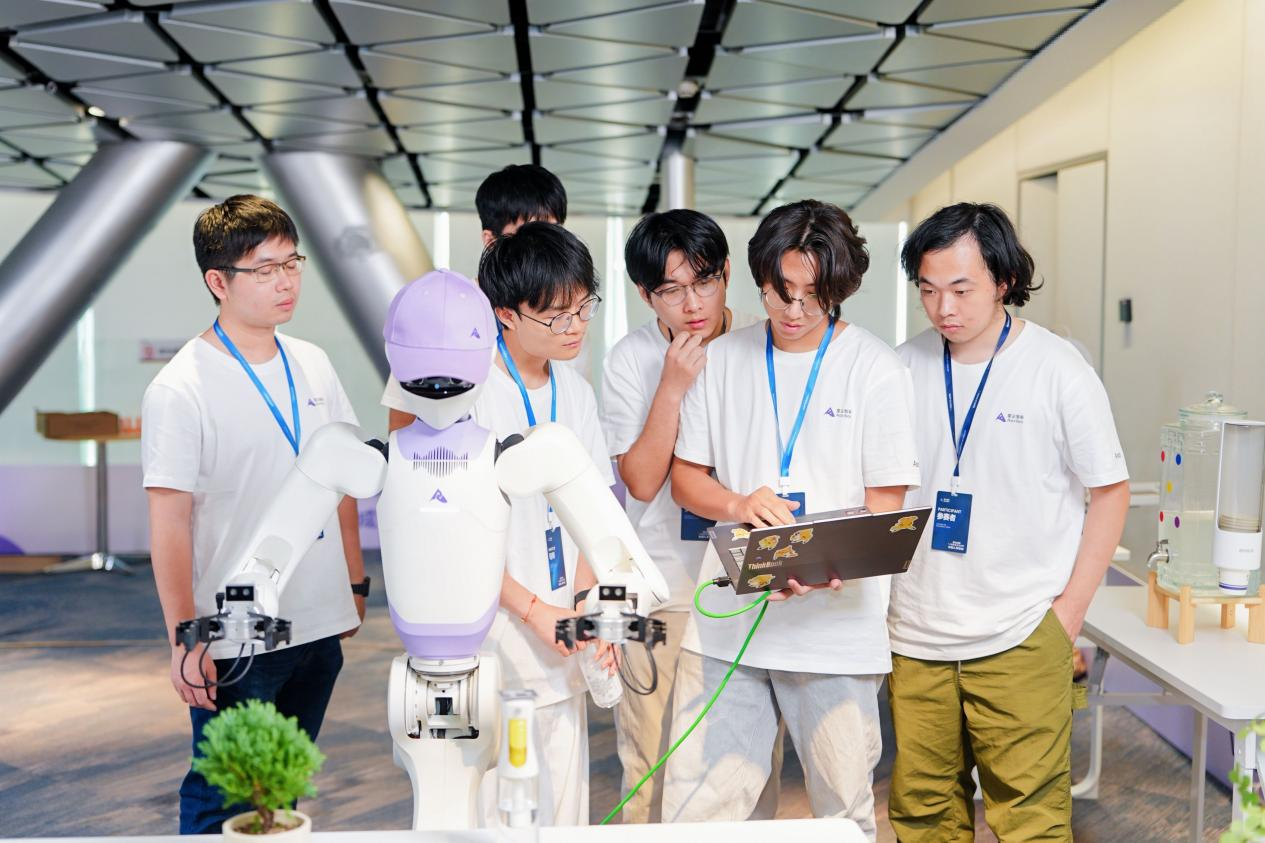
“有创意的人没有掌握工具,有工具的人又没什么创意,还好中间有AI。”来杰的这句话,解释了星尘为何如此看重普通创作者。程序员往往更关心功能怎样实现,产品经理、设计师和行业从业者则可能更在意表达、互动和体验。机器人打完麻将后的“嘚瑟”、书写春联背后的生活记忆,未必是底层技术上的突破,却可能决定一个应用是否真正能够走进生活。

黑客松展示的是应用创作的入口,支撑这一入口的,则是星尘模型、操作系统与本体的三位一体架构。Lumo系列具身基座模型负责物理世界中的理解、预测和行动,并在需要时与通用大模型配合。AOS将感知、移动、操作和交互等能力组织成模型与开发者都能调用的工具。绳驱机器人本体则在真实环境中完成动作,呈现执行中的限制与问题。

这三者又并非简单的全栈拼接。模型能力的变化,会影响AOS需要提供怎样的接口;本体在抓取、受力和移动中遇到的问题,又会成为模型训练、工具补充和系统迭代的依据。AOS因此既连接通用智能与具身智能,也连接机器人的智能与身体。

在这一结构中,应用不是三位一体之外的第四块拼图,而是三者能力面向用户的出口,也是新需求进入系统的入口。创作者不必掌握全部底层技术,可以把精力放在需求、交互和体验上。应用在真实场景中暴露的问题,则有望推动星尘补充新的Skill、改进异常处理,甚至重新调整模型与本体之间的分工。星尘所设想的生态,因而不只是应用数量的增加,而是应用、模型、系统和本体能否共同进化。

不过,这个循环尚未完全闭合。“一句话生成App”目前仍需要人与AI反复沟通,应用也要经过仿真和真机调试。一个作品在比赛中跑通,更不等于它已经能够进入应用生态并产生收入。对普通消费者而言,稳定的使用体验、足够大的终端规模和可持续的开发者回报,仍然是必须补齐的条件。

商业化的距离

AOS的部分商业化已经开始,但主要发生在专业用户一侧。星尘已经销售面向科研和二次开发用户的SDK、遥操作等软件和工具,商业场景的二次开发者也在利用这些能力完成交付。硬件、软件与工具的组合,构成了现阶段更现实的收入来源,也为AOS继续迭代提供了真实需求。

星尘为生态设定的扩展顺序同样从已有买方出发:先连接商业场景中的二次开发和交付需求,再连接科研用户之间的模型、数据与工具需求,最后才走向更多真正购买和使用机器人的普通消费者。黑客松的价值,不只是选出几个优胜作品,也在于让星尘观察创作者怎样表达需求、AI怎样介入开发,以及哪些能力有可能成为下一次产品迭代的起点。
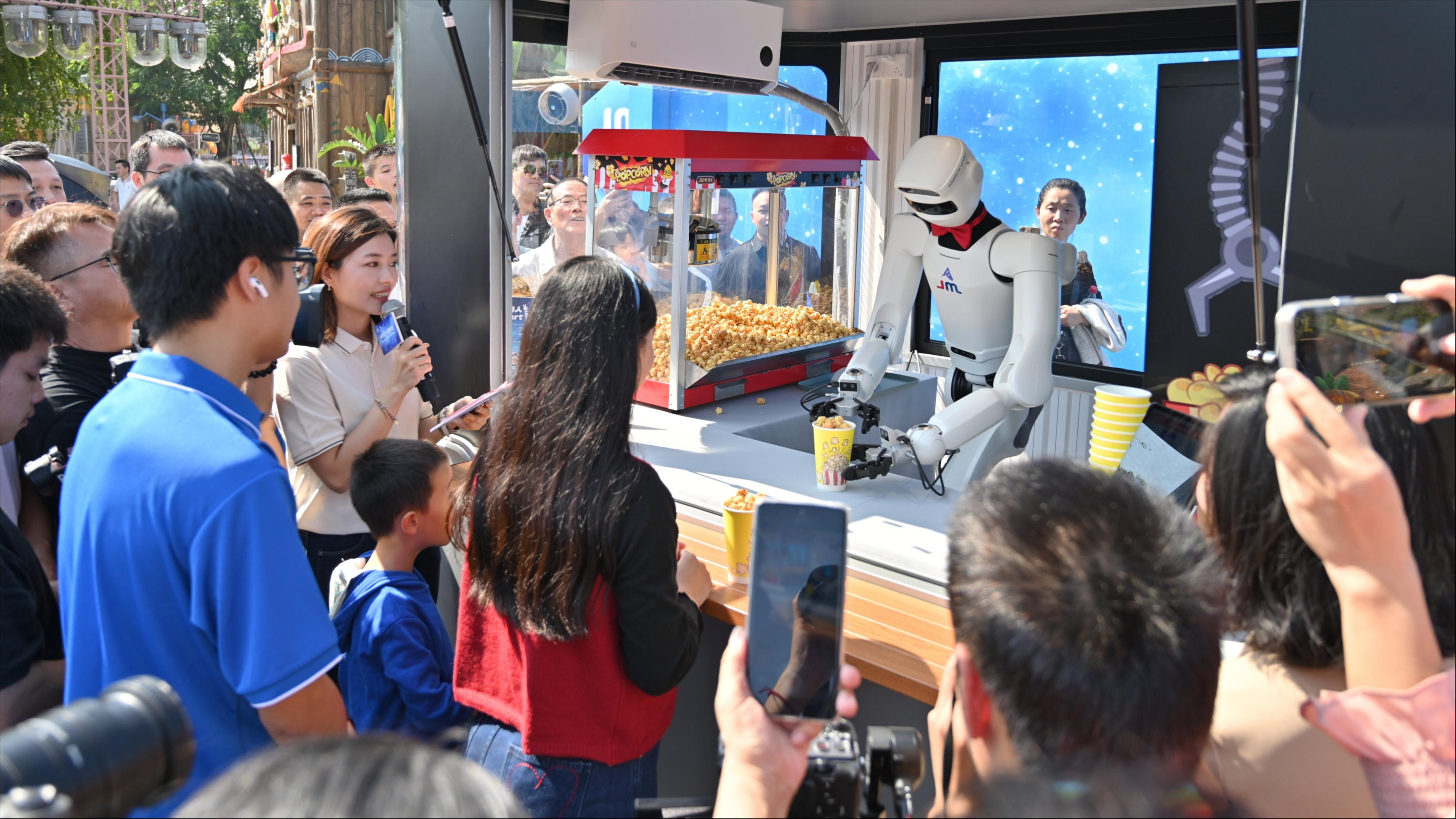
来杰在最近的一次公开采访中还提到一个观点:目前约200家具身公司,与未来最终上市的企业,可能只有10%重合。这并非看衰具身智能的长期价值,而是认为不同技术路线和商业选择不会全部成立,行业必然经历收敛。届时,一些公司会转向小而专或其他经营方式,也会有新的公司走出来。

在他看来,这些公司未必都来自今天的本体或模型厂商,基于AOS开发应用、深耕体验与创意的团队,同样可能成为下一批创业者。这一判断也让星尘的生态布局有了另一层含义:它不仅要降低机器人应用的开发门槛,也希望在行业价值向应用层扩展时,提前建立连接需求与创作者的入口。

AOS为通用大模型与具身模型之争提供了另一种答案:通用智能未必只是专用模型的替代者,也可能迅速拉低机器人应用的创作门槛。AOS真正要验证的,是机器人产业的价值,能否从厂商自己开发功能,扩展到更多人在其上创造功能。在应用稳定运行、创作者获得回报之前,星尘距离机器人时代的iOS和App Store仍有距离,但三次黑客松,已经让这条路径有了可被观察的样本。

更多精彩内容,关注钛媒体微信号(ID:taimeiti),或者下载钛媒体App
2026-11-03 03:13:20 · 大模型,AI应用,具身智能,融资,政策监管,OpenAI,Meta,Microsoft,DeepSeek,代码生成,Agent智能体,数字人,办公效率,翻译字幕,设计创意,教育学习,扩散模型,世界模型,模型发布,合作,财报,开发者生态

大众在合肥攒了个新平台,一年要往海外卖 30 万辆「中国大众」

爱范儿

Image

大众可以说是最懂平台化的车企之一。基于同一个 MLB Evo 平台,大众集团能造出大众途锐和奥迪 Q7、Q8,也能在不同兄弟品牌中带来保时捷 Cayenne、宾利添越,甚至兰博基尼 Urus。

这种把通用工程底座做到极致,用体量摊薄研发与制造成本的做法,是大众过去几十年建立全球规模优势的核心逻辑。
Image

但进入智能电动车时代,除了统一机械底盘,电子电气架构与辅助驾驶同样需要参与到平台化中,来规避每做一款新车都要重新适配硬件接口、重训模型的尴尬。

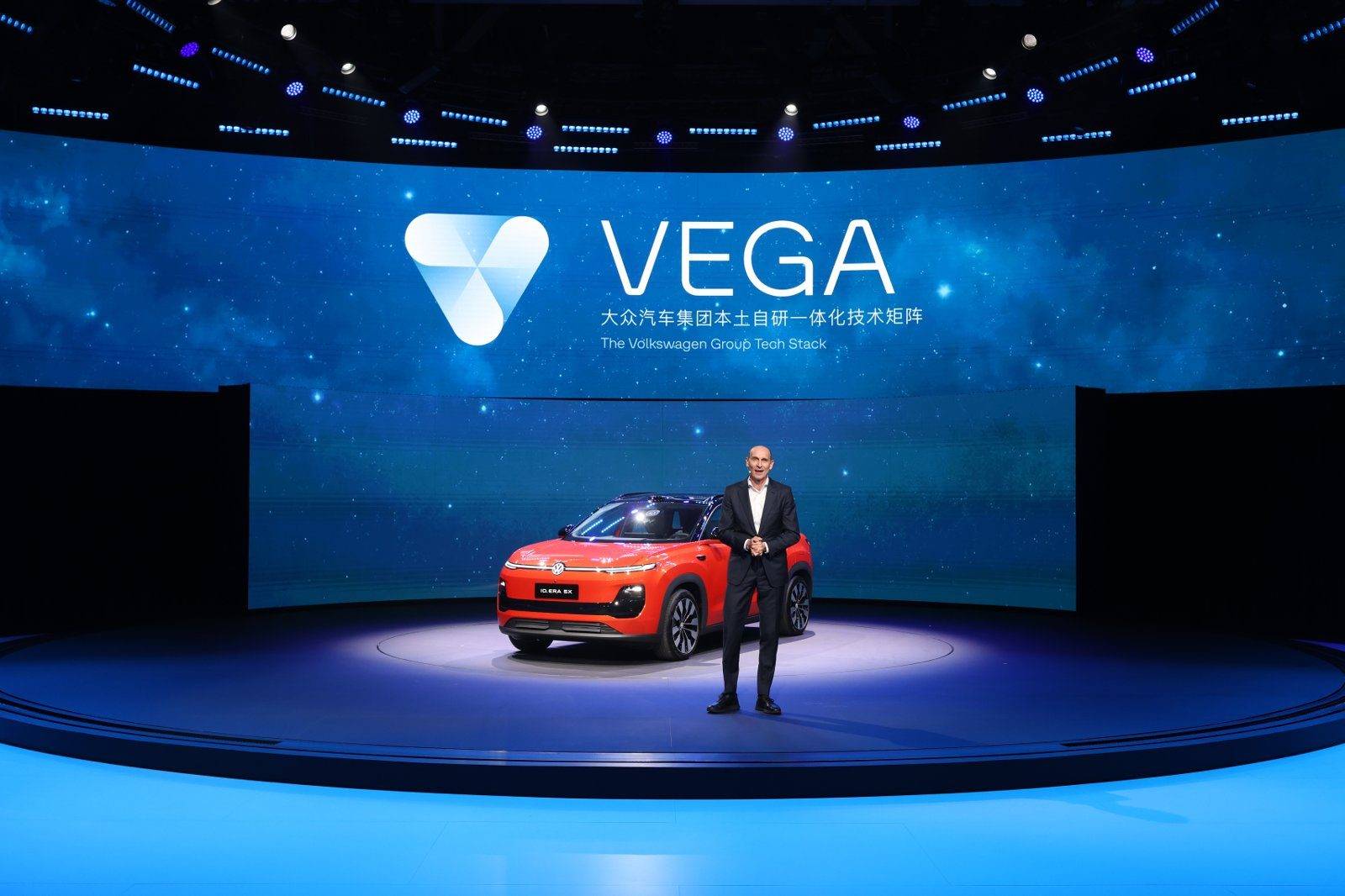
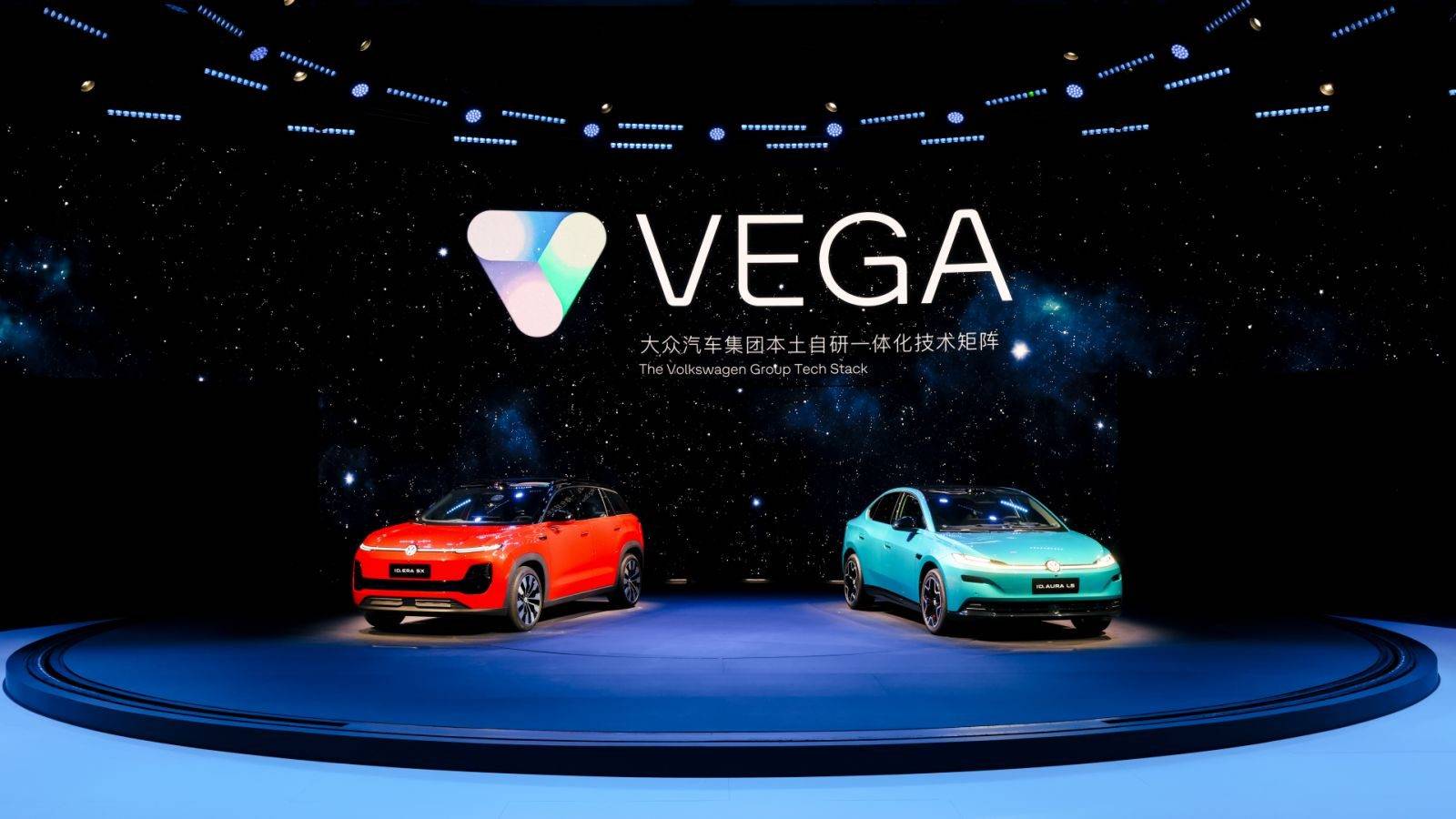
于是大众选择在 10 月 28 日的首届大众汽车集团技术日上,发布本土自研一体化技术矩阵——VEGA,将整车平台、电子电气架构以及高级驾驶辅助系统都整合在了一起。
Image

与过去在德国开发,再引入中国的 MLB 或 MEB 平台不同,在中国汽车的智能化浪潮下,大众这次选择了由中国本土团队主导开发 VEGA。

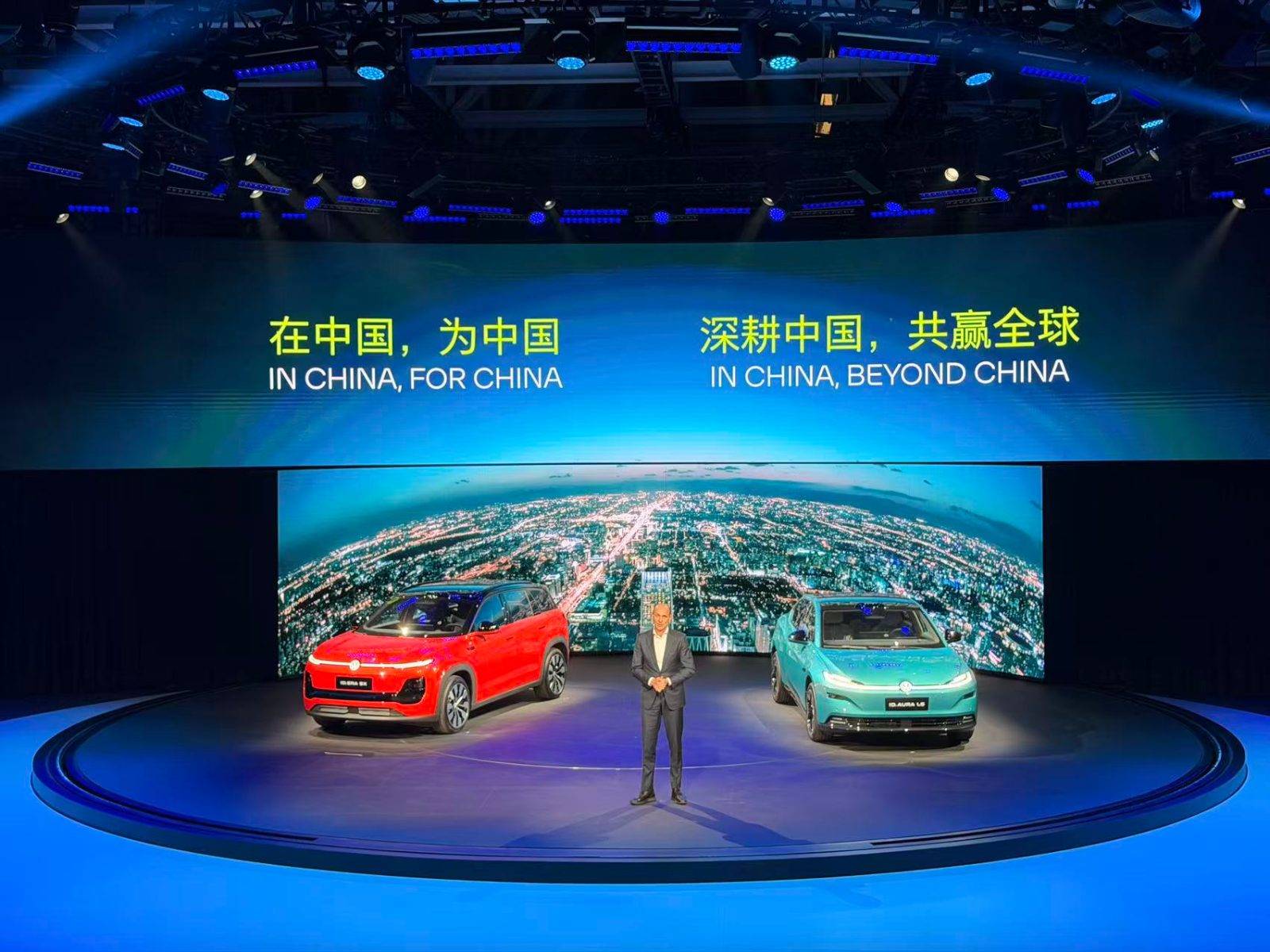
在发布这套技术底座的同时,大众中国也将战略口号从几年前的「在中国,为中国」,更新为「深耕中国,共赢全球」,这套由中国团队主导研发的技术体系,将要被推向全球市场。

大众在中国凑齐了智能汽车的技术底座

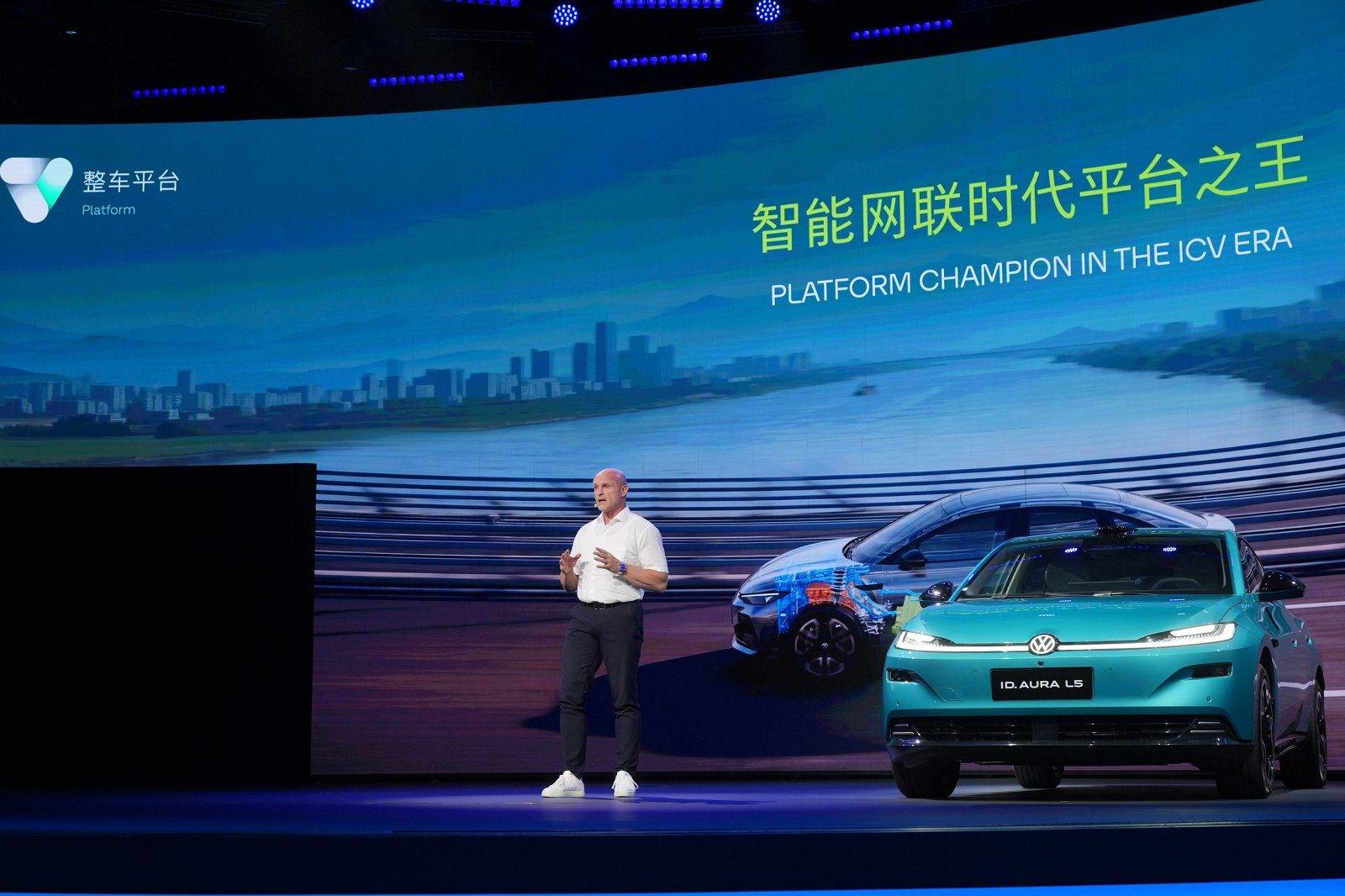
简单来说,VEGA 是大众过去三年多在中国搭建的一套软硬件协同底座,由整车平台,电气架构和高阶辅助驾驶三个模块共同组成(所以大众也将 LOGO 做成了三角形)。

CMP 与 CSP 两大新能源整车平台负责硬件与车型覆盖,CEA 电子电气架构负责打通全车智能化能力,HS8 则负责高阶辅助驾驶的量产落地。
Image

在硬件底层,大众用本土研发的 CMP 和 CSP 两个整车平台完成了从主流家用到全尺寸旗舰的覆盖。

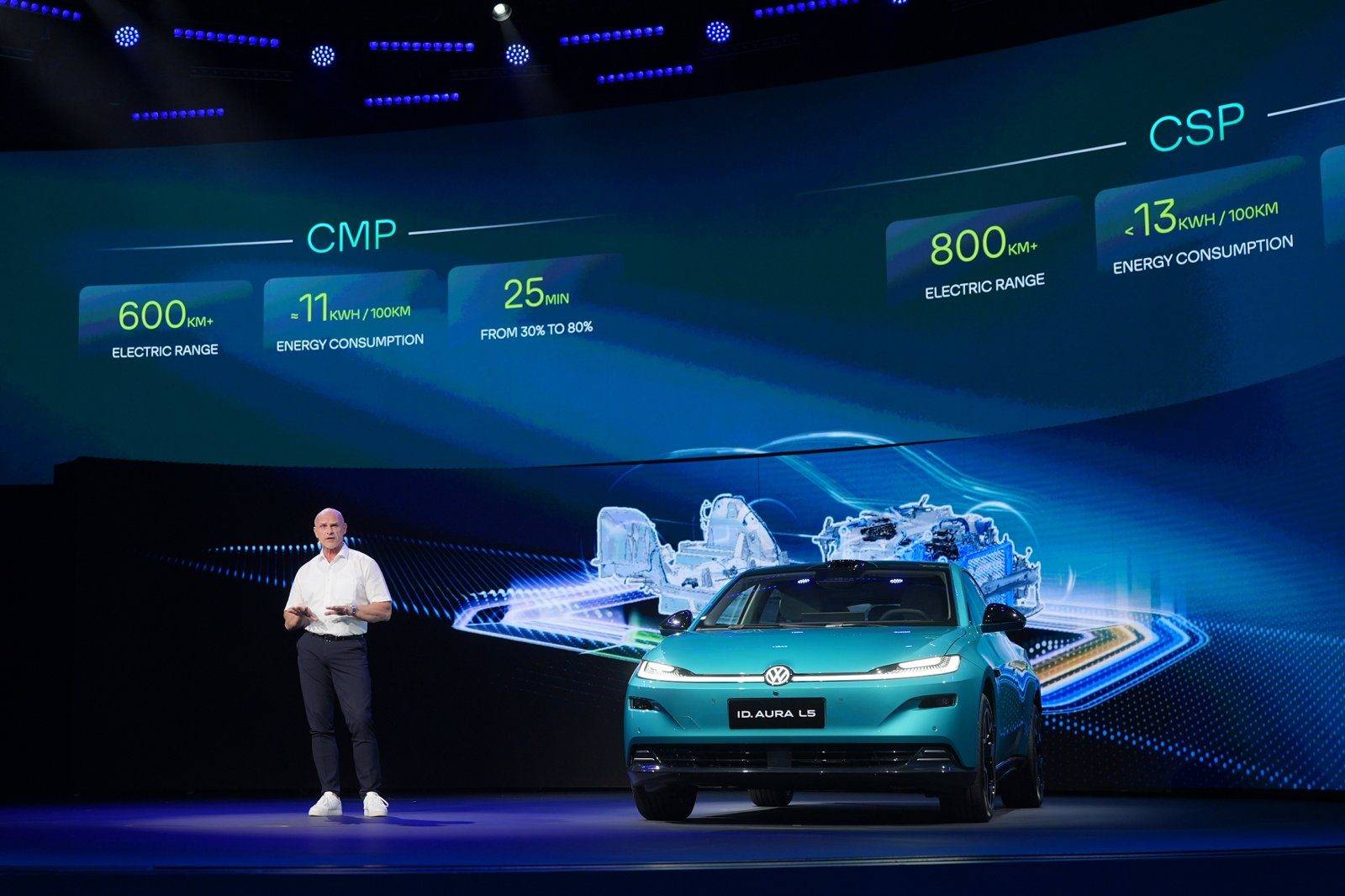
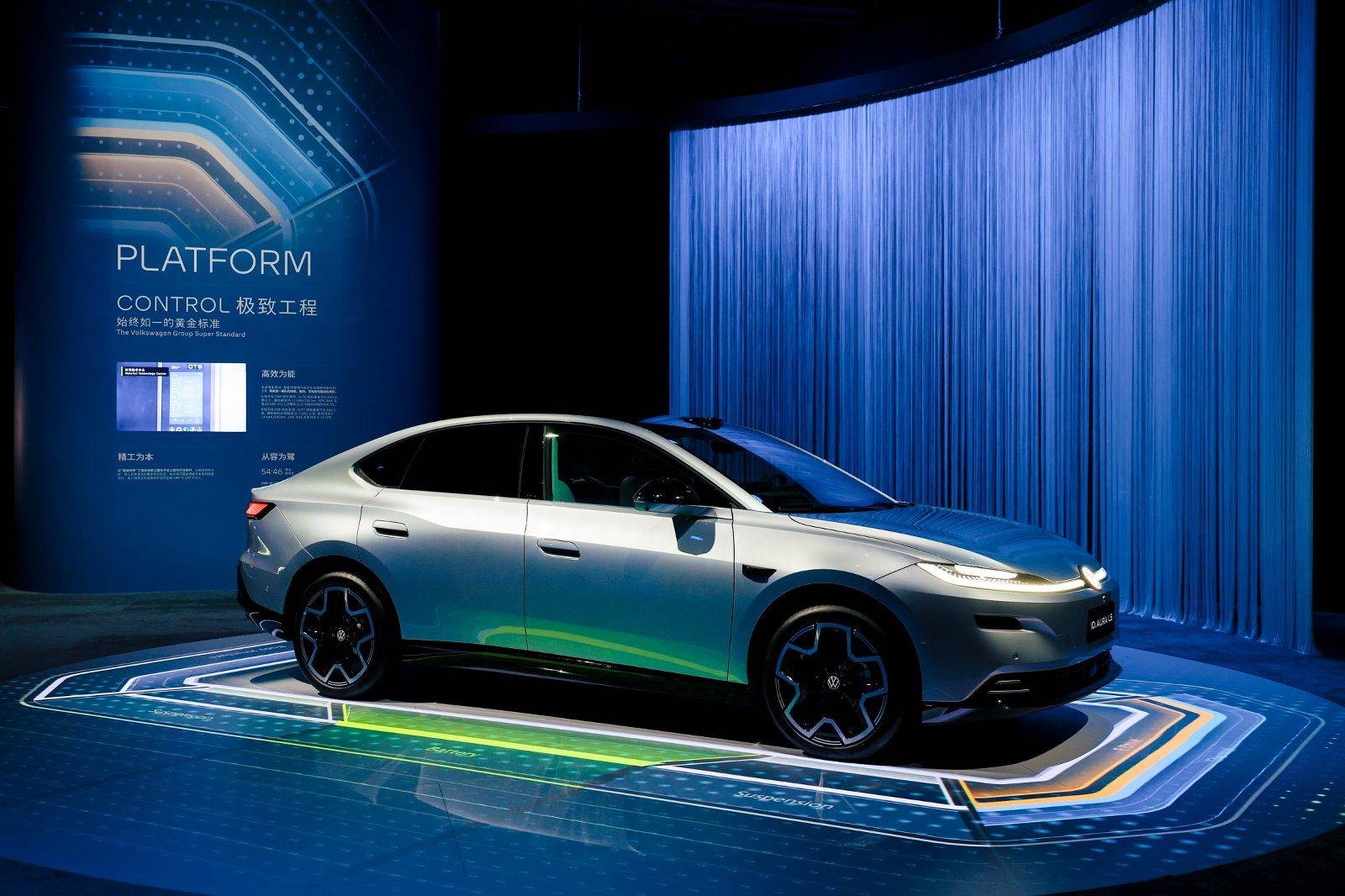
其中,CMP 平台面向 A 级至 A+ 级主流走量市场,支持纯电与插电式混合动力。大众把 B 级车的后多连杆独立悬架下放到了 CMP 平台,配合 54:46 的前后轴荷分配来保证基础驾控。

能效方面,CMP 平台车型的 CLTC 续航目标超过 600 公里,最高效版本百公里电耗约为 11kWh,并配备可在 -18℃ 环境下运行的直接式热泵系统。
Image

相比此前的 MEB 平台,基于 CMP 平台与 CEA 架构开发的紧凑级纯电车型,成本可降低 40%,产品上市周期缩短 30%。

CMP 搞定 A 级车,CSP 平台则面向 B 级至全尺寸及旗舰车型,支持纯电与增程式动力。

CSP 平台的纯电车型 CLTC 续航目标约为 800 公里,最低百公里电耗低于 13kWh,增程版综合续航超过 1500 公里。

依托 850V 的高压架构,CSP 平台的车型最快可在 13 分钟内完成 10% 至 80% 的充电。
Image

为了解决大尺寸车型的灵活性问题,CSP 平台引入了后轮转向技术,将最小转弯半径控制在 5.5 米以内,零百加速最快为 4.1 秒。

智驾方面,CSP 平台也在供电、制动和转向系统中预留了面向未来 L3 级自动驾驶的硬件冗余。

不过,大众在提及研发提速之余,也在不断强调「不造速成车」。CMP、CSP 两大平台均接入了大众的「超级闭环」工程验证体系。
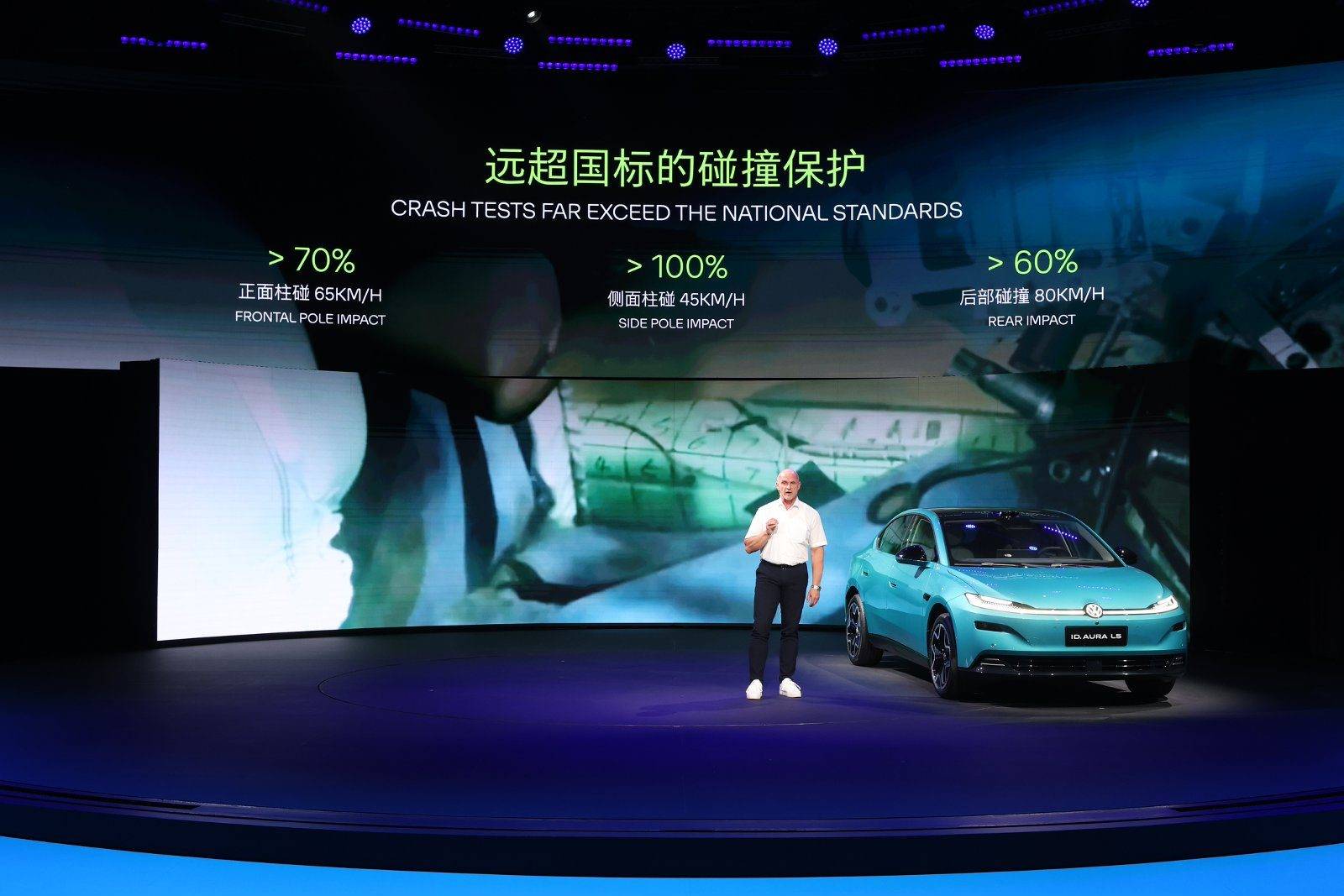
Image

以安全标准为例,大众内部采用了 65km/h 正面柱碰、45km/h 电池包多位置侧面柱碰以及 80km/h 后部碰撞等高于国标的测试工况。

发生严重碰撞后,系统可在 5 毫秒内切断电机动力输出,并在 5 秒内将高压电降至安全水平,放电耗时为国家标准的十二分之一。

在耐久验证上,每款平台车型都需通过 24K 整车道路模拟台架测试,在约 10 周内复现相当于 15 年、30 万公里的道路载荷。
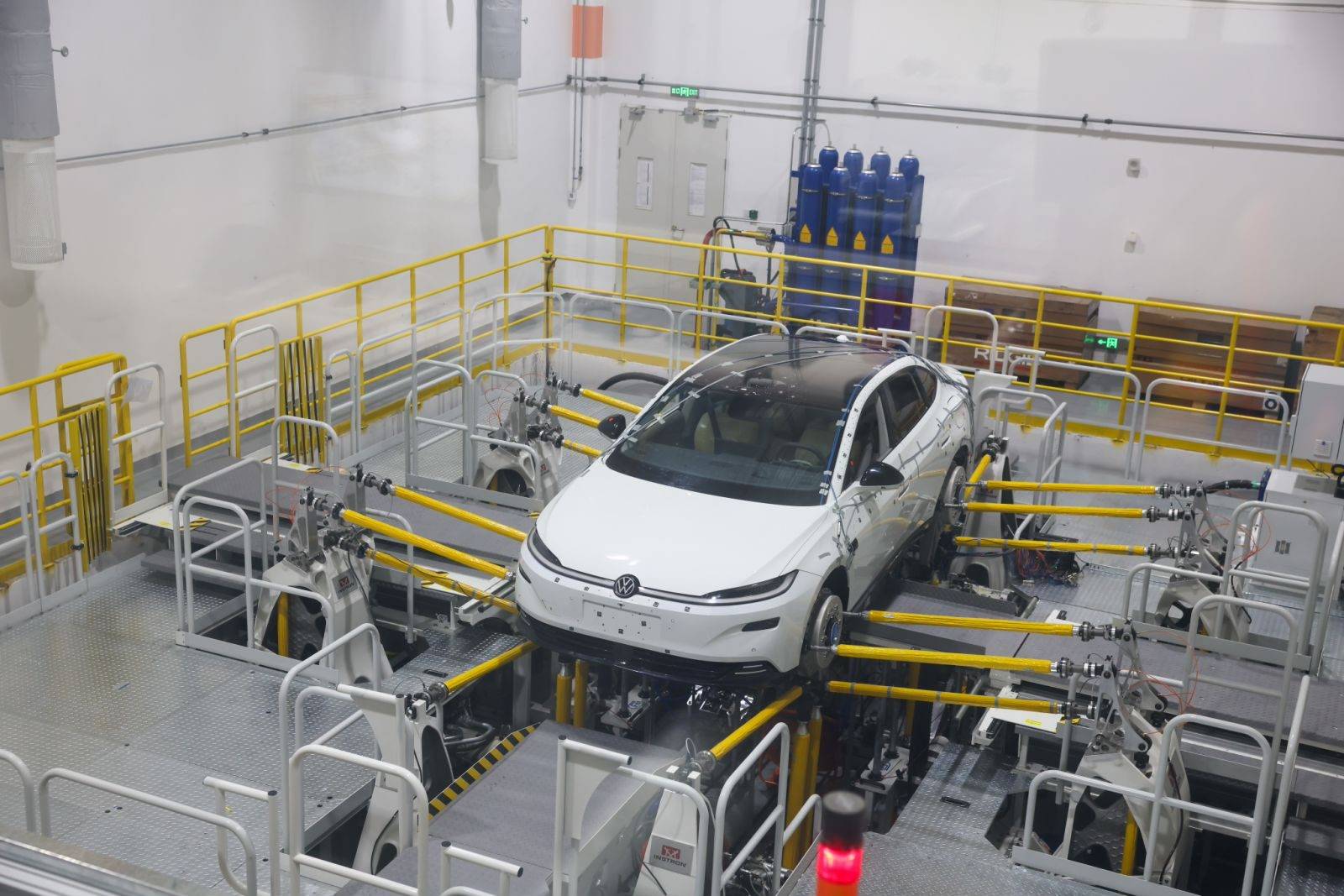
Image

如果说 CMP 和 CSP 解决了造什么车的问题,耗时 18 个月自主研发的 CEA 电子电气架构,则负责统一大众全系车型的智能化能力。

燃油车时代,造车通常是先定机械结构、再装电子件、最后写软件,而 CEA 改为软件先行。

CEA 采用中央计算+区域控制架构,把智能座舱、车身控制、底盘、动力总成和辅助驾驶整合到同一套软件底座上,并提供 70 余项可像拼乐高一样灵活调用的「原子服务」。根据不同的场景进行匹配
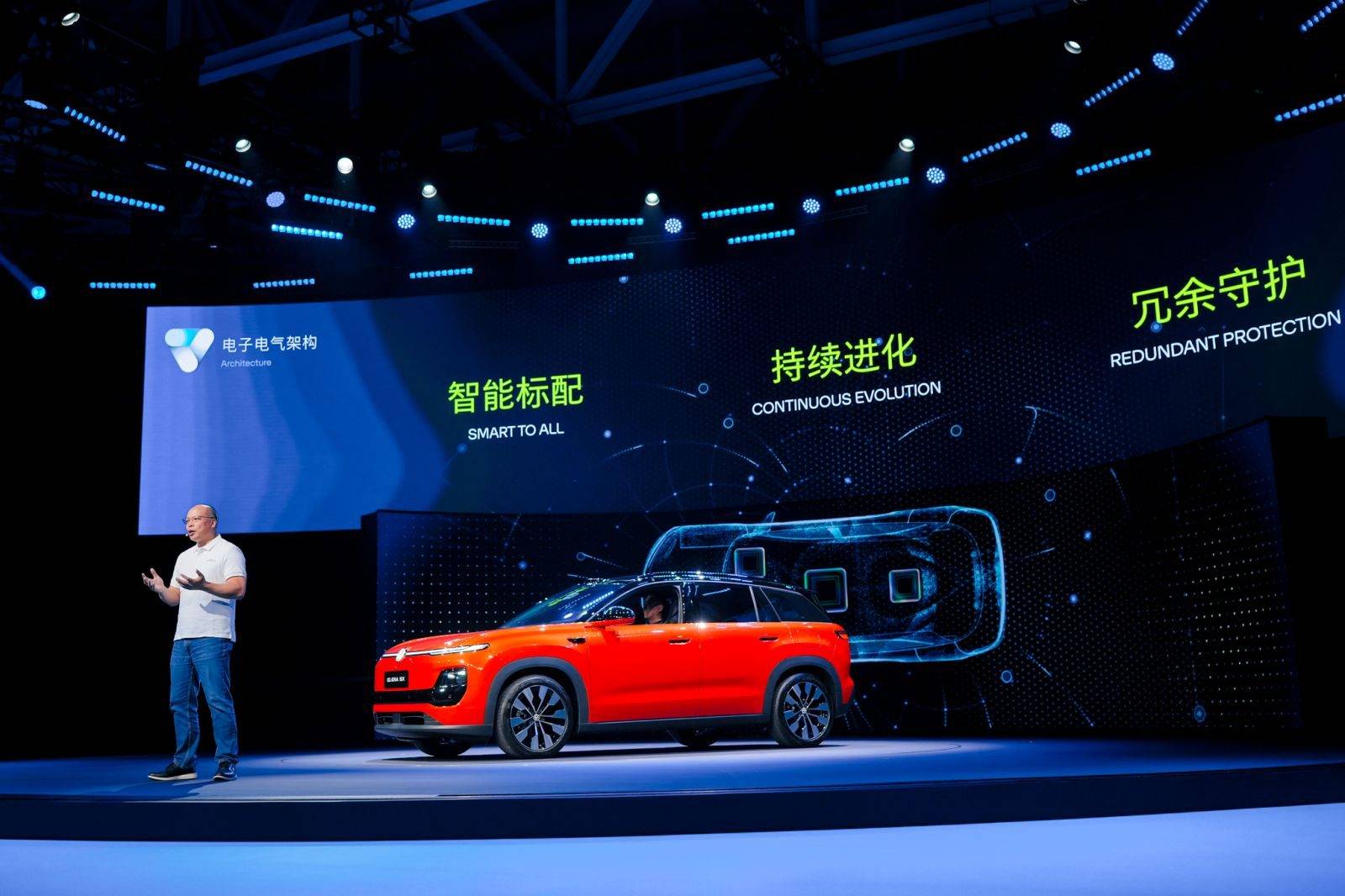
Image

CEA 的核心价值在于跨平台和跨动力形式的泛用性。它不仅适配从紧凑级到全尺寸的新能源车,也能直接装进燃油车。

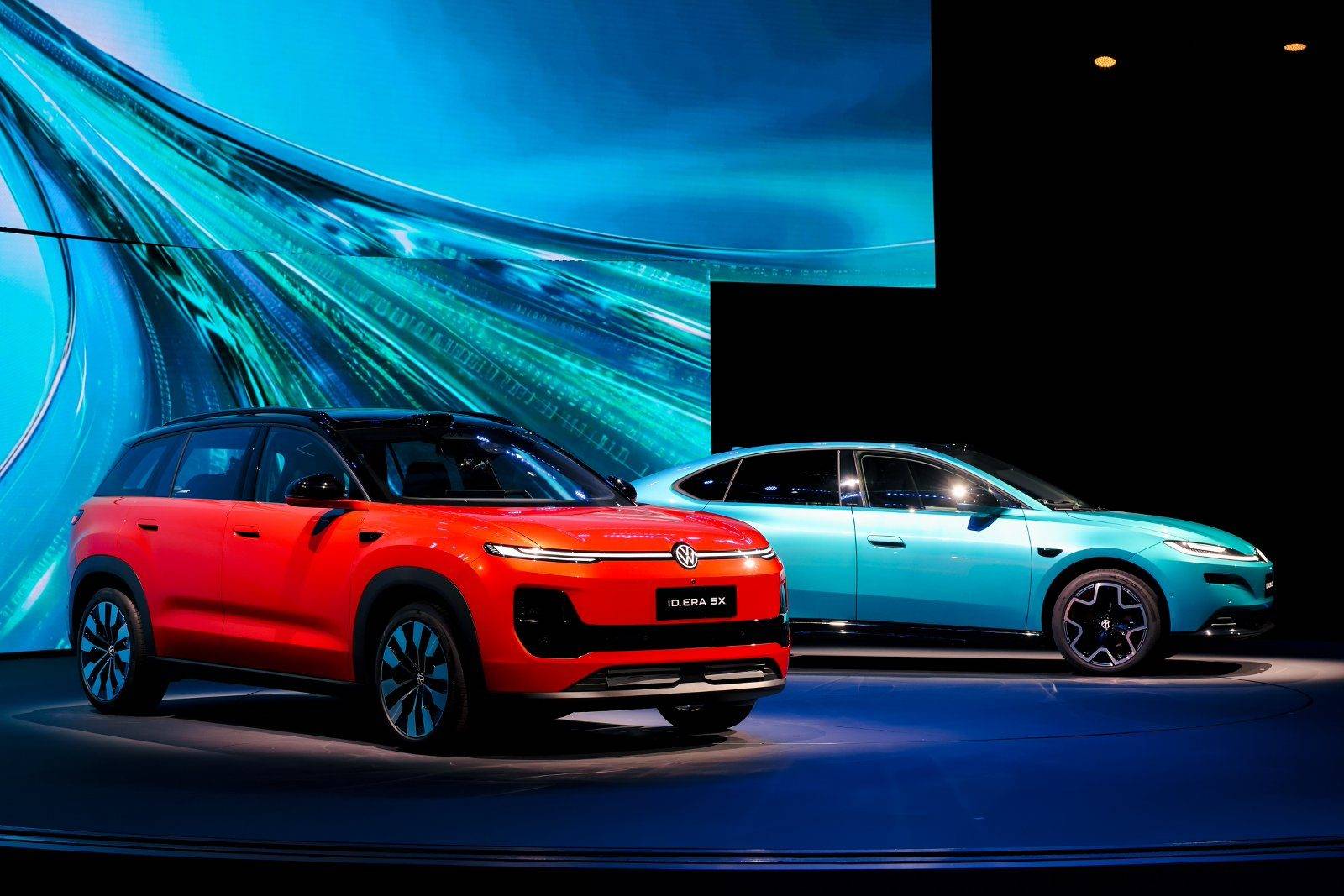
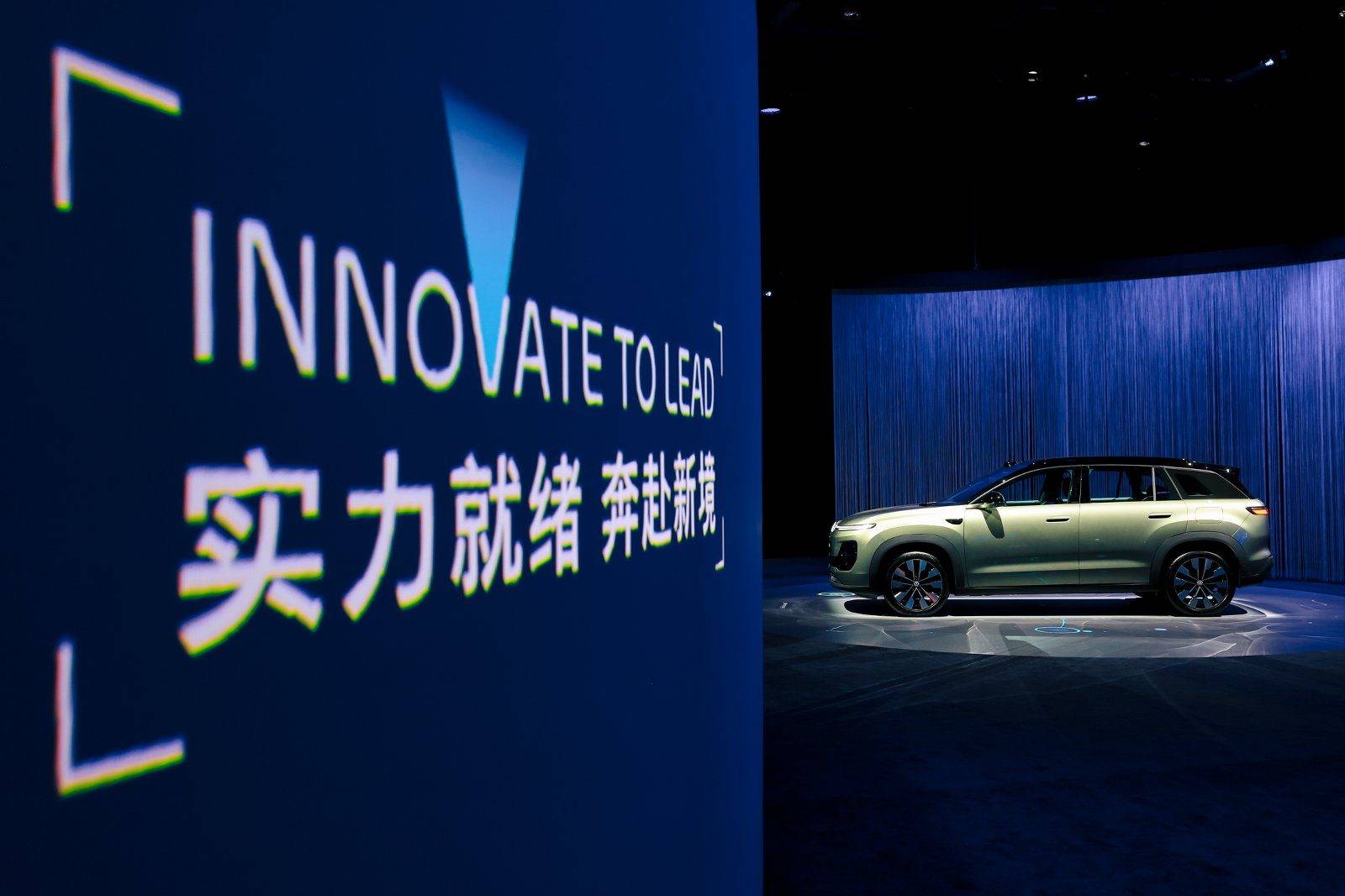
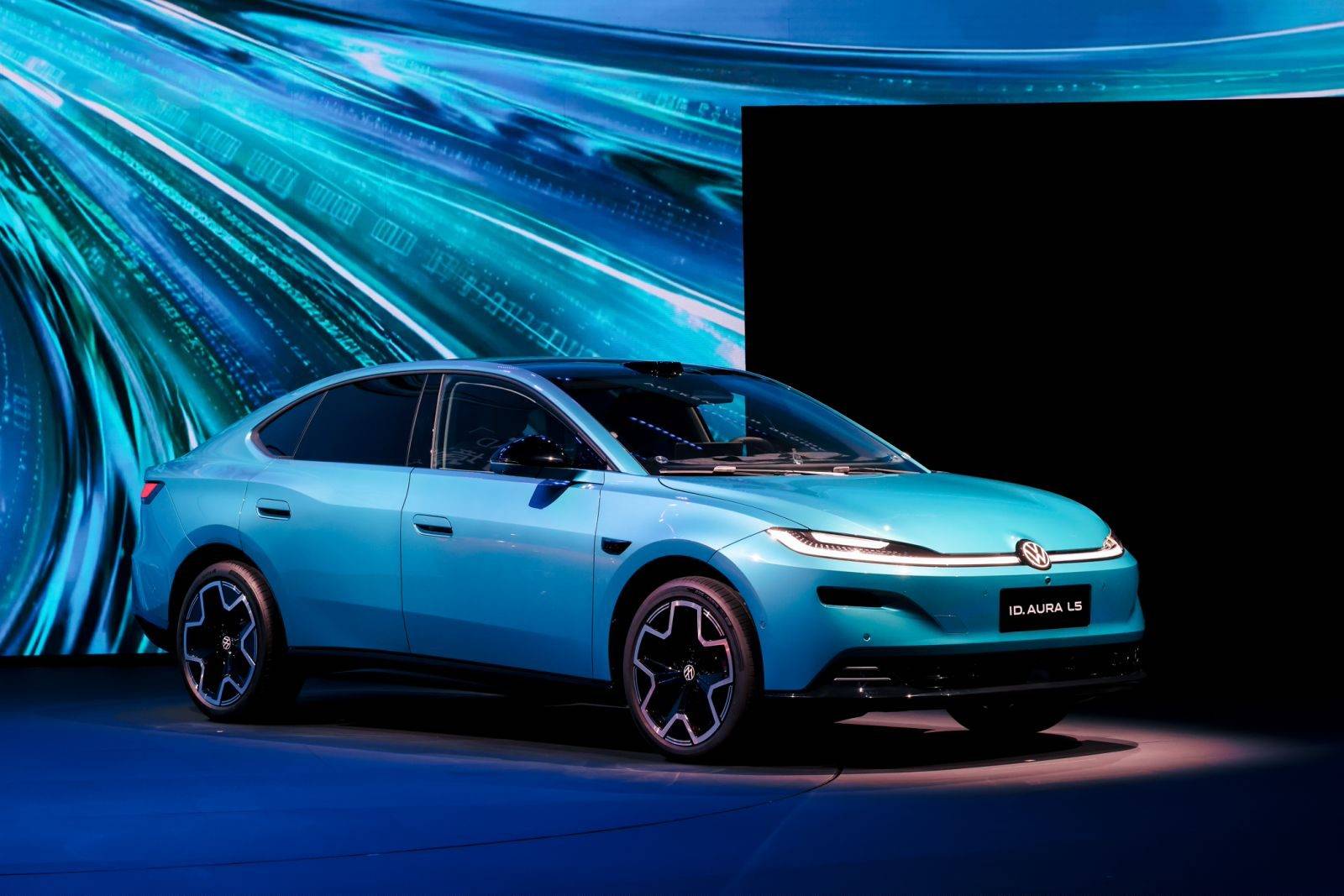
2026 年,CEA 已率先搭载于与众 06、与众 07、ID. ERA 5X、ID. AURA T6 和 ID. AURA L5 五款纯电车型,并在第三季度全面部署车载 AI 智能体。

2027 年,CEA 将扩展至大众在华生产的插混及燃油车型,同时通过架构升级整合座舱与智驾的中央计算,为 L3 级自动驾驶做技术准备。到 2029 年,CEA 3.0 将支持全域智能体 AI 与 L4 级自动驾驶开发。
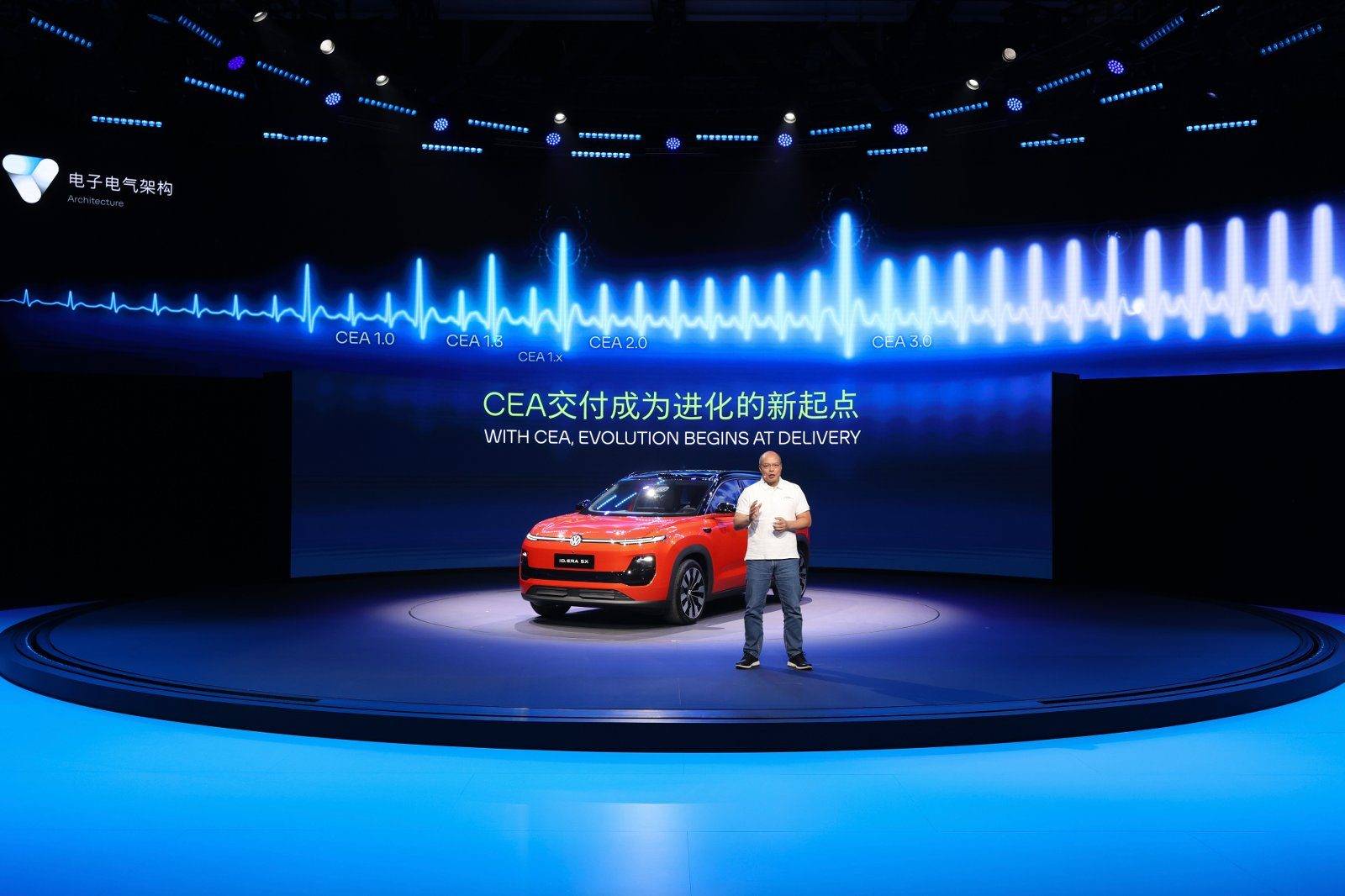
Image

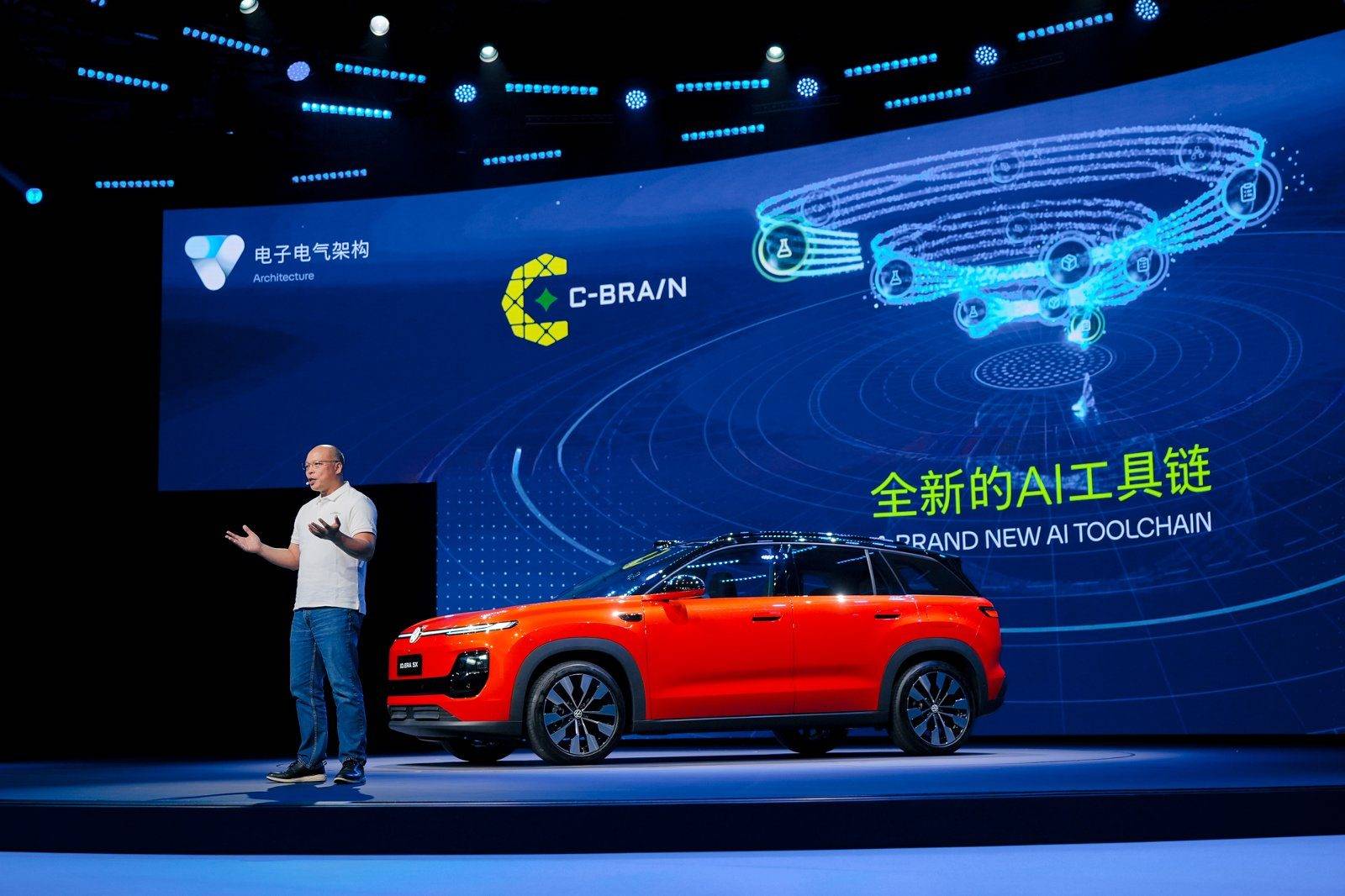
为了让这套架构保持「每三个月一次子版本更新、每两年一次架构代际升级」的节奏,大众自研了一套工程级 AI 工具链 C-Brain,把 AI 智能体嵌入从需求输入、架构设计、代码生成到测试诊断的全流程。

官方公布的数据是,借助 C-Brain,软件功能测试时间从过去的 48 至 72 小时缩短到了 2 至 3 小时,效率提升最高达 36 倍。

安全方面,CEA 1.3 还设计了五重相互备份的车门解锁通路,包括部署在不易受损位置、自带独立电源与通信专线的碰撞解锁冗余模块,确保碰撞极端断电时车门依然能够解锁。
Image

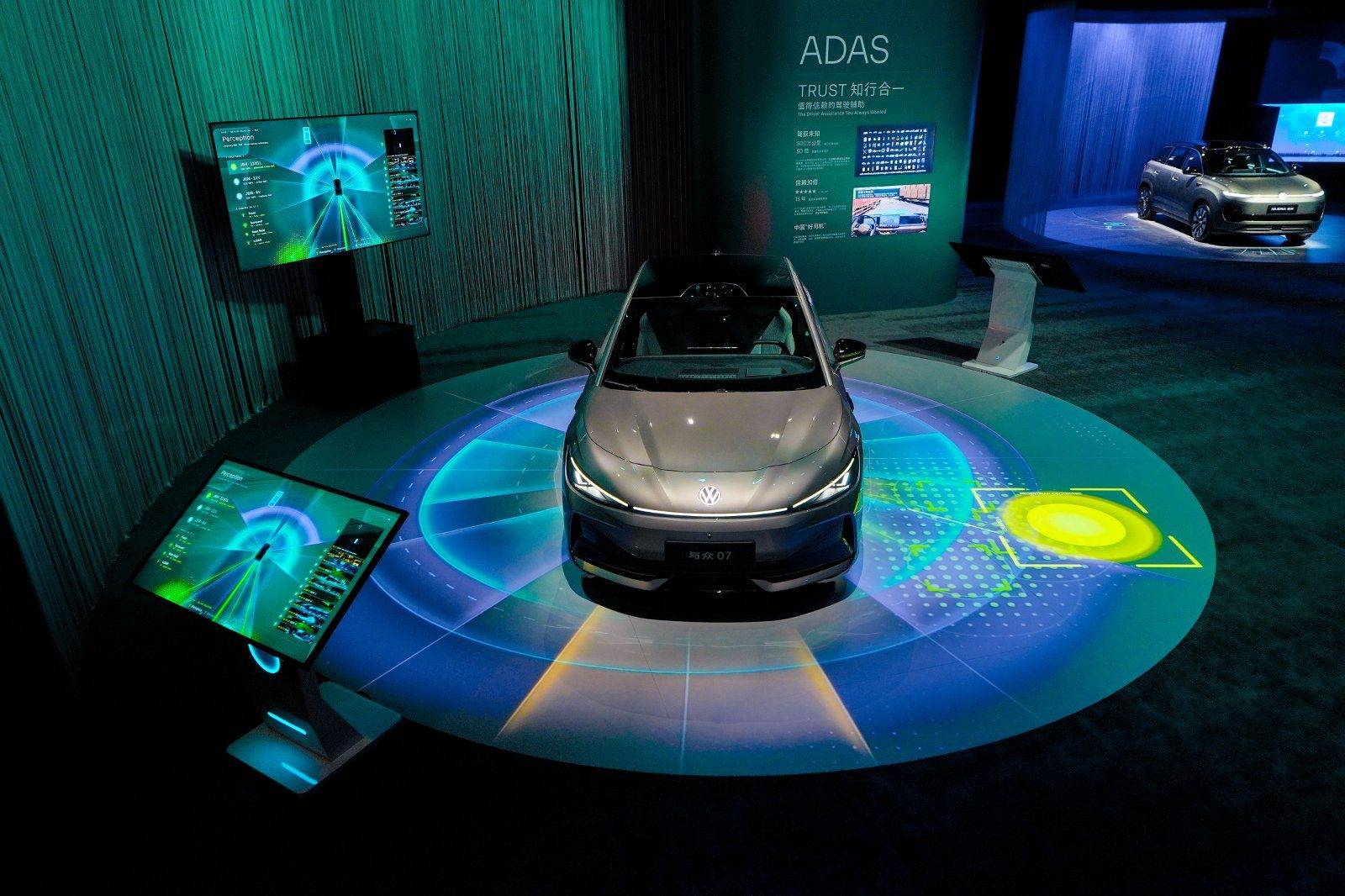
在这套底座之上,由大众旗下智驾能力中心酷睿程研发的 HS8 系统,负责全场景辅助驾驶的量产落地。

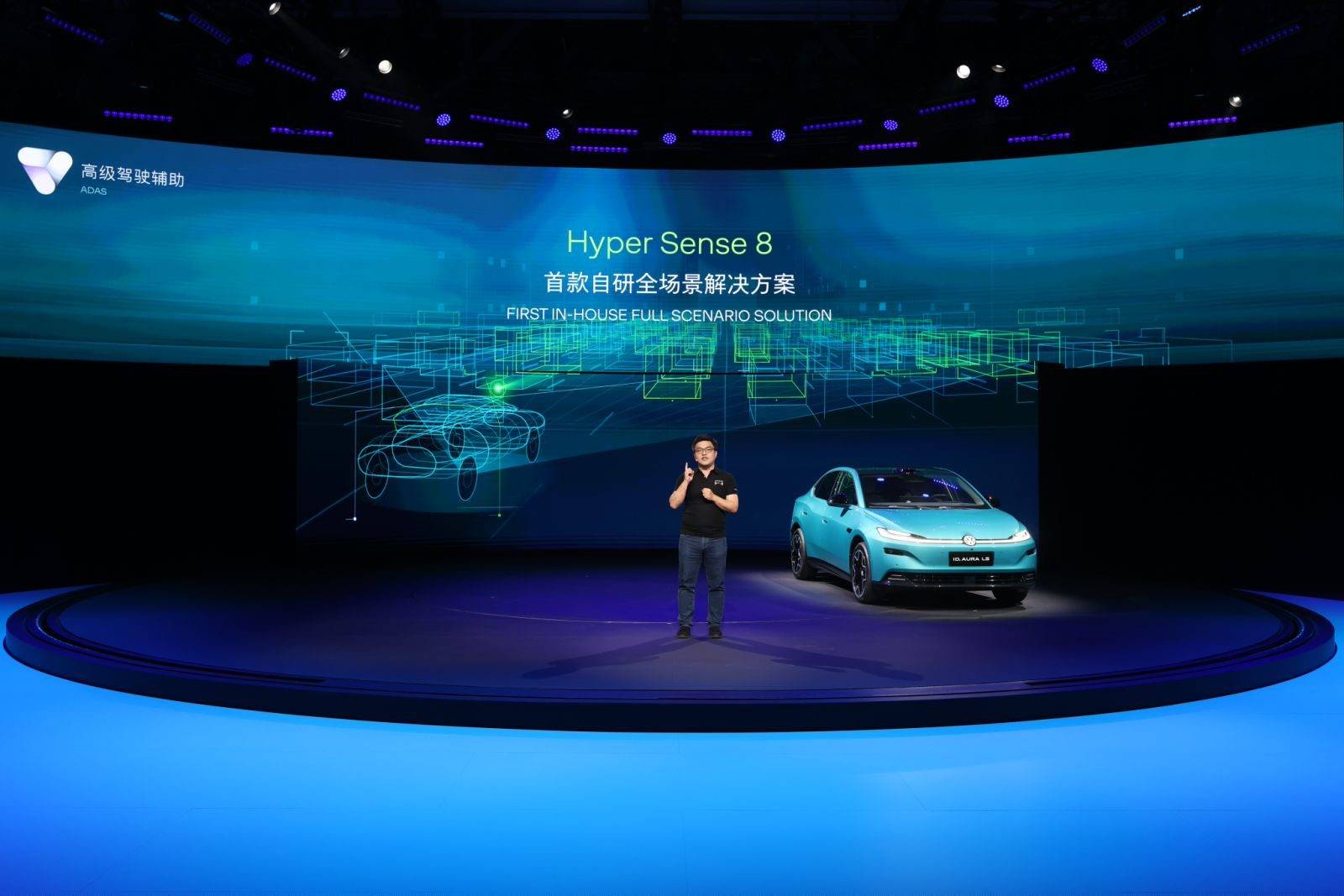
HS8 基于 HS AI 基座大模型,采用一段式端到端架构,将感知、理解、决策与控制整合在统一模型中,支持城市与高速领航辅助以及从车位到车位的全场景泊车。
Image

为了适配不同价位的车型,HS8 分为两套硬件配置:纯视觉方案搭载地平线征程 6M 芯片,算力为 128TOPS。激光雷达方案搭载征程 6H 芯片,算力为 420TOPS。

自 2026 年第三季度起,HS8 已开始陆续搭载于大众在华三家合资企业的 7 款全新新能源车型。

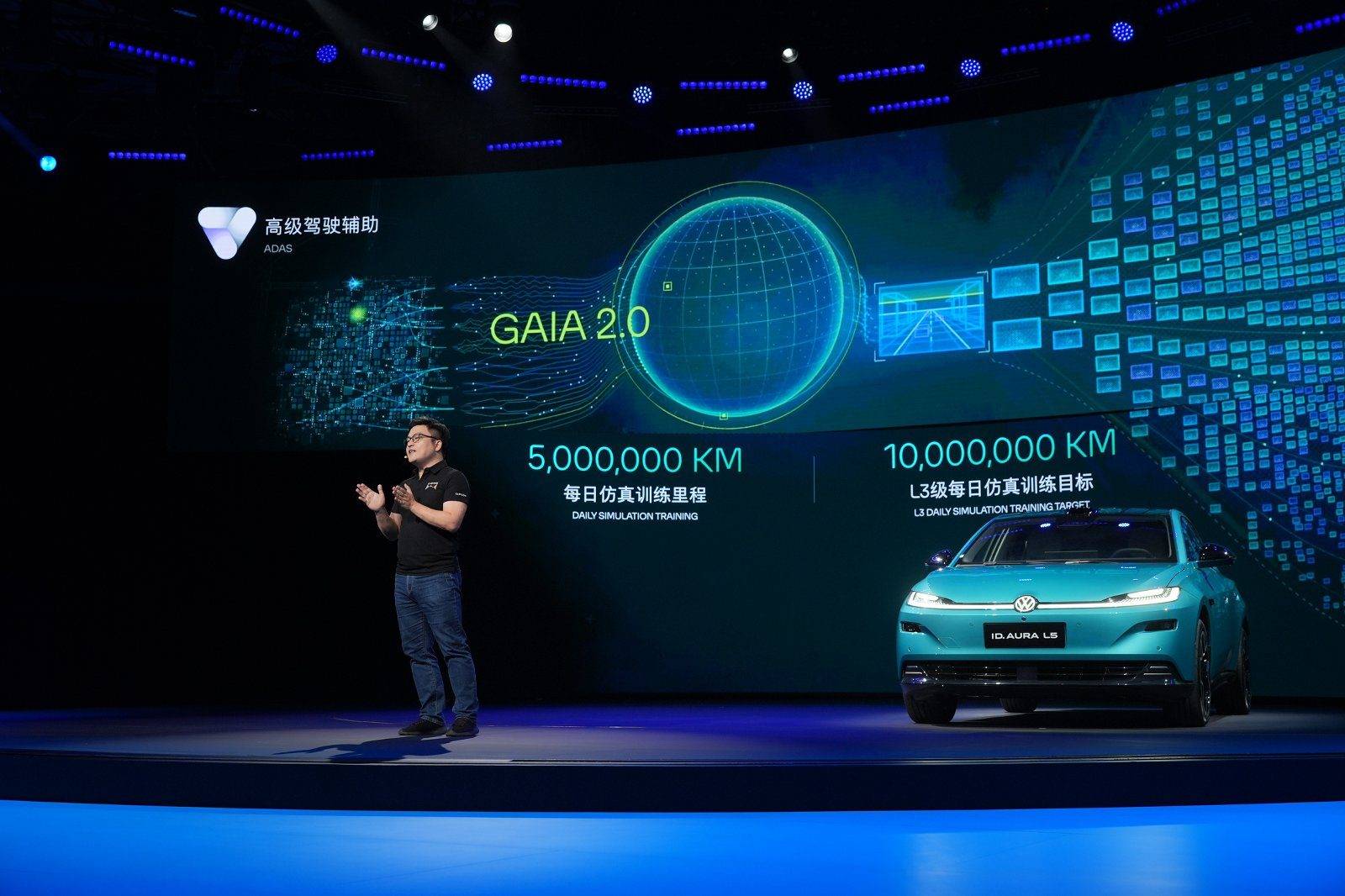
支撑 HS8 持续迭代的,是自研的 GAIA 2.0 世界模型与仿真系统。它结合 3000 万个真实路采场景片段,每天可进行相当于 500 万公里真实里程的智驾安全仿真测试。
Image

面向更高阶的自动驾驶,大众中国目前已正式在合肥获得 L3 级自动驾驶道路测试牌照并启动实路测试,计划于 2027 年实现 L3 级功能技术就绪,同时正在自主研发最高可支持 L4 级自动驾驶的系统级芯片 C7H。

中国研发,开始支撑大众的海外产品

把整车平台、电子电气架构和辅助驾驶全部攒齐之后,大众中国的角色也发生了显著变化。

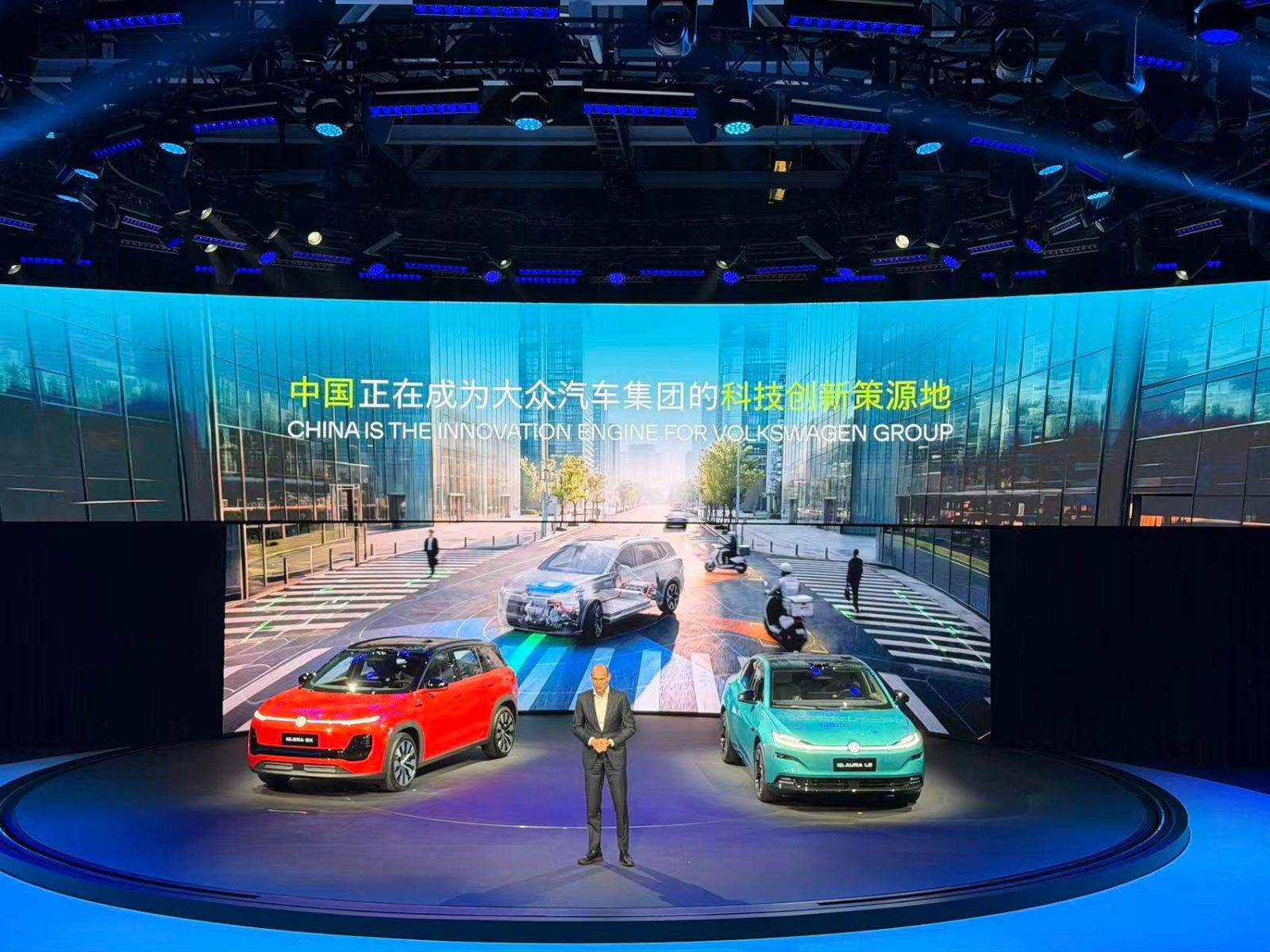
此前的「在中国,为中国」更多指向的是本土化追赶,而进入「深耕中国,共赢全球」的新阶段,中国团队开始接手面向全球市场的产品与技术定义。
Image

这一转变的前提,是大众在组织架构和研发权限上的彻底放权。位于合肥的大众汽车中国科技有限公司(VCTC),目前已经是大众集团在德国总部之外规模最大的研发中心。

与传统跨国车企只负责本地适配的海外研发中心不同,VCTC 在中国拥有德国境外产品的直接决策权、审批权和发布权限。

过去必须由德国总部主导的车身、模块化开发、整车平台和电子电气架构等核心研发工作,如今直接在合肥由 VCTC 主导完成。
Image

在具体分工上,VCTC 作为对接上汽大众、一汽大众和大众安徽三家合资企业的统一窗口,统筹端到端整车开发、CMP 与 CSP 平台以及工程验证。

CARIAD 中国与 VCTC 组建联合团队,主导 CEA 电子电气架构、C-Brain 工具链与智能座舱研发。

酷睿程则专注于 HS8 智驾算法、GAIA 2.0 数据平台与自研芯片 C7H。
Image

在搭建好本土研发与制造体系后,大众计划将这个架构推向海外,路径分为「整车出口」和「技术出海」两步。

第一步是整车出口。目前,在中国生产的大众品牌与捷达品牌车型,已经开始出口至中东、乌兹别克斯坦、哈萨克斯坦以及非洲地区。

按照规划,2026 年内,大众中国生产的车型将打入七个海外市场,进一步拓展至墨西哥、埃及和越南等地,后续还将进入东盟、南美洲和非洲的更多国家。

通过与上汽、一汽和江淮三大本土合资伙伴协同,大众计划到 2030 年实现每年至少 30 万辆的中国造汽车出口。
Image

第二步,则是平台与架构的技术输出。大众明确表示,中国本土研发的 CMP 整车平台与 CEA 电子电气架构,将成为大众汽车集团面向「全球南方」市场开发新一代车型的技术基础,支持当地定制化开发,并覆盖新能源、燃油及混合动力等多种动力形式。

面向海外市场时,中国开发的 CMP 平台将经过适配,直接转化为大众汽车集团的全球平台——GMP 平台。
Image

按照时间表,在 2030 年前,南美洲将成为首个在本土产品组合中引入大众中国研发技术的海外区域,随后这一方案还将拓展至南非等市场。

这意味着,中国团队不再只是围绕中国消费者的偏好做本土化改款,反而开始参与定义大众其他区域的产品。

过去几十年里,大众的「全球车」意味着德国总部定义平台、全球市场同步导入,而现在,由合肥主导开发的 CMP 与 CEA,正在成为大众新一代「全球车」的起点。

#欢迎关注爱范儿官方微信公众号:爱范儿(微信号:ifanr),更多精彩内容第一时间为您奉上。

2026-10-31 02:38:38 · 大模型,算力芯片,AI应用,自动驾驶,政策监管,代码生成,Agent智能体,设计创意,医疗健康,世界模型,向量数据库,工业制造,模型发布,产品更新,合作,财报,榜单评测
继续滚动加载更多…